 USD
USD GBP
GBP  CNY
CNY  EUR
EUR  INR
INR  JPY
JPY  MYR
MYR  ZAR
ZAR  KRW
KRW  THB
THB 


Cross-Therapeutic Expansion is Driving Transformational Growth Fueled by Novel Formats and Smarter Delivery
08-Sep-2025
Global
Market Research
PG1D-01-00-00-00
HC_2025_33798
Report Summary: Protein and Peptide Therapeutics Market
The global protein and peptide therapeutics market size was estimated at USD 422.71 billion in 2024 and is projected to reach USD 712.96 billion by 2030, expanding at a CAGR of 9.1% from 2024 to 2030. The rapid growth of the Peptide Therapeutics Market is driven by increasing adoption of biologics, rising prevalence of chronic diseases, and strong pipeline expansion in monoclonal antibodies (mAbs), GLP-1 analogs, and fusion proteins.
Key Market Trends & Insights
- North America dominates the protein and peptide therapeutics market due to strong R&D investments and advanced healthcare infrastructure.
- GLP-1 receptor agonists are among the fastest-growing segments within the Peptide Therapeutics Market, driven by rising obesity and diabetes prevalence.
- Increasing shift toward patient-friendly formulations is boosting the oral proteins & peptides market.
- Biosimilars and patent expirations are reshaping competitive dynamics in the protein and peptide therapeutics market.
- Innovation in multi-specific antibodies and ADCs is accelerating therapeutic advancements.
Market Size & Forecast
- 2024 Market Size: USD 422.71 billion
- 2030 Projected Market Size: USD 712.96 billion
- CAGR (2024–2030): 9.1%
- Largest Market in 2024: North America
- Fastest Growing Region: Asia-Pacific
The protein and peptide therapeutics market is witnessing strong momentum due to advancements in biologics and increasing demand for targeted therapies. Growth in the oral proteins & peptides market is further enhancing accessibility and patient compliance.
Market Overview: Protein and Peptide Therapeutics Market
The protein and peptide therapeutics market is undergoing a major transformation driven by next-generation biologics, precision medicine, and expanding therapeutic applications. The Peptide Therapeutics Market is benefiting from increasing adoption of GLP-1 therapies, monoclonal antibodies, and antibody-drug conjugates (ADCs), which are redefining treatment approaches across multiple disease areas.
A significant trend shaping the protein and peptide therapeutics market is the transition toward multifunctional biologics and targeted therapies. Advances in molecular engineering have enabled the development of highly selective and potent therapeutics, improving clinical outcomes. The oral proteins & peptides market is also gaining traction as companies focus on improving drug delivery methods to enhance patient convenience and adherence.
Another key trend is the growing importance of biosimilars, which are increasing competition and reducing treatment costs. The Peptide Therapeutics Market is also witnessing strong demand in metabolic disorders, oncology, and autoimmune diseases. Digital health integration and AI-driven drug discovery are further accelerating innovation in the protein and peptide therapeutics market.
The shift toward personalized medicine and biologics-based therapies is expected to continue driving growth across the oral proteins & peptides market and broader industry landscape.
Scope of Analysis: Protein and Peptide Therapeutics Market
This study evaluates the protein and peptide therapeutics market across the period 2025–2030, with 2024 as the base year. The analysis provides a comprehensive assessment of market dynamics, technological advancements, and regional trends within the Peptide Therapeutics Market.
The scope includes segmentation by therapeutic type, application, and region. Key therapeutic categories include monoclonal antibodies, fusion proteins, peptide hormones, GLP-1 analogs, cytokines, interleukins, and therapeutic enzymes. The study also highlights the growing importance of the oral proteins & peptides market in improving drug delivery and patient compliance.
Geographically, the analysis covers North America, Europe, Asia-Pacific, Latin America, and the Middle East & Africa. Each region is evaluated based on regulatory frameworks, healthcare infrastructure, and adoption trends within the protein and peptide therapeutics market.
The methodology combines primary interviews, secondary research, and advanced forecasting models. The report provides both quantitative and qualitative insights into the Peptide Therapeutics Market, enabling stakeholders to understand growth opportunities and competitive dynamics.
Revenue & Spending Forecast: Protein and Peptide Therapeutics Market
The protein and peptide therapeutics market is expected to experience strong growth driven by increasing adoption of biologics and innovative therapeutic solutions. In 2024, the market was valued at USD 422.71 billion, reflecting robust demand across multiple therapeutic areas.
By 2030, the protein and peptide therapeutics market is projected to reach USD 712.96 billion, registering a CAGR of 9.1% during the forecast period. This growth is supported by rising investments in biologics, expanding clinical pipelines, and increasing adoption of targeted therapies.
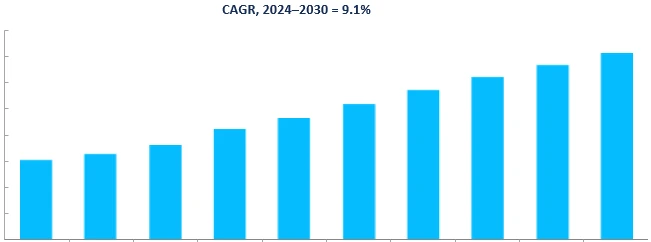
The Peptide Therapeutics Market is witnessing increased spending on GLP-1 therapies and peptide-based drugs, while the oral proteins & peptides market is gaining momentum due to advancements in drug delivery technologies.
Overall, the protein and peptide therapeutics market is expected to maintain strong growth, driven by innovation and increasing healthcare demand.
Market Segmentation Analysis: Protein and Peptide Therapeutics Market
The protein and peptide therapeutics market is segmented by structure, application, and geography, reflecting diverse therapeutic and clinical use cases across the Peptide Therapeutics Market.
By structure, the market is divided into protein therapeutics and peptide therapeutics. Protein therapeutics include monoclonal antibodies, fusion proteins, enzymes, and cytokines, which dominate the protein and peptide therapeutics market due to their extensive use in oncology and autoimmune diseases. Peptide therapeutics include GLP-1 analogs and other peptide-derived hormones, forming a rapidly growing segment within the Peptide Therapeutics Market.
By application, the protein and peptide therapeutics market spans oncology, immunology, dermatology, musculoskeletal disorders, endocrine diseases, gastrointestinal conditions, and blood-related disorders. The oral proteins & peptides market is emerging as a critical sub-segment, driven by advancements in drug delivery technologies.
Geographically, North America leads the protein and peptide therapeutics market, supported by strong R&D capabilities. Europe follows with robust regulatory frameworks, while Asia-Pacific is the fastest-growing region due to expanding healthcare access and pharmaceutical manufacturing.
Growth Drivers: Protein and Peptide Therapeutics Market
The protein and peptide therapeutics market is driven by the rising prevalence of chronic diseases such as diabetes, obesity, and cancer. The Peptide Therapeutics Market is benefiting from the rapid adoption of GLP-1 receptor agonists and advanced biologics.
Technological advancements in drug development and delivery are also accelerating growth in the oral proteins & peptides market, improving patient compliance and treatment outcomes. Increasing R&D investments and regulatory support further drive expansion in the protein and peptide therapeutics market.
Growth Restraints: Protein and Peptide Therapeutics Market
The protein and peptide therapeutics market faces challenges such as high development costs, regulatory complexities, and manufacturing constraints. Stability issues and cold chain requirements impact the oral proteins & peptides market.
Additionally, safety concerns and clinical trial complexities pose challenges within the Peptide Therapeutics Market.
Competitive Landscape: Protein and Peptide Therapeutics Market
The protein and peptide therapeutics market is moderately consolidated, with 33 major players generating significant revenues. Leading companies such as Roche, Novo Nordisk, Eli Lilly, Johnson & Johnson, and Merck dominate the Peptide Therapeutics Market.
The top players account for over 70% of the market, reflecting strong competitive intensity. The oral proteins & peptides market is attracting new entrants focusing on innovative delivery technologies.
Strategic acquisitions, partnerships, and R&D investments are shaping competition within the protein and peptide therapeutics market.
Market Definition, Scope, and Segmentation
Segmentation
Definitions
Why is it Increasingly Difficult to Grow?
The Strategic Imperative 8™
The Impact of the Top 3 Strategic Imperatives on the Protein and Peptide Therapeutics Industry
Key Highlights
Drug Development Trends—Protein Drugs
Drug Development Trends—Peptide Drugs
Trends Advancing Market Growth
Impact of Biosimilars—Recent Biosimilar Approvals and Launches
Impact of Biosimilars—Upcoming Major Patent Expirations
Strategic Partnerships and Collaborations
Venture Financing Assessment
Competitive Environment
Key Competitors
Growth Metrics
Growth Drivers
Growth Restraints
Research Process and Methodology
Forecast Considerations
Revenue Forecast
Revenue Forecast by Technology
Revenue Forecast by Region
Revenue Forecast Analysis
Market Access and Reimbursement Trends—mAbs
Market Access and Reimbursement Trends—GLP-1
Pricing Trends and Cost Reduction Strategies
Integrated Care Models—Bundled Obesity Program for GLP-1
Revenue Share
Revenue Share Analysis
Growth Metrics
Revenue Forecast
Revenue Forecast by Sub-technology
Revenue Forecast by Application
Revenue Forecast by Region
Forecast Analysis—mAbs
Forecast Analysis—Fusion Fc Proteins
Forecast Analysis—Coagulation
Forecast Analysis—Enzyme
Forecast Analysis—Hormones
Forecast Analysis—Growth Factors, Cytokines, and Others
Forecast Analysis—Application
Forecast Analysis—Region
Forecast Analysis—Protein Therapeutics
Growth Metrics
Revenue Forecast
Revenue Forecast by Sub-technology
Revenue Forecast by Application
Revenue Forecast by Region
Forecast Analysis—GLP and Others
Forecast Analysis—Application
Forecast Analysis—Region
Forecast Analysis—Peptide Therapeutics
Growth Opportunity 1: Engineered Multi-Specific Antibodies
Growth Opportunity 2: Generative AI for Antibody Discovery
Growth Opportunity 3: Advancing GLP-1s Upstream into Preventive Metabolic Care
Growth Opportunity 4: Next-Generation GLP-1 Delivery Systems
Benefits and Impacts of Growth Opportunities
Next Steps
List of Exhibits
Legal Disclaimer
Frequently Asked Questions (FAQ) – Protein and Peptide Therapeutics Market
What is the current and projected size of the protein and peptide therapeutics market?
The protein and peptide therapeutics market was valued at USD 422.71 billion in 2024 and is projected to reach USD 712.96 billion by 2030, growing at a CAGR of 9.1%, driven by increasing adoption of biologics and targeted therapies.
What are the key growth drivers of the protein and peptide therapeutics market?
Growth is driven by rising prevalence of chronic diseases, increasing adoption of biologics, expansion of GLP-1 therapies, and advancements in drug delivery technologies, including developments in the oral proteins & peptides market.
Why is the Peptide Therapeutics Market gaining significant traction?
The Peptide Therapeutics Market is gaining traction due to its effectiveness in treating metabolic disorders, oncology, and autoimmune diseases, along with improved safety profiles and targeted mechanisms of action.
What role does the oral proteins & peptides market play in industry growth?
The oral proteins & peptides market enhances patient compliance by enabling non-invasive drug delivery, reducing reliance on injections, and improving accessibility to biologic therapies.
Which therapeutic areas dominate the protein and peptide therapeutics market?
Key therapeutic areas include oncology, endocrinology, immunology, metabolic disorders, and cardiovascular diseases, which collectively drive demand in the protein and peptide therapeutics market.
Who are the leading companies in the protein and peptide therapeutics market?
Leading companies include Roche, Novo Nordisk, Eli Lilly, Johnson & Johnson, and Merck, which dominate the market through strong R&D pipelines, innovation, and global presence.
What are the major challenges in the protein and peptide therapeutics market?
Major challenges include high development and manufacturing costs, regulatory complexities, stability issues, and cold chain requirements, particularly affecting the oral proteins & peptides market.
How are biosimilars impacting the Peptide Therapeutics Market?
Biosimilars are increasing competition, lowering treatment costs, and improving patient access, thereby reshaping the competitive landscape of the protein and peptide therapeutics market.
Which regions are driving growth in the protein and peptide therapeutics market?
North America leads the market due to strong R&D and healthcare infrastructure, while Asia-Pacific is the fastest-growing region driven by increasing healthcare investments and pharmaceutical production.
What is the future outlook for the protein and peptide therapeutics market?
The market is expected to grow steadily with continued innovation in biologics, AI-driven drug discovery, and expanding adoption of oral protein and peptide therapies.
Speak directly with our analytics experts for tailored recommendations.
Recent related Pharmaceuticals research
23 Sep 2026 | Global | Technology Research
Programmable Epigenome Editing for Disease Reversal
Programmable epigenome editing is developing as a distinct approach to controlling gene activity without changing the underlying DNA sequence. This report examines the landscape from the core editing technologies and delivery systems through the companies, academic programs and therapeutic applicati...
18 Sep 2026 | Global | Technology Research
Innovations and Growth Opportunities in AI-Enabled Discovery and Diagnostics, Precision Therapeutics, and Next-Generation Vaccine Platforms
This edition of the Life Science, Health & Wellness Technology Opportunity Engine (TOE) provides a comprehensive overview of breakthrough innovations transforming AI-enabled discovery, precision diagnostics, cell engineering, targeted therapeutics, vaccines, and skin health across oncology, metaboli...
07 Sep 2026 | Global | Technology Research
Synthetic Antibodies and AI-Optimized Immunotherapies
Artificial intelligence is becoming increasingly relevant to antibody discovery and immunotherapy development, supporting target identification, de novo antibody design, antibody engineering, clinical intelligence, and bioprocessing. Advances in generative AI, protein language models, diffusion mode...
21 Aug 2026 | Global | Technology Research
Innovations and Growth Opportunities in AI-Driven Biomanufacturing, Advanced Cell and Gene Therapies, and Precision Immunotherapy
This edition of the Life Science, Health & Wellness Technology Opportunity Engine (TOE) provides a comprehensive overview of breakthrough innovations reshaping biomanufacturing, cell and gene therapy, precision immunotherapy, anti-infectives, and neurotherapeutics across oncology, infectious disease...
31 Jul 2026 | Global | Market Research
Growth Opportunities in Small-Molecule Contract Development and Manufacturing Organizations, Global, 2026–2031
The global small‑molecule CDMO industry is undergoing a structural transformation driven by increasing molecular complexity, patent expiries, cost pressures, and the strategic need to secure resilient pharmaceutical supply chains. Demand is shifting beyond high‑volume commodity generics toward speci...
Purchase includes:
- Report download
- Growth Dialog™ with our experts
Growth Dialog™
A tailored session with you where we identify the:- Strategic Imperatives
- Growth Opportunities
- Best Practices
- Companies to Action
Impacting your company's future growth potential.
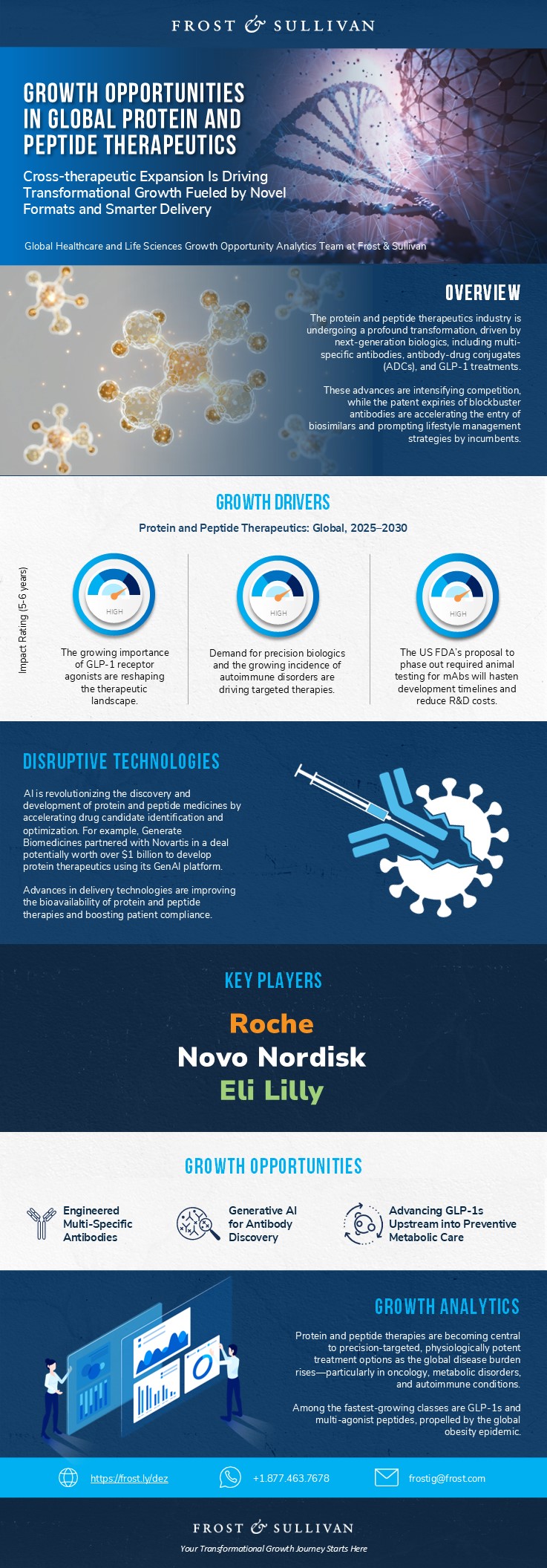
New monoclonal antibodies (mAbs) define drug development trends, targeting autoimmune, infectious, and cardiovascular disorders; fusion proteins with extended half-lives; innovations in enzyme replacement therapies; and cytokine engineering. Extended-release and patient-friendly formulations are improving cost efficiency, adherence, and access, while platform-based peptide methods emphasize multifunctional medicines with higher receptor selectivity and durability.
Protein and peptide therapies are becoming central to precision-targeted, physiologically potent treatment options as the global disease burden rises—particularly in oncology, metabolic disorders, and autoimmune conditions. Among the fastest-growing classes are GLP-1s and multi-agonist peptides, propelled by the global obesity epidemic.
Market dynamics—including steep price cuts, biosimilar expansion, and shifting treatment preferences toward GLP-1 receptor agonists—are driving a sales decline in traditional insulin products such as NovoRapid (NovoLog), Humalog, Lantus, Basaglar, and Tresiba beyond 2024. These drugs now treat not only diabetes but also obesity, sleep apnea, and cardiovascular risk.
This research service covers North America, Europe, Asia-Pacific, Latin America, and the Middle East & North Africa (MENA), providing a 6-year global revenue forecast (2025–2030) for the protein and peptide therapeutics market across segments including mAbs, fusion proteins, GLP-1 analogs, peptide hormones, coagulation factors, cytokines, interleukins, and therapeutic enzymes. It offers detailed insights into regional market trends, technological advancements, and clinical pathways, with emphasis on blockbuster drugs, biosimilars, and emerging modalities across oncology, endocrinology, infectious diseases, and immunology.
Strategic insights highlight market access, growth opportunities, collaboration models, and innovation hotspots such as oral peptide delivery, targeted protein degradation, and multifunctional biologics.
Author: Surbhi Gupta
| Deliverable Type | Market Research |
|---|---|
| Industries | Healthcare |
| No Index | No |
| Is Prebook | No |
| Keyword 1 | protein therapeutics market report |
| Keyword 2 | peptide drug forecast 2030 |
| Keyword 3 | biotech peptide industry growth |
| Podcast | No |
| Predecessor | None |
| WIP Number | PG1D-01-00-00-00 |