 USD
USD GBP
GBP  CNY
CNY  EUR
EUR  INR
INR  JPY
JPY  MYR
MYR  ZAR
ZAR  KRW
KRW  THB
THB 


Development of Sustainable, Multifunctional, and Value-added Masterbatch Solutions Is Driving New Growth Opportunities
09-Jul-2025
Global
Market Research
PFR8-01-00-00-00
CM_2025_33643
The masterbatches market includes color, additive, white, black, and filler segments. It also comprises 2 end-product families: thermoplastics and thermosets.
Manufacturers use masterbatches to incorporate pigments and additives into polymer resins and elastomers more efficiently. These compounds improve product uniformity and process stability by enhancing dispersion. They also encapsulate hazardous chemicals, making handling safer. Supplied in dust-free pellet form, masterbatches keep production areas cleaner, reduce cross-contamination, and speed up product changeovers. As a result, industries such as packaging, agriculture, textiles, and medical increasingly prefer masterbatches over conventional pigments and additives.
In 2024, additive and color masterbatches accounted for the largest global market shares by both value and volume. They are likely to maintain this lead during the forecast period. Additive masterbatches enhance plastic performance, while color masterbatches increase polymer versatility, allowing manufacturers to meet diverse end-use requirements.
Thermoplastics—including thermoplastic polymers and elastomers—represented the largest share of global masterbatch consumption in 2024. Manufacturers rely on them for consistent color addition and performance enhancement of base resins. By contrast, thermoset-based products, such as synthetic rubbers and thermoset resins, showed lower masterbatch usage—a trend that is expected to persist. End-users in these segments often choose powdered or liquid pigments and additives, which offer lower costs than solid or liquid masterbatches.
Developing countries, particularly in APAC and MEASA, have witnessed a sharp rise in middle-class populations and household incomes. This shift has increased discretionary spending on commoditized thermoplastic products. The dust-free handling and multifunctional benefits of masterbatches are driving their adoption as end-product development expands in these regions.
Meanwhile, mature markets in North America and Europe are prioritizing high-performance and sustainable materials. Leading producers are offering advanced masterbatches that ensure superior color consistency, uniform additive dispersion, dust-free processing, recyclability, and compatibility with various carrier resins.
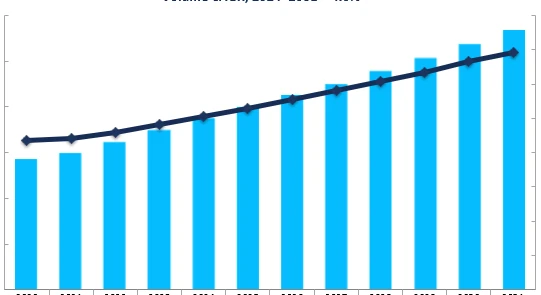
Revenue and Volume Forecast
Scope
| Aspect | Description |
|---|---|
| Market Analysis | Comprehensive analysis of market trends and dynamics. |
| Competitive Landscape | Evaluation of key players and their market strategies. |
| Growth Opportunities | Identification of potential growth areas and innovation. |
| Consumer Insights | Understanding consumer preferences and buying behavior. |
The Impact of the Top 3 Strategic Imperatives on the Plastic Masterbatches Industry
Competitive Intensity
- Why:
- By definition, masterbatches provide plastic processors with a method for incorporating required pigments and additives into compounds. However, alternative routes to market exist that do not rely on masterbatches, keeping competitive intensity high.
- Companies offering substitute forms continually evolve their products, requiring masterbatch specialists to stay vigilant and responsive to these developments.
- Frost Perspective:
- Although masterbatches offer customers significant convenience, they often cost more than in-house compounding. As a result, cost-conscious customers pose one of the biggest risks to masterbatch suppliers.
- Technical innovations in alternative solutions also present a threat—particularly those that enhance convenience and erode the competitive edge of masterbatches, such as liquid colors and additives.
Industry Convergence
- Why:
- Relatively few masterbatch suppliers remain “pure-play,” as many also operate in other tiers of the plastics value chain.
- Companies often pursue vertical integration as a key advantage in mergers and acquisitions (M&A) activity. For example, LyondellBasell acquired A. Schulman in 2018, and PolyOne acquired Clariant Masterbatches in 2020 to form Avient—adding masterbatch capabilities to broader portfolios.
- Since then, M&A activity in the industry has focused heavily on acquiring regional and local players to expand geographic reach.
- Frost Perspective:
- Mergers, acquisitions, and strategic collaborations—such as Sukano's acquisition of KAYS Kft. and the Hubron-Graphenest alliance—are intensifying competition and accelerating market consolidation in the masterbatch industry.
- While these moves strengthen larger players, they create pressure on smaller manufacturers, leading to an uneven market share and differentiation landscape.
Transformative Mega Trends
- Why:
- As in other markets, environmental sustainability is taking center stage in the plastics industry.
- Regulatory bodies are pushing for higher recycled content through circular economy mandates, driving manufacturers to adapt their formulations by incorporating more post-consumer resin (PCR).
- Frost Perspective:
- Stricter plastic waste regulations and the growing focus on the circular economy pose a significant risk to masterbatch manufacturers.
- As recycled plastics gain traction, demand for new masterbatches declines because recycled materials often already contain additives and colors.
Growth Drivers
| Driver | 1–2 Years | 3–4 Years | 5–7 Years |
|---|---|---|---|
| Industries increasingly demand more effective distribution of pigments and additives, which drives masterbatch market penetration. | Medium | High | High |
| More sectors continue to adopt masterbatch solutions, accelerating overall market growth. | Medium | High | High |
| Companies develop value-added and innovative products, boosting revenue growth. | Medium | High | High |
| Developing economies sustain demand for commoditized thermoplastics, supporting masterbatch consumption. | Medium | High | High |
Growth Restraints
| Restraint | 1–2 Years | 3–4 Years | 5–7 Years |
|---|---|---|---|
| Traditional pigments and additives continue to compete with masterbatches, limiting market expansion. | High | High | Medium |
| Increased plastic recycling reduces the demand for masterbatches, as recycled materials often retain existing colorants and additives. | Medium | Medium | Medium |
| Technological advancements in modern masterbatches lower the required dosage, which in turn reduces overall consumption. | Medium | Medium | Medium |
Competitive Environment
| Number of Competitors | <100 |
| Competitive Factors | Performance, innovation, cost, support, technology, reliability, customer relationships |
| Key End-user Industry Verticals | Packaging, textile, healthcare, consumer goods, construction, automotive, and electricals and electronics |
| Leading Competitors | Avient Corporation, LyondellBasell Industries NV, and Ampacet Corporation |
| Other Notable Competitors | Astra Polymers, Alok Masterbatch, GCR Group, Teknor Apex, Cabot Corp, Tosaf Group, Penn Color, RTP Company, Plastibends, Polyplast GmbH, Plastika Kritis SA, Global Colors Group, Colloids Ltd., Gabriel Chemie, Hellyar Plastic, Hubron International, Wells Plastics Ltd., Delta Kunststoffe AG, Constab Color Service GmbH, Washington Penn Plastic, Holland Colours, Colortech Inc., Ingenia Polymers Corp., Marval Industries, Lanxess AG, and Hexpol Compounding |
| Distribution Structure | Direct sales and distributors |
Masterbatches Market Overview and Scope
Segmentation
Why Is It Increasingly Difficult to Grow?
The Strategic Imperative 8
The Impact of the Top 3 Strategic Imperatives on the Plastic Masterbatches Industry
Growth Opportunities Fuel the Growth Pipeline Engine
Growth Metrics
Masterbatches Market Overview and Scope
Masterbatch Manufacturing Process
Growth Drivers
Growth Driver Analysis
Growth Restraints
Growth Restraint Analysis
New Product Developments
Graphical Summary of Drivers and Restraints: Thermoplastics
Graphical Summary of Drivers and Restraints: Thermoset
Revenue and Volume Forecast
Revenue and Volume Shipment Forecast Analysis
Pricing Trends and Forecast, Masterbatches Market
Pricing Trends and Forecast Analysis
Revenue Forecast by Region
Volume Forecast by Region
Revenue and Volume Forecast Analysis by Region
Percent Volume and Revenue Breakdown by Application
Value Chain, Masterbatches Market
Competitive Environment
Masterbatches Market for Thermoplastics: Segment Characteristics and Overview
Revenue and Volume Forecast
Forecast Analysis
Revenue Forecast by Product
Volume Shipment Forecast by Product
Forecast Analysis by Product
Masterbatches Market for Thermosets: Segment Characteristics and Overview
Revenue and Volume Forecast
Forecast Analysis
Revenue Forecast by Product
Volume Shipment Forecast by Product
Forecast Analysis by Product
Growth Opportunity 1: Focus on Quality
Growth Opportunity 2: Drive Sustainability
Growth Opportunity 3: Collaborate to Innovate
Benefits and Impacts of Growth Opportunities
Next Steps
List of Exhibits
Legal Disclaimer
Speak directly with our analytics experts for tailored recommendations.
Recent related Specialty Chemicals research
09 Oct 2026 | Global | Technology Research
Innovations in Transparent Ceramics, Biomaterials, Compostable Bioplastics, Graphite, Silica Foam, Aerogels, and Other Advanced Materials for Diverse Applications
This issue of High-Tech Materials Technology Opportunity Engine (TOE) profiles significant advances in high-tech materials for various industrial applications. The featured innovations include Large-sized Transparent and Bonded Ceramics for High-Power Laser Systems, High-Strength Transparent Alumina...
08 Oct 2026 | South Asia, Middle East & North Africa | Market Research
Growth Opportunities for Sulphur Derivatives in MENA, 2025–2030
The MENA region plays a critical role in global sulphur supply; however, a significant share of value creation remains concentrated in exports and commodity derivatives. As global demand evolves and advanced applications for sulphur-based products gain momentum, the region’s competitive advantage li...
02 Oct 2026 | Global | Technology Research
Innovations in Nanotechnology Including Nanocoatings, Nanolithography, Carbon Nanotubes, Nanofluids, Graphene, Ceramic Aerogels, Nanocatalysts, and Nanocomposites
This issue of the Nanotechnology Opportunity Engine profiles significant advances in nanotechnology for various industrial applications. The featured innovations include Sulfate-Free CNCs for Versatile Applications, Contact-Active Antimicrobial Nanocoating With Broad-Spectrum Protection, Nanoimprint...
29 Sep 2026 | Global | Market Research
Electronic Chemical Market, Global, 2025–2032
Electronic chemicals constitute a foundational input to semiconductor, printed circuit board (PCB), and flat panel display (FPD) manufacturing, underpinning the precision, purity, and performance requirements of increasingly sophisticated electronic devices. This study presents a comprehensive analy...
18 Sep 2026 | Global | Technology Research
Innovations in Surface Technologies for Automotive Coatings, Protective Coatings, Oleophobic Coatings, Plasma Coatings, Icephobic Coatings, and Others
This edition of the Advanced Coating & Surface Technology Opportunity Engine profiles significant advances in advanced coatings and surface treatments for various industrial applications. The featured innovations include Ultra-Black Nanocarbon Coatings for Next-Generation Automotive Surface Finishes...
Purchase includes:
- Report download
- Growth Dialog™ with our experts
Growth Dialog™
A tailored session with you where we identify the:- Strategic Imperatives
- Growth Opportunities
- Best Practices
- Companies to Action
Impacting your company's future growth potential.
Manufacturers use masterbatches to incorporate pigments and additives into polymer resins and elastomers more efficiently. These compounds improve product uniformity and process stability by enhancing dispersion. They also encapsulate hazardous chemicals, making handling safer. Supplied in dust-free pellet form, masterbatches keep production areas cleaner, reduce cross-contamination, and speed up product changeovers. As a result, industries such as packaging, agriculture, textiles, and medical increasingly prefer masterbatches over conventional pigments and additives.
In 2024, additive and color masterbatches accounted for the largest global market shares by both value and volume. They are likely to maintain this lead during the forecast period. Additive masterbatches enhance plastic performance, while color masterbatches increase polymer versatility, allowing manufacturers to meet diverse end-use requirements.
Thermoplastics—including thermoplastic polymers and elastomers—represented the largest share of global masterbatch consumption in 2024. Manufacturers rely on them for consistent color addition and performance enhancement of base resins. By contrast, thermoset-based products, such as synthetic rubbers and thermoset resins, showed lower masterbatch usage—a trend that is expected to persist. End-users in these segments often choose powdered or liquid pigments and additives, which offer lower costs than solid or liquid masterbatches.
Developing countries, particularly in APAC and MEASA, have witnessed a sharp rise in middle-class populations and household incomes. This shift has increased discretionary spending on commoditized thermoplastic products. The dust-free handling and multifunctional benefits of masterbatches are driving their adoption as end-product development expands in these regions.
Meanwhile, mature markets in North America and Europe are prioritizing high-performance and sustainable materials. Leading producers are offering advanced masterbatches that ensure superior color consistency, uniform additive dispersion, dust-free processing, recyclability, and compatibility with various carrier resins.
| Deliverable Type | Market Research |
|---|---|
| Industries | Chemicals and Materials |
| No Index | No |
| Is Prebook | No |
| Keyword 1 | Plastic masterbatches market |
| Keyword 2 | Plastic colorants forecast |
| Keyword 3 | Global plastics industry |
| Podcast | No |
| Predecessor | MFC6-01-00-00-00 |
| WIP Number | PFR8-01-00-00-00 |
Plastic Masterbatches Market, Global, 2024–2031
$2,450.00
Special Price $2,205.00 save 10 %