 USD
USD GBP
GBP  CNY
CNY  EUR
EUR  INR
INR  JPY
JPY  MYR
MYR  ZAR
ZAR  KRW
KRW  THB
THB 


Rising Focus on Improving Product Technologies and Developing New Alternatives is Driving Transformational Growth
27-Feb-2025
Global
PFPO-01-00-00-00
CM_2025_1319
Report Summary: Wind Turbine Materials Market
The global Wind Turbine Materials Market size was estimated at USD 26.4 billion in 2024 and is projected to reach USD 47.4 billion by 2031, growing at a steady CAGR during the forecast period. Market growth is primarily driven by accelerating deployment of onshore and offshore wind power projects, increasing turbine capacities, and rising material intensity per installed megawatt. The transition toward larger and more efficient turbines is significantly strengthening demand across the Wind Turbine Composite Materials Market and the wind rotor blade material market.
Key Market Trends & Insights
- Asia Pacific dominated the Wind Turbine Materials Market in 2024, supported by large-scale wind installations in China and India.
- Europe continues to lead technological innovation, particularly in offshore wind and advanced composite materials.
- The wind rotor blade material market represents the most material-intensive application, driven by longer blades and higher structural loads.
- Growing adoption of lightweight and high-strength composites is accelerating expansion of the Wind Turbine Composite Materials Market.
- Sustainability initiatives, including recyclable composites and blade end-of-life solutions, are increasingly influencing material selection.
Market Size & Forecast
- 2024 Market Size: USD 26.4 Billion
- 2031 Projected Market Size: USD 47.4 Billion
- Largest Market: Asia Pacific (2024)
- Fastest-Growing Segment: Composite materials for rotor blades
The continued expansion of global wind energy capacity and ongoing materials innovation are expected to sustain long-term growth in the Wind Turbine Material Market.
Market Overview & Trends: Wind Turbine Materials Market
The Wind Turbine Materials Market plays a critical role in the global wind energy value chain, supplying the materials required to manufacture blades, towers, nacelles, and drivetrain components. As wind turbines continue to scale in size and complexity, materials performance has emerged as a key determinant of efficiency, reliability, and cost competitiveness. This dynamic is reshaping demand patterns across the Wind Turbine Materials Market and accelerating innovation in advanced composites and structural materials.
One of the most significant trends is the growing dominance of the Wind Turbine Composite Materials Market, particularly in rotor blade manufacturing. Fiberglass composites remain widely used, while carbon fiber adoption is increasing in large and offshore blades to reduce weight and improve stiffness. This shift directly strengthens the wind rotor blade material market, as longer blades require materials capable of withstanding higher loads and fatigue cycles.
Offshore wind development is another major trend influencing material demand. Offshore turbines require enhanced corrosion resistance, durability, and structural integrity due to harsh marine environments. As a result, coatings, resins, adhesives, and advanced composite systems are gaining traction within the Wind Turbine Materials Market. Floating wind platforms further amplify material requirements by introducing new structural and anchoring challenges.
Sustainability and circular economy initiatives are also reshaping the Wind Turbine Composite Materials Market. Manufacturers are investing in recyclable resins, bio-based fibers, and blade recycling technologies to address end-of-life concerns. These efforts are becoming increasingly important as global wind capacity ages and decommissioning activity rises.
In parallel, digital design tools and advanced manufacturing techniques are enabling material optimization, reducing waste, and improving performance consistency. While cost pressures and raw material price volatility remain challenges, the long-term outlook for the Wind Turbine Material Market remains positive, underpinned by global decarbonization goals and expanding renewable energy targets.
Scope of Analysis: Wind Turbine Materials Market
This analysis examines the global Wind Turbine Materials Market over the study period 2024–2031, with 2024 as the base year and 2025–2031 as the forecast period. Market sizing and forecasts are presented in US dollars, reflecting revenues generated from materials supplied for wind turbine manufacturing and installation.
The scope includes materials used in rotor blades, towers, nacelles, and associated structural components. Coverage spans metallic materials, composite materials, resins, fibers, coatings, and adhesives, with particular emphasis on developments within the Wind Turbine Composite Materials Market and the wind rotor blade material market. Balance-of-plant materials and unrelated renewable technologies are excluded.
Geographic coverage includes North America, Europe, Asia Pacific, Latin America, and the Middle East & Africa. The study evaluates market dynamics using a combination of secondary research, primary expert interviews, and proprietary modeling techniques to assess demand trends, growth drivers, and competitive developments within the Wind Turbine Materials Market.
Segmentation analysis is provided for qualitative and structural understanding only. In line with your requirement, all revenue estimates and forecasts are presented exclusively at the total market level, without segmentation- or application-level revenue disclosure.
Market Segmentation Analysis: Wind Turbine Materials Market
The Wind Turbine Materials Market can be analyzed across multiple segmentation dimensions to understand demand patterns and material adoption trends. By material type, the market includes composites, metals, resins, fibers, coatings, and adhesives. Among these, composites represent the most dynamic category, driving growth within the Wind Turbine Composite Materials Market due to their extensive use in rotor blades and nacelle structures.
From a component perspective, rotor blades account for the highest material consumption, making the wind rotor blade material market a central focus for manufacturers and suppliers. Towers represent another significant application, relying heavily on steel and advanced alloys to support increasing hub heights. Nacelle materials are evolving to improve thermal management, vibration control, and overall durability.
Based on installation type, the market spans onshore and offshore wind turbines. Offshore installations exhibit higher material intensity per turbine, particularly for composites, corrosion-resistant coatings, and structural reinforcements. This trend is contributing to faster growth in offshore-related segments of the Wind Turbine Materials Market.
Regionally, Asia Pacific leads in terms of volume demand, driven by large-scale wind deployments, while Europe emphasizes advanced materials and offshore innovation. North America shows steady growth supported by repowering activity and policy incentives. Although segmentation highlights important structural trends, all financial projections in this analysis are limited to the total Wind Turbine Materials Market level.
Revenue & Spending Forecast: Wind Turbine Materials Market
The Wind Turbine Materials Market demonstrated strong revenue performance in the base year, supported by rising global wind installations and increasing material intensity per turbine. In 2024, the market generated revenues of USD 26.4 billion, reflecting robust demand across both onshore and offshore projects.
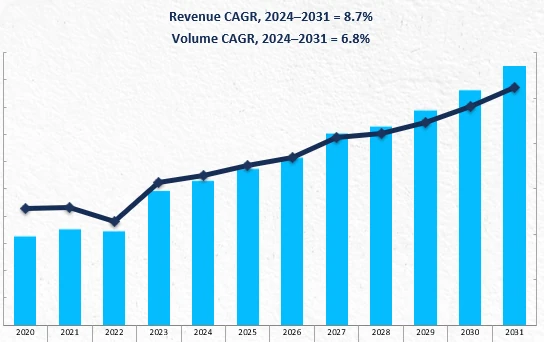
Over the forecast period, continued expansion of offshore wind capacity, repowering of aging fleets, and deployment of larger turbines are expected to drive sustained spending growth. By 2031, the Wind Turbine Materials Market is projected to reach USD 47.4 billion, supported by rising demand in the Wind Turbine Composite Materials Market and the wind rotor blade material market.
Spending patterns indicate increasing allocation toward advanced composites, high-performance resins, and corrosion-resistant materials, particularly for offshore applications. While raw material price volatility and supply chain constraints may create short-term fluctuations, long-term spending outlook remains positive as wind energy continues to play a central role in global decarbonization strategies.
Growth Drivers: Wind Turbine Materials Market
Key growth drivers include rapid global wind capacity additions, increasing turbine sizes, and technological advancements in material science. Larger rotor diameters and taller towers significantly increase material demand, directly benefiting the wind rotor blade material market and the broader Wind Turbine Materials Market.
The expansion of offshore wind is another major driver, as offshore turbines require higher-performance materials to withstand harsh marine environments. This trend strongly supports growth in the Wind Turbine Composite Materials Market, particularly for advanced composites and protective coatings.
Government policies, renewable energy targets, and decarbonization commitments are accelerating wind project development worldwide. Additionally, repowering of aging wind farms is generating incremental demand for new materials, further reinforcing market growth.
Growth Restraints: Wind Turbine Materials Market
Despite strong growth prospects, the Wind Turbine Materials Market faces several restraints. Volatility in raw material prices, particularly for steel and composite fibers, can impact project economics and procurement decisions. Supply chain disruptions may also affect material availability and lead times.
High costs associated with advanced composite materials and limited recycling infrastructure pose challenges for the Wind Turbine Composite Materials Market. Technical complexity in manufacturing and repairing large composite structures further adds to operational risk.
Environmental concerns related to blade disposal and end-of-life management remain a constraint, although recycling technologies are improving. These factors may temporarily slow adoption but are unlikely to derail long-term market growth.
Competitive Landscape: Wind Turbine Materials Market
The Wind Turbine Materials Market is characterized by a highly fragmented and competitive ecosystem, with fewer than 500 active participants operating across metals, composites, coatings, adhesives, and specialty chemicals. Competition is shaped by long-standing customer relationships, collaborative product development with turbine OEMs, and the ability to deliver consistent material performance at scale. Cost efficiency, innovation in material formulations, and reliability of supply remain critical differentiators, particularly as turbine sizes increase and offshore deployments expand.
Key end-user demand originates from onshore and offshore wind turbine designers, manufacturers, and installation companies, which increasingly require customized materials that balance structural strength, durability, and lifecycle performance. As a result, suppliers with strong technical support capabilities and co-engineering expertise are gaining competitive advantage.
The market is led by a mix of global material and chemical companies, including ArcelorMittal, Owens Corning, 3A Composites, Hempel, Westlake, Sika, and Shell, which benefit from broad product portfolios and established global footprints. In addition, a wide group of notable competitors—such as POSCO, Tata Steel, Toray Industries, Hexcel, BASF, Evonik, Huntsman, DuPont, AkzoNobel, Henkel, and Sinopec—contribute to intense competition across the Wind Turbine Composite Materials Market and the wind rotor blade material market.
Distribution is primarily conducted through direct sales and distributor networks, enabling suppliers to serve both large OEM contracts and regional project-based demand efficiently.

Scope of Analysis
Segmentation
Why Is It Increasingly Difficult to Grow?
The Strategic Imperative 8™
The Impact of the Top 3 Strategic Imperatives on the Global Wind Turbine Materials Industry
Key Takeaways
Emergence of Wooden Towers
Materials for Wind Energy: Market Highlights
Key Aspects of Wind Turbines
Capacity Factor and Materials Demand
Trends in Small-scale Wind Turbines
Larger Wind Turbines
Wind Turbine Service and Maintenance
Decommissioning and Repowering
Composites Recycling
Competitive Environment
Key Competitors: Structural Materials
Key Competitors: Non-structural Materials
Growth Metrics
Growth Drivers
Growth Restraints
Growth Restraint Analysis
Wind Turbine Materials: Key Regulatory Authorities
Value Chain
Value Chain Analysis
Forecast Assumptions
Revenue and Volume Forecast
Revenue Forecast by End Use
Volume Forecast by End Use
Revenue and Volume Forecast Analysis
Revenue and Volume Forecast Analysis by End Use
Revenue Forecast by Region
Volume Forecast by Region
Revenue and Volume Forecast Analysis by Region
Revenue Forecast by Material Type
Volume Forecast by Material Type
Forecast Analysis
Average Price Forecast: Structural Materials
Average Price Forecast: Non-structural Materials
Pricing Trends and Forecast Analysis
Revenue Forecast by Material Type: Structural Materials
Volume Forecast by Material Type: Structural Materials
Revenue Forecast by Material Type: Non-structural Materials
Volume Forecast by Material Type: Non-structural Materials
Structural and Non-structural Materials
Structural: Steel
Structural: Fiber-reinforced Composites
Structural: Core Materials
Non-structural: Coatings
Non-structural: Adhesives and Sealants
Non-structural: Lubricants
Market Share Analysis by Structural Material Type
Market Share Analysis by Non-structural Material Type
Overview
Areas of Materials Research for Wind Turbine Blades
Growth Metrics
Revenue Forecast by Material Type: Structural Materials
Volume Forecast by Material Type: Structural Materials
Revenue Forecast by Material Type: Non-structural Materials
Volume Forecast by Material Type: Non-structural Materials
Overview
Growth Metrics
Revenue and Volume Forecast
Revenue and Volume Forecast Analysis
Revenue Forecast by Material Type
Volume Forecast by Material Type
Revenue Forecast by Material Type: Structural Materials
Volume Forecast by Material Type: Structural Materials
Revenue Forecast by Material Type: Non-structural Materials
Volume Forecast by Material Type: Non-structural Materials
Volume Share Forecast by Tower Material Type
Structural Materials Used in Tower
Non-structural Materials Used in Tower
Overview
Growth Metrics
Revenue and Volume Forecast
Revenue and Volume Forecast Analysis
Revenue Forecast by Material Type
Volume Forecast by Material Type
Revenue Forecast by Material Type: Structural Materials
Volume Forecast by Material Type: Structural Materials
Revenue Forecast by Material Type: Non-structural Materials
Volume Forecast by Material Type: Non-structural Materials
Volume Share Forecast by Others Material Type
Structural Materials Used in Other Wind Turbine Components
Non-structural Materials Used in Other Wind Turbine Components
Growth Opportunity 1: Diversify and Strengthen Materials Supply
Growth Opportunity 2: Develop Higher Quality Materials for Offshore Turbines
Growth Opportunity 3: Improve Product Technology to Lower Maintenance Costs and Frequency
Benefits and Impacts of Growth Opportunities
Next Steps
List of Exhibits
Legal Disclaimer
 List of Figures
- Wind Turbine Blade Recycling: Value Chain, Global, 2024
- Wind Turbine Materials: Growth Metrics, Global, 2024
- Wind Turbine Materials: Growth Drivers, Global, 2025–2031
- Wind Turbine Materials: Growing Turbine Sizes, Global, 2024
- Offshore Wind: Annual Capacity Additions by Region, Global, 2022
- Share of Turbines Over 10 Years Old, Global, 2010–2030
- Wind Turbine Materials: Growth Restraints, Global, 2025–2031
- Wind Turbine Materials: Summary of Growth Drivers and Restraints, Global, 2024–2031
- Wind Turbine Materials: Revenue and Volume Forecast, Global, 2020–2031
- Wind Turbine Materials: Revenue Forecast by End Use, Global, 2020–2031
- Wind Turbine Materials: Volume Forecast by End Use, Global, 2020–2031
- Wind Turbine Materials: Revenue Forecast by Region, Global, 2020–2031
- Wind Turbine Materials: Volume Forecast by Region, Global, 2020–2031
- Wind Turbine Materials: Revenue Forecast by Material Type, Global, 2020–2031
- Wind Turbine Materials: Volume Forecast by Material Type, Global, 2020–2031
- Wind Turbine Materials: Average Price Forecast for Structural Materials, Global, 2020–2031
- Wind Turbine Materials: Average Price Forecast for Non-structural Materials, Global, 2020–2031
- Wind Turbine Materials: Revenue Forecast by Material Type—Structural Materials, Global, 2020–2031
- Wind Turbine Materials: Volume Forecast by Material Type—Structural Materials, Global, 2020–2031
- Wind Turbine Materials: Revenue Forecast by Material Type—Non-structural Materials, Global, 2020–2031
- Wind Turbine Materials: Volume Forecast by Material Type—Non-structural Materials, Global, 2020–2031
- Wind Turbine Steel: Volume Share by Component, Global, 2024
- Wind Turbine Composite: Volume Share by Component, Global, 2024
- Wind Turbine Core: Volume Share by Component, Global, 2024
- Wind Turbine Coatings: Volume Share by Component, Global, 2024
- Wind Turbine Adhesives and Sealants: Volume Share by Component, Global, 2024
- Wind Turbine Lubricants: Volume Share by Component, Global, 2024
- Wind Turbine Metals: Market Share, Global, 2023
- Wind Turbine FRC: Market Share, Global, 2023
- Wind Turbine Core: Market Share, Global, 2023
- Wind Turbine Coatings: Market Share, Global, 2023
- Wind Turbine A&S: Market Share, Global, 2023
- Wind Turbine Lubricants: Market Share, Global, 2023
- Wind Turbine Rotor Materials: Growth Metrics, Global, 2024
- Wind Turbine Rotor Materials: Revenue and Volume Forecast, Global, 2020–2031
- Wind Turbine Rotor Materials: Revenue Forecast by Material Type, Global, 2020–2031
- Wind Turbine Rotor Materials: Volume Forecast by Material Type, Global, 2020–2031
- Wind Turbine Rotor Materials: Revenue Forecast by Material Type—Structural Materials, Global, 2020–2031
- Wind Turbine Rotor Materials: Volume Forecast by Material Type—Structural Materials, Global, 2020–2031
- Wind Turbine Rotor Materials: Revenue Forecast by Material Type—Non-structural Materials, Global, 2020–2031
- Wind Turbine Rotor Materials: Volume Forecast by Material Type—Non-structural Materials, Global, 2020–2031
- Wind Turbine Rotor Materials: Volume Share by Material Type, Global, 2024
- Wind Turbine Rotor Materials: Volume Share by Material Type, Global, 2031
- Wind Turbine Tower Materials: Growth Metrics, Global, 2024
- Wind Turbine Tower Materials: Revenue and Volume Forecast, Global, 2020–2031
- Wind Turbine Tower Materials: Revenue Forecast by Material Type, Global, 2020–2031
- Wind Turbine Tower Materials: Volume Forecast by Material Type, Global, 2020–2031
- Wind Turbine Tower Materials: Revenue Forecast by Material Type—Metals, Global, 2020–2031
- Wind Turbine Tower Materials: Volume Forecast by Material Type—Metals, Global, 2020–2031
- Wind Turbine Tower Materials: Revenue Forecast by Material Type—Non-structural Materials, Global, 2020–2031
- Wind Turbine Tower Materials: Volume Forecast by Material Type—Non-structural Materials, Global, 2020–2031
- Wind Turbine Tower Materials: Volume Share by Material Type, Global, 2024
- Wind Turbine Tower Materials: Volume Share by Material Type, Global, 2031
- Wind Turbine Other* Materials: Growth Metrics, Global, 2024
- Wind Turbine Other* Materials: Revenue and Volume Forecast, Global, 2020–2031
- Wind Turbine Other* Materials: Revenue Forecast by Material Type, Global, 2020–2031
- Wind Turbine Other* Materials: Volume Forecast by Material Type, Global, 2020–2031
- Wind Turbine Other* Materials: Revenue Forecast by Material Type—Structural Materials, Global, 2020–2031
- Wind Turbine Other* Materials: Volume Forecast by Material Type—Structural Materials, Global, 2020–2031
- Wind Turbine Other* Materials: Revenue Forecast by Material Type—Non-structural Materials, Global, 2020–2031
- Wind Turbine Other* Materials: Volume Forecast by Material Type—Non-structural Materials, Global, 2020–2031
- Wind Turbine Other* Materials: Volume Share by Material Type, Global, 2024
- Wind Turbine Other* Materials: Volume Share by Material Type, Global, 2031
Frequently Asked Questions (FAQ) – Wind Turbine Materials Market
1. What is the Wind Turbine Materials Market?
2. What is the market size and revenue forecast for wind turbine materials?
3. Which materials dominate the Wind Turbine Composite Materials Market?
4. Why is the wind rotor blade material market growing rapidly?
5. What are the key growth drivers in the Wind Turbine Materials Market?
6. What challenges affect the Wind Turbine Materials Market?
7. Which regions lead the Wind Turbine Materials Market?
8. How is sustainability influencing material selection?
9. Who are the primary buyers of wind turbine materials?
10. What is the future outlook for the Wind Turbine Materials Market?
Speak directly with our analytics experts for tailored recommendations.
Recent related Specialty Chemicals research
02 Oct 2026 | Global | Technology Research
Innovations in Nanotechnology Including Nanocoatings, Nanolithography, Carbon Nanotubes, Nanofluids, Graphene, Ceramic Aerogels, Nanocatalysts, and Nanocomposites
This issue of the Nanotechnology Opportunity Engine profiles significant advances in nanotechnology for various industrial applications. The featured innovations include Sulfate-Free CNCs for Versatile Applications, Contact-Active Antimicrobial Nanocoating With Broad-Spectrum Protection, Nanoimprint...
29 Sep 2026 | Global | Market Research
Electronic Chemical Market, Global, 2025–2032
Electronic chemicals constitute a foundational input to semiconductor, printed circuit board (PCB), and flat panel display (FPD) manufacturing, underpinning the precision, purity, and performance requirements of increasingly sophisticated electronic devices. This study presents a comprehensive analy...
18 Sep 2026 | Global | Technology Research
Innovations in Surface Technologies for Automotive Coatings, Protective Coatings, Oleophobic Coatings, Plasma Coatings, Icephobic Coatings, and Others
This edition of the Advanced Coating & Surface Technology Opportunity Engine profiles significant advances in advanced coatings and surface treatments for various industrial applications. The featured innovations include Ultra-Black Nanocarbon Coatings for Next-Generation Automotive Surface Finishes...
11 Sep 2026 | Global | Technology Research
Innovations in Advanced Materials, Sustainable Polymerics, Functional Composites, Bio-based Materials, Quantum Materials, Photonics, and Clean Energy Technologies
This issue of High-Tech Materials Technology Opportunity Engine (TOE) profiles significant advances in high-tech materials for various industrial applications. The featured innovations include Recyclable Liquid Thermoplastic Resins for Advanced Composite Manufacturing, Thermoplastic Polyurethane for...
04 Sep 2026 | Global | Technology Research
Innovations in Nanotechnology Including Nanocellulose, 2D Nanomaterials, Nanomembranes, Nanotubes, and Alloy Nanoparticles for Diverse Industrial Applications
This issue of the Nanotechnology Opportunity Engine profiles significant advances in nanotechnology for various industrial applications. The featured innovations include Graphene-Enhanced Ballistic Composite for Defense Applications, Upcycling Carbon Waste into High-Quality, Sustainable Graphene, Gr...
Purchase includes:
- Report download
- Growth Dialog™ with our experts
Growth Dialog™
A tailored session with you where we identify the:- Strategic Imperatives
- Growth Opportunities
- Best Practices
- Companies to Action
Impacting your company's future growth potential.
| Author | Simran Tamboli |
|---|---|
| Industries | Chemicals and Materials |
| No Index | No |
| Is Prebook | No |
| Keyword 1 | Wind turbine materials market |
| Keyword 2 | Wind energy market growth |
| Keyword 3 | Sustainable wind power materials |
| List of Charts and Figures | Wind Turbine Blade Recycling: Value Chain, Global, 2024~ Wind Turbine Materials: Growth Metrics, Global, 2024~ Wind Turbine Materials: Growth Drivers, Global, 2025–2031~ Wind Turbine Materials: Growing Turbine Sizes, Global, 2024~ Offshore Wind: Annual Capacity Additions by Region, Global, 2022~ Share of Turbines Over 10 Years Old, Global, 2010–2030~ Wind Turbine Materials: Growth Restraints, Global, 2025–2031~ Wind Turbine Materials: Summary of Growth Drivers and Restraints, Global, 2024–2031~ Wind Turbine Materials: Revenue and Volume Forecast, Global, 2020–2031~ Wind Turbine Materials: Revenue Forecast by End Use, Global, 2020–2031~ Wind Turbine Materials: Volume Forecast by End Use, Global, 2020–2031~ Wind Turbine Materials: Revenue Forecast by Region, Global, 2020–2031~ Wind Turbine Materials: Volume Forecast by Region, Global, 2020–2031~ Wind Turbine Materials: Revenue Forecast by Material Type, Global, 2020–2031~ Wind Turbine Materials: Volume Forecast by Material Type, Global, 2020–2031~ Wind Turbine Materials: Average Price Forecast for Structural Materials, Global, 2020–2031~ Wind Turbine Materials: Average Price Forecast for Non-structural Materials, Global, 2020–2031~ Wind Turbine Materials: Revenue Forecast by Material Type—Structural Materials, Global, 2020–2031~ Wind Turbine Materials: Volume Forecast by Material Type—Structural Materials, Global, 2020–2031~ Wind Turbine Materials: Revenue Forecast by Material Type—Non-structural Materials, Global, 2020–2031~ Wind Turbine Materials: Volume Forecast by Material Type—Non-structural Materials, Global, 2020–2031~ Wind Turbine Steel: Volume Share by Component, Global, 2024~ Wind Turbine Composite: Volume Share by Component, Global, 2024~ Wind Turbine Core: Volume Share by Component, Global, 2024~ Wind Turbine Coatings: Volume Share by Component, Global, 2024~ Wind Turbine Adhesives and Sealants: Volume Share by Component, Global, 2024~ Wind Turbine Lubricants: Volume Share by Component, Global, 2024~ Wind Turbine Metals: Market Share, Global, 2023~ Wind Turbine FRC: Market Share, Global, 2023~ Wind Turbine Core: Market Share, Global, 2023~ Wind Turbine Coatings: Market Share, Global, 2023~ Wind Turbine A&S: Market Share, Global, 2023~ Wind Turbine Lubricants: Market Share, Global, 2023~ Wind Turbine Rotor Materials: Growth Metrics, Global, 2024~ Wind Turbine Rotor Materials: Revenue and Volume Forecast, Global, 2020–2031~ Wind Turbine Rotor Materials: Revenue Forecast by Material Type, Global, 2020–2031~ Wind Turbine Rotor Materials: Volume Forecast by Material Type, Global, 2020–2031~ Wind Turbine Rotor Materials: Revenue Forecast by Material Type—Structural Materials, Global, 2020–2031~ Wind Turbine Rotor Materials: Volume Forecast by Material Type—Structural Materials, Global, 2020–2031~ Wind Turbine Rotor Materials: Revenue Forecast by Material Type—Non-structural Materials, Global, 2020–2031~ Wind Turbine Rotor Materials: Volume Forecast by Material Type—Non-structural Materials, Global, 2020–2031~ Wind Turbine Rotor Materials: Volume Share by Material Type, Global, 2024~ Wind Turbine Rotor Materials: Volume Share by Material Type, Global, 2031~ Wind Turbine Tower Materials: Growth Metrics, Global, 2024~ Wind Turbine Tower Materials: Revenue and Volume Forecast, Global, 2020–2031~ Wind Turbine Tower Materials: Revenue Forecast by Material Type, Global, 2020–2031~ Wind Turbine Tower Materials: Volume Forecast by Material Type, Global, 2020–2031~ Wind Turbine Tower Materials: Revenue Forecast by Material Type—Metals, Global, 2020–2031~ Wind Turbine Tower Materials: Volume Forecast by Material Type—Metals, Global, 2020–2031~ Wind Turbine Tower Materials: Revenue Forecast by Material Type—Non-structural Materials, Global, 2020–2031~ Wind Turbine Tower Materials: Volume Forecast by Material Type—Non-structural Materials, Global, 2020–2031~ Wind Turbine Tower Materials: Volume Share by Material Type, Global, 2024~ Wind Turbine Tower Materials: Volume Share by Material Type, Global, 2031~ Wind Turbine Other* Materials: Growth Metrics, Global, 2024~ Wind Turbine Other* Materials: Revenue and Volume Forecast, Global, 2020–2031~ Wind Turbine Other* Materials: Revenue Forecast by Material Type, Global, 2020–2031~ Wind Turbine Other* Materials: Volume Forecast by Material Type, Global, 2020–2031~ Wind Turbine Other* Materials: Revenue Forecast by Material Type—Structural Materials, Global, 2020–2031~ Wind Turbine Other* Materials: Volume Forecast by Material Type—Structural Materials, Global, 2020–2031~ Wind Turbine Other* Materials: Revenue Forecast by Material Type—Non-structural Materials, Global, 2020–2031~ Wind Turbine Other* Materials: Volume Forecast by Material Type—Non-structural Materials, Global, 2020–2031~ Wind Turbine Other* Materials: Volume Share by Material Type, Global, 2024~ Wind Turbine Other* Materials: Volume Share by Material Type, Global, 2031~ |
| Podcast | No |
| Predecessor | MF23-01-00-00-00 |
| WIP Number | PFPO-01-00-00-00 |
Wind Turbine Materials Market, Global, 2024-2031
$4,950.00
Special Price $4,455.00 save 10 %