 USD
USD GBP
GBP  CNY
CNY  EUR
EUR  INR
INR  JPY
JPY  MYR
MYR  ZAR
ZAR  KRW
KRW  THB
THB 


Insulation Materials are Experiencing Transformational Growth due to Sustainability, Consolidation, and Evolution in Building Codes
17-Dec-2025
Global
Market Research
KBD2-01-00-00-00
CM_2025_34199
Report Summary: Building Insulation Materials Market
The global building insulation materials market size was estimated at USD 28.6 billion in 2024 and is projected to reach USD 36.6 billion by 2031, growing at a CAGR of 3.6% from 2025 to 2031. The increasing emphasis on energy-efficient buildings, evolving building codes, and sustainability-driven construction practices are key factors driving the growth of the Building Insulation Materials Market.
Key Market Trends & Insights
- Europe accounted for a significant share of the global building insulation materials market in 2024, supported by stringent energy efficiency regulations and high retrofit activity.
- In North America, rising adoption of insulation upgrades in residential and commercial buildings is reinforcing steady demand.
- By material type, mineral wool and plastic foam insulation held the largest adoption share in 2024 due to their thermal performance and fire resistance properties.
- Growing interest in bio-based and recycled insulation materials is shaping procurement strategies amid decarbonization goals.
- Asia Pacific is expected to witness the fastest growth over the forecast period, driven by rapid urbanization and expanding construction activity.
Market Size & Forecast
- 2024 Market Size: USD 28.6 Billion
- 2031 Projected Market Size: USD 36.6 Billion
- CAGR (2025–2031): 3.6%
- Europe: Mature and regulation-driven market
- Asia Pacific: Fastest-growing region
The modernization of building infrastructure, coupled with rising awareness of energy conservation and climate resilience, is accelerating demand for insulation solutions globally. As governments and private stakeholders prioritize lower energy consumption and reduced carbon emissions, the building insulation materials market is increasingly viewed as a foundational element of sustainable construction. Continued advancements in material performance, recycling, and low-carbon manufacturing are expected to support stable long-term growth of the Building Insulation Materials Market across both new construction and retrofit applications.
Market Overview: Building Insulation Materials Market
The Building Insulation Materials Market forms a critical part of the global construction materials ecosystem, enabling improved energy efficiency, reduced heat transfer, and enhanced indoor comfort across residential, commercial, and industrial buildings. Insulation materials are used to create an effective thermal envelope, reducing heating and cooling demand while supporting compliance with evolving building energy regulations.
Structural shifts in the building insulation materials market are being driven by sustainability imperatives and the evolution of building codes that require higher thermal resistance (R-values). Governments across Europe and North America are mandating stricter energy efficiency standards, while emerging markets are gradually introducing insulation requirements as part of broader urban development and climate policies. These regulatory developments are transforming insulation from a discretionary component into a mandatory building element.
The market is also influenced by material innovation and consolidation. Traditional insulation materials such as glass wool, stone wool, polystyrene, and polyurethane continue to dominate volumes, but bio-based materials—including cellulose, wood fiber, hemp, and recycled denim—are gaining attention due to lower embodied carbon and circular economy benefits. At the same time, large manufacturers are expanding portfolios through acquisitions and technology upgrades to address sustainability targets.
Another important trend shaping the Building Insulation Materials Market is the growing role of retrofitting in developed regions. Aging building stock, rising energy costs, and government incentive programs are accelerating insulation upgrades. Combined with increased adoption of off-site and modular construction methods, these factors are reshaping demand patterns and reinforcing the long-term importance of insulation materials in the global construction value chain.
Scope of Analysis: Building Insulation Materials Market
This analysis of the building insulation materials market covers the global industry over a study period from 2024 to 2031, with 2024 as the base year and 2025–2031 as the forecast period. All market values are presented in US dollars, and revenues are calculated at the manufacturer level to ensure consistency across regions and material categories.
The scope includes insulation materials widely used in the construction industry, encompassing mineral wool, plastic foams, phenolics, aerogels, and bio-based insulation materials. Both internal and external insulation applications are considered, including products used in walls, roofs, floors, facades, and structural insulated panels.
Geographically, the Building Insulation Materials Market is analyzed across North America, Europe, Asia Pacific, Latin America, and the Middle East & Africa. These regions represent varying stages of market maturity, regulatory enforcement, and insulation penetration.
Methodologically, market estimates are derived using a combination of secondary research, industry validation, regional construction activity analysis, and pricing trend assessment. Forecasts incorporate key drivers such as construction growth, regulatory changes, insulation penetration rates, and material performance improvements, ensuring a comprehensive and realistic outlook for the global building insulation materials market.
Revenue & Spending Forecast: Building Insulation Materials Market
The global building insulation materials market generated revenue of approximately USD 28.6 billion in 2024, reflecting steady demand from residential, commercial, and infrastructure construction activities worldwide. Spending levels are closely linked to construction volume, building envelope requirements, and regulatory enforcement of energy efficiency standards.
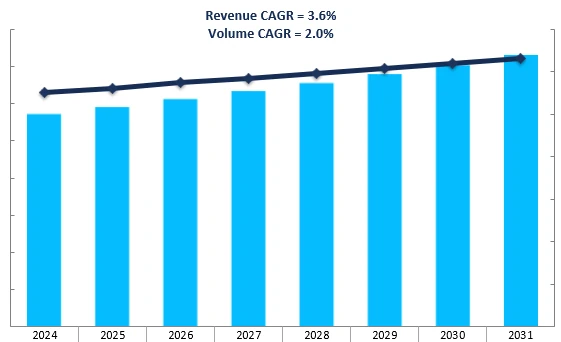
By 2031, the Building Insulation Materials Market is projected to reach USD 36.6 billion, growing at a CAGR of about 3.6% over the forecast period. This moderate but stable growth reflects the market’s relatively mature nature in developed regions, offset by expanding construction activity and rising insulation penetration in emerging economies.
Spending growth is expected to be supported by retrofitting programs, higher insulation performance standards, and gradual shifts toward premium and sustainable insulation solutions. Although improvements in insulation performance may reduce material volume per building, pricing trends and value-added features are expected to sustain revenue expansion across the forecast horizon.
Market Segmentation Analysis: Building Insulation Materials Market
The Building Insulation Materials Market is segmented by material type, application form, and geographic region. By material type, the market includes mineral wool (glass wool and stone wool), plastic foams (expanded and extruded polystyrene, polyurethane, and polyisocyanurate), phenolic foams, aerogels, and a growing category of bio-based insulation materials.
Mineral wool remains widely adopted due to its fire resistance, acoustic performance, and recyclability, particularly in commercial and industrial buildings. Plastic foams are extensively used in roofing, walls, and floors due to their high thermal resistance and moisture control properties. Meanwhile, bio-based insulation materials are gaining traction as sustainability considerations become more prominent in procurement decisions.
In terms of application, insulation materials are used in new construction as well as retrofit projects. Retrofit applications are increasingly important in mature markets, where upgrading existing buildings offers a cost-effective pathway to reduce emissions and energy consumption. Regionally, adoption patterns vary significantly, reflecting differences in construction practices, climate conditions, and regulatory frameworks.
Overall, segmentation highlights a market balancing performance-driven material selection with emerging sustainability priorities, reinforcing the strategic role of insulation materials across diverse construction environments.
Growth Drivers: Building Insulation Materials Market
Several factors are driving growth in the building insulation materials market.
First, global construction activity continues to expand, particularly in Asia Pacific, the Middle East, and parts of Latin America, directly increasing demand for insulation materials.
Second, tightening building energy codes and sustainability regulations are mandating higher insulation standards, especially in North America and Europe.
Third, rising energy costs are encouraging building owners to invest in insulation upgrades to reduce long-term operational expenses.
Fourth, climate change adaptation strategies are elevating the role of insulation in managing heat stress and extreme weather conditions.
Finally, increasing awareness of carbon reduction and circular economy principles is driving interest in low-carbon and bio-based insulation materials within the Building Insulation Materials Market.
Growth Restraints: Building Insulation Materials Market
Despite favorable drivers, the Building Insulation Materials Market faces several restraints. Improvements in insulation performance over time reduce material volumes required to achieve the same thermal outcomes, limiting volume-based growth. Variability in building design, size, and height also affects insulation demand, making growth less directly correlated with construction area.
In addition, uneven enforcement of building codes in developing regions slows adoption, while high testing and certification costs can delay the commercialization of innovative insulation materials. These factors collectively moderate growth momentum in the building insulation materials market.
Competitive Landscape: Building Insulation Materials Market
The building insulation materials market is characterized by a moderately consolidated yet highly competitive environment, with more than 250 active manufacturers and suppliers globally, many generating annual revenues exceeding USD 1.0 million. Competition intensity varies by region, material type, and application, reflecting differences in building codes, construction practices, and insulation penetration rates. Large multinational players coexist with regional manufacturers that compete on pricing, local distribution strength, and application-specific solutions.
Competitive differentiation within the Building Insulation Materials Market is primarily driven by cost efficiency, thermal performance, product reliability, innovation capabilities, and sustainability credentials. As insulation materials increasingly contribute to regulatory compliance and carbon reduction goals, manufacturers are investing in low-carbon production processes, recycled content, and improved fire and acoustic performance. Strong technical support, installer training, and long-term customer relationships are also critical competitive factors, particularly in commercial and infrastructure projects.
Key end-user verticals shaping competitive strategies include residential construction, commercial buildings, industrial facilities, and public infrastructure projects. Demand from large-scale housing developments and retrofit programs has encouraged suppliers to expand portfolios across mineral wool, plastic foams, and emerging bio-based insulation solutions. At the same time, distribution structures typically combine direct sales, distributor networks, wholesalers, and retail channels, enabling broad market reach across both professional and do-it-yourself segments.
Strategic mergers, acquisitions, and capacity expansions continue to reshape the competitive environment in the building insulation materials market. Leading manufacturers pursue acquisitions to strengthen geographic presence, secure raw material access, and accelerate innovation in sustainable insulation technologies. Looking ahead, competition is expected to intensify as regulatory pressure increases and customers prioritize performance, lifecycle value, and environmental impact, reinforcing the shift from volume-driven competition toward value-based differentiation in the Building Insulation Materials Market.
Research Scope
Highlights
Scope of Analysis
Segmentation
Descriptions
Why Is It Increasingly Difficult to Grow?
The Strategic Imperative 8™
The Impact of the Top 3 Strategic Imperatives on the Construction Insulation Materials Industry
Value Chain
Competitive Environment
Key Competitors by Material
Sustainability in Construction Insulation
Insulation and Off-Site Construction
New Products
Hemp
Sheep’s Wool
Trade Organizations in the Construction Insulation Sector
Growth Metrics
Growth Drivers
Growth Restraints
Forecast Considerations, Volume and Pricing
Growth Metrics: Model Variables, Regional and Global
Forecast Assumptions
Revenue and Volume Forecast
Revenue Forecast by Material
Growth Metrics: Revenue by Material, Regional and Global, 2024 and 2031
Volume Forecast by Material
Growth Metrics: Volume by Material, Regional and Global, 2024 and 2031
Revenue Forecast by Region
Volume Forecast by Region
APAC Construction Insulation Market
MEASA Construction Insulation Market
Latin American Construction Insulation Market
North American Construction Insulation Market
European Construction Insulation Market
Volume Share Forecast by Use: New Build or Retrofit, 2024 and 2031
Retrofitting
Revenue Share
Movements in the Market, 2020–2025
Growth Opportunity 1: Solar Reflective Coatings to Future-proof Homes from Heat Waves
Growth Opportunity 2: Non-fossil Insulation Materials
Growth Opportunity 3: Retrofitting in Developed Countries
Growth Opportunity 4: Modular Construction
Growth Opportunity 5: Insulation from Denim and Cotton
Benefits and Impacts of Growth Opportunities
Next Steps
List of Exhibits
Legal Disclaimer
Frequently Asked Questions (FAQ) – Building Insulation Materials Market
1. What is the building insulation materials market?
2. How large is the global Building Insulation Materials Market?
3. What is the expected growth rate of the building insulation materials market?
4. Which materials are commonly used in building insulation?
5. What factors are driving growth in the Building Insulation Materials Market?
6. What challenges limit growth of the building insulation materials market?
7. Which regions dominate the Building Insulation Materials Market?
8. Which region is expected to grow the fastest?
9. How do regulations impact the Building Insulation Materials Market?
10. What is the future outlook for the Building Insulation Materials Market?
Speak directly with our analytics experts for tailored recommendations.
Recent related CASE & Construction Chemicals research
24 Jul 2026 | Global | Market Research
Regulatory Trends Impacting the Chemical Industry, 2026
This study analyzes the impact of evolving regulatory frameworks across the chemical industry, focusing on both product-level and end-industry regulations. The scope spans key product segments including coatings, adhesives and sealants, polymers and composites, fuels and lubricants, and process chem...
22 Apr 2026 | Global | Technology Research
Data-Driven Materials Informatics for Accelerated Polymer, Coatings, and Catalyst Innovation
Data-driven materials informatics is transforming the discovery and development of advanced materials, enabling faster innovation across polymers, coatings, and catalytic systems. By integrating experimental data, computational simulations, and AI and ML models, these platforms enable predictive des...
10 Mar 2026 | Global | Strategic Imperatives
Top 10 Strategic Imperatives in the Construction Materials Industry, 2026
This report examines the key strategic transformations shaping growth in the construction materials industry throughout 2026 and beyond. It analyzes the impacts of geopolitical instability on supply chains, resulting in cost volatility, increased localization of production, and diversification of ra...
22 Jan 2026 | Global | Technology Research
Nanoporous Catalysts for Optimized Efficiency in Chemical Processing and Industrial Reactions
Global industries are entering a new phase of efficiency-driven transformation, where material innovation underpins competitive advantage and sustainability compliance. Within this landscape, nanoporous catalysts have emerged as a pivotal enabler—driving faster reaction kinetics, superior selectivit...
24 Dec 2025 | Global | Market Research
Digital Transformation in the Construction Materials Industry, Global, 2025
Digital transformation in the building materials industry involves integrating digital technologies and data-driven processes across every facet of a company’s operations, including supply chain management, design, production, sourcing, and customer interactions. The goals are to increase productivi...
Purchase includes:
- Report download
- Growth Dialog™ with our experts
Growth Dialog™
A tailored session with you where we identify the:- Strategic Imperatives
- Growth Opportunities
- Best Practices
- Companies to Action
Impacting your company's future growth potential.
Author: Leonardo Sampieri
| Deliverable Type | Market Research |
|---|---|
| Industries | Chemicals and Materials |
| No Index | No |
| Is Prebook | No |
| Keyword 1 | building insulation materials market |
| Keyword 2 | thermal insulation industry |
| Keyword 3 | sustainable construction materials |
| Podcast | No |
| Predecessor | K5AF-01-00-00-00 |
| WIP Number | KBD2-01-00-00-00 |