 USD
USD GBP
GBP  CNY
CNY  EUR
EUR  INR
INR  JPY
JPY  MYR
MYR  ZAR
ZAR  KRW
KRW  THB
THB 


Cell Biology Research Market, Global, 2024–2030
Cell Biology Research is Experiencing Transformational Growth due to Advances in Single-Cell Technologies and Genomics Tools
18-Aug-2025
Global
Market Research
KB9C-01-00-00-00
HC_2025_33733
Report Summary: Cell Biology Research Market
The global cell biology research market size was valued at USD 19.94 billion in 2024 and is projected to reach USD 30.75 billion by 2030, growing at a CAGR of 7.5% during the forecast period. The market expansion is primarily driven by rapid advancements in single-cell technologies, increasing adoption of genomics tools, and the rising demand for precision medicine. The evolution of the cell biology market is closely tied to innovations in high-throughput screening, live-cell imaging, and gene editing, which are significantly enhancing research efficiency and outcomes.
The growing integration of automation and artificial intelligence is transforming laboratory workflows, accelerating discoveries across the cell analysis market. The emergence of the Automated Cell Biology Systems Market is further supporting scalability, reproducibility, and data-driven experimentation. Additionally, increased funding from pharmaceutical and biotechnology companies, along with strong academic collaborations, is reinforcing market growth.
Key Market Trends & Insights
- North America accounted for the largest revenue share in the cell biology research market in 2024, supported by strong R&D infrastructure and funding.
- Asia-Pacific is expected to witness the fastest growth in the cell biology market, driven by expanding biotech ecosystems and increasing investments.
- By product type, consumables and reagents dominate the cell analysis market due to their recurring demand.
- By technology, single-cell analysis and CRISPR-based gene editing are leading innovation areas in the cell biology research market.
- Automation and AI integration are accelerating the growth of the Automated Cell Biology Systems Market, improving efficiency and scalability.
Market Size & Forecast
- 2024 Market Size: USD 19.94 Billion
- 2030 Projected Market Size: USD 30.75 Billion
- CAGR (2024–2030): 7.5%
The cell biology research market is poised for sustained growth as technological advancements, increasing disease burden, and the shift toward personalized therapies continue to drive demand across the cell biology market and cell analysis market.
Market Overview & Trends: Cell Biology Research Market
The cell biology research market is undergoing structural transformation as advanced technologies redefine how cellular processes are studied and applied. A major trend shaping the cell biology market is the integration of single-cell sequencing, which enables unprecedented resolution in understanding cellular heterogeneity. This has become critical for oncology, immunology, and regenerative medicine, significantly expanding the scope of the cell analysis market.
Another defining trend is the rapid adoption of automation. The Automated Cell Biology Systems Market is expanding as laboratories prioritize throughput, accuracy, and reproducibility. Automation platforms integrated with artificial intelligence are streamlining workflows, reducing manual errors, and accelerating discovery timelines.
Additionally, CRISPR-based gene editing is revolutionizing experimental biology, enabling precise manipulation of genetic material. This advancement is not only driving innovation within the cell biology research market but also fostering the development of targeted therapies.
Digitalization is also a key trend, with cloud-based platforms and bioinformatics tools becoming essential components of modern research. These tools allow researchers to manage, analyze, and interpret large datasets generated through high-throughput experiments.
From a structural standpoint, the cell biology market is shifting toward integrated solutions that combine instruments, consumables, and software. This convergence enhances operational efficiency and supports complex experimental designs.
Furthermore, increasing demand for personalized medicine is pushing the boundaries of the cell analysis market, encouraging deeper insights into cellular mechanisms. The Automated Cell Biology Systems Market is expected to play a pivotal role in scaling these insights for clinical applications.
Scope of Analysis: Cell Biology Research Market
The cell biology research market analysis covers a comprehensive evaluation of global industry dynamics from 2024 to 2030, with 2024 as the base year. The study examines technological advancements, market drivers, restraints, and emerging opportunities across the cell biology market and the broader cell analysis market.
The scope includes a detailed assessment of products such as instruments, consumables, reagents, and software, along with their applications across pharmaceutical companies, academic institutions, and clinical laboratories. The analysis also explores technological domains including single-cell analysis, live-cell imaging, high-throughput screening, flow cytometry, cell culture, and gene editing technologies.
Geographically, the cell biology research market is segmented into North America, Europe, Asia-Pacific, Latin America, and the Middle East & Africa, providing a global perspective on growth patterns and adoption trends.
The study further evaluates innovation trends such as AI-driven analytics and automation, which are shaping the Automated Cell Biology Systems Market. It also considers the role of regulatory frameworks and funding initiatives in influencing market expansion.
By integrating qualitative insights with quantitative forecasting, the report delivers a holistic understanding of the cell biology market, enabling stakeholders to identify growth opportunities and strategic priorities within the evolving cell analysis market landscape.
Revenue & Spending Forecast: Cell Biology Research Market
The cell biology research market is projected to grow steadily, reflecting increasing demand across the cell biology market and cell analysis market. Global revenue is estimated to rise from approximately USD 19.94 billion in 2024 to USD 30.75 billion by 2030, representing a compound annual growth rate (CAGR) of 7.5%.
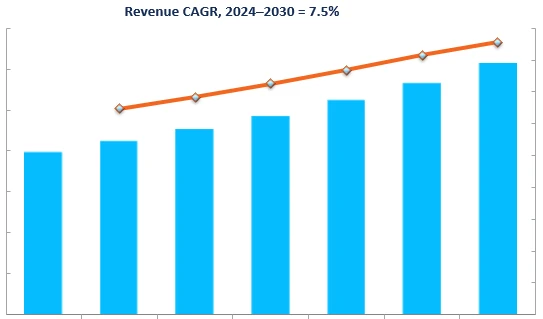
This growth trajectory is driven by continuous innovation in research technologies, expanding applications in drug discovery, and the rising importance of cellular-level insights in precision medicine. The Automated Cell Biology Systems Market is expected to contribute significantly to this expansion by improving operational efficiency and enabling high-throughput experimentation.
Investment in advanced tools such as CRISPR, next-generation sequencing, and AI-driven analytics is further accelerating spending within the cell biology research market. Additionally, increasing funding from governments and private organizations is supporting infrastructure development and research initiatives.
The cell biology market is also benefiting from the growing demand for personalized therapies, which require detailed cellular analysis. This trend is reinforcing the importance of the cell analysis market as a critical component of modern healthcare research.
Market Segmentation Analysis: Cell Biology Research Market
The cell biology research market is segmented across product type, end user, technology, and region, reflecting the diverse ecosystem of the cell biology market.
By product type, the market includes instruments, consumables and reagents, and software. Instruments such as imaging systems and flow cytometers represent a significant share, while consumables generate recurring revenue streams, reinforcing the stability of the cell analysis market. Software solutions are gaining importance as data complexity increases.
In terms of end users, the cell biology research market serves pharmaceutical and biotechnology companies, academic and research institutions, and clinical laboratories. Pharmaceutical firms dominate due to their extensive R&D activities, while academia drives foundational research within the cell biology market.
Technologically, the market is highly diversified. Key segments include single-cell analysis, live-cell imaging, high-throughput screening, flow cytometry, cell culture, and CRISPR-based gene editing. These technologies collectively define the innovation landscape of the cell analysis market and are central to advancements in disease research and drug development.
Regionally, North America leads the cell biology research market, supported by strong infrastructure and funding. Europe follows with robust research initiatives, while Asia-Pacific is emerging rapidly due to expanding biotech investments.
The Automated Cell Biology Systems Market cuts across all segments, enhancing efficiency and scalability. Overall, segmentation highlights the interconnected nature of products, technologies, and applications within the cell biology market.
Growth Drivers: Cell Biology Research Market
The cell biology research market is propelled by several strong growth drivers shaping the future of the cell biology market and cell analysis market.
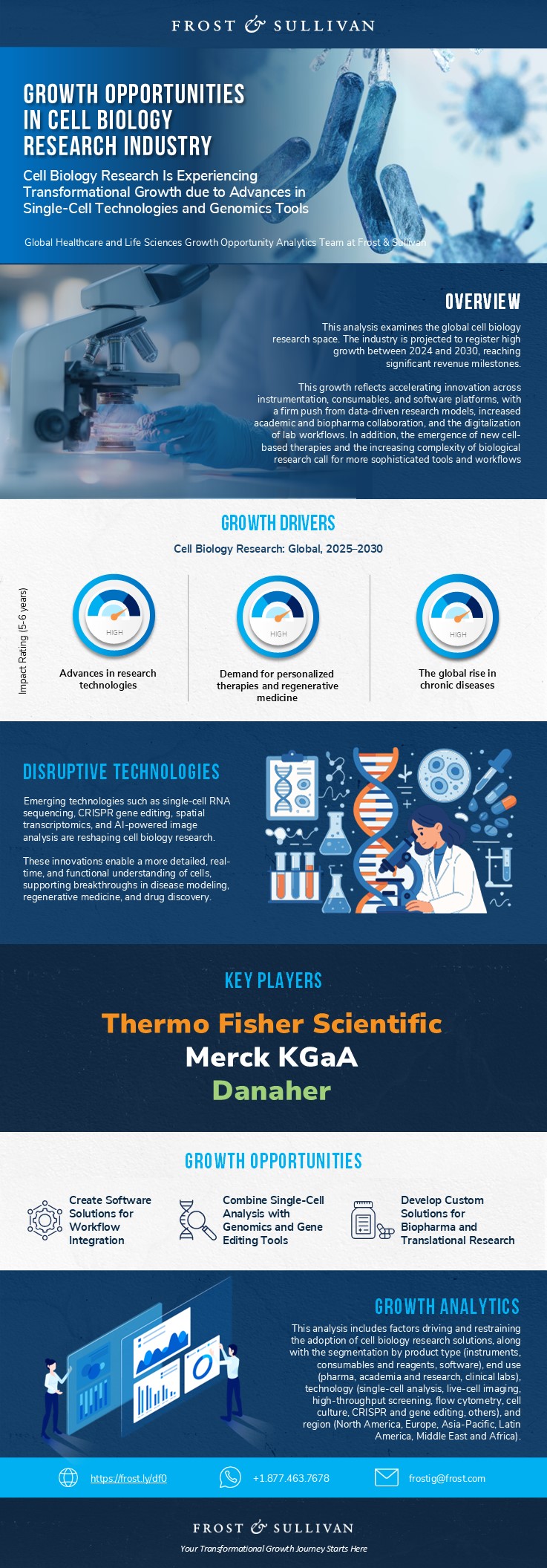
First, technological advancements such as CRISPR/Cas9 and next-generation sequencing are revolutionizing research capabilities. These innovations enable precise genetic modifications and deeper insights into cellular mechanisms, significantly boosting the cell biology research market.
Second, the increasing demand for personalized medicine and regenerative therapies is driving adoption across the cell biology market. Stem cell research and gene therapies are expanding rapidly, reinforcing the importance of the cell analysis market.
Third, the rising prevalence of chronic diseases, including cancer and cardiovascular conditions, is fueling research activity. This trend is creating sustained demand within the cell biology research market for advanced tools and technologies.
Fourth, strategic collaborations between academia and industry are accelerating innovation. These partnerships enhance funding, resource sharing, and knowledge exchange, benefiting the cell biology market.
Finally, the growth of the Automated Cell Biology Systems Market is transforming laboratory operations. Automation improves efficiency, reproducibility, and scalability, making it a critical driver of market expansion.
Collectively, these factors are strengthening the foundation of the cell biology research market and ensuring long-term growth.
Growth Restraints: Cell Biology Research Market
Despite strong growth potential, the cell biology research market faces several challenges that may hinder expansion across the cell biology market and cell analysis market.
One of the primary restraints is the high cost of advanced research tools and technologies. Instruments such as sequencing platforms and imaging systems require significant capital investment, limiting adoption among smaller institutions within the cell biology research market.
Another major challenge is the shortage of skilled professionals capable of handling complex technologies like CRISPR and next-generation sequencing. This skills gap affects efficiency and slows progress in the cell biology market.
Technical limitations also pose constraints. Issues related to data interpretation, accuracy, and reproducibility can impact outcomes within the cell analysis market.
Additionally, data privacy and security concerns are becoming increasingly important, especially with the use of patient-derived genetic data. Regulatory frameworks such as data protection laws can create compliance challenges for organizations in the cell biology research market.
The Automated Cell Biology Systems Market also faces barriers related to integration and initial setup costs.
Competitive Landscape: Cell Biology Research Market
The cell biology research market is highly competitive, with over 100 companies actively participating across the cell biology market and cell analysis market. Key players focus on innovation, product performance, cost efficiency, and user-friendly solutions to maintain a competitive edge.
Leading companies such as Thermo Fisher Scientific, Merck KGaA, Danaher, and BD Biosciences dominate the cell biology research market, collectively holding a significant revenue share. These companies invest heavily in R&D and strategic acquisitions to strengthen their positions.
Other notable players include Roche, Bio-Rad Laboratories, Agilent Technologies, Eppendorf, Revvity, and GE Healthcare, contributing to the diversity of the cell biology market.
Mergers and acquisitions are a defining feature of the competitive landscape. Strategic deals are enabling companies to expand capabilities, particularly within the Automated Cell Biology Systems Market and advanced therapeutic segments.
Competitive factors include technological innovation, reliability, scalability, and integration of analytics solutions. Companies are increasingly focusing on AI-driven platforms to enhance value within the cell analysis market.
Overall, the cell biology research market is characterized by strong competition, continuous innovation, and strategic collaborations, positioning it for sustained growth in the coming years.
Scope of Analysis
Segmentation
Why is it Increasingly Difficult to Grow?
The Strategic Imperative 8
The Impact of the Top 3 Strategic Imperatives on the Cell Biology Research Industry
Competitive Environment
Key Competitors
Growth Metrics
Growth Drivers
Growth Restraints
Forecast Considerations
Revenue Forecast
Revenue Forecast by Product
Revenue Forecast by End User
Revenue Forecast by Technology
Revenue Forecast by Region
Revenue Forecast Analysis
Revenue Forecast Analysis by Product
Revenue Forecast Analysis by End User
Revenue Forecast Analysis by Technology
Revenue Forecast Analysis by Region
Pricing Trends and Forecast Analysis
Revenue Share
Company Matrix
Company Portfolio
Revenue Share Analysis
Companies to Watch: Live-Cell Imaging
Companies to Watch: High-Throughput Screening
Companies to Watch: Flow Cytometry
Companies to Watch: Cell Culture
Companies to Watch: CRISPR and Gene Editing
Companies to Watch: Others*
Growth Metrics
Revenue Forecast
Revenue Forecast by Region
Forecast Analysis
Growth Metrics
Revenue Forecast
Revenue Forecast by Region
Forecast Analysis
Growth Metrics
Revenue Forecast
Revenue Forecast by Region
Forecast Analysis
Growth Opportunity 1: Create Software Solutions for Workflow Integration
Growth Opportunity 2: Combine Single-Cell Analysis with Genomics and Gene Editing Tools
Growth Opportunity 3: Develop Custom Solutions for Biopharma and Translational Research
Benefits and Impacts of Growth Opportunities
Next Steps
List of Exhibits
Legal Disclaimer
Frequently Asked Questions (FAQ) – Cell Biology Research Market
1. What is the cell biology research market?
The cell biology research market refers to the global industry focused on studying cellular structure, function, and behavior using advanced tools such as imaging systems, genomics platforms, and analytical software.
2. What is the size of the cell biology market?
The market was valued at USD 19.94 billion in 2024 and is projected to reach USD 30.75 billion by 2030, growing at a CAGR of 7.5%.
3. What is driving growth in the cell analysis market?
Growth is driven by CRISPR gene editing, rising chronic diseases, and increasing demand for precision medicine and personalized therapies.
4. What is the Automated Cell Biology Systems Market?
It includes technologies that automate lab workflows, improving efficiency, reproducibility, and scalability in cell-based research.
5. Which region leads the cell biology research market?
North America leads due to strong research infrastructure, funding, and presence of major biotech and pharma companies.
6. Which region is growing fastest in the cell biology market?
Asia-Pacific is the fastest-growing region due to expanding biotech ecosystems and increasing investments.
7. What are the key technologies in the cell biology research market?
Technologies include single-cell analysis, live-cell imaging, high-throughput screening, flow cytometry, and CRISPR gene editing.
8. Who are the major companies in the cell biology market?
Major players include Thermo Fisher Scientific, Merck KGaA, Danaher, BD Biosciences, Roche, and Bio-Rad Laboratories.
9. What challenges affect the cell analysis market?
Challenges include high costs, lack of skilled professionals, data complexity, and genetic data privacy concerns.
10. How is AI impacting the cell biology research market?
AI enhances data analysis, improves accuracy, and supports automation in laboratory workflows.
Speak directly with our analytics experts for tailored recommendations.
Recent related In Vitro Diagnostics (IVD) research
18 Sep 2026 | Global | Frost Radar
Frost Radar™: Life Sciences Laboratory Information Management Systems, 2026
Laboratory information management systems (LIMS) have been used in life sciences since laboratories began digitizing sample tracking and data management in the 1970s. Modern LIMS solutions enhance efficiency by automating workflows, improving data accuracy, and enabling seamless integration and offe...
18 Sep 2026 | Global | Technology Research
Innovations and Growth Opportunities in AI-Enabled Discovery and Diagnostics, Precision Therapeutics, and Next-Generation Vaccine Platforms
This edition of the Life Science, Health & Wellness Technology Opportunity Engine (TOE) provides a comprehensive overview of breakthrough innovations transforming AI-enabled discovery, precision diagnostics, cell engineering, targeted therapeutics, vaccines, and skin health across oncology, metaboli...
27 Aug 2026 | Global | Frost Radar
Frost Radar: AI-Powered Molecular Diagnostics, 2026
AI-powered molecular diagnostics is an emerging and moderately fragmented industry that includes molecular diagnostics companies, precision medicine platforms, sequencing specialists, AI-driven analytics providers, and disease-focused biotechnology companies. No single company has dominated, present...
25 Aug 2026 | Global | Technology Research
Breakthrough Innovations in Point-of-Care Diagnostics
This research analyzes how point-of-care (PoC) diagnostics is evolving from simple tests to decentralized, connected, and clinically actionable testing platforms across hospitals, outpatient settings, homes, and pharmacies.The study assesses key technology shifts, including rapid molecular testing, ...
21 Aug 2026 | Global | Technology Research
Innovations and Growth Opportunities in AI-Driven Biomanufacturing, Advanced Cell and Gene Therapies, and Precision Immunotherapy
This edition of the Life Science, Health & Wellness Technology Opportunity Engine (TOE) provides a comprehensive overview of breakthrough innovations reshaping biomanufacturing, cell and gene therapy, precision immunotherapy, anti-infectives, and neurotherapeutics across oncology, infectious disease...
Purchase includes:
- Report download
- Growth Dialog™ with our experts
Growth Dialog™
A tailored session with you where we identify the:- Strategic Imperatives
- Growth Opportunities
- Best Practices
- Companies to Action
Impacting your company's future growth potential.
Author: Lucila Martin
| Deliverable Type | Market Research |
|---|---|
| Industries | Healthcare |
| No Index | No |
| Is Prebook | No |
| Keyword 1 | single-cell analysis technologies |
| Keyword 2 | stem cell research |
| Keyword 3 | life sciences R&D platforms |
| Podcast | No |
| Predecessor | None |
| WIP Number | KB9C-01-00-00-00 |