 USD
USD GBP
GBP  CNY
CNY  EUR
EUR  INR
INR  JPY
JPY  MYR
MYR  ZAR
ZAR  KRW
KRW  THB
THB 


High Number of Cyberattacks is Driving Transformational Growth in Data Security Platforms
27-Nov-2025
Global
Market Research
PG5H-01-00-00-00
AE_2025_34139
Report Summary: Data Security Platform Market
The global data security platform market size was valued at USD 2,457.2 million in 2024 and is projected to reach USD 9,015.9 million by 2030, expanding at a CAGR of 23.2% from 2025 to 2030. Rising cloud adoption, growing regulatory compliance needs, and increasing cyber threats are accelerating the adoption of unified, intelligent security platforms across enterprises. Organizations are transitioning from siloed security tools to integrated, automated platforms capable of securing data across hybrid, multi-cloud, and on-premises environments, contributing to sustained market growth.
Key Market Trends & Insights
- North America accounted for the largest share of the global data security platform market in 2024.
- Increasing cloud migration and remote-work expansion are driving enterprise demand for unified data-security controls.
- Adoption of zero-trust architecture is accelerating, especially in BFSI, healthcare, technology, and government sectors.
- AI-driven threat analytics and behavioral monitoring gained strong traction for real-time risk detection.
- Increasing regulatory enforcement across the EU, APAC, and North America strengthened demand for automated compliance capabilities.
Market Size & Forecast
- 2024 Market Size: USD 2,457.2 Million
- 2030 Projected Market Size: USD 9,015.9 Million
- CAGR (2025–2030): 23.2%
- North America: Largest Regional Market in 2024
- Asia Pacific: Fastest Growing Market during the forecast period
The accelerated digitization of enterprises, rising cyber-attack sophistication, and the expanding volume of sensitive data across industries are propelling demand for advanced data security platforms. Organizations across BFSI, healthcare, telecom, retail, and government sectors are increasingly implementing AI-enhanced data-security frameworks to secure critical workloads, manage privacy compliance, and strengthen cyber resilience. Growing reliance on SaaS applications, multi-cloud deployments, and API-driven ecosystems is further boosting the need for automated, scalable, and governance-focused security architecture across global markets.
Market Overview & Trends: Data Security Platform Market
The data security platform market has entered an era defined by architectural complexity, real-time threat detection, and enterprise-wide data governance transformation. Organizations now operate across sprawling IT environments—multi-cloud platforms, edge devices, remote work infrastructures, SaaS workloads, and on-premises systems. This fragmentation has significantly increased risk exposure and created the need for consolidated platforms that unify encryption, access management, monitoring, policy enforcement, and threat analytics. As a result, the Data Security Platforms Market is shifting from legacy endpoint-centric approaches to holistic frameworks that safeguard data throughout its lifecycle.
A notable trend reshaping the data security market is the rising adoption of zero-trust architecture (ZTA), where continuous verification, least-privilege access, and identity-centric protections are central. Zero-trust has become the strategic foundation for data-centric security, especially within organizations managing sensitive customer data, regulated information, and mission-critical workloads. At the same time, the threat landscape is expanding due to advanced persistent threats (APTs), double-extortion ransomware, AI-enhanced malware, insider risk escalation, and API-based vulnerabilities. These threats are accelerating the adoption of automated detection mechanisms that rely on machine learning, behavioral analytics, and anomaly-detection engines to identify unusual access patterns.
Another significant shift involves the growing influence of data protection regulations. Global frameworks—GDPR, CCPA, PCI-DSS, HIPAA, India’s DPDP Act, and APAC-specific privacy mandates—are tightening compliance expectations, compelling enterprises to adopt structured data-governance mechanisms. As a result, the data protection market is underpinned not only by cybersecurity imperatives but also by legal exposure, operational risk, and brand-protection requirements.
Cloud-native security technologies are emerging as a central investment area. Cloud Access Security Brokers (CASB), Secure Access Service Edge (SASE), data-loss prevention (DLP), key-management systems, and confidential computing are reshaping how enterprises secure distributed data. At the same time, platform vendors increasingly emphasize seamless interoperability, given the challenges of managing dozens of overlapping security tools.
Furthermore, the integration of AI and automation has become a cornerstone trend. These technologies enable predictive risk scoring, policy auto-tuning, dynamic access decisions, and real-time orchestration of controls across multicloud environments. The future of the data security platform market is also being shaped by confidential computing, homomorphic encryption, secure enclave technologies, and advanced tokenization frameworks, which enhance privacy-preserving analytics while ensuring regulatory compliance.
Overall, market dynamics signal a decisive shift toward unified platforms that reduce complexity, improve visibility, and deliver centralized governance—positioning the Data Security Platforms Market as a critical component of global digital transformation.
Scope of Analysis: Data Security Platform Market
This analysis offers an in-depth evaluation of the global data security platform market, focusing on enterprise adoption patterns, technology evolution, competitive dynamics, regulatory influence, and long-term demand patterns. The study assesses the full lifecycle of data protection—from data creation and classification to access management, monitoring, and policy enforcement—across hybrid, multicloud, and on-premises infrastructures. The scope includes security suites that consolidate DLP, encryption, key management, privacy governance, analytics-driven risk management, insider-threat monitoring, and automated compliance reporting.
The geographic assessment covers North America, Europe, Asia-Pacific, Middle East, and Latin America, emphasizing regional maturity, regulatory strictness, cloud transformation, and cybersecurity investment trends. Vertical analysis spans BFSI, healthcare, IT & telecom, government, retail, manufacturing, eCommerce, and critical infrastructure sectors, all of which rely on secure data workflows and high-assurance protection mechanisms.
The report evaluates strategic drivers shaping the data protection market, including increasing cyberattacks, cloud adoption trends, governance obligations, and the integration of AI-driven security analytics. It also reviews market restraints such as talent shortages, integration complexity, rising encryption-related overheads, and budget constraints among small and mid-sized organizations. Competitive analysis covers leading vendors offering consolidated security platforms, emerging innovators delivering AI-native capabilities, and niche providers specializing in vertical-specific data-security requirements.
Market Segmentation Analysis: Data Security Platform Market
The data security platform market can be segmented across multiple strategic dimensions based on deployment environment, security function, organizational size, and end-user industries. Each segment plays a unique role in shaping demand patterns and influencing investment priorities across global enterprises.
1. By Deployment Environment
Organizations are rapidly increasing adoption of cloud-native security platforms as workloads migrate to public and hybrid clouds. Cloud-based platforms support rapid scaling, automated updates, unified policy governance, and enhanced visibility across disparate applications. On-premises deployments persist among enterprises requiring stringent data residency, highly sensitive information processing, or legacy-system compatibility. Hybrid models are increasingly common, enabling unified security across cloud and on-prem ecosystems.
2. By Security Function
Data security platforms integrate multiple layers of protection, including encryption & key management, data-loss prevention (DLP), identity & access management (IAM), tokenization, monitoring & analytics, privacy governance, insider-risk management, and automated compliance tooling. Centralizing these functions allows enterprises to reduce tool sprawl and achieve end-to-end visibility across their data estate.
3. By Organization Size
Large enterprises dominate spending due to complex, distributed infrastructures and heightened regulatory exposure. SMEs are increasingly adopting unified platforms due to ease of deployment, SaaS-based pricing, and reduced operational overhead. The mid-market segment shows rising interest in AI-driven automated security due to talent shortages.
4. By End-User Industry
The data protection market is particularly strong in BFSI, healthcare, government, telecom, and technology sectors, where sensitive data exposure carries significant operational and legal risks. Retail, manufacturing, energy, eCommerce, and transportation sectors are accelerating investments as digital transformation expands their attack surfaces. Public-sector digitalization and smart-city development further support adoption.
Overall, segmentation patterns indicate a strong shift toward unified, cloud-first, AI-enhanced security platforms that simplify governance and deliver real-time insights across diverse environments.
Revenue & Spending Forecast: Data Security Platform Market
The global data security platform market is on a robust growth trajectory as enterprises increasingly prioritize integrated, analytics-driven protection suites over isolated legacy tools. Market revenue is projected to rise significantly from USD 2,457.2 million in 2024 to USD 9,015.9 million by 2030, driven by rapid cloud adoption, stringent data-protection regulations, and escalating cyber threats targeting sensitive digital assets.
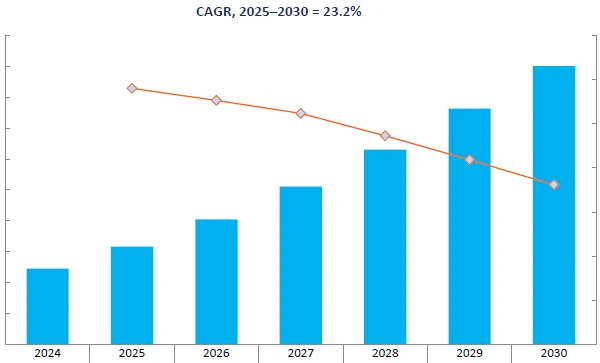
Enterprises worldwide are expanding spending on encryption, privacy governance, access control, and automated compliance frameworks that support hybrid and multi-cloud environments. Growing API ecosystems, workload distribution, remote workforce expansion, and AI-driven applications have heightened the urgency for comprehensive protection across structured and unstructured data.
Spending patterns also reflect increasing reliance on unified data-security suites that consolidate monitoring, threat detection, tokenization, and policy enforcement. Investments in behavioral analytics, insider-risk detection, and machine-learning-based risk scoring are rising as organizations seek to address sophisticated ransomware, credential-theft campaigns, and supply-chain attacks. Regulatory compliance costs continue to push enterprises toward platforms that automate audits, reporting, and cross-border data governance.
Overall, forecast indicators signal strong acceleration in global spending as enterprises adapt to evolving security challenges and manage compliance pressures more effectively within the data security market.
Growth Drivers: Data Security Platform Market
Several structural forces are fueling the rapid expansion of the data security platform market, beginning with the intensification of global cybersecurity threats. Enterprises face more sophisticated ransomware, insider abuse, state-sponsored attacks, and credential-theft campaigns, all targeting sensitive data assets. This risk surge is driving adoption of AI-driven monitoring, adaptive authentication, and behavior-based controls.
Cloud transformation is another major catalyst. As organizations migrate mission-critical workloads to public and hybrid clouds, the need for unified policy governance, encryption, and access control across distributed environments becomes essential. The proliferation of SaaS applications and API-centric integration frameworks further amplifies the importance of centralized data-security platforms.
Regulatory pressure is also a decisive driver. Global frameworks such as GDPR, CCPA, DPDP Act, and industry-specific mandates (HIPAA, PCI-DSS, SOX) compel enterprises to maintain precise data-governance controls. This intensifies spending across the data protection market, particularly for automated compliance, privacy governance, and real-time audit capabilities.
Additionally, enterprise adoption of zero-trust architecture has accelerated as organizations transition from perimeter-based models to data-centric, identity-driven approaches. Zero-trust prioritizes continuous verification and minimal access privileges, both of which require robust data-security integration.
The rise of AI, IoT, and edge computing also expands the attack surface, creating new vulnerabilities that demand context-aware, high-assurance protection—further accelerating market growth.
Growth Restraints: Data Security Platform Market
Despite strong expansion, the data security platform market faces several operational and structural constraints. The complexity of integrating numerous security tools remains a major challenge, especially for enterprises with legacy systems or siloed architectures. Migration to unified platforms often requires substantial planning, data reclassification, and process changes.
Cost is another barrier, particularly for mid-sized organizations. While cloud-based platforms reduce operational overhead, advanced AI-driven capabilities, encryption infrastructure, and compliance modules can require substantial upfront investment. This is especially challenging in sectors with limited cybersecurity budgets.
A global shortage of cybersecurity talent also limits adoption. Implementing advanced data-security strategies requires specialized expertise in privacy governance, encryption key management, and hybrid-cloud security. Many organizations lack internal skills to deploy, optimize, and maintain sophisticated platforms.
Additionally, heavy encryption and tokenization may introduce performance overhead, affecting latency-sensitive applications. Enterprises must carefully balance security with operational efficiency.
Lastly, evolving regulations introduce uncertainty and increase compliance complexity across geographies. While regulatory demand propels spending in the data protection market, inconsistencies between jurisdictions complicate implementation for multinational enterprises.
Competitive Landscape: Data Security Platform Market
Competition within the data security platform market is intensifying as global vendors strive to offer unified, cloud-first, AI-driven platforms that address complex regulatory and operational challenges. Market leaders typically provide integrated suites combining DLP, encryption, key management, identity governance, privacy monitoring, and analytics-driven risk detection. These vendors leverage strong enterprise relationships, extensive partner ecosystems, and deep integration across cloud platforms.
A second category includes cloud-native innovators specializing in confidential computing, tokenization, privacy-enhancing technologies, and zero-trust data controls. These companies differentiate through advanced automation, real-time analytics, and simplified deployment models tailored for multi-cloud environments.
Emerging players focus on niche capabilities such as insider-risk detection, behavioral analytics, secure enclaves, or sector-specific compliance. Their agility and specialization appeal to industries with unique privacy and data-handling requirements.
Competitive activity is also shaped by strategic acquisitions as vendors consolidate overlapping technologies and expand their portfolio breadth. Partnerships between data-security firms, hyperscale cloud providers, and identity-governance vendors are increasingly common, reflecting the need for integrated solutions.
Overall, the landscape is transitioning toward platform consolidation, deeper analytics, and frictionless deployment—reinforcing the global shift toward centralized, unified security governance across the data security market.
Scope of Analysis
Segmentation
Customer Segmentation
Research Methodology
Why is it Increasingly Difficult to Grow?
The Strategic Imperative 8™
The Impact of the Top 3 Strategic Imperatives on the Data Security Platforms Industry
Competitive Environment
Key Competitors
Forces Shaping the Modern Data Landscape
Key Challenges in the Data Security Landscape
Why Legacy Data Security Tools Fall Short
Initial Definition Rationale
Refined Definition for DSPs
Visualizing DSPs
Customer Expectations for Core Capabilities
Future Trends and Emerging Capabilities
Decision-Making Criteria
Compliance and Regulatory Considerations
DSP Users
Observations on the DSP Market
Customer Landscape for DSP
DSP Market Vendors
Growth Metrics
Growth Drivers
Growth Driver Analysis
Growth Restraints
Growth Restraint Analysis
Forecast Considerations
Revenue Forecast
Revenue Forecast by Region
Revenue Forecast Analysis
Revenue Forecast Analysis by Region
Pricing Trends and Forecast Analysis
Revenue Share by Vertical
Revenue Share by Horizontal
Revenue Share by Region
Revenue Share of Vendors
Recommendations for Evaluating DSPs
Trade-Offs That CISOs Must Acknowledge in a DSP
Growth Opportunity 1: Improving Non-Historical Strengths to Deliver a Truly Holistic DSP
Growth Opportunity 2: Embedding DSP Capabilities Directly into AI and SaaS Environments
Growth Opportunity 3: Extending Data Lineage to Visualize and Simulate Possible Attack Paths
Benefits and Impacts of Growth Opportunities
Next Steps
List of Exhibits
Legal Disclaimer
Frequently Asked Questions (FAQ) – Data Security Platform Market
1. What is the data security platform market?
2. What is the revenue outlook for the Data Security Platforms Market?
3. What factors are driving the data security market growth?
4. Which region leads the global data protection market?
5. What are the main components of a data security platform?
6. How does cloud adoption influence the Data Security Platforms Market?
7. What challenges restrain market growth?
8. Which industries adopt data security platforms most actively?
9. What role does AI play in the data security market?
10. What is the future outlook for the Data Security Platforms Market?
Speak directly with our analytics experts for tailored recommendations.
Recent related Security research
07 Oct 2026 | Global | Frost Radar
Frost Radar™: Network Detection and Response, 2026
The rapid evolution of enterprise IT environments, driven by cloud adoption, connected devices, and hybrid infrastructure, has rendered legacy perimeter defenses inadequate. Network detection and response (NDR) has become a strategic imperative, providing continuous visibility across network traffi...
05 Oct 2026 | Global | Market Research
Workforce IAM and IGA, Global, 2025–2030
The workforce identity and access management (IAM) and identity governance and administration (IGA) market is a critical component of modern cybersecurity and digital transformation strategies. As organizations continue to adopt cloud services, hybrid work models, artificial intelligence, and increa...
24 Sep 2026 | Global | Market Research
Insights for CISOs: Securing Software Supply Chains in the Age of AI
Software supply chain security (SSCS) is increasingly a strategic business imperative as organizations rely more on open-source software, cloud-native architectures, AI-driven development, and autonomous development workflows. Modern software supply chains now extend beyond traditional code reposito...
22 Sep 2026 | Global | Market Research
AI Usage for Cybersecurity Operations, 2026–2030
Artificial intelligence is fundamentally transforming cybersecurity operations from reactive, analyst-driven monitoring into intelligent, adaptive, and increasingly autonomous security ecosystems. As organizations face escalating cyber threats, expanding attack surfaces, and persistent security tale...
18 Sep 2026 | Global | Market Research
Environmental Security Technologies, Global, 2026–2030
Environmental risks are expanding the role of security technologies beyond traditional asset and perimeter protection. Climate-related disasters, pollution, environmental crime, biodiversity loss, infrastructure disruption, and growing sustainability requirements are increasing the demand for techno...
Purchase includes:
- Report download
- Growth Dialog™ with our experts
Growth Dialog™
A tailored session with you where we identify the:- Strategic Imperatives
- Growth Opportunities
- Best Practices
- Companies to Action
Impacting your company's future growth potential.
Data security platforms (DSPs) have emerged as a solution to help enterprises deal with various data security challenges through a single console. DSPs' core promises include providing unified visibility and governance across structured, semi-structured, and unstructured data, contextual access and identity management, comprehensive data protection, and real-time detection and response. These core promises are anchored by a centralized policy and intelligence engine to build a unified understanding of data context and thus ensure all policy and enforcement decisions are consistent across the data life cycle.
This Frost & Sullivan study provides insight into the global DSP market by verticals and horizontals. It offers a global breakdown as well as regional breakdowns for North America, Europe, the Middle East and Africa (EMEA), Latin America (LATAM), and Asia-Pacific (APAC). The analysis covers factors driving and restraining the adoption of DSPs, revenue forecasts, pricing trends, competitive landscape trends, and insights for chief information security officers (CISOs). The study also identifies emerging growth opportunities that stakeholders and participants should consider and leverage. The base year is 2025, and the forecast period is from 2026 to 2030.
| Deliverable Type | Market Research |
|---|---|
| Industries | Aerospace, Defence and Security |
| No Index | No |
| Is Prebook | No |
| Keyword 1 | data security platforms |
| Keyword 2 | enterprise security market |
| Keyword 3 | cyber protection market |
| Podcast | No |
| Predecessor | None |
| WIP Number | PG5H-01-00-00-00 |