 USD
USD GBP
GBP  CNY
CNY  EUR
EUR  INR
INR  JPY
JPY  MYR
MYR  ZAR
ZAR  KRW
KRW  THB
THB 


Global Clinical Diagnostics Industry Growth Opportunities, 2026–2031
Next-Gen AI-Integrated Biomarkers and Smart Automation are Advancing Precision and Early Detection in Molecular and Point-of-Care Diagnostics
25-Mar-2026
Global
Market Research
PG8R-01-00-00-00
HC_2026_34465
Report Summary: Clinical Diagnostics Market
The global Clinical Diagnostics Market is witnessing steady expansion, supported by rising demand for early disease detection, increasing adoption of advanced diagnostic technologies, and growing investments in healthcare infrastructure. The clinical diagnostics industry is undergoing a structural shift toward intelligent, connected testing systems that enhance clinical decision-making and operational efficiency.
Key Market Trends & Insights
- The Clinical Diagnostics Market is rapidly transitioning toward molecular diagnostics and decentralized testing models.
- Precision medicine and oncology diagnostics are accelerating innovation across the clinical diagnostics industry.
- Point-of-care testing (POCT) and molecular diagnostics are emerging as high-growth areas within the Clinical Diagnostics Market.
- Integration of AI, automation, and multi-omics technologies is transforming workflows in the clinical diagnostics industry.
- North America remains the leading market, while Asia-Pacific is gaining momentum due to expanding diagnostic access.
Market Size & Forecast
- 2024 Market Size: USD 105.9 Billion
- 2030 Projected Market Size: USD 143.3 Billion
- CAGR (2024–2030): ~5.2%
- Largest Region: North America
- Fastest Growing Region: Asia-Pacific
The increasing convergence of diagnostics, data analytics, and automation is positioning the Clinical Diagnostics Market as a critical enabler of precision medicine and next-generation healthcare delivery.
Market Overview: Clinical Diagnostics Market
The Clinical Diagnostics Market is evolving into a highly integrated and technology-driven ecosystem, where diagnostic solutions are no longer limited to laboratory settings but extend across decentralized and patient-centric environments. The clinical diagnostics industry encompasses centralized testing, referral and peripheral diagnostics, and decentralized testing, forming a comprehensive diagnostic value chain.
A key transformation shaping the Clinical Diagnostics Market is the rapid adoption of molecular diagnostics. These technologies are enabling early disease detection, personalized treatment strategies, and improved clinical outcomes, particularly in oncology, infectious diseases, and chronic conditions. As a result, molecular diagnostics are becoming a cornerstone of innovation in the clinical diagnostics industry.
Decentralization is another major shift redefining the Clinical Diagnostics Market. Point-of-care testing (POCT) and rapid diagnostics are enabling healthcare providers to deliver faster and more accessible testing services. This transition is reducing turnaround times and enhancing patient engagement, making decentralized testing a critical growth driver in the clinical diagnostics industry.
Digital transformation is further accelerating change within the Clinical Diagnostics Market. The integration of artificial intelligence, automation, and advanced analytics is improving laboratory efficiency, minimizing errors, and enabling seamless data exchange across platforms. Vendors in the clinical diagnostics industry are increasingly investing in connected diagnostic ecosystems that combine hardware, software, and data capabilities.
While reimbursement challenges and regulatory complexities remain, the increasing emphasis on preventive healthcare and precision medicine continues to create strong growth momentum for the Clinical Diagnostics Market, reinforcing its role as a foundational component of modern healthcare systems.
Scope of Analysis: Clinical Diagnostics Market
The Clinical Diagnostics Market analysis covers a wide range of diagnostic technologies and testing workflows used across global healthcare systems. The clinical diagnostics industry includes centralized laboratory testing, referral and peripheral diagnostics, and decentralized testing models such as point-of-care testing.
The study period spans from 2024 to 2031, with 2025 as the base year and forecasts extending through 2031. The Clinical Diagnostics Market is evaluated across major regions, including North America, Europe, Asia-Pacific, Latin America, and the Middle East and Africa, providing a comprehensive global outlook.
From a technology perspective, the clinical diagnostics industry includes clinical chemistry and immunoassays (CC&IA), hematology, hemostasis, molecular diagnostics, tissue diagnostics, and clinical microbiology. The Clinical Diagnostics Market also incorporates emerging technologies such as AI-driven diagnostics and multi-omics approaches, which are reshaping diagnostic workflows.
The analysis emphasizes integrated diagnostic workflows rather than standalone products, focusing on how technologies interact across healthcare environments. Key evaluation parameters within the clinical diagnostics industry include adoption rates, testing volumes, and innovation intensity.
Research methodology combines primary interviews with industry stakeholders and secondary analysis of validated data sources, ensuring a robust and accurate assessment of trends influencing the Clinical Diagnostics Market.
Revenue Forecast: Clinical Diagnostics Market
The global Clinical Diagnostics Market is expected to maintain a stable and consistent growth trajectory, supported by rising diagnostic testing volumes, increasing adoption of molecular diagnostics, and expanding healthcare access worldwide. The clinical diagnostics industry was valued at approximately USD 105.9–115.5 billion in 2024 and is projected to reach around USD 143.3–169.2 billion by 2030, reflecting a CAGR in the range of 5.2% to 6.6% during the forecast period.
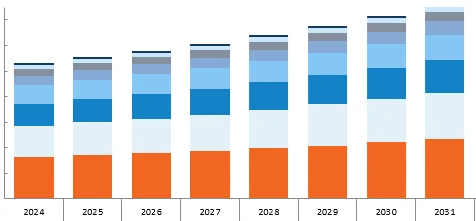
Growth in the Clinical Diagnostics Market is being driven by increasing demand for early disease detection, precision medicine, and decentralized testing solutions. The clinical diagnostics industry is witnessing a shift in revenue contribution, with molecular diagnostics, point-of-care testing, and AI-enabled diagnostic platforms accounting for a growing share of incremental revenue.
The transition toward decentralized and near-patient testing is further accelerating revenue expansion in the Clinical Diagnostics Market, as healthcare providers prioritize faster turnaround times and improved patient outcomes. At the same time, automation and digital integration are enhancing laboratory efficiency, enabling higher throughput and cost optimization across the clinical diagnostics industry.
Regionally, North America continues to lead revenue generation in the Clinical Diagnostics Market, while Asia-Pacific is expected to register the fastest growth due to increasing healthcare investments and expanding diagnostic infrastructure.
Sustained innovation, coupled with the rising burden of chronic diseases and the shift toward preventive healthcare, will continue to support long-term revenue expansion across the clinical diagnostics industry.
Segmentation Analysis: Clinical Diagnostics Market
The Clinical Diagnostics Market is segmented based on testing workflows and technology categories, reflecting the diverse and evolving nature of diagnostic services. The clinical diagnostics industry is broadly categorized into centralized testing, referral and peripheral testing, and decentralized testing.
Centralized testing represents a significant share of the Clinical Diagnostics Market, characterized by high-throughput laboratory environments and specialized expertise. This segment includes clinical chemistry, hematology, hemostasis, and molecular diagnostics, forming the backbone of large-scale diagnostic operations within the clinical diagnostics industry.
Referral and peripheral testing constitute another important segment of the Clinical Diagnostics Market, including tissue diagnostics and clinical microbiology. These services are typically delivered through specialized laboratories and play a critical role in disease diagnosis, monitoring, and treatment planning.
Decentralized testing is the fastest-growing segment within the Clinical Diagnostics Market, driven by the increasing demand for rapid and accessible diagnostic solutions. Point-of-care testing (POCT) and self-monitoring of blood glucose (SMBG) are key components of this segment. The clinical diagnostics industry is witnessing significant adoption of decentralized testing as healthcare systems prioritize patient-centric care and real-time decision-making.
Technological advancements are reshaping segmentation across the Clinical Diagnostics Market, with molecular diagnostics and AI-enabled solutions gaining traction across all testing environments. These innovations are enhancing diagnostic accuracy, efficiency, and scalability across the clinical diagnostics industry.
Competitive Environment: Clinical Diagnostics Market
The Clinical Diagnostics Market is highly competitive, with a combination of established global players and emerging companies driving innovation and expansion. The clinical diagnostics industry is characterized by strong competition across molecular diagnostics, immunoassays, and point-of-care testing segments.
Leading companies in the Clinical Diagnostics Market include Roche Diagnostics, Danaher (Beckman Coulter and Cepheid), Abbott Laboratories, Siemens Healthineers, and Thermo Fisher Scientific. These organizations maintain a strong presence in the clinical diagnostics industry through extensive product portfolios, global distribution networks, and continuous investment in research and development.
Competition in the Clinical Diagnostics Market is driven by technological innovation, pricing strategies, and the ability to deliver integrated diagnostic solutions. Companies within the clinical diagnostics industry are increasingly focusing on end-to-end platforms that combine diagnostic instruments, software, and analytics capabilities.
Mergers and acquisitions continue to play a critical role in shaping the Clinical Diagnostics Market, enabling companies to expand their technological capabilities and strengthen their market position. Strategic partnerships and collaborations are also accelerating innovation within the clinical diagnostics industry, particularly in areas such as molecular diagnostics, digital pathology, and AI-driven solutions.
As the market evolves, differentiation is increasingly centered on the ability to deliver connected, scalable, and data-driven diagnostic ecosystems that align with the future needs of healthcare providers and patients.
Analysis Highlights
The 2025 Clinical Diagnostics Industry: Forecast vs. Actual
Historical Analytics
Top Clinical Diagnostics Predictions for 2026
Why is it Increasingly Difficult to Grow?
The Strategic Imperative 8™
The Impact of the Top 3 Strategic Imperatives on the Clinical Diagnostics Industry
Growth Opportunities Fuel the Growth Pipeline EngineTM
Segmentation
Growth Environment
2025 Economic Highlights
Economic Transformations for 2026
Forecast Considerations
Revenue Forecast Analysis by Region: North America
Revenue Forecast Analysis by Region: Europe
Revenue Forecast Analysis by Region: APAC
Revenue Forecast Analysis by Region: LATAM
Revenue Forecast Analysis by Region: MEA
Headwinds and Challenges
Regional Regulatory Frameworks and Reimbursement Policies
Competitive Environment
Revenue Share
Revenue Share Analysis
Competitor Matrix
Mergers and Acquisitions
Partnerships and Collaborations
Regulatory Approvals, Clearances, and Reimbursements
Product Launches
Other Strategic Activities
The AI Revolution in Diagnostics
Prediction 1: Decentralized Diagnostics Will Shift Care From Acute to Chronic Management in Emerging Markets, Reaching a $34 Million Global Market by 2026
Prediction 2: Whole Genome Sequencing (WGS) Will Emerge as a Strategic Alternative to Targeted Sequencing
Prediction 3: Multi-Omics Panels Will Drive the Next Phase of Rare Disease Diagnostics in 2026
Prediction 4: Reimbursement Pressure Will Accelerate the Shift Toward Evidence-Based Diagnostics Adoption
Prediction 5: Agentic AI Integration with LIMS Will Accelerate, Reshaping Data Integrity and Automation in Laboratory Operations
Industry Snapshot
Industry Snapshot
Companies to Watch
Industry Snapshot
Companies to Watch
Industry Snapshot
Companies to Watch
Industry Snapshot
Companies to Watch
Growth Opportunity 1: NGS for Rare Disease Diagnosis, Oncology Panels, and Pharmacogenomics
Growth Opportunity 2: Decentralized and Home-Based Diagnostics Ecosystem
Growth Opportunity 3: WGS for the Antimicrobial Resistance Diagnostics Market
Conclusions and Future Outlook
Benefits and Impacts of Growth Opportunities
Next Steps
List of Exhibits
Legal Disclaimer
Frequently Asked Questions (FAQ) – Clinical Diagnostics Market
1. What is the Clinical Diagnostics Market?
The Clinical Diagnostics Market refers to the global ecosystem of diagnostic testing technologies and services used to detect, monitor, and manage diseases. The clinical diagnostics industry includes laboratory testing, molecular diagnostics, and point-of-care solutions across healthcare settings.
2. What is driving growth in the clinical diagnostics industry?
Growth in the clinical diagnostics industry is driven by increasing prevalence of chronic and infectious diseases, rising demand for early disease detection, advancements in molecular diagnostics, and expanding healthcare infrastructure worldwide.
3. What are the key segments in the Clinical Diagnostics Market?
The Clinical Diagnostics Market includes centralized testing, referral and peripheral testing, and decentralized testing. These segments cover technologies such as clinical chemistry, hematology, molecular diagnostics, tissue diagnostics, microbiology, and point-of-care testing.
4. What is the role of molecular diagnostics in the Clinical Diagnostics Market?
Molecular diagnostics plays a crucial role in the Clinical Diagnostics Market by enabling early detection, personalized medicine, and targeted therapies. It is one of the fastest-growing segments within the clinical diagnostics industry.
5. Which region dominates the Clinical Diagnostics Market?
North America dominates the Clinical Diagnostics Market due to advanced healthcare infrastructure, high adoption of innovative diagnostic technologies, and strong presence of leading industry players.
6. Which region is growing fastest in the clinical diagnostics industry?
Asia-Pacific is the fastest-growing region in the clinical diagnostics industry, driven by increasing healthcare investments, expanding diagnostic access, and rising awareness of preventive healthcare.
7. What is point-of-care testing (POCT)?
Point-of-care testing (POCT) refers to diagnostic testing conducted near the patient, enabling faster results and immediate clinical decisions. It is a rapidly growing segment in the Clinical Diagnostics Market.
8. What challenges does the Clinical Diagnostics Market face?
Challenges in the Clinical Diagnostics Market include reimbursement pressures, regulatory complexities, infrastructure limitations, and high costs associated with advanced diagnostic technologies.
9. How is AI impacting the clinical diagnostics industry?
AI is transforming the clinical diagnostics industry by enabling automated analysis, improving diagnostic accuracy, enhancing workflow efficiency, and supporting predictive healthcare and personalized medicine.
10. What is the future outlook for the Clinical Diagnostics Market?
The future outlook for the Clinical Diagnostics Market is positive, with sustained growth driven by technological advancements, increasing demand for precision medicine, and expansion of decentralized and digital diagnostic solutions.
Speak directly with our analytics experts for tailored recommendations.
Recent related In Vitro Diagnostics (IVD) research
16 Oct 2026 | Global | Technology Research
Innovations and Growth Opportunities in Precision Therapeutics, AI-Enabled Discovery and Bioengineering, Regenerative Medicine, and Next-Generation Vaccine Platforms
This edition of the Life Science, Health & Wellness Technology Opportunity Engine (TOE) provides a comprehensive overview of breakthrough innovations transforming precision therapeutics, regenerative medicine, AI-enabled discovery, laboratory automation, targeted delivery, vaccines, and biomanufactu...
18 Sep 2026 | Global | Frost Radar
Frost Radar™: Life Sciences Laboratory Information Management Systems, 2026
Laboratory information management systems (LIMS) have been used in life sciences since laboratories began digitizing sample tracking and data management in the 1970s. Modern LIMS solutions enhance efficiency by automating workflows, improving data accuracy, and enabling seamless integration and offe...
18 Sep 2026 | Global | Technology Research
Innovations and Growth Opportunities in AI-Enabled Discovery and Diagnostics, Precision Therapeutics, and Next-Generation Vaccine Platforms
This edition of the Life Science, Health & Wellness Technology Opportunity Engine (TOE) provides a comprehensive overview of breakthrough innovations transforming AI-enabled discovery, precision diagnostics, cell engineering, targeted therapeutics, vaccines, and skin health across oncology, metaboli...
27 Aug 2026 | Global | Frost Radar
Frost Radar: AI-Powered Molecular Diagnostics, 2026
AI-powered molecular diagnostics is an emerging and moderately fragmented industry that includes molecular diagnostics companies, precision medicine platforms, sequencing specialists, AI-driven analytics providers, and disease-focused biotechnology companies. No single company has dominated, present...
25 Aug 2026 | Global | Technology Research
Breakthrough Innovations in Point-of-Care Diagnostics
This research analyzes how point-of-care (PoC) diagnostics is evolving from simple tests to decentralized, connected, and clinically actionable testing platforms across hospitals, outpatient settings, homes, and pharmacies.The study assesses key technology shifts, including rapid molecular testing, ...
Purchase includes:
- Report download
- Growth Dialog™ with our experts
Growth Dialog™
A tailored session with you where we identify the:- Strategic Imperatives
- Growth Opportunities
- Best Practices
- Companies to Action
Impacting your company's future growth potential.