 USD
USD GBP
GBP  CNY
CNY  EUR
EUR  INR
INR  JPY
JPY  MYR
MYR  ZAR
ZAR  KRW
KRW  THB
THB 


Global Vital Signs Monitoring Market, Forecast to 2030
Vital Signs Monitoring Is Experiencing Transformational Growth Due to Development of Wearables
08-Oct-2025
Global
Market Research
KBB6-01-00-00-00
HC_2026_34580
Report Summary: Vital Signs Monitoring Market
The global Vital Signs Monitoring Market is witnessing rapid expansion due to increasing demand for remote patient monitoring, AI-enabled healthcare systems, and continuous patient surveillance solutions. Healthcare providers are increasingly adopting advanced monitoring technologies to improve chronic disease management, reduce hospital readmissions, and enhance patient outcomes across acute care, ambulatory care, and homecare settings. The growing penetration of connected healthcare devices and clinical-grade wearables is significantly transforming patient monitoring workflows worldwide.
The global vital signs monitoring market was valued at USD 40.09 billion in 2024 and is projected to reach USD 91.20 billion by 2030, registering a CAGR of 14.7% during the forecast period. Rising investments in digital healthcare infrastructure, telehealth integration, and predictive analytics platforms are accelerating adoption across hospitals and homecare environments.
Key Market Trends & Insights
- Clinical-grade wearables are gaining strong adoption for continuous remote monitoring.
- AI-powered monitoring systems are improving early detection and hospital workflow efficiency.
- Hospitals remain the dominant end-user segment due to rising demand for multiparameter monitoring devices.
- Homecare monitoring adoption is increasing due to aging populations and chronic disease prevalence.
- North America leads the market with advanced healthcare infrastructure and digital health investments.
- Asia-Pacific is emerging as the fastest-growing region due to rapid healthcare modernization.
Market Size & Forecast
- 2024 Market Size: USD 40.09 Billion
- 2030 Projected Market Size: USD 91.20 Billion
- CAGR (2024–2030): 14.7%
- Largest End-user Segment: Hospitals
- Fastest Growing Segment: Clinical-Grade Wearables
The Vital signs monitoring devices market continues to evolve with integration of wireless connectivity, cloud-based analytics, and AI-driven clinical decision support systems. The increasing need for real-time monitoring and personalized healthcare delivery is strengthening long-term growth opportunities across the global Vital Signs Monitoring Market.
Market Overview & Trends: Vital Signs Monitoring Market
The Vital Signs Monitoring Market is undergoing a major transformation driven by the rapid adoption of connected healthcare technologies, AI-enabled diagnostics, remote patient monitoring systems, and clinical-grade wearable devices. Healthcare systems worldwide are increasingly prioritizing continuous monitoring solutions to improve patient outcomes, reduce hospitalization costs, and enhance operational efficiency across hospitals, ambulatory care centers, and homecare settings. The growing burden of chronic diseases such as cardiovascular disorders, diabetes, hypertension, and respiratory illnesses is significantly increasing demand for advanced patient monitoring solutions.
The global shift toward preventive healthcare and personalized medicine is reshaping the Vital signs monitoring devices market. Healthcare providers are integrating multiparameter monitoring systems with predictive analytics, telehealth platforms, and cloud-based infrastructure to enable real-time patient monitoring and early intervention. Clinical-grade wearable technologies are becoming a key growth area as they provide continuous monitoring capabilities outside traditional hospital environments. These wearable solutions are increasingly adopted for tracking heart rate, respiratory rate, blood pressure, oxygen saturation, and temperature in real time.
Hospital-at-home programs and virtual care models are also contributing significantly to market expansion. Healthcare providers are leveraging remote monitoring technologies to manage patients outside hospital facilities while maintaining clinical supervision and reducing healthcare costs. This trend is particularly strong in North America and Europe, where healthcare systems are investing heavily in digital transformation initiatives.
AI integration is becoming one of the most influential trends in the Vital Signs Monitoring Market. Advanced monitoring systems now incorporate machine learning algorithms, automated alert systems, predictive risk analysis, and workflow automation tools to improve clinical decision-making. These technologies help clinicians identify early signs of deterioration, reduce alarm fatigue, and improve patient safety.
From a regional perspective, North America remains the largest market due to strong healthcare infrastructure, high healthcare spending, and rapid adoption of connected medical technologies. Asia-Pacific is expected to witness the fastest growth due to expanding healthcare infrastructure, increasing digital health investments, and rising awareness regarding remote healthcare monitoring solutions.
The market is also benefiting from increased consumer adoption of health-focused wearable technologies. Major technology companies are introducing FDA-cleared wearable monitoring devices that support continuous health tracking, further accelerating expansion across the global Vital Signs Monitoring Market.
Scope of Analysis: Vital Signs Monitoring Market
This study evaluates the global Vital Signs Monitoring Market across multiple device categories, end-user segments, and geographic regions. The analysis covers market dynamics, growth opportunities, technology trends, competitive positioning, and forecast insights related to advanced vital signs monitoring solutions. The study period spans from 2022 to 2030, with 2024 considered as the base year for market estimation and 2024–2030 representing the forecast period.
The scope of the study includes multiparameter monitoring devices and clinical-grade wearable technologies used for monitoring vital health parameters such as heart rate, respiratory rate, blood pressure, body temperature, and oxygen saturation. The Vital signs monitoring devices market includes both hardware and associated software platforms, consumables, accessories, and monitoring services.
The study analyzes the adoption of monitoring technologies across hospitals, outpatient facilities, ambulatory care centers, homecare environments, physician offices, and skilled nursing facilities. Hospitals currently represent the dominant end-user category due to increasing demand for continuous patient monitoring in critical care and high-acuity environments. Meanwhile, homecare monitoring is rapidly expanding due to rising chronic disease prevalence and aging populations.
Geographically, the report covers North America, Europe, Asia-Pacific, Latin America, and the Middle East & Africa. Regional analysis includes evaluation of healthcare infrastructure development, digital health investments, regulatory environments, and technology adoption patterns influencing market growth.
The study also examines key technological trends shaping the Vital Signs Monitoring Market, including AI-enabled monitoring systems, predictive analytics, cloud-based healthcare platforms, wireless connectivity, remote patient monitoring, and telehealth integration. However, the scope excludes standalone glucose monitoring systems, neurological monitoring devices, fetal monitoring systems, hearing devices, prosthetics, and consumer-grade wearables without clinical-grade regulatory approvals.
Market Segmentation Analysis: Vital Signs Monitoring Market
The Vital Signs Monitoring Market is segmented by device type, end user, and geography. Each segment plays a critical role in shaping market demand, technology adoption, and future investment opportunities across the healthcare ecosystem. The increasing need for continuous patient monitoring and real-time clinical insights is driving growth across all major segments within the Vital signs monitoring devices market.
By device type, the market is segmented into multiparameter monitoring devices and clinical-grade wearable devices. Multiparameter monitoring systems currently account for a major share of the market due to widespread use in hospitals, intensive care units, emergency departments, and surgical settings. These systems provide simultaneous monitoring of multiple physiological parameters, enabling clinicians to deliver faster and more accurate treatment decisions. Demand for advanced bedside monitoring systems continues to rise due to growing patient volumes and increasing healthcare digitization.
Clinical-grade wearable devices represent one of the fastest-growing segments within the Vital Signs Monitoring Market. These wearable technologies are increasingly adopted for continuous remote monitoring, chronic disease management, preventive healthcare, and post-acute patient care. Regulatory-approved wearable devices capable of monitoring heart rate, oxygen saturation, respiratory rate, and body temperature are gaining traction across hospitals and homecare settings.
Based on end users, the market is segmented into hospitals, homecare settings, and other healthcare facilities such as ambulatory centers and physician offices. Hospitals remain the largest segment due to high investments in patient monitoring infrastructure and increasing adoption of AI-enabled monitoring technologies. Homecare settings are emerging rapidly as healthcare systems increasingly focus on decentralized care delivery and remote patient management.
Geographically, North America dominates the market due to strong healthcare infrastructure, advanced reimbursement systems, and rapid digital health adoption. Europe follows closely with strong regulatory support and expanding telehealth integration. Asia-Pacific is projected to experience the fastest growth due to rising healthcare expenditure, expanding hospital infrastructure, and increasing penetration of connected healthcare technologies across developing economies.
The market segmentation structure reflects the growing convergence of wearable technologies, AI-powered healthcare analytics, and connected patient monitoring systems across the global Vital Signs Monitoring Market.
Revenue & Spending Forecast: Vital Signs Monitoring Market
The global Vital Signs Monitoring Market is expected to witness substantial revenue expansion during the forecast period, supported by increasing investments in digital healthcare infrastructure, rising chronic disease prevalence, and growing adoption of remote patient monitoring technologies. Healthcare providers worldwide are prioritizing continuous patient monitoring systems to improve patient outcomes, reduce healthcare costs, and optimize hospital workflow efficiency.
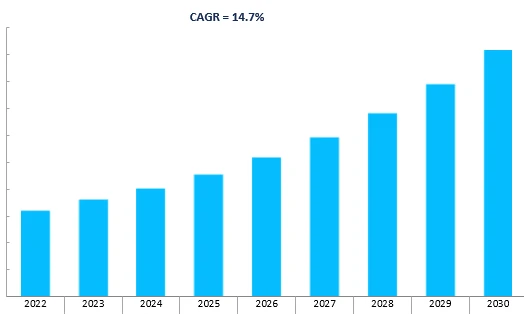
The global vital signs monitoring market was valued at USD 40.09 billion in 2024 and is projected to reach USD 91.20 billion by 2030, expanding at a CAGR of 14.7% during the forecast period. Strong demand for AI-enabled monitoring systems, clinical-grade wearable technologies, and cloud-connected healthcare platforms is accelerating long-term market growth.
Hospitals continue to account for a significant share of healthcare spending on monitoring technologies due to rising patient admissions, increasing ICU utilization, and the need for real-time monitoring capabilities. Investments in advanced multiparameter monitoring devices are increasing across critical care and emergency care settings. At the same time, homecare monitoring solutions are experiencing strong spending growth due to the expansion of hospital-at-home programs and telehealth adoption.
The Vital signs monitoring devices market is also benefiting from increasing healthcare investments in predictive analytics, wireless patient monitoring, and interoperable healthcare systems. AI-driven alert systems, remote monitoring dashboards, and wearable monitoring platforms are becoming essential components of modern healthcare delivery infrastructure.
North America currently represents the largest revenue-generating region due to advanced healthcare digitization and high healthcare expenditure. Meanwhile, Asia-Pacific is expected to register the fastest growth rate as governments and private healthcare organizations accelerate investments in connected healthcare ecosystems and remote patient monitoring solutions.
Growth Drivers: Vital Signs Monitoring Market
The Vital Signs Monitoring Market is being driven by several long-term healthcare transformation trends, including increasing chronic disease prevalence, expansion of remote healthcare delivery, growing demand for personalized medicine, and rapid adoption of AI-enabled monitoring technologies. These factors are reshaping global healthcare systems and accelerating demand for continuous patient monitoring solutions.
One of the primary growth drivers is the rising burden of chronic diseases such as cardiovascular disorders, diabetes, hypertension, and respiratory illnesses. Healthcare providers increasingly rely on continuous monitoring technologies to improve patient management, reduce emergency admissions, and support preventive care strategies. This trend is significantly expanding demand within the Vital signs monitoring devices market.
The rapid growth of hospital-at-home programs and virtual healthcare delivery models is another major driver. Healthcare systems are investing heavily in remote patient monitoring infrastructure to reduce hospitalization costs, improve patient convenience, and enhance healthcare accessibility. Continuous monitoring solutions enable clinicians to track patient health conditions remotely while maintaining high-quality care standards.
The adoption of clinical-grade wearable devices is accelerating across both healthcare institutions and consumer health markets. Advanced wearable technologies capable of real-time monitoring are supporting chronic disease management, post-operative care, and preventive healthcare initiatives. Increasing regulatory approvals for wearable monitoring devices are further strengthening market expansion.
AI integration is also transforming the Vital Signs Monitoring Market. Advanced monitoring systems now incorporate predictive analytics, automated alert systems, and workflow optimization tools that improve clinical efficiency and patient safety. AI-enabled systems help reduce alarm fatigue, identify patient deterioration earlier, and enhance decision-making capabilities.
Additionally, growing investments in digital health infrastructure, telehealth platforms, cloud connectivity, and interoperable healthcare systems are creating strong long-term growth opportunities across the global monitoring ecosystem.
Growth Restraints: Vital Signs Monitoring Market
Despite strong growth potential, the Vital Signs Monitoring Market faces several operational, technological, and financial challenges that may limit adoption rates across certain healthcare environments. High implementation costs, interoperability limitations, and data management challenges remain key barriers affecting market expansion.
One of the primary restraints is the high cost associated with advanced monitoring systems and clinical-grade wearable devices. Healthcare facilities often require significant investments in hardware infrastructure, software integration, cybersecurity systems, staff training, and ongoing maintenance. Smaller hospitals and healthcare providers may face financial limitations that delay technology adoption.
Interoperability challenges also continue to affect the Vital signs monitoring devices market. Many healthcare institutions operate fragmented IT infrastructures, making integration between monitoring systems, hospital information systems, and electronic health records complex and resource-intensive. Limited interoperability can reduce workflow efficiency and restrict the scalability of advanced monitoring platforms.
Alarm fatigue remains another major concern within healthcare facilities. Continuous monitoring systems often generate excessive alerts, including non-actionable notifications and false alarms, which can overwhelm clinicians and negatively impact patient safety. Managing large volumes of real-time patient data requires advanced analytics and workflow optimization capabilities.
Data privacy and cybersecurity risks are also increasing as healthcare organizations adopt cloud-connected monitoring systems and remote patient monitoring platforms. Protecting sensitive patient data while complying with evolving healthcare regulations creates additional operational complexity for healthcare providers and technology vendors.
In addition, clinician resistance to workflow changes and the shortage of skilled healthcare professionals capable of managing advanced digital monitoring systems may slow adoption in certain markets. These challenges could particularly affect developing regions with limited healthcare infrastructure and lower digital health maturity levels.
Competitive Landscape: Vital Signs Monitoring Market
The Vital Signs Monitoring Market is highly competitive and characterized by continuous innovation, strategic partnerships, AI integration, and expanding wearable technology portfolios. Leading market participants are focusing on enhancing remote monitoring capabilities, improving interoperability, and strengthening cloud-based healthcare ecosystems to gain competitive advantages.
Major companies operating in the Vital signs monitoring devices market include Medtronic, Philips Healthcare, Masimo, BioIntelliSense, Biobeat, GE HealthCare, Nihon Kohden, Honeywell, Abbott, and several emerging digital health technology providers. Consumer technology companies such as Apple, Samsung, Garmin, and Fitbit are also increasing their presence in clinical-grade wearable monitoring applications.
Competition is primarily driven by product reliability, monitoring accuracy, AI-enabled analytics capabilities, wireless connectivity, interoperability with hospital information systems, and scalability across healthcare environments. Vendors are investing heavily in predictive analytics, real-time data processing, and cloud-integrated monitoring platforms to improve clinical decision-making and workflow efficiency.
Strategic collaborations between healthcare providers, telehealth platforms, wearable technology companies, and AI software developers are becoming increasingly common. Companies are also pursuing acquisitions and partnerships to expand remote patient monitoring capabilities and strengthen global market presence.
North America currently represents the most competitive regional market due to strong healthcare digitization and advanced reimbursement infrastructure. However, Asia-Pacific is emerging rapidly as healthcare providers and governments increase investments in connected healthcare ecosystems and remote patient monitoring technologies.
Innovation in clinical-grade wearables, AI-powered monitoring platforms, and predictive healthcare analytics will remain central to competitive differentiation across the global Vital Signs Monitoring Market during the forecast period.
Scope of Analysis
Segmentation By Device Type
Segmentation By End User
Segmentation By Region
Why Is It Increasingly Difficult to Grow?
The Strategic Imperative 8
The Impact of the Top 3 Strategic Imperatives on the Vital Signs Monitoring Industry
Competitive Environment
Key Competitors
Key Competitors: Multiparameter Monitoring
Key Competitors: Clinical-Grade Wearables
Growth Metrics
Growth Drivers
Growth Restraints
Forecast Considerations
Revenue Forecast
Revenue Forecast by Product
Revenue Forecast by End User
Revenue Forecast by Region
Revenue Forecast Analysis
Pricing Trends and Forecast Analysis
Revenue Share
Revenue Share Analysis
Product Mapping: Multiparameter Monitoring
Product Mapping: Clinical-Grade Wearables
Evolving Vital Signs Monitoring Industry
Vital Signs Monitoring Analytics
Alarm Management System
Growth Metrics
Revenue Forecast
Revenue Forecast by Type
Revenue Forecast by End User
Revenue Forecast by Region
Revenue Forecast Analysis
Multiparameter Monitoring By Acuity
Multiparameter Monitoring Top Trends
Growth Metrics
Revenue Forecast
Revenue Forecast by End User
Revenue Forecast by Region
Revenue Forecast Analysis
Technological Innovations in Clinical-Grade Wearables
Clinical-Grade Wearables Applications
Clinical-Grade Wearables Adoption
Reimbursement Scenario
Growth Opportunity 1: Clinical-Grade Wearables for Acute Care
Growth Opportunity 2: Predictive and Prescriptive Insights
Growth Opportunity 3: Chronic Disease Management
Benefits and Impacts of Growth Opportunities
Next Steps
List of Exhibits
Legal Disclaimer
Frequently Asked Questions (FAQ) – Vital Signs Monitoring Market
1. What is the Vital Signs Monitoring Market?
The Vital Signs Monitoring Market refers to the global industry focused on devices and technologies used to continuously monitor physiological parameters such as heart rate, blood pressure, respiratory rate, oxygen saturation, and body temperature across hospitals, homecare, and ambulatory settings.
2. What is driving growth in the Vital signs monitoring devices market?
The Vital signs monitoring devices market is growing due to increasing chronic disease prevalence, rising adoption of remote patient monitoring, expansion of telehealth services, growing demand for clinical-grade wearables, and advancements in AI-powered healthcare analytics.
3. What is the projected market size of the Vital Signs Monitoring Market by 2030?
The global Vital Signs Monitoring Market was valued at USD 40.09 billion in 2024 and is projected to reach USD 91.20 billion by 2030, growing at a CAGR of 14.7% during the forecast period.
4. Which end-user segment dominates the Vital Signs Monitoring Market?
Hospitals represent the largest end-user segment in the Vital Signs Monitoring Market due to increasing demand for continuous patient monitoring, critical care management, and advanced multiparameter monitoring systems.
5. What role do wearable devices play in the Vital Signs Monitoring Market?
Clinical-grade wearable devices are becoming increasingly important in the Vital Signs Monitoring Market by enabling continuous remote patient monitoring, chronic disease management, preventive healthcare, and real-time health tracking outside hospital environments.
6. Which regions are analyzed in the global Vital Signs Monitoring Market?
The global Vital Signs Monitoring Market analysis covers North America, Europe, Asia-Pacific, Latin America, and the Middle East & Africa, with North America currently leading the market and Asia-Pacific emerging as the fastest-growing region.
7. What are the major technologies influencing the Vital signs monitoring devices market?
Key technologies influencing the Vital signs monitoring devices market include AI-powered analytics, cloud-based healthcare platforms, wireless connectivity, predictive monitoring systems, remote patient monitoring software, and interoperable digital healthcare infrastructure.
8. What challenges affect the growth of the Vital Signs Monitoring Market?
Major challenges affecting the Vital Signs Monitoring Market include high implementation costs, interoperability limitations, alarm fatigue, cybersecurity concerns, and the complexity of integrating monitoring systems with hospital information platforms.
9. Who are the leading companies in the Vital Signs Monitoring Market?
Leading companies operating in the Vital Signs Monitoring Market include Medtronic, Philips Healthcare, Masimo, GE HealthCare, Abbott, Nihon Kohden, BioIntelliSense, Biobeat, Honeywell, Apple, Samsung, Garmin, and Fitbit.
10. Why is remote patient monitoring important in the Vital Signs Monitoring Market?
Remote patient monitoring is important because it enables continuous health tracking, early disease detection, reduced hospital readmissions, improved patient convenience, and efficient management of chronic conditions through connected healthcare technologies.
Speak directly with our analytics experts for tailored recommendations.
Recent related Advanced Medical Technologies research
25 Sep 2026 | Global | Technology Research
Innovations and Growth Opportunities in Advanced Medical Devices, Diagnostic Solutions, and Implantables
The latest issue of Advanced MedTech Technology Opportunity Engine (TOE) spotlights a diverse slate of innovations across advanced medical devices, diagnostic solutions, and implantables.The issue features advanced medical devices such as peritoneal dialysis fluid system, cold sterilization-based au...
18 Sep 2026 | Global | Technology Research
Innovations and Growth Opportunities in AI-Enabled Discovery and Diagnostics, Precision Therapeutics, and Next-Generation Vaccine Platforms
This edition of the Life Science, Health & Wellness Technology Opportunity Engine (TOE) provides a comprehensive overview of breakthrough innovations transforming AI-enabled discovery, precision diagnostics, cell engineering, targeted therapeutics, vaccines, and skin health across oncology, metaboli...
28 Aug 2026 | Global | Technology Research
Innovations and Growth Opportunities in Advanced Medical Devices, Artificial Intelligence Solutions, Digital Solutions, and Medical Imaging Solutions
The latest issue of Advanced MedTech Technology Opportunity Engine (TOE) spotlights a diverse slate of innovations across advanced medical devices, artificial intelligence solutions, digital solutions, and medical imaging solutions.The issue features advanced medical devices such as active bioelectr...
25 Aug 2026 | Global | Technology Research
Breakthrough Innovations in Point-of-Care Diagnostics
This research analyzes how point-of-care (PoC) diagnostics is evolving from simple tests to decentralized, connected, and clinically actionable testing platforms across hospitals, outpatient settings, homes, and pharmacies.The study assesses key technology shifts, including rapid molecular testing, ...
25 Aug 2026 | Global | Technology Research
Innovations and Growth Opportunities in Digital Biomarkers
A digital biomarker refers to measurable data about physiological functions or behaviors collected through digital devices and technologies, such as wearables, implants, ingestible sensors, smartphones, and mobile applications. These biomarkers provide continuous, real-time insights into an individu...
Purchase includes:
- Report download
- Growth Dialog™ with our experts
Growth Dialog™
A tailored session with you where we identify the:- Strategic Imperatives
- Growth Opportunities
- Best Practices
- Companies to Action
Impacting your company's future growth potential.
Multiparameter monitoring solutions are primarily driven by high demand from hospitals, particularly in high acuity settings, for the implementation of remote monitoring and telemetry features, and for AI integration with early warning systems, alarm management, and hospital workflow management. This Frost & Sullivan study analyzes multiparameter monitoring devices and clinical-grade wearables. It covers North America, Europe, Asia-Pacific, Latin America, and the Middle East and Africa. The study offers insights into market size, growth rates, opportunities, strategic imperatives, company shares, new technologies, and end users. The study period spans 2022 to 2030, with 2024 as the base year and 2024 to 2030 as the forecast.
Author: Utkarsha Kaustubh Soundankar
| Deliverable Type | Market Research |
|---|---|
| Industries | Healthcare |
| No Index | No |
| Is Prebook | No |
| Keyword 1 | Vital signs monitoring market |
| Keyword 2 | Remote patient monitoring (RPM) |
| Keyword 3 | Clinical wearable devices |
| Podcast | No |
| Predecessor | None |
| WIP Number | KBB6-01-00-00-00 |