 USD
USD GBP
GBP  CNY
CNY  EUR
EUR  INR
INR  JPY
JPY  MYR
MYR  ZAR
ZAR  KRW
KRW  THB
THB 


Growth Opportunities for the 2026 Medium- and Heavy-Duty Commercial Vehicle Aftermarket
Higher Fleet Utilization and Aging Trucks Are Driving Frequent Parts Replacement and Robust Aftermarket Revenue Growth
21-Apr-2026
Global
Market Outlook
KC8D-01-00-00-00
AU_2026_34513
Key Takeaways: Medium- and Heavy-Duty Commercial Vehicle Aftermarket
- The Medium- and Heavy-Duty Commercial Vehicle Aftermarket is projected to grow from $158.81 billion in 2025 to $167.01 billion in 2026, with the market expected to reach $226.68 billion by 2031 at a 6.1% CAGR (2025–2031).
- Global commercial vehicle vehicles in operation (VIO) are forecast to increase from 50.1 million in 2025 to 50.9 million in 2026, supporting sustained replacement parts demand despite slower new truck sales.
- The Commercial Vehicle Aftermarket is being strengthened by aging fleets, higher freight utilization, and longer vehicle retention cycles that drive recurring maintenance and parts replacement.
- The Heavy-Duty Truck Aftermarket is rapidly evolving through predictive maintenance, telematics, software-defined vehicles, and AI-powered diagnostics that create new recurring revenue opportunities.
- Asia-Pacific remains the largest revenue contributor, while North America is expected to record the fastest replacement parts growth, reinforcing long-term opportunities across the Commercial Vehicle Parts Market.
In the Analyst's Words
"The commercial vehicle aftermarket has shifted from being a replacement-parts business to a fleet-performance business. Operators are extending vehicle life while demanding predictive maintenance, connected diagnostics, and recurring service models that improve uptime and lower total operating costs."
— Shantanu Santosh Khambekar, Frost & Sullivan
Report Summary: Medium- and Heavy-Duty Commercial Vehicle Aftermarket
The Medium- and Heavy-Duty Commercial Vehicle Aftermarket is evolving into a technology-enabled ecosystem supported by longer fleet lifecycles and increasing replacement demand. Although global new truck sales declined by roughly 4.1% during 2025, fleet operators are postponing vehicle replacement, increasing maintenance spending, and investing in connected fleet management solutions.
The Commercial Vehicle Aftermarket benefits from growing vehicle utilization, higher freight activity, and stricter emissions regulations that require more sophisticated replacement components. Digital diagnostics, telematics, predictive maintenance, and subscription-based service models are becoming essential competitive differentiators.
The Heavy-Duty Truck Aftermarket is particularly benefiting from aging fleets, while Asia-Pacific, North America, and Europe remain the largest revenue contributors. By 2031, the Commercial Vehicle Parts Market is expected to generate significant opportunities across tires, batteries, brake systems, filters, lighting, exhaust components, and connected maintenance services.
Market Overview & Trends: Medium- and Heavy-Duty Commercial Vehicle Aftermarket
The Medium- and Heavy-Duty Commercial Vehicle Aftermarket is becoming increasingly resilient as fleet operators prioritize asset utilization over rapid fleet replacement. Rising vehicle prices, tighter financing conditions, and freight market uncertainty are encouraging companies to extend vehicle ownership periods, increasing replacement cycles across the Commercial Vehicle Aftermarket.
One of the most important shifts involves software-defined vehicles (SDVs). Modern trucks now incorporate advanced driver assistance systems (ADAS), telematics, over-the-air (OTA) updates, cybersecurity features, and predictive diagnostics, creating new recurring revenue opportunities beyond traditional mechanical repairs.
The Heavy-Duty Truck Aftermarket is also experiencing growing demand for data-driven maintenance strategies. Fleet operators increasingly rely on predictive analytics to reduce downtime, optimize repair schedules, and manage inventory more efficiently.
Regional dynamics continue to shape growth. Asia-Pacific remains the largest contributor to aftermarket revenue, supported by expanding commercial fleets in China and India. North America leads premium replacement parts spending, while Europe benefits from stricter emissions standards and fleet modernization initiatives.
Meanwhile, geopolitical disruptions—including tariffs, supply-chain realignments, and logistics volatility—are influencing sourcing decisions and pricing across the Commercial Vehicle Parts Market. Vendors capable of combining digital services, connected maintenance, and resilient supply chains are expected to strengthen their competitive position throughout the forecast period.
Scope of Analysis: Medium- and Heavy-Duty Commercial Vehicle Aftermarket
The Medium- and Heavy-Duty Commercial Vehicle Aftermarket analysis evaluates global replacement parts demand, fleet maintenance trends, vehicle utilization, and long-term revenue opportunities across medium-duty (GVWR Classes 4–6) and heavy-duty trucks (GVWR Classes 7–8). Using 2025 as the base year, the study examines historical developments from 2024 and provides revenue forecasts through 2031, with market values measured at the manufacturer level in US dollars. The assessment focuses primarily on replacement parts revenue while excluding service revenue unless otherwise specified, providing a consistent view of the Commercial Vehicle Aftermarket and Commercial Vehicle Parts Market.
The research incorporates key market indicators such as commercial vehicle vehicles in operation (VIO) growth, average fleet age, replacement rates, freight utilization, financing conditions, regulatory developments, and supply chain dynamics to evaluate future demand. It also analyzes the impact of software-defined vehicles, telematics, AI-powered diagnostics, predictive maintenance, and connected fleet technologies on the Heavy-Duty Truck Aftermarket. Geographically, the study covers North America, Europe, Asia-Pacific, Latin America, and the Middle East & Africa, highlighting regional growth patterns, competitive positioning, and evolving aftermarket distribution channels that will shape industry opportunities through 2031.
Market Segmentation Analysis: Medium- and Heavy-Duty Commercial Vehicle Aftermarket
The Medium- and Heavy-Duty Commercial Vehicle Aftermarket is segmented across replacement parts, aftermarket service channels, vehicle categories, and regional markets, with each segment contributing to long-term revenue expansion. The Commercial Vehicle Aftermarket continues to shift from traditional replacement cycles toward technology-enabled fleet management, creating new opportunities across both parts suppliers and service providers.
By offering, the Commercial Vehicle Parts Market remains the largest revenue contributor, covering high-demand replacement categories such as tires, batteries, brake parts, lubricants, filters, collision body parts, lighting systems, exhaust components, starters and alternators, wheels, accessories, and other powertrain components. Tires continue to generate the highest replacement frequency due to constant fleet utilization, while batteries, brake systems, and electronic components are benefiting from increasing vehicle electrification and advanced safety technologies.
The service segment is divided between Original Equipment Supplier (OES) networks and the Independent Aftermarket (IAM). OES providers increasingly bundle diagnostics, software updates, warranty support, and maintenance contracts, while IAM distributors compete through broader parts availability, faster service turnaround, competitive pricing, and expanding digital service capabilities. As connected trucks become more common, both channels are investing in predictive maintenance, telematics integration, and AI-powered diagnostics to improve fleet uptime.
Vehicle segmentation within the Medium- and Heavy-Duty Commercial Vehicle Aftermarket includes medium-duty trucks (GVWR Classes 4–6) and heavy-duty trucks (GVWR Classes 7–8). Medium-duty vehicles primarily serve urban logistics, construction, and regional delivery operations, creating consistent demand for wear-and-tear components. Heavy-duty trucks operating in long-haul freight, mining, and industrial transportation generate higher aftermarket spending due to longer operating hours, greater mechanical stress, and more frequent replacement of critical components.
Regional segmentation further shapes market opportunities. Asia-Pacific represents the largest revenue pool, supported by expanding commercial fleets in China and India. North America leads premium replacement parts spending and is expected to deliver the fastest aftermarket growth, while Europe benefits from aging truck fleets, stricter emissions regulations, and growing adoption of connected fleet technologies. Latin America and the Middle East & Africa continue to generate steady replacement demand as fleet operators extend vehicle lifecycles and prioritize maintenance over new vehicle purchases.
Revenue & Spending Forecast: Medium- and Heavy-Duty Commercial Vehicle Aftermarket
The Medium- and Heavy-Duty Commercial Vehicle Aftermarket is expected to maintain healthy revenue expansion throughout the forecast period despite slower new truck sales. Global replacement parts revenue is projected to increase from $158.81 billion in 2025 to $167.01 billion in 2026, representing approximately 5.2% annual growth.
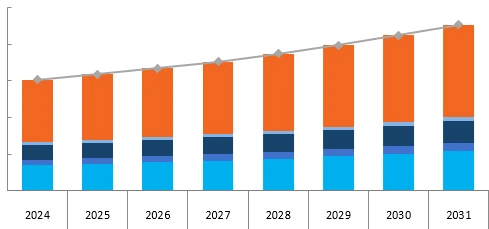
By 2031, total Commercial Vehicle Aftermarket replacement revenue is forecast to reach approximately $226.68 billion, reflecting a 6.1% CAGR between 2025 and 2031.
Regional spending patterns remain uneven. North America is expected to record the fastest replacement parts growth, achieving roughly 6.7% CAGR, supported by premium component demand and higher fleet operating costs. Europe follows with approximately 6.3% CAGR, while Latin America demonstrates resilient expansion near 6.2% CAGR due to aging commercial fleets.
Asia-Pacific continues to represent the largest revenue pool, increasing from $89.86 billion in 2025 to approximately $126.53 billion by 2031. Rising commercial vehicle utilization, expanding logistics activity, and longer replacement cycles continue to strengthen the Commercial Vehicle Parts Market across major fleet operators worldwide.
Growth Environment: Medium- and Heavy-Duty Commercial Vehicle Aftermarket
The Medium- and Heavy-Duty Commercial Vehicle Aftermarket is entering a structural growth phase driven by fleet retention, digital transformation, and changing maintenance economics. Rather than replacing vehicles quickly, operators are extending truck lifecycles, increasing demand across the Commercial Vehicle Aftermarket for higher-value replacement components and predictive service solutions.
Software-defined vehicles represent one of the most significant disruptions. Trucks increasingly require over-the-air software updates, cybersecurity management, electronic calibration, and connected diagnostics, expanding aftermarket revenue beyond traditional mechanical repairs.
The Heavy-Duty Truck Aftermarket also benefits from AI-powered maintenance planning. Fleet operators use telematics to monitor engine performance, tire wear, brake conditions, fuel efficiency, and vehicle health in real time, reducing unexpected breakdowns while improving fleet productivity.
Subscription-based maintenance agreements are emerging as another growth catalyst. OEMs and independent aftermarket providers increasingly offer bundled diagnostics, software services, maintenance scheduling, and predictive repair programs that create recurring revenue streams throughout vehicle lifecycles.
However, geopolitical uncertainty continues to influence market dynamics. Trade tensions, tariffs on imported trucks and components, logistics disruptions, and rising lubricant costs create pricing pressure across the Commercial Vehicle Parts Market.
Despite these challenges, long-term fundamentals remain favorable. Aging commercial fleets, growing freight activity, expanding digital fleet management, and increasing electronic vehicle content are expected to sustain investment across the Medium- and Heavy-Duty Commercial Vehicle Aftermarket through 2031.
Highlights
The Global Medium- and Heavy-Duty Commercial Vehicle Aftermarket: A Recap of 2025
Why Is It Increasingly Difficult to Grow?
Replacement Revenue Forecast for Parts and Accessories
2025 Commercial Vehicle Aftermarket: In Numbers
2025 Commercial Vehicle Aftermarket: In Trends
2026 Commercial Vehicle Aftermarket: In Numbers
2026 Commercial Vehicle Aftermarket: In Trends
Scope of Analysis
Segmentation
Geographic Scope
Research Aims and Objectives
Key Questions This Study Will Answer
Data Sources
Research Methodology
Strategic Imperatives
Top 10 Global Growth Opportunities
Top 10 Global and Regional Economic Transformations for 2026
Global GDP Growth Snapshot
Trend 1: Global GDP Growth
Growth Opportunity 1: Global GDP Growth
Trend 2: Global Inflation and Interest Rates
Growth Opportunity 2: Global Inflation and Interest Rates
Trend 3: Global Oil Prices
Growth Opportunity 3: Global Oil Prices
Trend 4: Global Trade, Tariffs, and Supply Chains
Growth Opportunity 4: Global Trade, Tariffs, and Supply Chains
Growth Opportunity 5: Global Unemployment Rate
Growth Opportunity 6: North America Growth
Growth Opportunity 7: Latin America Growth
Growth Opportunity 8: Western Europe Growth
Growth Opportunity 9: Middle East Growth
Trend 10: Asia Growth
Growth Opportunity 10: Asia Growth
S1: Top 10 Macroeconomic Risks, 2026
S2: Global Economic Transformations, 2026 (March Reforecast)
S3: Global Resilience Strategies and Opportunities
Global Aftermarket Revenue Share by Part Type
Global Aftermarket Revenue by Region and Distribution Channel
Global Aftermarket Revenue Forecast by Category
Global Commercial Vehicle VIO
Average Vehicle Age: Key Countries
Average Vehicle Miles Traveled
Top Trends Driving the Global Commercial Vehicle Aftermarket
Top Trends by Region
Trend 1: Shift from Repair-Led to Uptime-Led Aftermarket
Trend 2: Over-the-Air (OTA) Updates in Commercial Vehicles
Trend 3: Nearshoring Reshapes the CV Aftermarket
Trend 4: Adaptable, Scalable SDV Platforms in the Commercial Vehicle Aftermarket
Trend 5: Automation and Supply Chain Efficiency Improvements
OEM Activity in 2025
Supplier Activity in 2025
Regional Highlights: North America
Aftermarket Dashboard: North America
Revenue by Part Type: North America
VIO Ownership Pattern: North America
VIO Model Mix: North America
Distribution Channel and Gross Margin Analysis: North America
MD and HD Commercial Vehicle Aftermarket Opportunity Areas: North America
Regional Highlights: Europe
Aftermarket Dashboard: Europe
Revenue by Part Type: Europe
VIO Ownership Pattern: Europe
VIO Model Mix: Europe
Distribution Channel and Gross Margin Analysis: Europe
MD and HD Commercial Vehicle Aftermarket Opportunity Areas: Europe
Regional Highlights: Latin America
Aftermarket Dashboard: Latin America
Revenue by Part Type: Latin America
VIO Ownership Pattern: Latin America
VIO Model Mix: Latin America
Distribution Channel and Gross Margin Analysis: Latin America
MD and HD Commercial Vehicle Aftermarket Opportunity Areas: Latin America
Regional Highlights: Asia-Pacific
Aftermarket Dashboard: Asia-Pacific
Revenue by Parts Type: Asia-Pacific
VIO Ownership Pattern: Asia-Pacific
VIO Model Mix: Asia-Pacific
Distribution Channel and Gross Margin Analysis: Asia-Pacific
MD and HD Commercial Vehicle Aftermarket Opportunity Areas: Asia-Pacific
Regional Highlights: Middle East and Africa
Aftermarket Dashboard: Middle East and Africa
Revenue by Parts Type: Middle East and Africa
VIO Ownership Pattern: Middle East and Africa
VIO Model Mix: Middle East and Africa
Distribution Channel and Gross Margin Analysis: Middle East and Africa
MD and HD Commercial Vehicle Aftermarket Opportunity Areas: Middle East and Africa
Key Conclusions and Future Prospects
Growth Opportunity 1: Emission Lifecycle Management
Growth Opportunity 2: Digitization of the Service Ecosystem
Growth Opportunity 3: Growth of Alternative Fuel Vehicles
Benefits and Impacts of Growth Opportunities
Next Steps
List of Exhibits
Legal Disclaimer
Frequently Asked Questions (FAQs) – Medium- and Heavy-Duty Commercial Vehicle Aftermarket
1. What is the Medium- and Heavy-Duty Commercial Vehicle Aftermarket?
2. How large is the Commercial Vehicle Aftermarket?
3. What factors are driving growth in the Heavy-Duty Truck Aftermarket?
4. Which replacement parts generate the highest demand in the Commercial Vehicle Parts Market?
5. Which regions lead the Medium- and Heavy-Duty Commercial Vehicle Aftermarket?
6. How are digital technologies transforming the Commercial Vehicle Aftermarket?
7. What challenges affect the Commercial Vehicle Aftermarket?
8. What opportunities will shape the Medium- and Heavy-Duty Commercial Vehicle Aftermarket through 2031?
Speak directly with our analytics experts for tailored recommendations.
Recent related Aftermarket research
15 Oct 2026 | Asia Pacific | Market Research
Replacement Turbocharger Aftermarket in Passenger and Light Commercial Vehicles, China, 2026–2032
This study provides a comprehensive assessment of the automotive turbocharger replacement aftermarket in China, with a 2025 base year and forecasts extending through 2032. The analysis covers the replacement market across passenger vehicles and light commercial vehicles, evaluating market size, unit...
06 Oct 2026 | Asia Pacific | Market Research
Aftermarket Replacement Turbochargers in Medium- Duty and Heavy-Duty Commercial Vehicles, China, 2026–2032
China's medium- and heavy-duty truck turbocharger aftermarket is entering a mature yet resilient phase, supported by a vehicle parc exceeding 10 million units and sustained replacement demand despite increasing battery electric vehicle (BEV) sales. While turbocharger penetration is nearing saturatio...
16 Sep 2026 | North America | Customer Research
US Automotive Technicians’ Choice Survey, 2025
The 2025 US Automotive Technicians’ Choice study is an insightful voice-of-customer survey that highlights the tool preferences of automotive aftermarket service technicians. The survey of 400 automotive technicians across the United States used a combination of computer-assisted telephone and compu...
17 Aug 2026 | Asia Pacific | Market Research
Passenger Vehicle and Light Commercial Vehicle Aftermarket, APAC, 2024–2032
In this research service, Frost & Sullivan has assessed the automotive aftermarket in the Asia-Pacific (APAC) region, focusing on Australia, China, Indonesia, Japan, Malaysia, and Thailand. The research service provides an aftermarket overview for 2025, covering automotive aftermarket performance an...
13 Aug 2026 | Global | Market Research
AI in the Global Automobile Aftermarket
This analysis examines the AI applications reshaping the automotive aftermarket ecosystem, exploring key adoption areas, regional dynamics, emerging use cases, and AI-driven investments driving change in operations and business models. Structured into six core segments, the report focuses on major v...
Purchase includes:
- Report download
- Growth Dialog™ with our experts
Growth Dialog™
A tailored session with you where we identify the:- Strategic Imperatives
- Growth Opportunities
- Best Practices
- Companies to Action
Impacting your company's future growth potential.