 USD
USD GBP
GBP  CNY
CNY  EUR
EUR  INR
INR  JPY
JPY  MYR
MYR  ZAR
ZAR  KRW
KRW  THB
THB 


Growth Opportunities, Global Life Sciences LIMS Market, Forecast to 2031
AI is Transforming Life Sciences LIMS by Automating Analysis, Enabling Predictive Insights, and Improving Efficiency and Decision-making
22-Jun-2026
Global
Market Research
PG9O-01-00-00-00
HC_2026_34671
Key Takeaways: Life Sciences Laboratory Information Management Systems (LIMS) Market
- The global Life Sciences Laboratory Information Management Systems (LIMS) Market is projected to grow from USD 1.33 billion in 2025 to approximately USD 2.10 billion by 2031, representing a CAGR of 7.9% during the forecast period.
- The Life Science Software Market continues to benefit from growing laboratory digitization, regulatory compliance requirements, and increasing demand for data-driven decision-making.
- Cloud-based deployment models are becoming the preferred choice due to scalability, flexibility, rapid implementation, and lower infrastructure costs.
- Pharmaceutical and biotechnology companies remain the largest adopters of life sciences LIMS solutions as they seek improved data traceability, regulatory compliance, and workflow automation.
- Artificial intelligence (AI), advanced analytics, and laboratory automation are transforming the life sciences LIMS market by improving productivity, data insights, and operational efficiency.
- Growing volumes of genomic, clinical, and research data are driving demand for advanced laboratory information management platforms.
- Integration with Electronic Laboratory Notebooks (ELNs), Chromatography Data Systems (CDS), and enterprise applications is becoming a key purchasing criterion.
- Regulatory requirements related to electronic records, audit trails, data integrity, and quality management continue to support market growth.
- Clinical diagnostics laboratories are increasingly investing in LIMS platforms to improve sample tracking, testing accuracy, and reporting efficiency.
- Emerging biotech firms and mid-sized laboratories are creating new growth opportunities for scalable SaaS-based LIMS solutions.
- North America remains the largest market, while Asia-Pacific is expected to emerge as one of the fastest-growing regions due to expanding pharmaceutical manufacturing and research investments.
- Migration complexity, implementation costs, customization requirements, and legacy system integration remain significant adoption challenges.
- Leading vendors continue to invest in cloud-native architectures, AI-powered analytics, workflow automation, and interoperability capabilities.
Report Summary: Life Sciences Laboratory Information Management Systems (LIMS) Market
The global Life Sciences Laboratory Information Management Systems (LIMS) Market is experiencing sustained growth as laboratories increasingly adopt digital technologies to improve efficiency, compliance, and scientific productivity. LIMS platforms have become essential infrastructure within pharmaceutical companies, biotechnology firms, clinical diagnostic laboratories, academic research institutions, government laboratories, and biobanks.
The market is evolving beyond traditional sample management systems toward integrated digital laboratory ecosystems that support workflow automation, data management, quality control, compliance tracking, and advanced analytics. Organizations are increasingly adopting cloud-based LIMS platforms to improve scalability, reduce IT complexity, and accelerate deployment.
Growing regulatory requirements related to data integrity, audit trails, and electronic records management are driving adoption across highly regulated environments. At the same time, increasing volumes of scientific data generated through genomics, clinical research, and laboratory automation initiatives are creating demand for advanced information management capabilities.
The integration of artificial intelligence, machine learning, and predictive analytics is further transforming the Life Science Software Market, enabling laboratories to extract actionable insights, improve decision-making, and optimize research and quality processes. As laboratories continue digital transformation efforts, demand for modern life sciences LIMS platforms is expected to increase significantly through 2031.
Market Overview & Trends: Life Sciences Laboratory Information Management Systems (LIMS) Market
The global Life Sciences Laboratory Information Management Systems (LIMS) Market is undergoing a period of technological transformation driven by increasing laboratory complexity, regulatory requirements, and digital innovation. Organizations across the life sciences ecosystem are seeking solutions that streamline workflows, improve data integrity, and support advanced research initiatives.
One of the most prominent trends shaping the market is the rapid shift toward cloud-based LIMS deployment models. Laboratories increasingly prefer cloud-native platforms because they provide greater flexibility, scalability, lower upfront investment, and faster implementation compared to traditional on-premises solutions. Cloud deployment also enables easier collaboration across geographically distributed research teams and laboratory networks.
Artificial intelligence and advanced analytics are becoming major differentiators within the life sciences LIMS market. Modern platforms increasingly incorporate AI-driven capabilities that help laboratories automate workflows, identify patterns within large scientific datasets, improve predictive insights, and support more informed decision-making.
Another key trend is the growing adoption of laboratory automation. Laboratories are integrating LIMS platforms with analytical instruments, robotic systems, and automated sample processing technologies to improve efficiency and reduce manual errors. Automated data capture and real-time information exchange help improve laboratory productivity and compliance performance.
The increasing need for regulatory compliance remains a powerful market driver. Pharmaceutical manufacturers, biotechnology companies, and clinical laboratories must maintain strict adherence to regulations governing electronic records, audit trails, quality control, and data integrity. LIMS solutions help organizations meet these requirements while simplifying compliance management.
The market is also witnessing growing demand from emerging biotechnology companies and mid-sized laboratories seeking cost-effective SaaS-based platforms that support rapid growth and operational scalability. These organizations are increasingly adopting cloud-based systems to modernize laboratory operations without extensive infrastructure investments.
As laboratories continue embracing digital transformation, interoperability with ELNs, CDS platforms, ERP systems, and enterprise applications will become increasingly important, shaping future product development and competitive positioning.
Scope of Analysis: Life Sciences Laboratory Information Management Systems (LIMS) Market
This study analyzes the global Life Sciences Laboratory Information Management Systems (LIMS) Market, focusing specifically on software solutions used within life sciences laboratories to manage workflows, samples, data, quality processes, and compliance activities.
The analysis covers LIMS deployments across pharmaceutical companies, biotechnology organizations, clinical diagnostic laboratories, academic research institutions, government laboratories, and biobanks. Applications include sample tracking, workflow automation, laboratory operations management, quality control, data management, and regulatory compliance support.
The study evaluates both cloud-based LIMS and on-premises LIMS deployment models. Geographic coverage includes North America, Europe, Asia-Pacific, Latin America, and the Middle East & Africa.
The study period spans 2025–2031, with 2025 serving as the base year and 2026–2031 representing the forecast period. Revenue estimates are presented in U.S. dollars.
The analysis also examines growth drivers, market restraints, competitive dynamics, emerging technology trends, regional opportunities, and future developments expected to influence the evolution of the Life Science Software Market.
Revenue & Spending Forecast: Life Sciences Laboratory Information Management Systems (LIMS) Market
The global Life Sciences Laboratory Information Management Systems (LIMS) Market is expected to demonstrate steady expansion throughout the forecast period. Market revenue is projected to increase from approximately USD 1.33 billion in 2025 to nearly USD 2.10 billion by 2031, reflecting a CAGR of 7.9%.
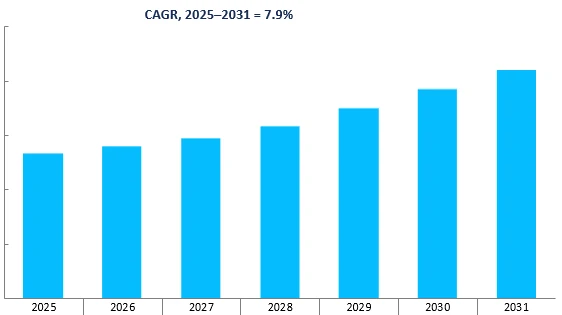
Growth will be supported by increasing investments in laboratory digitization, cloud-based software platforms, regulatory compliance solutions, laboratory automation technologies, and AI-powered analytics. Pharmaceutical and biotechnology companies are expected to remain the largest contributors to overall market spending, while clinical diagnostics and research laboratories continue expanding their investments in advanced information management systems.
Market Segmentation Analysis: Life Sciences Laboratory Information Management Systems (LIMS) Market
The Life Sciences Laboratory Information Management Systems (LIMS) Market can be segmented by end-user industry and deployment model.
By End User
Clinical Diagnostics Laboratories
Clinical diagnostic laboratories represent a major segment within the market. These organizations utilize LIMS platforms for sample tracking, test management, quality control, result reporting, and regulatory compliance. Growing demand for diagnostic testing and precision medicine is supporting segment growth.
Pharmaceutical and Biotechnology Companies
Pharmaceutical and biotech organizations account for the largest share of the life sciences LIMS market. These companies rely on LIMS solutions to support drug discovery, research and development, quality assurance, manufacturing operations, and regulatory compliance.
Others
This segment includes academic institutions, government laboratories, research organizations, and biobanks. Increasing investments in scientific research and public health initiatives are contributing to adoption across these environments.
By Product Type
On-Premises LIMS
On-premises solutions are installed within an organization's IT infrastructure and provide greater control over data and system customization. These platforms remain popular among highly regulated organizations with specific security requirements.
Cloud-Based LIMS
Cloud-based LIMS solutions are hosted remotely and accessed through web-based interfaces. This segment is expected to experience the fastest growth due to scalability, ease of deployment, reduced infrastructure costs, and support for distributed laboratory operations.
Growth Drivers: Life Sciences Laboratory Information Management Systems (LIMS) Market
Several factors are accelerating growth within the global Life Sciences Laboratory Information Management Systems (LIMS) Market.
Regulatory scrutiny remains one of the most significant growth drivers. Laboratories must maintain strict compliance with electronic recordkeeping requirements, audit trail regulations, quality standards, and data integrity mandates. LIMS platforms help organizations manage these obligations effectively.
The increasing adoption of laboratory automation is another major driver. Laboratories seek solutions that integrate seamlessly with analytical instruments and automate data collection processes to improve efficiency and reduce human error.
Artificial intelligence and advanced analytics are transforming the Life Science Software Market by enabling laboratories to derive meaningful insights from large datasets, automate routine processes, and enhance decision-making capabilities.
Growing demand from pharmaceutical and biotechnology organizations is also supporting market expansion. These companies require sophisticated data management systems to support research, quality control, manufacturing, and regulatory compliance activities.
Finally, the rapid emergence of biotech startups and mid-sized laboratories is creating new opportunities for scalable cloud-based LIMS platforms that support growth while minimizing operational complexity.
Growth Restraints: Life Sciences Laboratory Information Management Systems (LIMS) Market
Despite positive growth prospects, several challenges continue to impact the Life Sciences Laboratory Information Management Systems (LIMS) Market.
Lengthy sales and procurement cycles often delay purchasing decisions. LIMS implementations typically require extensive evaluation, customization, validation, and stakeholder approval processes.
Migration from legacy systems can be complex and resource-intensive. Organizations must manage historical data transfer, workflow redesign, instrument integration, and regulatory compliance requirements during implementation.
High implementation and customization costs remain significant barriers, particularly for smaller laboratories with limited budgets. Integration with laboratory instruments and enterprise systems can further increase deployment complexity.
Resistance to organizational change also affects adoption. Laboratories operating heavily customized legacy systems may hesitate to transition to modern platforms due to concerns regarding workflow disruption, retraining requirements, and potential loss of functionality.
Competition from alternative laboratory software platforms such as cloud-based ELNs may also create challenges for traditional LIMS vendors.
Competitive Landscape: Life Sciences Laboratory Information Management Systems (LIMS) Market
The global Life Sciences Laboratory Information Management Systems (LIMS) Market remains highly competitive, with approximately 25 vendors generating significant revenue from life sciences laboratory customers.
Competition is driven by technology capabilities, performance, support services, reliability, product innovation, integration capabilities, and customer relationships. Vendors increasingly compete on cloud deployment flexibility, AI-enabled analytics, workflow automation, and interoperability features.
Leading competitors include LabWare, Benchling, Clinisys, LabVantage, STARLIMS, and Thermo Fisher Scientific. Together, the top five vendors account for approximately 54.7% of market revenue.
Other notable competitors include AgileBio, Agilent Technologies, CloudLIMS, Dassault Systèmes (Biovia), Labguru, LabLynx, QBench, Revvity, Sapio Sciences, SciSure, and Waters Corporation.
Recent market activity includes acquisitions such as STARLIMS' acquisition by Turn/River Capital and Instem's acquisition of Xybion, highlighting ongoing consolidation within the industry.
Future competition is expected to focus on cloud-native architectures, AI-powered insights, advanced analytics, laboratory automation integration, and seamless interoperability across laboratory technology ecosystems.
Analyst Perspective & Future Outlook: Life Sciences Laboratory Information Management Systems (LIMS) Market
According to Frost & Sullivan's analysis, the Life Sciences Laboratory Information Management Systems (LIMS) Market is undergoing a significant transformation as laboratories increasingly shift toward cloud-based deployments to improve scalability, flexibility, implementation speed, and data accessibility. Organizations are moving beyond traditional data management functions and seeking intelligent platforms that integrate artificial intelligence, advanced analytics, and automation capabilities.
The growing complexity of laboratory operations, increasing regulatory requirements, and expanding scientific datasets are accelerating demand for modern LIMS solutions that can support data-driven decision-making and operational efficiency. As laboratories seek to optimize workflows and enhance productivity, cloud-native architectures are becoming the preferred deployment model due to their ability to support collaboration, interoperability, and rapid scalability.
Top Growth Perspectives: Life Sciences Laboratory Information Management Systems (LIMS) Market
- The integration of artificial intelligence and advanced analytics into LIMS platforms is enabling laboratories to derive actionable insights from large scientific datasets, improve decision-making, automate workflows, and enhance operational efficiency across research, quality control, and laboratory management functions.
- Growing adoption of LIMS among pharmaceutical and biotechnology companies is driven by increasing requirements for data traceability, regulatory compliance, and cross-functional collaboration. These capabilities support more streamlined and integrated drug discovery, development, and manufacturing processes.
- The rapid expansion of emerging biotechnology companies and mid-sized laboratories is creating demand for scalable and cost-effective LIMS solutions. These organizations increasingly rely on cloud-based platforms to improve data management, maintain regulatory compliance, and support expanding research and development activities.
Scope of Analysis
Segmentation
Life Sciences LIMS Key Functionalities
Why is it Increasingly Difficult to Grow?
The Strategic Imperative 8™
The Impact of the Top 3 Strategic Imperatives on the Life Sciences LIMS Industry
Competitive Environment
Key Competitors
Key Competitors by Clinical Application
Key Competitors by Functional Area Focus
Growth Metrics
Growth Drivers
Growth Restraints
Forecast Considerations
Revenue Forecast
Revenue Forecast by End-User Segment
Revenue Forecast by Region
Revenue Forecast by End-User Product Type
Revenue Forecast Analysis
Pricing Trends and Forecast Analysis
Life Sciences LIMS Revenue Share by Tier Classification
Revenue Share
Revenue Share Analysis
Growth Metrics
Revenue Forecast
Revenue Forecast by Region
Forecast Analysis
Growth Metrics
Revenue Forecast
Revenue Forecast by Region
Forecast Analysis
Growth Metrics
Revenue Forecast
Revenue Forecast by Region
Forecast Analysis
Growth Opportunity 1: AI-Powered Analytics in LIMS Solutions
Growth Opportunity 2: Seamless Integration of LIMS with Laboratory Ecosystems
Growth Opportunity 3: Hybrid Cloud Deployment in LIMS Solutions
Benefits and Impacts of Growth Opportunities
Next Steps
List of Exhibits
Legal Disclaimer
Frequently Asked Questions (FAQs) – Life Sciences Laboratory Information Management Systems (LIMS) Market
1. What is the Life Sciences Laboratory Information Management Systems (LIMS) Market?
The Life Sciences Laboratory Information Management Systems (LIMS) Market consists of software platforms designed to manage laboratory workflows, sample tracking, data management, quality control, regulatory compliance, and reporting activities across pharmaceutical, biotechnology, clinical diagnostics, academic research, and government laboratories.
2. What is driving growth in the Life Sciences Laboratory Information Management Systems (LIMS) Market?
Growth is being driven by increasing laboratory automation, rising regulatory compliance requirements, growing adoption of cloud-based platforms, expanding pharmaceutical and biotechnology research activities, and the integration of artificial intelligence and advanced analytics into laboratory operations.
3. How large is the Life Sciences Laboratory Information Management Systems (LIMS) Market expected to become by 2031?
The global Life Sciences Laboratory Information Management Systems (LIMS) Market is projected to grow from approximately USD 1.33 billion in 2025 to about USD 2.10 billion by 2031, reflecting strong demand for digital laboratory management and compliance solutions.
4. Why are pharmaceutical and biotechnology companies investing in LIMS solutions?
Pharmaceutical and biotechnology companies use LIMS solutions to improve data traceability, support regulatory compliance, streamline drug discovery and development processes, automate workflows, enhance collaboration across departments, and maintain data integrity throughout the product lifecycle.
5. What are the benefits of cloud-based LIMS platforms?
Cloud-based LIMS platforms provide scalability, lower infrastructure costs, faster deployment, improved accessibility, automatic software updates, and enhanced collaboration among geographically distributed laboratory teams. They also support integration with modern laboratory technologies and enterprise systems.
6. How is artificial intelligence transforming the Life Sciences LIMS Market?
Artificial intelligence is enhancing LIMS capabilities by automating workflows, analyzing large scientific datasets, generating predictive insights, improving laboratory productivity, supporting decision-making, and enabling advanced analytics across research, quality control, and laboratory management functions.
7. Which end-user segments are the primary adopters of LIMS solutions?
Major end-user segments include pharmaceutical companies, biotechnology firms, clinical diagnostics laboratories, academic research institutions, government laboratories, biobanks, and contract research organizations (CROs). Pharmaceutical and biotech companies currently represent the largest market segment.
8. What challenges are affecting the Life Sciences Laboratory Information Management Systems (LIMS) Market?
Key challenges include high implementation and customization costs, lengthy procurement cycles, migration complexity from legacy systems, integration difficulties with laboratory instruments and enterprise platforms, and the need for skilled professionals to manage and maintain LIMS deployments.
9. Who are the leading companies in the Life Sciences Laboratory Information Management Systems (LIMS) Market?
Leading vendors in the Life Sciences Laboratory Information Management Systems (LIMS) Market include LabWare, Benchling, Clinisys, LabVantage, STARLIMS, Thermo Fisher Scientific, Agilent Technologies, Sapio Sciences, CloudLIMS, Waters Corporation, and Dassault Systèmes (BIOVIA).
10. What is the future outlook for the Life Sciences Laboratory Information Management Systems (LIMS) Market?
The future outlook remains positive as laboratories continue digital transformation initiatives and adopt cloud-native, AI-powered, and automated laboratory management platforms. Growing investments in biotechnology, precision medicine, genomics, and pharmaceutical R&D are expected to create substantial opportunities for LIMS vendors through 2031.
Speak directly with our analytics experts for tailored recommendations.
Recent related In Vitro Diagnostics (IVD) research
16 Oct 2026 | Global | Technology Research
Innovations and Growth Opportunities in Precision Therapeutics, AI-Enabled Discovery and Bioengineering, Regenerative Medicine, and Next-Generation Vaccine Platforms
This edition of the Life Science, Health & Wellness Technology Opportunity Engine (TOE) provides a comprehensive overview of breakthrough innovations transforming precision therapeutics, regenerative medicine, AI-enabled discovery, laboratory automation, targeted delivery, vaccines, and biomanufactu...
18 Sep 2026 | Global | Frost Radar
Frost Radar™: Life Sciences Laboratory Information Management Systems, 2026
Laboratory information management systems (LIMS) have been used in life sciences since laboratories began digitizing sample tracking and data management in the 1970s. Modern LIMS solutions enhance efficiency by automating workflows, improving data accuracy, and enabling seamless integration and offe...
18 Sep 2026 | Global | Technology Research
Innovations and Growth Opportunities in AI-Enabled Discovery and Diagnostics, Precision Therapeutics, and Next-Generation Vaccine Platforms
This edition of the Life Science, Health & Wellness Technology Opportunity Engine (TOE) provides a comprehensive overview of breakthrough innovations transforming AI-enabled discovery, precision diagnostics, cell engineering, targeted therapeutics, vaccines, and skin health across oncology, metaboli...
27 Aug 2026 | Global | Frost Radar
Frost Radar: AI-Powered Molecular Diagnostics, 2026
AI-powered molecular diagnostics is an emerging and moderately fragmented industry that includes molecular diagnostics companies, precision medicine platforms, sequencing specialists, AI-driven analytics providers, and disease-focused biotechnology companies. No single company has dominated, present...
25 Aug 2026 | Global | Technology Research
Breakthrough Innovations in Point-of-Care Diagnostics
This research analyzes how point-of-care (PoC) diagnostics is evolving from simple tests to decentralized, connected, and clinically actionable testing platforms across hospitals, outpatient settings, homes, and pharmacies.The study assesses key technology shifts, including rapid molecular testing, ...
Purchase includes:
- Report download
- Growth Dialog™ with our experts
Growth Dialog™
A tailored session with you where we identify the:- Strategic Imperatives
- Growth Opportunities
- Best Practices
- Companies to Action
Impacting your company's future growth potential.