 USD
USD GBP
GBP  CNY
CNY  EUR
EUR  INR
INR  JPY
JPY  MYR
MYR  ZAR
ZAR  KRW
KRW  THB
THB 


As NOA Scales beyond Differentiation, the Battleground Shifts from Highway Deployment to Urban Conquest
27-Mar-2026
Asia Pacific
Market Research
PG7Y-01-00-00-00
AU_2026_34468
Report Summary: China’s Passenger Vehicle Navigation on Autopilot (NOA) Market
The global China’s passenger vehicle navigation on autopilot (NOA) market is undergoing rapid commercialization, driven by the transition from early-stage deployment to large-scale adoption across passenger vehicles. The market generated approximately USD 2.60 billion in 2025 and is projected to reach around USD 26.99 billion by 2032, reflecting strong growth momentum supported by increasing integration of NOA capabilities across vehicle segments. Rising advancements in artificial intelligence, sensor technologies, and software-defined vehicle architectures are significantly accelerating adoption within China’s passenger vehicle navigation on autopilot (NOA) market.
Key Market Trends & Insights
- China’s passenger vehicle navigation on autopilot (NOA) market is shifting from highway-focused deployment toward complex urban NOA applications.
- Increasing OEM competition is standardizing NOA as a core vehicle feature rather than a premium add-on.
- Declining costs of sensors, compute platforms, and software are enabling scalability across mid-range and entry-level vehicles.
- Regulatory frameworks are evolving to support safe commercialization through OTA governance, driver monitoring, and compliance standards.
- Ecosystem collaboration among OEMs, Tier 1 suppliers, and technology providers is accelerating innovation and deployment timelines.
Market Size & Forecast
- 2025 Market Size: USD 2.60 Billion
- 2032 Projected Market Size: USD 26.99 Billion
- Strong double-digit growth driven by mass-market NOA adoption
- Urban NOA expansion expected to be a major revenue contributor
- Increasing monetization through software-driven features and subscriptions
The rapid evolution of intelligent mobility ecosystems is transforming China’s passenger vehicle navigation on autopilot (NOA) market. As urbanization intensifies and consumer expectations for advanced driving technologies increase, automakers are prioritizing NOA integration to enhance safety, convenience, and user experience. The convergence of hardware standardization, software innovation, and regulatory enablement is creating a robust foundation for scalable deployment. Over the forecast period, China’s passenger vehicle navigation on autopilot (NOA) market is expected to remain a key driver of autonomous vehicle adoption, supported by sustained investments and continuous technological advancements.
Market Overview & Trends: China’s Passenger Vehicle Navigation on Autopilot (NOA) Market
China’s passenger vehicle navigation on autopilot (NOA) market is undergoing a structural transformation characterized by rapid commercialization, ecosystem expansion, and increasing standardization of autonomous driving capabilities. The market is evolving from early-stage experimentation to mass adoption, with NOA becoming a core feature in passenger vehicles rather than a premium add-on. This transition is supported by strong OEM competition, technological advancements, and declining costs of sensors, compute platforms, and software integration.
One of the most significant trends shaping China’s passenger vehicle navigation on autopilot (NOA) market is the shift from highway NOA to urban NOA deployment. While highway NOA has enabled early adoption due to relatively predictable driving conditions, urban NOA introduces higher complexity, including dense traffic, mixed road users, and unstructured environments. This shift is driving investments in AI-based perception systems, high-definition mapping, and end-to-end autonomous driving algorithms.
Another key trend is the rise of software-defined vehicles, where NOA capabilities are increasingly delivered through software platforms rather than hardware differentiation. This is enabling OEMs to introduce subscription-based monetization models and continuous feature upgrades through over-the-air (OTA) updates. As a result, China’s passenger vehicle navigation on autopilot (NOA) market is witnessing the emergence of recurring revenue streams.
Ecosystem collaboration is also accelerating, with partnerships among OEMs, semiconductor companies, and AI technology providers enabling faster innovation and deployment. Platform standardization is reducing integration complexity and enabling scalability across multiple vehicle models.
Regulatory evolution is playing a critical role in shaping China’s passenger vehicle navigation on autopilot (NOA) market. Authorities are implementing structured frameworks for safety validation, driver monitoring, and OTA governance, ensuring controlled commercialization while maintaining safety standards.
Despite strong growth, the market faces challenges such as urban driving complexity, pricing pressures, and consumer trust issues. However, continuous technological advancements and regulatory support are expected to mitigate these challenges and sustain long-term market expansion.
Scope of Analysis: China’s Passenger Vehicle Navigation on Autopilot (NOA) Market
This study provides a comprehensive analysis of China’s passenger vehicle navigation on autopilot (NOA) market, covering the period from 2025 to 2032, with 2025 as the base year. The geographic scope focuses exclusively on China, reflecting its leadership in autonomous driving adoption and innovation.
The report evaluates China’s passenger vehicle navigation on autopilot (NOA) market across multiple dimensions, including technology evolution, deployment models, regulatory frameworks, and competitive dynamics. It examines the transition from highway NOA to urban NOA, highlighting the technological requirements for addressing complex driving environments.
The analysis includes detailed assessment of software-defined vehicle architectures, AI-driven autonomy stacks, and OTA capabilities that enable continuous feature enhancements. It also evaluates cost structures, platform standardization, and scalability across vehicle segments.
Primary research inputs include insights from OEMs, Tier 1 suppliers, and technology providers, complemented by secondary research and data triangulation. The study also analyzes regulatory developments, including safety standards, compliance requirements, and approval processes.
Additionally, the report assesses competitive positioning within China’s passenger vehicle navigation on autopilot (NOA) market, identifying key players and emerging entrants. It provides actionable insights into growth opportunities, technology trends, and market challenges.
Overall, the scope of analysis delivers a holistic view of China’s passenger vehicle navigation on autopilot (NOA) market, enabling stakeholders to make informed strategic decisions.
Market Segmentation Analysis: China’s Passenger Vehicle Navigation on Autopilot (NOA) Market
China’s passenger vehicle navigation on autopilot (NOA) market is segmented based on autonomy levels, application environments, and deployment models, reflecting the evolving maturity of autonomous driving technologies.
By autonomy level, the market is primarily centered around Level 2 (L2) and Level 2+ systems, where NOA operates as a supervised driving feature requiring driver intervention. These systems are increasingly being positioned as standard features in passenger vehicles, bridging the gap between traditional ADAS and higher levels of autonomy. The transition toward Level 3 (L3) capabilities is expected to further enhance market potential, although regulatory and technological barriers remain.
By application environment, China’s passenger vehicle navigation on autopilot (NOA) market is divided into highway NOA and urban NOA. Highway NOA has historically dominated due to its lower complexity and faster deployment. However, urban NOA is emerging as the key growth segment, driven by its ability to address real-world driving scenarios in densely populated cities. This shift is accelerating investments in AI perception, mapping, and decision-making technologies.
From a deployment perspective, the market is transitioning from premium vehicle segments to mid-range and entry-level vehicles. Declining costs of sensors, compute platforms, and software integration are enabling broader adoption, making NOA accessible to a larger consumer base.
The ecosystem within China’s passenger vehicle navigation on autopilot (NOA) market includes OEMs, Tier 1 suppliers, semiconductor companies, and AI technology providers. Collaboration among these stakeholders is critical for delivering integrated and scalable autonomy solutions.
Overall, the segmentation landscape highlights the rapid evolution of China’s passenger vehicle navigation on autopilot (NOA) market toward mass-market adoption, supported by technological advancements and cost optimization.
Revenue & Spending Forecast: China’s Passenger Vehicle Navigation on Autopilot (NOA) Market
China’s passenger vehicle navigation on autopilot (NOA) market is projected to experience significant revenue growth, driven by increasing adoption across passenger vehicles and expanding deployment of advanced autonomous driving features. The market generated approximately USD 2.60 billion in 2025 and is expected to reach around USD 26.99 billion by 2032, reflecting a strong CAGR of 39.7%.
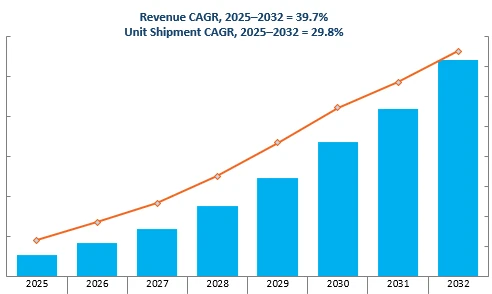
Revenue growth in China’s passenger vehicle navigation on autopilot (NOA) market is primarily driven by the increasing integration of NOA systems across mid-range and entry-level vehicles. As NOA becomes a standardized feature, OEMs are expanding its deployment across multiple vehicle models, significantly increasing market penetration.
The market is also witnessing a shift toward software-driven monetization models, including subscription-based services and feature upgrades enabled through OTA updates. This is creating new revenue streams and enhancing long-term profitability for OEMs and technology providers.
Investments in AI, high-performance computing, and mapping technologies are further supporting revenue expansion in China’s passenger vehicle navigation on autopilot (NOA) market. These advancements are improving system reliability and enabling more complex urban driving capabilities.
Overall, strong consumer demand, technological innovation, and regulatory support are expected to sustain high revenue growth in China’s passenger vehicle navigation on autopilot (NOA) market over the forecast period.
Growth Drivers: China’s Passenger Vehicle Navigation on Autopilot (NOA) Market
China’s passenger vehicle navigation on autopilot (NOA) market is driven by several key factors that are accelerating adoption and commercialization. One of the primary drivers is increasing OEM competition, which is pushing manufacturers to standardize NOA features across vehicle segments. This competitive pressure is transforming NOA into a baseline feature rather than a premium offering.
Technological advancements in AI, sensor fusion, and autonomous driving algorithms are also driving growth in China’s passenger vehicle navigation on autopilot (NOA) market. These innovations are enabling improved perception, decision-making, and system reliability, particularly in complex urban environments.
Cost reduction is another significant driver, with declining prices of sensors, compute platforms, and software development enabling broader adoption across mid-range vehicles. Platform standardization is further reducing integration complexity and accelerating deployment timelines.
Regulatory support is playing a crucial role in enabling market growth. Structured frameworks for OTA updates, safety validation, and driver monitoring systems are fostering consumer trust and supporting commercialization.
Additionally, ecosystem maturity, including collaboration among OEMs, Tier 1 suppliers, and technology providers, is accelerating innovation and deployment. These drivers collectively position China’s passenger vehicle navigation on autopilot (NOA) market for sustained high growth.
Growth Restraints: China’s Passenger Vehicle Navigation on Autopilot (NOA) Market
Despite strong growth prospects, China’s passenger vehicle navigation on autopilot (NOA) market faces several challenges that could impact its expansion. One of the primary restraints is regulatory uncertainty, particularly regarding approval processes for new features and OTA updates. Compliance requirements can increase costs and delay deployment timelines.
Pricing pressure is another significant challenge in China’s passenger vehicle navigation on autopilot (NOA) market. Intense competition among OEMs is leading to feature bundling with limited price premiums, restricting monetization potential. High software development and validation costs further impact profitability.
Urban driving complexity also presents a major restraint. Dense traffic, mixed road users, and unstructured environments make it difficult to achieve consistent performance, limiting scalability of urban NOA solutions.
Consumer trust remains a concern, as safety incidents and media scrutiny can influence adoption rates. Misunderstanding of system capabilities may lead to overreliance, increasing safety risks.
Additionally, fragmented standards and ecosystem coordination gaps are creating integration challenges, slowing deployment and increasing development costs. Addressing these restraints will be critical for sustaining growth in China’s passenger vehicle navigation on autopilot (NOA) market.
Competitive Landscape: China’s Passenger Vehicle Navigation on Autopilot (NOA) Market
China’s passenger vehicle navigation on autopilot (NOA) market is highly competitive, with participation from a diverse range of OEMs, Tier 1 suppliers, and technology companies. The market includes over 20 OEMs and numerous suppliers, reflecting a dynamic and rapidly evolving ecosystem.
Key competitors in China’s passenger vehicle navigation on autopilot (NOA) market include global automotive technology leaders such as Bosch, Continental, and ZF, alongside technology companies such as Huawei, NVIDIA, and Qualcomm. Chinese players, including Baidu Apollo and SenseTime, are also playing a significant role in driving innovation and commercialization.
Competition is primarily based on factors such as technology performance, cost efficiency, reliability, and ecosystem integration. Companies are focusing on developing scalable and modular autonomy platforms that can be deployed across multiple vehicle models.
Strategic partnerships and collaborations are a key feature of the competitive landscape. OEMs are increasingly partnering with technology providers to accelerate development and reduce time-to-market. Mergers and acquisitions are also shaping the market, enabling companies to strengthen their capabilities and expand their product portfolios.
The distribution structure includes hardware suppliers, ADAS providers, Tier 1 integrators, and OEMs, creating a complex value chain. As China’s passenger vehicle navigation on autopilot (NOA) market continues to evolve, competition is expected to intensify, driving further innovation and market consolidation.
Scope of Analysis
Segmentation
Regional Segmentation
Understanding Navigation on Autopilot (NOA)
NOA Classification
Recent Regulatory Landscape Snapshot of China’s NOA Market
Key Findings
Why is it Increasingly Difficult to Grow?
The Strategic Imperative 8™
The Impact of the Top 3 Strategic Imperatives on the Chinese Passenger Vehicle NOA Industry
Value Chain
Building Blocks of NOA in China’s PV Market
Sensor Suite Difference Between L2 and NOA
Evolving Business Models Are Redefining NOA Commercialization in China
Competitive Environment
Key Competitors
Growth Metrics
Growth Drivers
Growth Restraints
Forecast Considerations
Revenue and Unit Shipment Forecast
Forecast by Classification
Unit Shipment Forecast by Classification
Revenue Forecast Analysis
Pricing Trends and Forecast
Pricing Trends and Forecast Analysis
Key Regulations
Top Trends in China’s Autonomous Driving Market
Trend 1: Urban NOA Is Scaling Fast
Trend 2: Shift Towards End-to-End AI
Trend 3: Map-Free/Light-Map NOA Is Going Mainstream
Trend 4: Regulation Tightening Is Reshaping NOA
Trend 5: NOA Is Getting Commoditized Fast
Future Roadmap
Tesla Autonomous Driving Capability
BYD Autonomous Driving Capability
Zeekr Autonomous Driving Capability
Geely Autonomous Driving Capability
Changan Autonomous Driving Capability
Price Positioning of Players Under $65,000 with NOA Feature
Price Positioning of Players $98,000 and Above with NOA Feature
Supplier Profiling
Momenta
Huawei
Horizon Robotics
DeepRoute.ai
QCraft
Growth Opportunity 1: Mass Market Standardization
Growth Opportunity 2: Urban NOA Scaling from Pilots to Nationwide Coverage
Growth Opportunity 3: Modular NOA with Low-Cost Sensors and Scalable Design
Benefits and Impacts of Growth Opportunities
Next Steps
List of Exhibits
Legal Disclaimer
Frequently Asked Questions (FAQ) – China’s Passenger Vehicle Navigation on Autopilot (NOA) Market
1. What is China’s passenger vehicle navigation on autopilot (NOA) market?
China’s passenger vehicle navigation on autopilot (NOA) market refers to advanced driver assistance systems that enable supervised autonomous driving using AI, sensors, and mapping technologies across highways and urban environments.
2. What is the current size of China’s passenger vehicle navigation on autopilot (NOA) market?
China’s passenger vehicle navigation on autopilot (NOA) market was valued at approximately USD 2.60 billion in 2025 and is projected to grow significantly by 2032, driven by rapid commercialization and adoption across vehicle segments.
3. What are the key growth drivers in China’s passenger vehicle navigation on autopilot (NOA) market?
Key growth drivers include increasing OEM competition, advancements in AI and sensor technologies, declining hardware costs, regulatory support, and growing demand for intelligent driving features.
4. What is the difference between highway NOA and urban NOA?
Highway NOA operates in structured environments with predictable traffic conditions, while urban NOA handles complex driving scenarios such as dense traffic, pedestrians, and unstructured roads.
5. Which companies are leading China’s passenger vehicle navigation on autopilot (NOA) market?
Leading companies include Bosch, Continental, Huawei, NVIDIA, Qualcomm, Baidu Apollo, and various Chinese OEMs and autonomous driving technology providers.
6. What technologies enable NOA systems?
NOA systems rely on artificial intelligence, sensor fusion, LiDAR, radar, cameras, high-definition maps, and real-time data processing platforms to enable safe and efficient autonomous driving.
7. What challenges does China’s passenger vehicle navigation on autopilot (NOA) market face?
Challenges include regulatory uncertainties, pricing pressures, urban driving complexity, safety concerns, and ecosystem integration issues that can slow deployment and adoption.
8. How is regulation impacting the NOA market in China?
Regulation is enabling structured commercialization by ensuring safety through frameworks for OTA updates, driver monitoring, and algorithm validation, while also increasing compliance requirements.
9. What role does AI play in China’s passenger vehicle navigation on autopilot (NOA) market?
AI plays a critical role by enabling perception, decision-making, path planning, and real-time responses to complex driving scenarios, particularly in urban environments.
10. What is the future outlook for China’s passenger vehicle navigation on autopilot (NOA) market?
The market is expected to experience strong growth driven by technological advancements, increasing adoption across vehicle segments, regulatory support, and the expansion of urban NOA capabilities.
Speak directly with our analytics experts for tailored recommendations.
Recent related Infotainment and Telematics research
25 Sep 2026 | Global | Technology Research
Growth Opportunities in Next-Gen Wireless EV charging, Automotive Grade IoT module, Autonomous driving, E-bike Platform, UAVs, and 4D Radars
The Mobility Technology Opportunity Engine (TOE) covers innovations pertaining to EV charging, Automotive Grade IoT module, Autonomous driving, E-bike Platform, UAVs, and 4D Radars.The purpose of the Mobility Technology TOE is to raise awareness of global technology innovations in self-propelled gro...
22 Sep 2026 | Global | Market Research
Growth Opportunities in the Global EV Power Electronics Market, 2025–2032
The rapid push toward e-mobility is accelerating adoption of advanced power electronics by major OEMs. Power electronics underpin electric vehicle reliability, efficiency, and performance. Core systems, including traction inverters, onboard chargers, and DC-DC converters, are gaining strategic impor...
10 Sep 2026 | Global | Market Research
Global Robobus Market, 2026–2032
The global robobus market is at an inflection point. Large autonomous buses are no longer a concept—they are running as paid public services in China, South Korea, Norway, Switzerland, Finland, and the Netherlands. Europe is in its first wave of real deployment, with active L4 commercial service acr...
03 Sep 2026 | Global | Technology Research
Photonic and Optical Computing Chips for AI and Data Center Acceleration
The study evaluates photonic and optical computing technologies as critical enablers of next-generation AI infrastructure, addressing growing bandwidth, latency, power consumption, and scalability constraints associated with copper-based interconnects. The analysis covers photonic integrated circuit...
02 Sep 2026 | Global | Frost Radar
Frost Radar™: In-Vehicle Audio Technology Stacks, 2026
The in-vehicle entertainment industry is going through a dynamic shift. Audio entertainment in the passenger vehicle is no longer limited to music playback through multiple sources. The rise of ADAS/AD and SDVs have made audio a critical part of the passenger vehicle. Audio developers must now cater...
Purchase includes:
- Report download
- Growth Dialog™ with our experts
Growth Dialog™
A tailored session with you where we identify the:- Strategic Imperatives
- Growth Opportunities
- Best Practices
- Companies to Action
Impacting your company's future growth potential.
Market momentum is being propelled by intensifying OEM competition, which is standardizing NOA as a core vehicle feature rather than a premium add-on. Concurrently, falling costs across compute, sensors, and software are improving platform affordability, enabling scalable deployment across multiple vehicle segments. Urban NOA is emerging as a key differentiator, particularly in China’s complex urban environments, where daily usability enhances customer engagement and brand perception. Ecosystem maturity spanning chipsets, tools, and development platforms is further accelerating deployment timelines and supporting reliable, cost-efficient scale-up.
Regulatory evolution will remain commercialization-enabling yet safety-anchored. Authorities are formalizing governance across OTA approvals, algorithm traceability, driver monitoring enforcement, and HD map licensing, while gradually expanding urban operational domains. This structured oversight is fostering stronger consumer trust and creating a controlled pathway toward conditional autonomy without prematurely shifting liability frameworks.
However, growth will be moderated by structural restraints. Regulatory tightening may slow feature rollouts and expand OEM compliance costs, while safety incidents and media scrutiny continue to influence consumer trust. Monetization remains constrained by price competition, with many OEMs bundling NOA with limited price uplift, compounded by customer perception equating L2 ADAS with NOA. Additionally, urban complexity, dense traffic, mixed road users, and unstructured driving environments pose technical scaling challenges, while fragmented standards and ecosystem coordination gaps extend integration timelines.
Deployment penetration is also undergoing structural rebalancing. While highway NOA continues to anchor near-term scale, its share will gradually dilute as urban NOA expands from pilot corridors to multi-city coverage, signaling rising algorithm sophistication and growing regulatory confidence in supervised urban autonomy.
Investment intensity is set to accelerate across the autonomy stack, spanning AI perception models, end-to-end planning, domain controllers, LiDAR cost optimization, and high-precision mapping, alongside substantial cloud investments supporting data training loops. OEMs and technology players are expected to allocate multi-billion-dollar budgets to secure autonomy data advantages and compute leadership.
Supplier ecosystems are concurrently consolidating around modular, cost-optimized AD platforms engineered for scale, enabling NOA penetration into mid- and entry-segment passenger vehicles. Supported by government pilot corridor expansion and infrastructure readiness, China is positioned to sustain the world’s fastest supervised-autonomy commercialization and monetization trajectory through the early 2030s.
Collectively, these dynamics signal NOA’s evolution from an optional ADAS enhancement into a foundational software-defined mobility layer where scaled deployment, recurring monetization, regulatory enablement, and cost-optimized hardware converge to establish supervised autonomy as a central revenue and competitive differentiation pillar in China’s passenger vehicle market.
| Deliverable Type | Market Research |
|---|---|
| Industries | Automotive |
| No Index | No |
| Is Prebook | No |
| Keyword 1 | China NOA market growth |
| Keyword 2 | autonomous driving China market |
| Keyword 3 | passenger vehicle automation China |
| Podcast | No |
| Predecessor | None |
| WIP Number | PG7Y-01-00-00-00 |