 USD
USD GBP
GBP  CNY
CNY  EUR
EUR  INR
INR  JPY
JPY  MYR
MYR  ZAR
ZAR  KRW
KRW  THB
THB 


HVAC Equipment, North America, 2023–2031
Electrification, Refrigerant Transition, and Energy Efficiency Mandates Driving Transformational Growth
22-Jul-2026
North America
Market Research
M1J7-01-00-00-00
EN_2026_34752
Key Takeaways: North America HVAC Equipment Market
- The North America HVAC Equipment Market is entering a higher-value growth phase driven by electrification, refrigerant transition, energy-efficiency requirements, and replacement demand.
- Market revenue is projected to increase from $60.02 billion in 2025 to $90.14 billion by 2031, representing a 7.0% CAGR.
- The North America HVAC Equipment Market is being reshaped by heat pump adoption, low-global-warming-potential refrigerants, smart HVAC controls, and increasingly stringent building-performance requirements.
- Replacement and retrofit activity is becoming a major source of demand as aging HVAC systems face tighter efficiency, environmental, and regulatory requirements.
- Data center expansion, particularly investments supporting AI workloads, is creating additional demand for chillers, precision cooling, liquid cooling, and other advanced thermal-management technologies.
- The market includes heating, ventilation, and cooling equipment, with applications spanning commercial, industrial, and residential end users.
- Labor shortages, regulatory complexity, pricing pressures, refrigerant-transition challenges, and cybersecurity concerns for connected HVAC systems remain important constraints.
Report Summary: North America HVAC Equipment Market
The North America HVAC Equipment Market is experiencing sustained growth as electrification, refrigerant transition, energy-efficiency mandates, replacement demand, and digitalization reshape heating, ventilation, and air-conditioning requirements across the region. According to the supplied research, market revenue reached $60.02 billion in 2025 and is forecast to reach $90.14 billion by 2031, reflecting a 7.0% CAGR.
The North America HVAC Equipment Market is benefiting from rising replacement demand as building owners and consumers upgrade aging equipment to comply with increasingly stringent efficiency and environmental requirements. Heat pumps, hybrid systems, low-global-warming-potential refrigerants, modular equipment, and connected HVAC technologies are becoming increasingly important within the market.
Data center development is another emerging demand center. Increasing investment in facilities supporting AI workloads is generating demand for advanced thermal-management technologies, including precision cooling and liquid cooling. This trend is expanding the addressable opportunity for specialized HVAC equipment beyond conventional commercial and residential applications.
The market is also transitioning toward higher-value equipment categories. Premiumization is supported by heat pumps, high-efficiency systems, smart controls, modular solutions, and connected equipment that can improve performance and optimize energy consumption.
Despite strong fundamentals, the North America HVAC Equipment Market faces labor shortages, regulatory complexity, refrigerant-transition challenges, pricing pressures, tariff-related affordability concerns, and cybersecurity issues associated with connected HVAC systems.
Analyst Words: North America HVAC Equipment Market
“The North American HVAC equipment market is entering a higher-value growth phase, where electrification, the low-GWP refrigerant transition, and tightening efficiency standards are reshaping product mix and accelerating replacement cycles. Demand is increasingly defined by sustainability, performance, and integration into smart building platforms, with surging data center cooling needs adding a new layer of premium growth.”
— Giselle Canahuati, Lead Analyst, HVAC Equipment Market
The analyst perspective highlights a structural transition within the North America HVAC Equipment Market from conventional equipment replacement toward higher-performance, electrified, connected, and sustainability-oriented solutions.
Market Overview & Trends: North America HVAC Equipment Market
The North America HVAC Equipment Market is undergoing a transition from traditional equipment replacement toward electrified, connected, efficient, and environmentally compliant HVAC systems. The supplied research identifies electrification, refrigerant transition, energy-efficiency mandates, replacement demand, smart buildings, and data center investment as central forces shaping market development.
The market generated $60.02 billion in revenue in 2025 and is projected to reach $90.14 billion by 2031. The forecast represents a 7.0% CAGR between 2025 and 2031, indicating sustained expansion across residential, commercial, and industrial applications.
Electrification and Heat Pump Adoption
Electrification is becoming an increasingly important structural trend. Policy support and lifecycle-cost benefits are encouraging the adoption of heat pumps and hybrid systems. These technologies can support energy-efficiency objectives while contributing to the broader transition away from conventional fossil-fuel-based heating technologies.
The North America HVAC Equipment Market is therefore seeing increasing attention toward heat pumps, including air-source, water-source, and ground-source configurations.
Refrigerant Transition
The transition toward low-global-warming-potential refrigerants is influencing equipment design, replacement cycles, manufacturing requirements, and professional training. Manufacturers and building owners are increasingly required to adopt HVAC equipment that aligns with evolving environmental and safety requirements.
This transition is also creating replacement and upgrade opportunities, although temporary disruption, regulatory uncertainty, refrigerant availability, and technician training requirements can create implementation challenges.
Energy Efficiency and Building Performance
Increasing building-performance requirements are supporting demand for higher-efficiency HVAC systems. Building owners are increasingly evaluating equipment based not only on initial purchase price but also on lifecycle cost, energy consumption, regulatory compliance, and operating performance.
Smart and Connected HVAC
The shift toward smart buildings is accelerating the integration of HVAC equipment with connected controls, remote monitoring, diagnostics, and energy-management platforms. Connected equipment can provide opportunities for predictive maintenance and energy optimization while creating new requirements around cybersecurity and data privacy.
Data Center Cooling
Data center construction to support AI workloads represents an emerging high-value demand segment. High-density computing environments require specialized thermal-management infrastructure, creating opportunities for precision cooling, liquid cooling, chillers, applied HVAC equipment, and related thermal solutions.
Replacement and Retrofit Demand
Aging HVAC infrastructure is supporting replacement and retrofit activity. Decarbonization requirements, refrigerant regulations, and efficiency standards can compress equipment lifecycles and encourage customers to replace older systems with higher-efficiency alternatives.
Scope of Analysis: North America HVAC Equipment Market
The North America HVAC Equipment Market analysis covers manufacturer-level revenue generated from the sale of heating, ventilation, and air-conditioning (HVAC) equipment in the United States and Canada. The study period spans 2023–2031, with 2025 as the base year and 2026–2031 as the forecast period, and all revenue is presented in US dollars. The analysis excludes revenue from HVAC controls, installation, maintenance, channel-partner margins, and value-added services such as consulting, design, installation, and maintenance. Revenue is attributed to the country where the equipment is sold rather than where it is manufactured. The market covers unitary equipment, applied equipment, chiller equipment, heat pumps, and ductless systems and other equipment, while HVAC types are categorized into heating, ventilation, and cooling. From an end-user perspective, the study covers commercial, industrial, and residential applications. Commercial applications include offices, retail stores, education, healthcare, hospitality, data centers, transportation, government, and public buildings; industrial applications include warehouses, manufacturing plants, factories, life-science facilities, power plants, and laboratories; and residential applications include individual homes, condominiums, apartments, and townhouses.
Market Segmentation Analysis: North America HVAC Equipment Market
The North America HVAC Equipment Market can be analyzed across HVAC type, equipment category, and end-user vertical.
Heating
Heating equipment represents an important component of the regional HVAC ecosystem. Electrification is changing the product mix, with heat pumps and hybrid systems receiving increasing attention. Replacement activity is also supporting demand as customers upgrade aging heating infrastructure to improve efficiency and comply with changing environmental requirements.
Ventilation
Ventilation equipment supports indoor air movement, air quality, and building environmental performance. Commercial and institutional facilities represent important applications because offices, healthcare facilities, educational buildings, hospitality properties, and public buildings require managed ventilation systems.
The increasing emphasis on building performance and smart-building integration can encourage investment in more sophisticated ventilation solutions.
Cooling
Cooling represents a major portion of HVAC equipment demand across commercial, industrial, residential, and data center applications. Increasing cooling requirements associated with computing infrastructure are creating additional opportunities for chillers, applied HVAC systems, precision cooling, and liquid cooling.
Unitary Equipment
Unitary equipment includes systems such as air-handling units and rooftop units. These systems serve a wide range of commercial and other building applications and are influenced by replacement cycles, efficiency requirements, and demand for modular and easier-to-install equipment.
Applied Equipment
Applied equipment includes central air-handling units and other larger-scale systems. These solutions are relevant to commercial and industrial facilities requiring centralized HVAC management.
Chiller Equipment
Chillers include air- and water-cooled systems and are particularly relevant to larger commercial, industrial, and data center applications. Rising data center investment is creating opportunities for advanced chiller and thermal-management technologies.
Heat Pumps
Heat pumps are a strategically important segment within the North America HVAC Equipment Market because electrification and energy-efficiency objectives are encouraging their adoption. The research specifically identifies air-source, water-source, and ground-source heat pumps.
Ductless Systems and Others
Ductless HVAC solutions and other equipment categories provide flexibility for residential, commercial, and retrofit applications. Their modular characteristics can be particularly relevant where installation constraints or labor availability make simpler deployment advantageous.
Commercial Segment
The commercial segment includes:
- Offices
- Retail stores
- Education
- Healthcare
- Hospitality
- Data centers
- Transportation
- Government buildings
- Public buildings, including religious facilities, museums, and galleries
Commercial demand is being supported by replacement cycles, smart-building initiatives, energy-efficiency requirements, and data center construction.
Industrial Segment
Industrial applications include:
- Warehouses
- Manufacturing plants
- Factories
- Life-science facilities
- Power plants
- Laboratories
Industrial facilities can require specialized heating, ventilation, cooling, and process-related thermal-management capabilities.
Residential Segment
Residential applications include:
- Individual houses
- Condominiums and apartments
- Townhouses
Residential demand is influenced by replacement requirements, electrification, heat pump adoption, efficiency standards, affordability, and available rebates or incentives.
Revenue & Spending Forecast: North America HVAC Equipment Market
The supplied forecast indicates sustained revenue expansion for the North America HVAC Equipment Market.
The market increases from $55.16 billion in 2023 to $90.14 billion in 2031. The supplied study identifies a 7.0% CAGR for 2025–2031.
The 2025 base-year revenue is $60.02 billion, while revenue is forecast to increase to $90.14 billion in 2031. This represents an absolute increase of approximately $30.12 billion over the period.
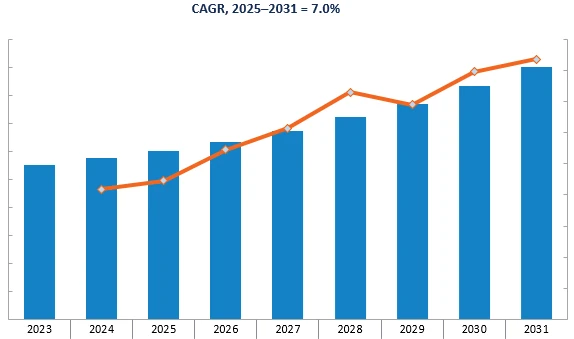
The forecast indicates accelerating annual growth toward the end of the forecast period, with the reported growth rate reaching 8.4% in 2031. This reflects strengthening replacement demand, electrification, efficiency requirements, data center investment, and adoption of higher-value HVAC technologies.
The supplied material does not provide a separate spending forecast by customer category; therefore, expenditure figures should not be inferred beyond the reported equipment revenue forecast.
Growth Drivers: North America HVAC Equipment Market
1. Electrification and Heat Pump Adoption
Policy support and lifecycle-cost considerations are accelerating heating electrification. Heat pumps and hybrid systems are gaining importance as customers seek equipment capable of improving energy performance while supporting decarbonization objectives.
2. Stricter Building Performance Requirements
Increasing energy-efficiency requirements are encouraging replacement of legacy HVAC systems. Building owners are increasingly seeking equipment that delivers improved efficiency, lower operating costs, and compliance with evolving standards.
3. Smart Building Adoption
Smart-building development is increasing demand for HVAC systems with integrated controls, remote monitoring, diagnostics, and energy optimization. Connected equipment can improve visibility into system performance and support more proactive maintenance.
4. Data Center Expansion
Data center construction associated with AI workloads is becoming an important demand catalyst. High-density computing environments require sophisticated thermal-management systems, creating opportunities for chillers, precision cooling, applied HVAC, and liquid-cooling technologies.
5. Low-GWP Refrigerant Transition
The move toward low-global-warming-potential refrigerants is accelerating replacement and upgrade activity. Manufacturers and building owners must increasingly adapt equipment to comply with environmental and safety requirements.
6. Skilled-Labor Constraints
Although labor shortages are a restraint, they are also encouraging demand for modular and easier-to-install HVAC equipment. Products that reduce commissioning complexity and enable faster installation can address workforce constraints.
Growth Restraints: North America HVAC Equipment Market
1. Skilled-Labor Shortages
A shortage of qualified HVAC professionals can delay installation, commissioning, servicing, and adoption of increasingly sophisticated equipment. Advanced systems can require additional training and technical expertise.
2. Reduced Incentives and Higher Affordability Pressure
The elimination or reduction of tax credits and rebates, combined with tariffs and higher equipment costs, can affect replacement economics. Higher upfront costs may cause some customers to postpone replacement decisions.
3. Refrigerant Transition Complexity
The transition toward lower-GWP refrigerants can create temporary disruption because of refrigerant availability, safety considerations, equipment redesign, and uncertainty surrounding implementation timelines. HVAC professionals also require training on new technologies and refrigerants.
4. Regulatory Complexity
Regulatory requirements can vary across federal, state, and local jurisdictions. Differences in requirements can complicate product planning, equipment specifications, compliance, and channel execution.
5. Residential HVAC Inventory
Excess inventory can restrict short-term manufacturer sales because channel partners may continue fulfilling orders using existing stock rather than purchasing new equipment.
6. Cybersecurity and Data Privacy
Increasing HVAC connectivity introduces cybersecurity and data privacy concerns. Smart HVAC systems can connect to building networks and digital platforms, increasing the importance of secure system architecture and data-management practices.
Competitive Landscape: North America HVAC Equipment Market
The supplied research identifies the North America HVAC Equipment Market as a mature/modernization market with more than 20 active competitors in 2025. The market has a reported 55.9% revenue concentration among the top five companies, indicating a meaningful presence of leading suppliers alongside other market participants.
The research does not provide the names of those top five competitors in the supplied materials, so specific company rankings or market-share assignments cannot be established from the source.
Competitive Factors
Competition in the North America HVAC Equipment Market is shaped by several factors:
- Product efficiency
- Equipment performance
- Technology integration
- Lifecycle cost
- Refrigerant compliance
- Installation requirements
- Product reliability
- Smart-building compatibility
- Service and support capabilities
- Ability to address specialized applications such as data centers
Product Portfolio Expansion
Manufacturers are strengthening their positions by expanding portfolios toward electrified, high-efficiency, connected, modular, and low-GWP HVAC systems. This reflects changing customer requirements and the increasing importance of sustainability and lifecycle performance.
Premiumization
Premiumization is an important competitive trend. Heat pumps, connected systems, advanced controls, modular equipment, and specialized cooling solutions can command higher value because customers increasingly evaluate HVAC equipment based on performance, efficiency, integration, and lifecycle economics.
Data Center Opportunity
Data centers are creating a distinct competitive opportunity. AI workloads and high-density computing require increasingly advanced thermal-management infrastructure. Suppliers capable of addressing precision cooling, liquid cooling, chillers, and other high-performance requirements can participate in this expanding application area.
Smart HVAC Competition
Connected HVAC solutions are becoming increasingly important as building owners adopt smart-building technologies. Manufacturers are competing not only on physical equipment but also on the ability to provide integrated controls, monitoring, diagnostics, energy optimization, and digital capabilities.
Replacement and Retrofit Competition
Replacement demand creates opportunities for manufacturers with broad portfolios capable of addressing legacy-system upgrades. Regulatory requirements, refrigerant changes, and efficiency standards are encouraging customers to consider higher-performance equipment when replacing aging systems.
Market Structure
The 55.9% revenue concentration among the top five companies indicates that a relatively concentrated group of leading suppliers captures a substantial portion of market revenue. At the same time, the presence of more than 20 active competitors demonstrates that the market includes multiple suppliers competing across equipment categories and customer segments.
The supplied source does not provide sufficient information to rank individual companies, identify the top five by name, or assign individual market shares. Accordingly, the competitive assessment is limited to the documented market structure and competitive factors.
Scope of Analysis
Global HVAC Equipment Vertical Segmentation
Why is it Increasingly Difficult to Grow?
The Strategic Imperative 8™
The Impact of the Top 3 Strategic Imperatives on the North American HVAC Equipment Industry
Growth Metrics
Growth Drivers
Growth Restraints
Forecast Methodology and Assumptions
Revenue Forecast
Revenue Forecast Analysis
HVAC Demand Trends By Region
Revenue Forecast by Equipment Type
Revenue Forecast Analysis by Equipment Type
Revenue Forecast by Vertical
Revenue Forecast Analysis by Vertical
Megatrends Impacting North America HVAC Equipment
Distribution Channel
Distribution Channel Analysis
Competitive Environment
Revenue Share
Competitive Success Factors
Growth Opportunity 1: Mission-Critical Environmental and Thermal Management
Growth Opportunity 2: Cold Climate Heat Pumps
Growth Opportunity 3: Replacement Market from Refrigerant and Efficiency Transition
Growth Opportunity 4: Modular Prefabricated HVAC Units
Benefits and Impacts of Growth Opportunities
Next Steps
List of Exhibits
Legal Disclaimer
Frequently Asked Questions: North America HVAC Equipment Market
1. What is the North America HVAC Equipment Market?
The North America HVAC Equipment Market covers manufacturer-level revenue from heating, ventilation, and air-conditioning equipment sold in the United States and Canada. The study covers commercial, industrial, and residential applications and excludes HVAC controls, installation, and maintenance revenue.
2. How large is the North America HVAC Equipment Market?
The North America HVAC Equipment Market generated approximately $60.02 billion in revenue in 2025. The supplied forecast projects the market to reach $90.14 billion by 2031.
3. What is the expected growth rate of the North America HVAC Equipment Market?
The market is forecast to grow at a 7.0% CAGR from 2025 to 2031. Annual growth is projected to reach 8.4% by 2031 according to the supplied forecast.
4. What are the major segments of the North America HVAC Equipment Market?
The North America HVAC Equipment Market is segmented by HVAC type into heating, ventilation, and cooling. Equipment categories include unitary equipment, applied equipment, chiller equipment, heat pumps, and ductless systems and others. End users include commercial, industrial, and residential sectors.
5. What is driving growth in the North America HVAC Equipment Market?
Key growth drivers include electrification, heat pump adoption, stricter building-performance requirements, smart-building adoption, data center construction, the transition to low-GWP refrigerants, and replacement of aging HVAC equipment.
6. Why are data centers important to the HVAC equipment market?
Data center investments supporting AI workloads are increasing demand for advanced thermal-management solutions. High-density computing environments require technologies such as precision cooling, chillers, applied HVAC systems, and liquid cooling, creating additional opportunities within the North America HVAC Equipment Market.
7. How is the refrigerant transition affecting the North America HVAC Equipment Market?
The transition toward low-global-warming-potential refrigerants is accelerating equipment replacement and upgrades. It is also creating requirements related to equipment redesign, refrigerant availability, safety, regulatory compliance, and technician training.
8. What are the major restraints affecting the North America HVAC Equipment Market?
Major restraints include skilled-labor shortages, affordability pressure from higher equipment costs, refrigerant-transition complexity, regulatory differences across jurisdictions, excess residential HVAC inventory, and cybersecurity and data privacy concerns related to connected HVAC systems.
9. Which end-user sectors are covered by the North America HVAC Equipment Market?
The study covers commercial, industrial, and residential end users. Commercial applications include offices, retail, healthcare, hospitality, education, transportation, government buildings, and data centers. Industrial applications include factories, warehouses, manufacturing plants, laboratories, power plants, and life-science facilities.
10. What is the forecast for the North America HVAC Equipment Market through 2031?
The supplied forecast indicates that the North America HVAC Equipment Market will increase from $60.02 billion in 2025 to $90.14 billion in 2031, representing a 7.0% CAGR during 2025–2031. Growth is supported by electrification, replacement demand, energy-efficiency requirements, refrigerant transition, smart buildings, and data center cooling requirements.
Speak directly with our analytics experts for tailored recommendations.
Recent related Homes and Buildings research
09 Oct 2026 | Global | Frost Radar
Frost Radar™: Smart Building Solutions in Healthcare, 2026
Healthcare facilities are some of the most complex and mission-critical environments in the smart buildings market, and investment priorities now extend beyond energy management to indoor environmental quality, critical infrastructure monitoring, asset visibility, and workflow optimization. Revenue ...
17 Sep 2026 | Asia Pacific | Frost Radar
Frost Radar™: Facility Management in Malaysia, 2026
Malaysia's facility management (FM) market is transitioning from labor-intensive, compliance-driven service delivery to technology-enabled, outcome-oriented, and sustainability-integrated operating models. Competitive differentiation increasingly depends on providers’ ability to combine integrated F...
27 Aug 2026 | Global | Market Research
Smart Building Solutions, Global, 2025–2031
Smart building solutions encompass the integrated suite of hardware, software, and digital services that enable the automation, optimization, and intelligent management of commercial, educational, healthcare, industrial, datacenters and other buildings.The scope includes: Hardware: Automation contro...
07 Aug 2026 | Asia Pacific | Frost Radar
Frost Radar™: Facility Management in Thailand, 2026
Thailand's facility management (FM) market is transitioning from labor-intensive, task-based service delivery to integrated, technology-enabled, and outcome-driven operating models. Customer expectations for operational efficiency, sustainability, resilience, digital visibility, and business outcome...
28 Jul 2026 | Global | Market Research
Building Construction Robotics, Global, 2025–2031
The global building construction robotics market is transitioning from proof of concept to selective deployment, shifting focus from technological feasibility to execution at the project and contractor level. Growth is influenced by the ability of firms to redesign workflows, manage human robot coor...
Purchase includes:
- Report download
- Growth Dialog™ with our experts
Growth Dialog™
A tailored session with you where we identify the:- Strategic Imperatives
- Growth Opportunities
- Best Practices
- Companies to Action
Impacting your company's future growth potential.
Rising replacement demand, the transition to low global warming potential refrigerants, and the widespread adoption of heat pumps and smart HVAC systems underpin this growth. Additionally, significant data center investments, particularly to support AI workloads, are elevating demand for advanced thermal management solutions, including precision and liquid cooling technologies.
Despite short-term headwinds such as regulatory complexity, pricing pressures, and labor shortages, market fundamentals remain strong. OEMs are strengthening their positioning through portfolio expansion in electrified and high-efficiency systems, while partnerships across building automation and energy ecosystems are becoming more critical. Overall, the market is transitioning toward integrated, high-performance HVAC solutions that align with decarbonization and digitalization trends.
Author: Giselle Canahuati
| Deliverable Type | Market Research |
|---|---|
| Industries | Environment |
| No Index | No |
| Is Prebook | No |
| Keyword 1 | North America HVAC Equipment Market Report |
| Keyword 2 | HVAC Industry Analysis |
| Keyword 3 | HVAC Equipment Market Forecast |
| Podcast | No |
| Predecessor | None |
| WIP Number | M1J7-01-00-00-00 |