 USD
USD GBP
GBP  CNY
CNY  EUR
EUR  INR
INR  JPY
JPY  MYR
MYR  ZAR
ZAR  KRW
KRW  THB
THB 


Rear-Seat Entertainment Market, United States, 2026–2032
The integration of HD Displays and AI is Driving Transformational Growth by Turning In-vehicle Cabins into Personalized Digital Hubs, Driving Demand for Advanced Rear-seat Entertainment
21-Apr-2026
North America
Market Research
PG7X-01-00-00-00
AU_2026_34514
Report Summary: Rear-Seat Entertainment Market
The Rear-Seat Entertainment Market in the United States is witnessing strong momentum, driven by rising demand for premium in-cabin experiences, rapid advancements in display technologies, and the growing integration of connected vehicle ecosystems. The market was valued at USD 83.9 million in 2025 and is projected to reach USD 399.2 million by 2032, expanding at a robust CAGR of 29.7% from 2025 to 2032. This growth reflects the increasing importance of infotainment as a key differentiator across both luxury and mid-segment vehicles.
Key Market Trends & Insights
- The adoption of 5G connectivity and V2X integration is enabling seamless high-speed streaming, cloud gaming, and real-time digital services in vehicles.
- The transition toward software-defined vehicles (SDVs) is unlocking new monetization opportunities through subscription-based content and over-the-air (OTA) updates.
- Advanced display technologies such as OLED, MicroLED, and 4K panels are enhancing visual quality and enabling innovative form factors like retractable and partition-mounted screens.
- The automotive rear seat infotainment market is increasingly integrated with cloud platforms and content ecosystems, improving personalization and user engagement.
- Growing adoption of electric and autonomous vehicles is transforming rear-seat spaces into immersive digital environments, boosting demand across the broader In-vehicle Infotainment Market.
Market Size & Forecast
- 2025 Market Size: USD 83.9 Million
- 2032 Projected Market Size: USD 399.2 Million
- CAGR (2025–2032): 29.7%
The evolution of connected mobility, combined with consumer expectations for seamless digital experiences, is positioning the Rear-Seat Entertainment Market as a high-growth segment within the global automotive ecosystem.
Market Overview & Trends: Rear-Seat Entertainment Market
The Rear-Seat Entertainment Market is undergoing a structural transformation as vehicles shift from transportation tools to connected digital environments. The increasing penetration of advanced infotainment systems is redefining passenger experiences, particularly in premium and electric vehicles. Consumers now expect seamless access to streaming platforms, gaming, and productivity tools, aligning the automotive rear seat infotainment market closely with consumer electronics trends.
One of the most significant trends is the rise of software-defined vehicles (SDVs), enabling continuous updates, feature enhancements, and personalized content delivery. This shift allows OEMs to decouple hardware from software, unlocking recurring revenue streams through subscriptions and over-the-air (OTA) updates. In parallel, the deployment of 5G connectivity is enabling ultra-low latency and high-bandwidth applications, such as cloud gaming and real-time video streaming, enhancing the overall value proposition of the Rear-Seat Entertainment Market.
Display innovation is another critical driver. The transition from traditional LCDs to OLED and MicroLED panels is improving visual quality while enabling flexible form factors such as retractable ceiling-mounted screens and immersive partition displays. These advancements are particularly relevant in luxury and autonomous vehicles, where passenger comfort and entertainment are key differentiators.
Furthermore, the integration of AI is enabling personalized content recommendations, voice control, and adaptive user interfaces, enhancing user engagement. As part of the broader In-vehicle Infotainment Market, rear-seat systems are increasingly integrated with front-seat controls and mobile ecosystems, ensuring a unified digital experience.
Scope of Analysis: Rear-Seat Entertainment Market
This study provides a comprehensive evaluation of the Rear-Seat Entertainment Market in the United States, focusing on technological evolution, adoption trends, and competitive dynamics. The analysis covers the study period from 2025 to 2032, with 2025 as the base year and forecasts extending through 2032. Market sizing is conducted in USD, with a detailed assessment of revenue growth, unit shipments, and penetration trends.
The scope includes an in-depth examination of key system types, including overhead/ceiling-mounted displays, seat-back systems, and partition-mounted solutions. It also evaluates the integration of connectivity technologies, content ecosystems, and software platforms that define the modern automotive rear seat infotainment market.
From a strategic perspective, the study analyzes how OEMs, Tier 1 suppliers, and technology providers are leveraging partnerships with telecom operators, cloud platforms, and content providers to deliver enhanced in-cabin experiences. The role of 5G, AI, and edge computing in enabling next-generation infotainment capabilities is also assessed.
Additionally, the report explores monetization strategies, including subscription-based services, advertising, and data-driven personalization. It highlights key regulatory considerations, safety requirements, and design constraints that influence product development. The analysis ultimately provides actionable insights into how the Rear-Seat Entertainment Market is evolving within the broader In-vehicle Infotainment Market landscape.
Revenue & Spending Forecast: Rear-Seat Entertainment Market
The Rear-Seat Entertainment Market in the United States is poised for rapid expansion, driven by increasing penetration of connected vehicles, rising consumer demand for premium infotainment, and continuous advancements in display and connectivity technologies. The market is projected to grow from USD 83.9 million in 2025 to USD 399.2 million by 2032, registering a strong CAGR of 29.7% during the forecast period.
This growth trajectory reflects the accelerating adoption of rear-seat entertainment (RSE) systems across both luxury and mid-range vehicles. Unit shipments of RSE-enabled vehicles are also rising significantly, supported by increasing integration of high-resolution displays, AI-powered personalization, and seamless connectivity features. As vehicles evolve into digital ecosystems, automakers are prioritizing infotainment investments to enhance passenger experience and brand differentiation.
Spending trends indicate a clear shift toward high-value, feature-rich systems, particularly those integrated with cloud platforms and subscription-based content services. The expansion of 5G infrastructure is further enabling real-time streaming, gaming, and interactive applications, reinforcing the value proposition of the automotive rear seat infotainment market.
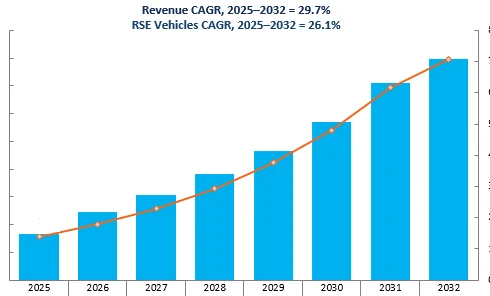
Additionally, RSE market penetration is expected to increase substantially over the forecast period, highlighting its growing importance within the broader In-vehicle Infotainment Market. As OEMs continue to focus on digital monetization strategies and immersive in-cabin experiences, the Rear-Seat Entertainment Market is set to witness sustained investment and long-term revenue growth.
Market Segmentation Analysis: Rear-Seat Entertainment Market
The Rear-Seat Entertainment Market is segmented based on system type, reflecting diverse use cases and vehicle configurations. Overhead/ceiling-mounted systems remain popular in larger vehicles such as SUVs and minivans, offering shared viewing experiences for multiple passengers. These systems are cost-effective and widely adopted in family-oriented vehicles, though they may face limitations related to driver visibility and screen positioning.
Seat-back systems represent a rapidly growing segment within the automotive rear seat infotainment market. These systems provide individualized displays integrated into front-seat headrests, enabling personalized content consumption. The increasing adoption of high-resolution OLED screens, integrated charging ports, and gaming capabilities is driving demand in premium and mid-range vehicles.
Partition-mounted systems are gaining traction in luxury and executive vehicles. These setups create a private, immersive environment by integrating large displays between the front and rear cabins. This segment is closely aligned with the rise of chauffeur-driven and autonomous vehicles, where passengers prioritize comfort, privacy, and productivity.
From a technology perspective, the market is influenced by advancements in connectivity, including 5G and V2X communication, as well as integration with cloud-based content platforms. The segmentation also reflects the growing convergence of the Rear-Seat Entertainment Market with the broader In-vehicle Infotainment Market, as systems become more interconnected and software-driven.
Growth Drivers: Rear-Seat Entertainment Market
The Rear-Seat Entertainment Market is driven by several high-impact factors that are reshaping the automotive experience. One of the primary drivers is the expansion of 5G connectivity and V2X integration, enabling high-speed data transmission and low-latency applications such as cloud gaming and real-time streaming.
Another key driver is rising consumer expectations for premium in-cabin experiences. Passengers increasingly demand personalized entertainment, seamless connectivity, and access to digital services, pushing OEMs to enhance their infotainment offerings. This trend is particularly evident in the automotive rear seat infotainment market, where differentiation is critical.
The transition to software-defined vehicles (SDVs) is also accelerating market growth. SDVs enable continuous feature updates, subscription-based services, and enhanced customization, creating new revenue opportunities for automakers.
Advancements in display technologies, including OLED, MicroLED, and 4K panels, are improving visual quality and enabling innovative form factors. These technologies are transforming rear-seat systems into immersive entertainment hubs.
Additionally, the rise of electric and autonomous vehicles is creating new use cases for rear-seat entertainment. As driving responsibilities shift away from passengers, the demand for engaging and productive in-cabin experiences is expected to increase significantly.
Growth Restraints: Rear-Seat Entertainment Market
Despite strong growth prospects, the Rear-Seat Entertainment Market faces several challenges. One of the most significant restraints is the Bring Your Own Device (BYOD) trend, where passengers prefer using personal smartphones and tablets instead of built-in systems. This trend reduces the perceived value of integrated RSE solutions.
High hardware costs also pose a barrier, particularly for mass-market vehicles. Advanced display systems, connectivity modules, and integration costs can significantly increase vehicle prices, limiting adoption in price-sensitive segments.
Connectivity limitations in certain vehicle platforms, especially those with legacy architectures, can hinder the performance of data-intensive applications. This challenge is particularly relevant for streaming and cloud-based services within the automotive rear seat infotainment market.
Another key restraint is the hardware obsolescence gap. Vehicles typically have long lifecycles, while infotainment technologies evolve rapidly, leading to outdated systems and reduced user satisfaction over time.
Finally, safety and regulatory constraints related to display placement and driver visibility can limit design flexibility. Compliance with safety standards requires extensive testing and can increase development timelines and costs.
Competitive Landscape: Rear-Seat Entertainment Market
The Rear-Seat Entertainment Market is characterized by a dynamic competitive environment involving OEMs, technology providers, content platforms, and telecom operators. Leading automotive players such as BMW, Cadillac, and Mercedes-Benz are at the forefront, leveraging advanced infotainment systems to differentiate their vehicles.
The market structure includes multiple stakeholders, including OEMs, mobile network operators (MNOs), and content providers. Strategic partnerships are a key competitive factor, with collaborations between automakers and technology companies enabling the integration of streaming services, cloud platforms, and AI-driven personalization.
Notable partnerships include integrations with Amazon Prime, Google Built-in platforms, and telecom providers, which enhance content accessibility and connectivity. These collaborations are critical in shaping the future of the automotive rear seat infotainment market and its alignment with the broader In-vehicle Infotainment Market.
Competition is driven by factors such as ecosystem integration, user experience, and regional readiness. Companies are increasingly focusing on software capabilities, data analytics, and subscription-based business models to gain a competitive edge. As the market evolves, the ability to deliver seamless, personalized, and scalable infotainment solutions will be a key determinant of success.
Rear-Seat Entertainment: Important Definitions
Key Findings
RSE Technology and Adoption Trends: Premium OEMs
RSE Technology and Adoption Trends: Volume OEMs
RSE Technology Comparison: Premium OEMs
RSE Technology Comparison: Volume OEMs
RSE Feature Penetration Among OEMs Offering RSE
Rear Seat Entertainment Penetration versus Key Technology Enablers
Scope of Analysis
Segmentation
Why is it Increasingly Difficult to Grow?
The Strategic Imperative 8™
The Impact of the Top 3 Strategic Imperatives on the RSE Industry
Addressable In-Vehicle Segments in RSE
Key Players in the RSE Ecosystem
RSE Value Chain
Automaker Type Segmentation
Vehicle Body Type Segmentation
Competitive Environment
Key Competitors
Regulations Impacting Automotive RSE
RSE Evolution
Evolution of IVI Architecture
EVs Accelerating RSE Adoption
Major Trends Impacting RSE
RSE Business Model Flow
Future Developments in RSE
Growth Metrics
Growth Drivers
Growth Restraints
Forecast Considerations
Total Addressable Market—Revenue and RSE Vehicle Forecast
Revenue Forecast Analysis
RSE Pricing Trends and Forecast Analysis
Growth Trend Analysis
Audi
BMW
Cadillac
Chevrolet
Chrysler
Ford
Genesis
GMC
Honda
Hyundai
Jeep
Lexus
Lincoln
Mercedes-Benz
Porsche
Range Rover
Tesla
Toyota
Amazon Fire TV
Google built-In
DTS AutoStage/TiVo
Growth Opportunity 1: AI-Driven Personalization & Independent RSE Intelligence
Growth Opportunity 2: Immersive Infotainment and Multisensory UX Design
Growth Opportunity 3: Rear-Seat Wellness & Productivity on Demand
Benefits and Impacts of Growth Opportunities
Next Steps
List of Exhibits
Legal Disclaimer
Frequently Asked Questions (FAQ) – Rear-Seat Entertainment Market
1. What is the market size and forecast of the Rear-Seat Entertainment Market?
The Rear-Seat Entertainment Market was valued at approximately USD 83.9 million in 2025 and is projected to reach around USD 399.2 million by 2032, growing at a CAGR of 29.7% during the forecast period.
2. What is driving growth in the automotive rear seat infotainment market?
Growth is driven by rising demand for premium in-cabin experiences, advancements in display technologies, increasing 5G connectivity, and the shift toward software-defined vehicles enabling personalized digital services.
3. How does the Rear-Seat Entertainment Market relate to the In-vehicle Infotainment Market?
The Rear-Seat Entertainment Market is a key segment within the broader In-vehicle Infotainment Market, focusing specifically on passenger-side digital experiences such as streaming, gaming, and personalized content delivery.
4. What are the key technologies used in rear-seat entertainment systems?
Key technologies include OLED and 4K displays, AI-based personalization, 5G connectivity, cloud-based content platforms, and over-the-air (OTA) software updates.
5. What types of rear-seat entertainment systems are available?
The market includes overhead/ceiling-mounted systems, seat-back integrated displays, and partition-mounted screens, each catering to different vehicle types and passenger preferences.
6. What challenges are affecting the Rear-Seat Entertainment Market?
Major challenges include the growing use of personal devices (BYOD), high hardware costs, connectivity limitations in legacy vehicles, rapid technology obsolescence, and safety regulations.
7. How is 5G influencing the Rear-Seat Entertainment Market?
5G enables high-speed, low-latency connectivity, allowing seamless streaming, cloud gaming, and real-time content delivery, significantly enhancing the user experience in rear-seat systems.
8. Who are the key players in the Rear-Seat Entertainment Market?
Leading players include automotive OEMs such as BMW, Cadillac, and Mercedes-Benz, along with technology providers and content platforms collaborating to deliver integrated infotainment solutions.
9. What role do electric vehicles play in market growth?
Electric vehicles support advanced digital architectures and quieter cabins, making them ideal platforms for immersive rear-seat entertainment systems and driving higher adoption.
10. What are the future opportunities in the Rear-Seat Entertainment Market?
Future opportunities include subscription-based content services, AI-driven personalization, integration with autonomous driving systems, and expansion into mid-range vehicle segments.
Speak directly with our analytics experts for tailored recommendations.
Recent related Infotainment and Telematics research
16 Oct 2026 | Global | Market Research
Via Transportation: Strategic Profile, Global, 2026
Via Transportation, Inc. (Via) is a leading business-to-business (B2B) transit software and tech-enabled operations company. The company’s platform serves five segments of the global demand-response transit (DRT) market: microtransit, paratransit, school transport, corporate/campus transport, and no...
15 Oct 2026 | Asia Pacific | Market Outlook
Automotive Market Opportunities, South Korea, 2026
This Frost & Sullivan report analyzes South Korea’s automotive market, focusing on passenger vehicles and light commercial vehicles.South Korea has built a fully integrated supply chain, covering everything from manufacturing to sales and aftermarket services. The entire business cycle is continuous...
13 Oct 2026 | North America | Frost Radar
Frost Radar™: Commercial Vehicle Telematics in North America, 2026
The North American commercial vehicle telematics market is moving from basic vehicle tracking and compliance to broader digital fleet management, creating a more competitive but also more diverse growth environment. Traditional telematics functions, such as GPS tracking, remain important, particular...
09 Oct 2026 | Global | Market Research
Passenger Vehicle Hands-Free Driving Industry, Global, 2025–2032
The global passenger vehicle hands-free driving market is transitioning toward broader commercialization, driven by software-defined vehicle (SDV) architectures, AI-native perception, centralized compute platforms, and lower sensor and compute costs. The market is forecast to soar from $8.9 billion ...
09 Oct 2026 | South Asia, Middle East & North Africa | Market Research
Medium- and Low-Traffic Truck Charging Infrastructure Revenue Opportunities, India, 2026–2041
India’s electric truck charging ecosystem is expanding beyond major freight corridors and metropolitan logistics hubs, creating new revenue opportunities across medium- and low-traffic operating environments. As medium- and heavy-duty electric trucks (MDTs and HDTs) gradually penetrate regional frei...
Purchase includes:
- Report download
- Growth Dialog™ with our experts
Growth Dialog™
A tailored session with you where we identify the:- Strategic Imperatives
- Growth Opportunities
- Best Practices
- Companies to Action
Impacting your company's future growth potential.