 USD
USD GBP
GBP  CNY
CNY  EUR
EUR  INR
INR  JPY
JPY  MYR
MYR  ZAR
ZAR  KRW
KRW  THB
THB 


Data Security Posture Management Market, Global, 2024-2029
DSPM is Driving Transformational Growth Due to the Difficulty in Managing Data Sprawl in Modern Business Environments
27-Dec-2024
Global
Market Research
PFO2-01-00-00-00
AE_2024_1219
Key Takeaways: Data Security Posture Management Market
- The Data Security Posture Management Market is witnessing rapid growth as enterprises struggle to secure sensitive data across hybrid, multi-cloud, on-premises, and edge environments.
- The global DSPM Market is projected to grow from US$415.1 million in 2024 to US$2.03 billion by 2029, registering a CAGR of 37.4% during the forecast period.
- Increasing data sprawl, cloud adoption, AI workloads, and stricter data privacy regulations are accelerating demand for DSPM solutions.
- Organizations are prioritizing automated data discovery, classification, risk assessment, compliance monitoring, and access governance to strengthen cybersecurity.
- Banking, financial services, healthcare, retail, manufacturing, technology, and government sectors represent the largest adopters of DSPM platforms.
- North America currently leads the market, while Asia-Pacific is expected to witness the fastest growth due to increasing cybersecurity investments and evolving privacy regulations.
- The market remains highly competitive, with more than 20 vendors and the top five companies accounting for approximately 77.2% of total market revenue.
Report Summary: Data Security Posture Management Market
The Data Security Posture Management Market has emerged as one of the fastest-growing segments within enterprise cybersecurity as organizations increasingly manage sensitive data across public clouds, private clouds, SaaS platforms, hybrid infrastructure, and on-premises environments. The exponential growth of enterprise data, combined with cloud migration and AI adoption, has significantly expanded the attack surface, making it difficult for organizations to maintain complete visibility into where sensitive information resides and how it is protected.
The global DSPM Market is forecast to increase from US$415.1 million in 2024 to US$2.03 billion by 2029, representing a robust 37.4% CAGR. This exceptional growth reflects increasing investments in automated data discovery, classification, compliance monitoring, access governance, and continuous risk assessment as enterprises seek stronger protection against ransomware, insider threats, and regulatory penalties.
The Data Security Management Market is benefiting from rising regulatory requirements such as GDPR, CCPA, and other global data privacy laws, alongside growing enterprise adoption of hybrid cloud and multi-cloud strategies. Organizations across banking, healthcare, retail, manufacturing, government, and technology sectors are deploying DSPM platforms to improve visibility into sensitive data repositories while ensuring compliance and reducing security risks.
As AI-generated data, cloud-native applications, and distributed workloads continue to grow, the cloud security posture management market and DSPM solutions are expected to become foundational components of enterprise cybersecurity architectures. The market will continue evolving through platform consolidation, AI-powered security automation, and deeper integration with cloud-native application protection platforms (CNAPP), identity security, and broader data security ecosystems.
Market Overview & Trends: Data Security Posture Management Market
The Data Security Posture Management Market has emerged as one of the fastest-growing segments within enterprise cybersecurity as organizations struggle to protect sensitive information across increasingly distributed IT environments. Cloud migration, hybrid infrastructure, AI adoption, and digital transformation initiatives have significantly increased enterprise data volumes, making traditional security tools insufficient for discovering, classifying, and protecting critical business data. As a result, organizations are investing in DSPM platforms that provide continuous visibility into sensitive data regardless of where it resides.
The global DSPM Market is forecast to grow from US$415.1 million in 2024 to US$2.03 billion by 2029, representing a remarkable 37.4% CAGR. Growth is primarily driven by expanding cloud-native workloads, stricter regulatory compliance requirements, rising ransomware attacks, and the increasing complexity of multi-cloud environments. Organizations are moving beyond perimeter-based security toward data-centric security strategies that continuously monitor data exposure, access rights, misconfigurations, and compliance risks.
Another defining trend in the Data Security Management Market is the convergence of DSPM with broader cloud security platforms such as Cloud Security Posture Management (CSPM), Cloud-Native Application Protection Platforms (CNAPP), Identity and Access Management (IAM), and Data Loss Prevention (DLP). Enterprises increasingly prefer integrated security ecosystems capable of delivering end-to-end visibility across cloud infrastructure, applications, identities, and sensitive data.
Artificial intelligence is also reshaping the market by enabling automated data classification, anomaly detection, risk prioritization, and real-time remediation. As generative AI adoption accelerates, organizations must secure significantly larger volumes of structured and unstructured data, further strengthening demand for DSPM solutions.
Regionally, North America leads the market due to mature cybersecurity spending and rapid cloud adoption. Europe follows closely because of stringent data privacy regulations such as GDPR, while Asia-Pacific is expected to record the fastest growth as governments strengthen privacy legislation and enterprises accelerate cloud transformation initiatives. Latin America and the Middle East are gradually increasing investments as cybersecurity awareness improves.
Overall, the cloud security posture management market and DSPM ecosystem are evolving toward intelligent, AI-driven, policy-based security platforms that enable organizations to secure sensitive information continuously while meeting increasingly complex regulatory obligations.
Scope of Analysis: Data Security Posture Management Market
This study evaluates the global Data Security Posture Management Market by examining dedicated DSPM solutions designed to discover, classify, monitor, and protect sensitive enterprise data across hybrid IT environments. The research focuses on software vendors offering standalone DSPM platforms or DSPM capabilities integrated into broader cloud-native application protection portfolios.
The scope includes global market analysis across North America, Europe, Asia-Pacific, Latin America, and the Middle East & Africa. Revenue estimates are based primarily on software licensing and subscription services and exclude professional implementation and consulting services. The study covers the period from 2023 to 2029, using 2024 as the base year and forecasting market developments between 2025 and 2029.
The research evaluates customer adoption across enterprise sizes, including very large enterprises, large businesses, medium-sized organizations, small businesses, and microenterprises. It also analyzes adoption across major industry verticals such as banking and financial services, healthcare, government, manufacturing, retail and eCommerce, technology, utilities, energy, media, and other service industries.
In addition, the study assesses pricing trends, regional demand, competitive positioning, channel strategies, mergers and acquisitions, regulatory developments, technology evolution, and emerging opportunities shaping the future of the DSPM Market.
Market Segmentation Analysis: Data Security Posture Management Market
The Data Security Posture Management Market is segmented across customer size, industry verticals, deployment environments, and geographic regions. Enterprise size remains one of the most important segmentation criteria because organizations face varying levels of data complexity and regulatory obligations. Very large enterprises with over 10,000 employees represent the largest adopters due to extensive cloud environments and massive volumes of sensitive information. However, adoption is steadily expanding among medium-sized organizations as SaaS-based deployment models lower implementation costs.
Industry verticals also play a significant role in market demand. Banking, financial services, and insurance (BFSI) remain the leading adopters because of stringent compliance requirements and the need to secure highly sensitive customer information. Healthcare organizations continue expanding investments to protect electronic health records and comply with privacy regulations. Government agencies, manufacturing companies, technology firms, retail and eCommerce businesses, utilities, and energy companies are increasingly implementing DSPM platforms as digital transformation initiatives expand their cloud footprints.
Regional segmentation highlights North America as the largest market, supported by advanced cloud adoption and mature cybersecurity ecosystems. Europe maintains strong demand driven by GDPR compliance and enterprise data governance initiatives. Asia-Pacific represents the fastest-growing region, led by countries including Singapore, Australia, India, Malaysia, and Indonesia, where cloud adoption and privacy regulations continue to strengthen. Latin America remains an emerging market with growing cybersecurity investments, particularly in Brazil and Mexico.
From a deployment perspective, organizations increasingly favor cloud-native DSPM platforms capable of monitoring sensitive data across public cloud, private cloud, hybrid infrastructure, SaaS applications, branch offices, and edge environments. Integration with cloud-native security platforms, identity management, and compliance automation tools has become a critical purchasing requirement for enterprise customers.
Revenue & Spending Forecast: Data Security Posture Management Market
The global Data Security Posture Management Market is expected to experience exceptional revenue growth throughout the forecast period as organizations prioritize data-centric cybersecurity investments. Market revenue is projected to increase from US$415.1 million in 2024 to approximately US$629.2 million in 2025, US$906.4 million in 2026, US$1.24 billion in 2027, US$1.63 billion in 2028, and ultimately US$2.03 billion by 2029. This represents a strong 37.4% compound annual growth rate (CAGR) between 2024 and 2029.
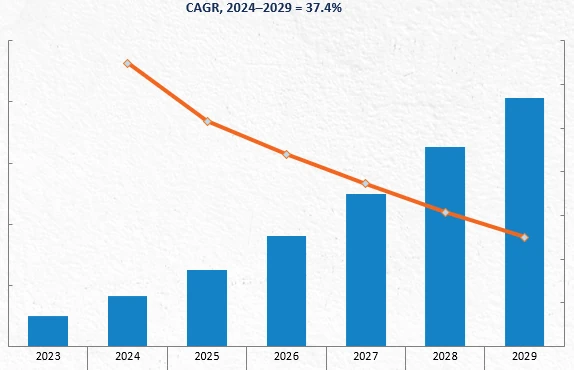
The rapid expansion reflects increasing enterprise spending on cloud security, data governance, regulatory compliance, and AI-powered security automation. Organizations are allocating larger cybersecurity budgets toward solutions capable of continuously discovering sensitive data, monitoring access permissions, identifying exposure risks, and automating remediation across hybrid cloud environments.
Subscription-based SaaS delivery models are expected to dominate revenue generation, allowing organizations to deploy DSPM solutions more rapidly while reducing infrastructure management costs. Spending is also shifting toward integrated security platforms that combine DSPM with identity security, data loss prevention, cloud workload protection, and compliance management.
As cloud-native architectures, AI applications, and distributed workforces continue expanding, enterprise investments in DSPM solutions are expected to accelerate further, positioning the market among the fastest-growing segments within enterprise cybersecurity.
Growth Drivers: Data Security Posture Management Market
Several structural trends are accelerating growth across the Data Security Posture Management Market. One of the strongest drivers is the rapid expansion of global data privacy regulations. Governments worldwide continue introducing stricter compliance frameworks that require organizations to identify, classify, monitor, and secure sensitive information. Failure to comply exposes enterprises to significant financial penalties, making DSPM investments increasingly essential.
The growing frequency and sophistication of cyberattacks also continue driving adoption. Data breaches, ransomware attacks, insider threats, and cloud misconfigurations have encouraged organizations to move toward proactive security strategies that continuously monitor sensitive data rather than relying solely on perimeter defenses.
Another major growth catalyst is the explosion of enterprise data generated across cloud platforms, SaaS applications, IoT devices, AI systems, and distributed workplaces. Organizations require automated discovery, classification, and risk prioritization capabilities to manage these expanding data repositories efficiently.
Artificial intelligence is further strengthening market demand by creating new requirements for securing training datasets, large language models, and AI-driven business applications. DSPM platforms increasingly incorporate AI capabilities to automate data classification, prioritize security risks, recommend remediation actions, and improve operational efficiency.
Finally, continued enterprise investment in hybrid cloud infrastructure, digital transformation, and cloud-native applications is expanding the addressable market for DSPM vendors across virtually every major industry.
Growth Restraints: Data Security Posture Management Market
Despite its strong outlook, the DSPM Market faces several challenges that may moderate adoption across certain organizations. Economic uncertainty and shifting IT investment priorities remain major concerns, particularly among small and medium-sized businesses with constrained cybersecurity budgets. During periods of economic volatility, organizations may delay investments in emerging security technologies.
A shortage of experienced cybersecurity professionals also limits market growth. Successful DSPM implementation requires expertise in cloud architecture, data governance, compliance, identity management, and security operations. Many organizations continue struggling to recruit professionals with these specialized skills.
Implementation complexity presents another challenge. Enterprises often operate across multiple cloud providers, legacy infrastructure, SaaS platforms, and on-premises environments, making integration and policy management increasingly difficult. Organizations without mature data governance frameworks may require significant planning before deploying DSPM successfully.
Limited awareness also affects adoption. Many enterprises still misunderstand DSPM capabilities or believe existing data loss prevention and cloud security tools provide sufficient protection. Educating decision-makers on the value of continuous data visibility remains an important market challenge.
Finally, vendor consolidation within the broader cybersecurity industry may reduce standalone DSPM investments as larger security platforms integrate similar capabilities into comprehensive cloud security suites.
Competitive Landscape: Data Security Posture Management Market
The global Data Security Posture Management Market remains competitive and innovation-driven, with more than 20 active vendors competing across enterprise cybersecurity. The market demonstrates relatively high concentration, with the top five competitors accounting for approximately 77.2% of total revenue, reflecting strong enterprise preference for established cybersecurity providers with comprehensive product portfolios.
Leading vendors include BigID, Securiti, Varonis, Cyera, and Palo Alto Networks, all of which provide advanced capabilities for automated data discovery, classification, compliance management, risk prioritization, and access governance. Other notable participants include Theom, Rubrik, Sentra, Concentric AI, and Normalyze, each focusing on AI-powered data security, cloud-native visibility, and automated remediation.
Competition increasingly centers on AI capabilities, cloud-native architecture, regulatory compliance support, platform integration, deployment flexibility, customer support, and automation. Vendors are expanding partnerships with cloud service providers, managed security service providers (MSSPs), system integrators, distributors, and reseller networks to strengthen market reach.
Mergers and acquisitions continue reshaping the competitive landscape. Recent transactions—including acquisitions involving Dig Security, Laminar, Eureka Security, Polar Security, Open Raven, Flow Security, Normalyze, and Dasera—demonstrate the industry's ongoing consolidation as major cybersecurity companies integrate DSPM capabilities into broader cloud security platforms. Going forward, innovation in AI-driven automation, data governance, and unified cloud security will remain the primary differentiators across the Data Security Management Market.
Why Is It Increasingly Difficult to Grow?
The Strategic Imperative 8™
The Impact of the Top 3 Strategic Imperatives on the DSPM Industry
Scope of Analysis
Segmentation
Customer Segmentation
Research Methodology
Definitions: DSPM
Inclusion and Exclusion of Vendors
Competitive Environment
Key Competitors
Market Background
Findings
Customer Expectations by Capabilities
Customer Expectations by Region
Key Growth Metrics
Growth Drivers
Growth Driver Analysis
Growth Restraints
Growth Restraint Analysis
Forecast Considerations
Revenue Forecast
Revenue Forecast by Region
Revenue Forecast Analysis
Revenue Forecast Analysis by Region
Pricing Trends and Forecast Analysis
Percent Revenue by Vertical
Percent Revenue by Horizontal
Percent Revenue by Region
Revenue Share
Growth Opportunity 1: Extending DSPM Functionalities to Ensure Secure Utilization of GenAI
Growth Opportunity 2: Consolidating DSPM into Data Security and CNAPP Platforms
Growth Opportunity 3: Detecting and Responding to Threats in Real Time
DSPM: CISOs' Concerns
Evaluating DSPM: Insights and Recommendations
Benefits and Impacts of Growth Opportunities
Next Steps
Legal Disclaimer
 List of Figures
- DSPM: Customer Segmentation, Global, 2024
- DSPM: Research Methodology, Global, 2024
- Estimated Rate of the Growth of Data Volume in the Last 12 Months, Global, 2023
- Infrastructure That Organizations Are Utilizing, Global, 2023
- DSPM: Key Growth Metrics, Global, 2024
- DSPM: Growth Drivers, Global, 2025–2029
- Percent of Cybersecurity Budget, Global, 2023
- DSPM: Growth Restraints, Global, 2025–2029
- DSPM: Revenue Forecast, Global, 2023–2029
- DSPM: Revenue Forecast by Region, Global, 2023–2029
- DSPM: Revenue Share by Vertical, Global, 2024
- DSPM: Revenue Share by Horizontal, Global, 2024
- DSPM: Revenue Share by Region, Global, 2024
- DSPM: Revenue Share of Key Vendors, Global, 2024
Frequently Asked Questions (FAQs) – Data Security Posture Management Market
1. What is the Data Security Posture Management Market?
2. What is driving the growth of the DSPM Market?
3. How large is the global Data Security Posture Management Market?
4. Which industries are the primary users of Data Security Management Market solutions?
5. How does DSPM differ from the cloud security posture management market?
6. Which regions are expected to lead the Data Security Posture Management Market?
7. Who are the leading companies in the Data Security Posture Management Market?
8. What opportunities exist in the future of the DSPM Market?
Speak directly with our analytics experts for tailored recommendations.
Recent related Security research
21 Oct 2026 | Global | Market Research
Insights for CISOs: The Transition to Quantum-Safe
The emergence of post-quantum cryptography (PQC) reflects a significant problem: powerful quantum computers may soon compromise the cryptographic algorithms underpinning today’s digital economy, threatening the confidentiality and integrity of sensitive data and communications. Addressing this risk ...
16 Oct 2026 | Global | Market Research
Customer Transformation Journeys External Risk Mitigation and Management: BitSight
This report explores how organizations are accelerating cyber risk reduction and remediation through Bitsight’s intelligent External Risk Management and Mitigation (ERMM) solution. It examines customer transformation journeys, highlighting how continuous visibility, contextualized risk intelligence,...
15 Oct 2026 | Global | Market Research
Network Detection and Response (NDR) Sector, Global, 2026–2030
This study examines the global NDR market over the 2022–2030 forecast period. It finds that rising investment reflects NDR's evolution from a discretionary security enhancement into a foundational component of enterprise cyber defense, underscoring stronger buyer commitment and heightened vendor com...
09 Oct 2026 | Global | Technology Research
Growth Opportunities in SiC MOSFET, Photodiodes, RISC-Vs, and Advanced Memory
The Microelectronics Technology Opportunity Engine covers innovations pertaining to SiC MOSFET, Photodiodes, RISC-Vs, and Advanced Memory.The Microelectronics Technology Opportunity Engine captures global electronics-related innovations and developments on a weekly basis. Developments are centered o...
09 Oct 2026 | Global | Frost Radar
Frost Radar™: Workforce Identity and Access Management, 2026
Hybrid work and software as a service have shifted security enforcement from the network perimeter to identity, transforming it into a control plane. Workforce identity and access management (IAM) now determines whether every user, device, and session should retain access based on context, risk, and...
Purchase includes:
- Report download
- Growth Dialog™ with our experts
Growth Dialog™
A tailored session with you where we identify the:- Strategic Imperatives
- Growth Opportunities
- Best Practices
- Companies to Action
Impacting your company's future growth potential.