 USD
USD GBP
GBP  CNY
CNY  EUR
EUR  INR
INR  JPY
JPY  MYR
MYR  ZAR
ZAR  KRW
KRW  THB
THB 


Engineering Plastics are Experiencing Transformational Growth Due to Innovation, Regulation, and Advanced Applications
08-Apr-2026
Global
Market Research
PG8B-01-00-00-00
CM_2026_34486
Report Summary: Engineering Plastics Market
The global engineering plastics market is experiencing steady growth, driven by rising demand for lightweight, high-performance materials across automotive, electronics, and industrial applications. The market was valued at USD 50.90 billion in 2022 and is projected to reach USD 78.61 billion by 2032, growing at a CAGR of 4.7%. Expansion in the engineering plastics market is supported by increasing adoption of durable, heat-resistant polymers that offer superior mechanical properties compared to conventional plastics.
Key polymer types such as polycarbonate (PC), polyamides (PA), polyoxymethylene (POM), polyesters (PET/PBT), and PMMA are widely used across industries. The engineering plastics market is also benefiting from megatrends such as electrification, miniaturization of electronics, and sustainability-driven material innovation.
Key Market Trends & Insights
- Automotive and aerospace sectors are major demand drivers in the engineering plastics market.
- Increasing electrification is boosting demand for lightweight materials.
- Consumer electronics growth is accelerating the engineering plastics market.
- Bio-based and recyclable plastics are gaining traction.
- Asia-Pacific dominates the engineering plastics market due to manufacturing expansion.
Market Size & Forecast
- 2022 Market Size: USD 50.90 Billion
- 2032 Projected Market Size: USD 78.61 Billion
- CAGR (2022–2032): 4.7%
The engineering plastics market is expected to grow steadily as industries continue shifting toward high-performance and sustainable materials.
Market Overview & Trends: Engineering Plastics Market
The engineering plastics market is evolving rapidly as industries demand materials that combine strength, durability, and lightweight properties. A major trend shaping the engineering plastics market is the increasing use of polymers in automotive electrification, where lightweight components improve energy efficiency and performance.
Another significant trend is the miniaturization of electronic devices. The engineering plastics market benefits from this shift, as advanced polymers are essential for compact, high-performance electronic components.
Sustainability is also a critical factor influencing the engineering plastics market. Manufacturers are focusing on recyclable and bio-based materials to meet regulatory requirements and consumer expectations.
Additionally, the engineering plastics market is witnessing advancements in polymer engineering, enabling enhanced thermal resistance, chemical stability, and mechanical strength. These improvements are expanding application areas across industries.
The growing adoption of engineering plastics in replacing metals and glass is another key trend. This substitution reduces weight and cost while maintaining performance, further driving the engineering plastics market.
Scope of Analysis: Engineering Plastics Market
The engineering plastics market analysis covers global trends from 2022 to 2032, with 2025 as the base year. The study evaluates key factors influencing the engineering plastics market, including technological advancements, market drivers, and restraints.
The scope includes polymer types such as styrenics (ABS, SAN, ASA), polycarbonate (PC), polyamides (PA), polyoxymethylene (POM), polyesters (PET/PBT), and PMMA. These materials form the core segments of the engineering plastics market.
Applications analyzed in the engineering plastics market include automotive and aerospace, electrical and electronics, construction, packaging, and consumer goods.
Geographically, the engineering plastics market spans the Americas, Europe, Asia-Pacific, and the Middle East & Africa, offering a comprehensive regional outlook.
The study also examines feedstock sources, including virgin, recycled, and bio-based materials, reflecting sustainability trends within the engineering plastics market.
Market Segmentation Analysis: Engineering Plastics Market
The engineering plastics market is segmented by polymer type, end-use industry, and region.
By polymer type, the engineering plastics market includes styrenics, PC, PA, POM, polyester, and PMMA. Polyamides and polycarbonate hold significant shares due to their versatility and performance characteristics.
By end-use, the engineering plastics market is driven by automotive and aerospace, electrical and electronics, construction, packaging, and consumer goods. Automotive applications dominate due to increasing demand for lightweight materials.
Regionally, Asia-Pacific leads the engineering plastics market, supported by strong manufacturing activity and growing industrialization. Europe and the Americas also contribute significantly to the engineering plastics market.
The increasing adoption of advanced polymers across industries highlights the expanding scope of the engineering plastics market, driven by performance and sustainability requirements.
Revenue & Spending Forecast: Engineering Plastics Market
The engineering plastics market is projected to grow steadily, with revenue increasing from USD 50.90 billion in 2022 to USD 78.61 billion by 2032, reflecting a CAGR of 4.7%.
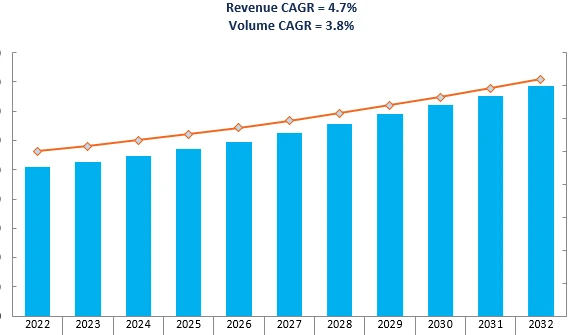
This growth is driven by rising demand for high-performance materials in automotive, electronics, and industrial applications. The engineering plastics market is also benefiting from increasing investments in sustainable and bio-based materials.
Technological advancements in polymer production are improving efficiency and reducing costs, further supporting growth in the engineering plastics market.
Growth Drivers: Engineering Plastics Market
The engineering plastics market is driven by several key factors.
The growth of the automotive industry, particularly electric vehicles, is a major driver of the engineering plastics market, as manufacturers seek lightweight materials to improve efficiency.
The expansion of consumer electronics is also boosting the engineering plastics market, with increasing demand for compact and durable components.
Sustainability trends are encouraging the adoption of recyclable and bio-based materials, supporting the engineering plastics market.
Additionally, advancements in material science are enhancing performance characteristics, further driving the engineering plastics market.
These factors collectively contribute to the steady growth of the engineering plastics market.
Growth Restraints: Engineering Plastics Market
The engineering plastics market faces several challenges that may impact growth.
Inter-material competition is a key restraint, as alternative materials such as metals and composites compete with products in the engineering plastics market.
Technology obsolescence and rapid innovation cycles can also affect the engineering plastics market, requiring continuous investment in R&D.
Additionally, cost pressures and raw material price fluctuations pose challenges for the engineering plastics market.
Addressing these issues is essential for sustaining long-term growth in the engineering plastics market.
Competitive Landscape: Engineering Plastics Market
The engineering plastics market is highly competitive, with numerous global players driving innovation and growth.
Leading companies in the engineering plastics market include BASF, SABIC, Arkema, Mitsubishi Chemical, and Covestro. These companies focus on product innovation and sustainability.
Other notable players in the engineering plastics market include Celanese, INEOS, LG Chem, Toray, and Trinseo, contributing to technological advancements.
The engineering plastics market is characterized by strong competition, strategic partnerships, and continuous investment in R&D.

Scope of Analysis
Segmentation
Why is it Increasingly Difficult to Grow?
The Strategic Imperative 8™
The Impact of the Top 3 Strategic Imperatives on the Engineering Plastic Industry
Value Chain and Ecosystem
Value Chain and Ecosystem Discussion
Circularity in Engineering Plastics
Competitive Environment
Key Competitors—Engineering Plastics
Automotive and Aerospace Trends
Total Market Growth Drivers
Growth Drivers Analysis
Total Market Growth Restraints
Growth Restraints
Growth Metrics
Revenue and Volume Forecast
Volume Forecast by Polymer
Revenue Forecast by Plastics
Volume and Revenue Forecast Analysis—By Plastics
Volume Forecast by End Use
Revenue Forecast by End Use
Volume and Revenue Forecast Analysis—By End Use
Volume Forecast by Region
Revenue Forecast by Region
Volume and Revenue Forecast Analysis—By Region
Growth Metrics
Key Factors Affecting Market Growth—Styrenics (ABS, SAN, and ASA)
Revenue and Volume Forecast
Volume Forecast by End Use
Revenue Forecast by End Use
Volume and Revenue Forecast Analysis—By End Use
Volume Forecast Analysis—By Materials
Volume Forecast Analysis—By Form
Volume Forecast Analysis—By Feedstock
Volume Forecast by Region
Revenue Forecast by Region
Volume and Revenue Forecast Analysis—By Region
Growth Metrics
Key Factors Affecting Market Growth—PC
Revenue and Volume Forecast
Volume Forecast by End Use
Revenue Forecast by End Use
Volume and Revenue Forecast Analysis—By End Use
Volume Forecast Analysis—By Form
Volume Forecast Analysis—By Feedstock
Volume Forecast by Region
Revenue Forecast by Region
Volume and Revenue Forecast Analysis—By Region
Growth Metrics
Key Factors Affecting Market Growth—PA
Revenue and Volume Forecast
Volume Forecast by End Use
Volume and Revenue Forecast Analysis—By End Use
Volume Forecast Analysis—By Materials
Volume Forecast Analysis—By Feedstock
Volume Forecast by Region
Revenue Forecast by Region
Volume and Revenue Forecast Analysis—By Region
Growth Metrics
Key Factors Affecting Market Growth—POM
Revenue and Volume Forecast
Volume Forecast by End Use
Revenue Forecast by End Use
Volume and Revenue Forecast Analysis—By End Use
Volume Forecast Analysis—By Form
Volume Forecast Analysis—By Feedstock
Volume Forecast by Region
Revenue Forecast by Region
Volume and Revenue Forecast Analysis—By Region
Growth Metrics
Key Factors Affecting Market Growth—Polyester
Revenue and Volume Forecast
Volume Forecast by End Use
Revenue Forecast by End Use
Volume and Revenue Forecast Analysis—By End Use
Volume Forecast Analysis—By Materials
Volume Forecast Analysis—By Feedstock
Volume Forecast by Region
Revenue Forecast by Region
Volume and Revenue Forecast Analysis—By Region
Growth Metrics
Key Factors Affecting Market Growth—PMMA
Revenue and Volume Forecast
Volume Forecast by End Use
Revenue Forecast by End Use
Volume and Revenue Forecast Analysis—By End Use
Volume Forecast Analysis—By Feedstock
Volume Forecast by Region
Revenue Forecast by Region
Volume and Revenue Forecast Analysis—By Region
Growth Opportunity 1: India Localization Wave
Growth Opportunity 2: Mold-in-Colour (MIC) as a Value Enhancement
Growth Opportunity 3: 3D Printing and Customization
Benefits and Impacts of Growth Opportunities
Next Steps
List of Exhibits
Legal Disclaimer
Frequently Asked Questions (FAQ) – Engineering Plastics Market
1. What is the engineering plastics market?
The engineering plastics market refers to high-performance polymers used in demanding applications requiring superior strength, heat resistance, and durability compared to standard plastics.
2. What is the current size of the engineering plastics market?
The engineering plastics market was valued at USD 50.90 billion in 2022 and is projected to reach USD 78.61 billion by 2032, growing at a CAGR of 4.7%.
3. What are the key drivers of the engineering plastics market?
Key drivers include rising demand for lightweight materials in automotive and aerospace, growth in consumer electronics, and increasing adoption of sustainable and recyclable plastics.
4. Which industries use engineering plastics?
Engineering plastics are widely used in automotive and aerospace, electrical and electronics, construction, packaging, and consumer goods industries.
5. Which region dominates the engineering plastics market?
Asia-Pacific dominates the engineering plastics market due to strong manufacturing activity, industrial growth, and increasing demand from automotive and electronics sectors.
6. What are the main types in the engineering plastics market?
Major types include polycarbonate (PC), polyamides (PA), polyoxymethylene (POM), polyesters (PET/PBT), styrenics (ABS, SAN, ASA), and PMMA.
7. What trends are shaping the engineering plastics market?
Key trends include electrification, miniaturization of electronics, sustainability initiatives, and increased use of plastics as substitutes for metals and glass.
8. What challenges affect the engineering plastics market?
Challenges include competition from alternative materials, raw material price volatility, and the need for continuous innovation due to evolving technology requirements.
9. Who are the key players in the engineering plastics market?
Key players include BASF, SABIC, Arkema, Mitsubishi Chemical, Covestro, Celanese, LG Chem, and Toray, among others.
10. What is the future outlook for the engineering plastics market?
The engineering plastics market is expected to grow steadily, driven by increasing demand for high-performance materials, sustainability trends, and advancements in polymer technology.
Speak directly with our analytics experts for tailored recommendations.
Recent related Performance Materials research
11 Sep 2026 | Global | Technology Research
Innovations in Advanced Materials, Sustainable Polymerics, Functional Composites, Bio-based Materials, Quantum Materials, Photonics, and Clean Energy Technologies
This issue of High-Tech Materials Technology Opportunity Engine (TOE) profiles significant advances in high-tech materials for various industrial applications. The featured innovations include Recyclable Liquid Thermoplastic Resins for Advanced Composite Manufacturing, Thermoplastic Polyurethane for...
04 Sep 2026 | Global | Technology Research
Innovations in Nanotechnology Including Nanocellulose, 2D Nanomaterials, Nanomembranes, Nanotubes, and Alloy Nanoparticles for Diverse Industrial Applications
This issue of the Nanotechnology Opportunity Engine profiles significant advances in nanotechnology for various industrial applications. The featured innovations include Graphene-Enhanced Ballistic Composite for Defense Applications, Upcycling Carbon Waste into High-Quality, Sustainable Graphene, Gr...
28 Aug 2026 | South Asia, Middle East & North Africa | Market Research
Decorative Paints, KSA, 2025–2030
Saudi Arabia's decorative paints market remains one of the largest and most attractive in the GCC, supported by long-term investments in housing, urban development, tourism, and infrastructure under Vision 2030. While the market continues to offer significant opportunities, the operating environment...
14 Aug 2026 | Global | Market Research
Wood Coatings Market, Global, 2026–2032
Wood coatings are specialized protective and decorative finishes applied to wooden surfaces to enhance durability, improve aesthetic appeal, and protect against environmental and mechanical damage. Growth in the global construction sector continues to drive demand for wood coatings because of their ...
14 Aug 2026 | Global | Technology Research
Innovations in Surface Technologies for Optical Coatings, Antifouling Coatings, Protective Coatings, Sustainable Packaging Coatings, and Others
This edition of the Advanced Coating & Surface Technology Opportunity Engine profiles significant advances in advanced coatings and surface treatments for various industrial applications. The featured innovations include Next-Generation Low-Emissivity Coatings for Lightweight Transparent Glazing, Pl...
Purchase includes:
- Report download
- Growth Dialog™ with our experts
Growth Dialog™
A tailored session with you where we identify the:- Strategic Imperatives
- Growth Opportunities
- Best Practices
- Companies to Action
Impacting your company's future growth potential.
The report analyzes the market across multiple dimensions, including polymer type, feedstock source (virgin, recycled, and bio-based), and end-use industries (automotive and aerospace, electrical and electronics, construction, packaging, consumer goods, and others). It also shows how different stages of the engineering plastics value chain interact within the broader ecosystem.
Several megatrends are expected to shape the market trajectory over the forecast period. These include electrification and high-voltage electrical systems, lightweighting and metal substitution, increasing product miniaturization in electronics, circularity and recycling adoption, and the emergence of bio-based polymer chemistries. Overall, the report provides a strategic view of the engineering plastics industry, combining market sizing, demand forecasts, value chain analysis, and emerging opportunities.
| Deliverable Type | Market Research |
|---|---|
| Industries | Chemicals and Materials |
| No Index | No |
| Is Prebook | No |
| Keyword 1 | engineering plastics market |
| Keyword 2 | High-Performance Polymers |
| Keyword 3 | Automotive Engineering Plastics |
| Podcast | No |
| Predecessor | None |
| WIP Number | PG8B-01-00-00-00 |