 USD
USD GBP
GBP  CNY
CNY  EUR
EUR  INR
INR  JPY
JPY  MYR
MYR  ZAR
ZAR  KRW
KRW  THB
THB 


Global Cardiac Biomarkers Diagnostics Market, 2024-2029
Rising Prevalence of CVD and High Sensitivity POCT Driving Transformational Growth in Cardiac Biomarkers Diagnostics
20-Jan-2025
Global
Market Research
PFRK-01-00-00-00
HC_2025_1266
Report Summary: Cardiac Biomarkers Diagnostics Market
The global cardiac biomarkers diagnostics market is experiencing strong growth driven The global cardiac biomarkers diagnostics market reached USD 4,711.5 million in 2024 and is projected to grow to USD 6,163.5 million by 2029, expanding at a CAGR of 5.3% from 2023 to 2029. Market demand is accelerating as cardiovascular disease (CVD) remains the leading global cause of mortality, driving increased utilization of high-sensitivity troponins, BNP/NT-proBNP, multiplex biomarker panels, and rapid point-of-care testing (POCT) solutions. Clinical priorities such as early detection of acute myocardial infarction (AMI), risk stratification of acute coronary syndromes, and faster decision-making in emergency and critical care environments continue to strengthen adoption across both developed and emerging healthcare systems.
Key Market Trends & Insights
- High-sensitivity troponin assays and BNP/NT-proBNP continue to dominate biomarker usage for AMI diagnosis and heart failure assessment.
- POCT cardiac biomarker platforms are rapidly gaining traction in emergency departments, urgent care centers, ambulances, and remote clinics.
- Asia-Pacific remains the fastest-growing region, while North America and Europe lead in high-sensitivity assay adoption and regulatory-compliant diagnostic integration.
- The competitive landscape is led by Roche Diagnostics, Abbott Rapid Diagnostics, Siemens Healthineers, Quidel Corporation, and bioMérieux, supported by a long tail of specialized assay developers.
- Multiple distribution channels—including OEMs, distributors, and direct hospital partnerships—enhance global reach and accessibility.
- Regulatory approval costs and the high price of multiplex panels remain key barriers to adoption in resource-constrained markets.
Market Size & Forecast
- 2023 Market Size: USD 4,508.6 Million
- 2024 Market Size: USD 4,711.5 Million
- 2029 Projected Market Size: USD 6,163.5 Million
- CAGR (2023–2029): 5.3%
- Competitive Landscape: 200+ active players
- Life Cycle Stage: Growth
The global market is supported by rising CVD prevalence, expansion of preventive and emergency care networks, and continuous technological innovation across lab-based and point-of-care cardiac biomarker platforms. As healthcare systems prioritize faster turnaround times, improved diagnostic accuracy, and greater clinical utility, cardiac biomarkers are expected to remain central to modern cardiovascular care strategies worldwide.
Market Overview: Cardiac Biomarkers Diagnostics Market
The global cardiac biomarkers market is set for robust expansion, propelled by the rising prevalence of cardiovascular disease (CVD), the adoption of multiplex biomarkers, and rapid technological advances in diagnostic assays and point-of-care testing (POCT). As cardiovascular diseases remain the leading cause of mortality worldwide, the importance of early detection and intervention is underscored, with acute myocardial infarction (AMI), acute coronary syndrome, and heart failure being the most critical conditions in the focus of the cardiac biomarkers diagnostics market.
Growing public health focus on preventive care, coupled with WHO projections estimating 23.3 million deaths from CVDs by 2030, drives increased utilization of innovative biomarker solutions. Notably, high-sensitivity cardiac troponin assays, such as Roche’s Elecsys® Troponin T hs, are now standard tools in emergency departments across Europe and Asia, accelerating diagnosis and improving clinical outcomes. Asia-Pacific emerges as the fastest-growing region, benefiting from untapped growth potential and expanding diagnostics access.
Both lab-based and POCT methods have essential roles in the cardiac diagnostics industry. Laboratory-based testing provides high precision and is indispensable for comprehensive risk evaluation and monitoring. Conversely, POCT delivers rapid, bedside results, enabling quick decision-making in acute and remote settings. This dual advancement ensures that the cardiac biomarkers diagnostics market remains resilient and responsive to diverse healthcare needs.
Competition in the Cardiovascular diagnostics market is moderate but intensifying, with six principal firms—Roche Diagnostics, Abbott Rapid Diagnostics, Quidel Corporation, bioMérieux, Siemens Healthineers, and Danaher Corporation—dominating the landscape. The lab analyzer market is consolidated due to high technical barriers, while the assays segment is competitive and fragmented. Laboratories are crucial for complex, multi-marker panels (BNP, CK-MB, myoglobin, troponin) to deliver comprehensive cardiac health insights.
This market research covers a 6-year global revenue forecast (2024–2029) across North America, Europe, Asia-Pacific, MENASA, and Latin America. It details standardized lab and POCT tests for leading cardiac biomarkers—troponins, BNP/NT-proBNP, hs-CRP, CK-MB, Neuregulin-1beta, ST2, Galectin, lipid profiles, and others. The study discusses key testing environments (labs, physician offices, urgent care, hospitals) and profiles leading vendors and product ranges (instruments, consumables, reagents, kits, and assays). The ongoing demand for innovation, accuracy, and high-assay sensitivity ensures the cardiac biomarkers market will be at the center of future cardiovascular diagnostics and personalized clinical care.
Revenue Forecast: Cardiac Biomarkers Diagnostics Market
The revenue outlook for the global cardiac biomarkers diagnostics market remains positive, supported by rising cardiovascular disease burden, rapid adoption of high-sensitivity and multiplex biomarker panels, and expanding use of POCT solutions across acute and emergency care settings. The market generated USD 4,711.5 million in 2024 and is expected to reach USD 6,163.5 million by 2029, reflecting a sustained CAGR of 5.3%.
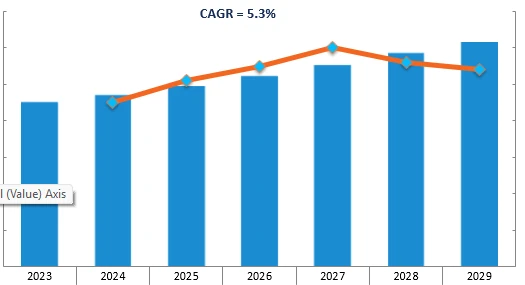
Growth will continue to be driven by the increasing clinical emphasis on early detection of AMI and heart failure, continuous innovation in lab-based and rapid-testing technologies, and wider integration of biomarker-guided protocols across global healthcare systems. This steady upward trajectory highlights the market’s strong clinical relevance and long-term diagnostic value.
Scope of Analysis: Cardiac Biomarkers Diagnostics Market
This research service delivers a comprehensive overview of the global cardiac biomarkers diagnostics market and cardiac diagnostics industry, with a particular focus on the market dynamics, regulatory environment, and technological evolution shaping industry growth from 2024 to 2029. The scope encompasses a detailed revenue forecast and strategic assessment across four core regions: North America, Europe, Asia-Pacific (APAC), and the Middle East, North Africa, and South Asia (MENASA) and Latin America, positioning the cardiac biomarkers market and cardiac biomarkers diagnostics market within a global context.
The analytical focus is twofold:
- Lab-based standardized tests: The segment includes a full suite of regulatory-approved cardiac biomarkers extensively used by centralized laboratories. This covers troponins, high-sensitivity troponins, BNP/NT-proBNP, hs-CRP, CK-MB, and additional biomarkers such as Neuregulin-1beta, ST2, Galectin, lipid profiles, and Copeptin. These lab-based tests are critical to the cardiac diagnostics industry for comprehensive cardiac risk stratification and chronic disease management.
- Point-of-care testing (POCT): This segment encompasses rapid and accessible tests for troponins, BNP, CK-MB, D-dimer, and myoglobin, serving the acute and emergency spectrum of the cardiac biomarkers diagnostics market. Excluded are laboratory-developed tests without regulatory approval.
Cardiac biomarkers—substances released in the blood due to heart damage or stress—are essential to the diagnosis, risk assessment, and management of heart failure, myocardial infarction, and acute coronary syndrome, thus driving the Cardiovascular diagnostics market globally. Testing sites covered in this analysis include independent laboratories, physicians’ offices, urgent care facilities, nursing homes, hospitals, and emergency departments, reflecting the extensive reach of the market into both centralized and decentralized healthcare settings.
Vendor analysis covers the full spectrum of the cardiac biomarkers market, including instruments, consumables, reagents, kits, and assays, providing critical insight into supply chain, technology, and competitive landscape factors crucial for future market participants and stakeholders in the cardiac diagnostics industry. The study period is from 2023 to 2029, with financial reporting in US dollars.
Segmentation: Cardiac Biomarkers Diagnostics Market
The global cardiac biomarkers diagnostics market and cardiac diagnostics industry is segmented both by test type and region, providing a comprehensive understanding of how advances in cardiac biomarkers are delivered and utilized across settings.
By Test Type
Lab-based Cardiac Biomarker Diagnostics:
Lab-based cardiac biomarkers refer to biomarker diagnostics performed in centralized clinical laboratories, often found within hospitals or diagnostic centers. These diagnostics require blood samples to be drawn from patients and transported to the laboratory for analysis. The use of advanced instruments and high-sensitivity assays in these settings ensures the highest level of precision and detail in results. Lab-based platforms are particularly well-suited for comprehensive risk assessment, chronic disease monitoring, and multiplex testing essential to the cardiac biomarkers market. This segment covers a wide biomarker spectrum including high-sensitivity troponins, BNP/NT-proBNP, hs-CRP, CK-MB, Neuregulin-1beta, ST2, Galectin, lipid profiles, and copeptin—providing a detailed view of cardiac health in the Cardiovascular diagnostics market.
Point-of-Care Testing (POCT) Cardiac Biomarker Diagnostics:
POCT, also termed "near-patient" testing, enables rapid diagnostic testing in decentralized settings, such as emergency departments or intensive care units, where immediate treatment decisions are essential. While POCT may have slightly lower sensitivity than some lab-based assays, technological advancements are continually improving accuracy, supporting the expanding role of cardiac biomarkers diagnostics market at the bedside and in urgent clinical scenarios. POCT commonly includes troponin and BNP, as well as CK-MB, D-dimer, and myoglobin biomarkers, making it vital for acute and emergency cardiac diagnostics.
By Region
The cardiac biomarkers diagnostics market is analyzed across four key regions:
- North America
- Europe
- Asia-Pacific
- MENASA and Latin America
This regional segmentation allows for targeted analysis reflecting the differing healthcare infrastructures, regulatory dynamics, technology adoption, and market opportunities within the broader cardiac diagnostics industry worldwide.
Growth Drivers: Cardiac Biomarkers Diagnostics Market (2024–2029)
- The high number of patients visiting EDs (Emergency Departments)
The surge in chest pain presentations is elevating demand for more high-sensitivity and point-of-care testing (POCT) in the cardiac biomarkers market. These tests shorten ED stays, expedite appropriate treatment, and significantly drive need within the cardiac biomarkers diagnostics market and broader cardiac diagnostics industry. Impact intensity: High across all periods. - The emergence of multi-biomarker panels for CVD diagnosis
Integrating inflammation markers and lipid panels offers a holistic cardiac risk profile, expanding applicability in the cardiovascular diagnostics market. Multi-marker strategies improve diagnostic accuracy, reduce false outcomes, and enable earlier, personalized care. Impact: Medium in the near term, rising to high over 4–6 years. - Increased demand for POCT diagnostics
POCT enables fast, actionable diagnosis—especially valuable in primary care and remote settings within the cardiac biomarkers diagnostics market. Tests such as troponin and BNP speed up decision-making, deliver earlier care access (especially in underserved regions), and minimize hospitalizations. Impact: Medium initially, but high in the longer term. - Technological advancements in biomarker detection methods
Innovations like nanotechnology and lab-on-a-chip platforms are making biomarker assays in the cardiac diagnostics industry and cardiovascular diagnostics market faster, more accurate, higher in sensitivity, and cost-effective. This progress enhances broad clinical adoption and strengthens the relevance and impact of the cardiac biomarkers diagnostics market over time.
Growth Restraints: Cardiac Biomarkers Diagnostics Market (2024–2029)
- Established players dominate the cardiac biomarkers diagnostics market, creating high barriers to entry in the cardiac diagnostics industry. Market incumbents capture the majority of revenue, while reduced collaboration between established firms and new entrants can stifle innovation, impacting the overall growth and competitiveness of the cardiac biomarkers market and broader cardiovascular diagnostics market. This restraint remains high throughout the forecast period.
- Stringent regulations for diagnostics significantly hinder market expansion across the cardiac biomarkers diagnostics market and cardiac diagnostics industry. For example, high-sensitivity cardiac troponin (hs-cTn) assays have been available in Europe and Australasia since 2010, but only received approval in the United States in 2017. The European Union's strict In Vitro Diagnostics Regulation (IVDR) intensifies market access challenges. Such regulatory complexities restrict the ability of new cardiac biomarker tests to achieve rapid adoption and scale in the cardiovascular diagnostics market. The impact is consistently high over the next six years.
- The high cost of multiplex panels and POCT testing limits adoption—particularly in cost-sensitive healthcare systems and lower-income regions—across the cardiac biomarkers diagnostics market. Higher relative prices for POCT, compared to lab-based tests, constrain broader uptake, especially in the cardiac biomarkers market and cardiovascular diagnostics market. While industry initiatives aim to lower POCT expenses, the rate of adoption is only expected to improve in the long run. High impact persists in the short- and mid-term, easing to medium in the later years.
Competitive Environment: Cardiac Biomarkers Diagnostics Market
- The cardiac biomarkers market, cardiac biomarkers diagnostics market, and broader cardiac diagnostics industry are characterized by a highly dynamic and moderately consolidated competitive environment, with more than 200 active competitors globally. Competition is driven by factors such as cost efficiency, technology innovation, reliability, assay accuracy, sensitivity, and turnaround times—factors that are crucial for success in the fast-evolving Cardiovascular diagnostics market.
- Key end-user industry verticals for the market include hospitals, diagnostics laboratories, physician’s offices, urgent care facilities, and nursing facilities, reflecting the broad adoption and clinical importance of cardiac biomarker diagnostics.
- Leading competitors include Roche Diagnostics, Abbott Rapid Diagnostics (formerly Alere), Siemens Healthineers, Quidel Corporation, and bioMérieux. In 2023, the top five competitors collectively accounted for 57.9% of total market revenue, demonstrating significant consolidation at the high end of the market.
- Other notable competitors are Danaher (operating through Beckman Coulter and Radiometer), Sysmex Corporation, Fujirebio, CTK Biotech, Shenzhen Mindray Bio-Medical Electronics, Elabscience Biotechnology, Quanterix, Response Biomedical, Tosoh Bioscience, and Tulip Diagnostics. These firms add competitive pressure by introducing new assays and technologies targeting both centralized labs and point-of-care markets.
- Distribution structures are diverse, including distributors, OEM partnerships, retail, and direct sales to streamline market penetration and enhance end-user reach.
- M&A activity continues to reshape the competitive landscape. For example, Roche’s acquisition of LumiraDx’s Point of Care unit will allow the company to further integrate advanced multi-assay POCT platforms and R&D capabilities into its global business, supporting its dominant role in rapid and comprehensive cardiac biomarkers diagnostics.
- This multifaceted environment ensures continued innovation and competitive differentiation across the cardiac biomarkers market and the cardiac diagnostics industry, maintaining high standards for quality, speed, and clinical utility worldwide.

Scope of Analysis
Segmentation
History of Cardiac Biomarkers
Cardiac Biomarkers
Mechanism of Cardiac Biomarkers in Heart Failure
Why Is It Increasingly Difficult to Grow?
The Strategic Imperative 8
The Impact of the Top 3 Strategic Imperatives on the Cardiac Biomarkers Diagnostics Industry
Competitive Environment
Key Competitors by Region
Growth Metrics
Growth Drivers
Growth Restraints
Emerging Biomarkers for the Detection of Cardiovascular Diseases
Cardiac Biomarkers Diagnostics Trends
Digital Health and Diagnostics Inter Convergence Model: Cardiac Diagnostics
Forecast Considerations
Revenue Forecast
Revenue Forecast Analysis
Revenue Forecast by Test Type
Revenue Forecast Analysis
Revenue Forecast by Region
Revenue Forecast Analysis by Region: NA
Revenue Forecast Analysis by Region: Europe
Revenue Forecast Analysis by Region: APAC
Revenue Forecast Analysis by Region: MENASA and Latin America
Revenue Share
Revenue Share Analysis
Competitor Matrix
Global Cardiac Biomarkers Diagnostics Industry: Notable Activities
Growth Metrics: Lab-based Cardiac Biomarkers Diagnostics
Lab-based Cardiac Biomarkers Diagnostics Revenue Forecast
Lab-based Cardiac Biomarkers Diagnostics Revenue Forecast Analysis
Growth Metrics: POCT Cardiac Biomarkers Diagnostics
POCT Cardiac Biomarkers Diagnostics Revenue Forecast
POCT Cardiac Biomarkers Diagnostics Revenue Forecast Analysis
Growth Opportunity 1: High Sensitivity Assays HSAs
Growth Opportunity 2: Multi-marker Cardiac Panels for Comprehensive Diagnostics
Growth Opportunity 3: POCT Devices for Rural and Emerging Markets
Growth Opportunity 4: Convergence with Wearables and Apps for Early Detection and Real-time Monitoring
Benefits and Impacts of Growth Opportunities
Next Steps
List of Exhibits
Legal Disclaimer
 List of Figures
- Cardiac Biomarkers Diagnostics: Key Growth Metrics, Global, 2023
- Cardiac Biomarkers Diagnostics: Growth Drivers, Global, 2024‒2029
- Cardiac Biomarkers Diagnostics: Growth Restraints, Global, 2024‒2029
- Cardiac Biomarkers Diagnostics: Industry Trends, Global, 2024
- Cardiac Biomarkers Diagnostics: Revenue Forecast, Global, 2023‒2029
- Cardiac Biomarkers Diagnostics: Revenue Forecast by Test Type, Global, 2023‒2029
- Cardiac Biomarkers Diagnostics: Revenue Forecast by Region, Global, 2023‒2029
- Cardiac Biomarkers Diagnostics: Revenue Share of Top Participants, Global, 2023
- Cardiac Biomarkers Diagnostics: Competitor Matrix, Global, 2023
- Lab-based Cardiac Biomarkers Diagnostics: Key Growth Metrics, Global, 2023
- Lab-based Cardiac Biomarkers Diagnostics: Revenue Forecast, 2023‒2029
- POCT Cardiac Biomarkers Diagnostics: Key Growth Metrics, Global, 2023
- POCT Cardiac Biomarkers Diagnostics: Revenue Forecast, Global, 2023‒2029
Frequently Asked Questions (FAQ) – Global Cardiac Biomarkers Diagnostics Industry
1. What is driving growth in the global cardiac biomarkers diagnostics industry?
2. Which biomarkers are most widely used for cardiac diagnosis?
3. How is the market segmented in terms of test type?
4. Why are high-sensitivity troponin assays increasingly adopted?
5. What cardiovascular conditions are diagnosed using cardiac biomarkers?
6. How is the cardiac biomarkers diagnostics market performing across regional markets?
7. What challenges are limiting broader adoption of cardiac biomarker diagnostics?
8. What differentiates leading companies in the cardiac biomarker diagnostics sector?
9. How is point-of-care testing (POCT) shaping the future of cardiac biomarker diagnostics?
10. What is the revenue outlook for the global cardiac biomarkers diagnostics market?
Speak directly with our analytics experts for tailored recommendations.
Recent related Healthcare research
08 Oct 2026 | Global | Frost Radar
Frost Radar: Endoscopy Device Technology Ecosystem, 2026
The endoscopy device market is advancing toward higher-quality visualization and improved clinical decision-making, with innovation across 4K ultrahigh-definition display systems, image-enhanced endoscopy, and computer-aided detection systems. Advanced visualization is evolving through improvements ...
07 Oct 2026 | Global | Technology Research
Growth Opportunities in Image-Guided Cancer Ablation Systems
Image-guided cancer ablation systems are minimally invasive medical technologies that use real-time imaging to accurately guide the placement of an ablation device into a tumor, enabling localized destruction of cancerous tissue while minimizing damage to surrounding healthy structures.The increasin...
06 Oct 2026 | Global | Technology Research
Trends in Laboratory Automation, Global, 2021–2025
This research study provides a comprehensive assessment of the recent trends, technological advancements, and strategic developments shaping the global laboratory automation industry. The analysis traces the evolution of laboratory automation from task-specific automation systems to integrated, inte...
05 Oct 2026 | Global | Frost Radar
Frost Radar™: Point-of-Care Ultrasound Imaging Technology Ecosystem, 2026
The point-of-care ultrasound imaging industry is undergoing a fundamental transformation from equipment-intensive ultrasound to portable, handheld, wireless, AI-enabled, and connected point-of-care solutions. Driven by the need for rapid bedside diagnosis and decentralized healthcare delivery, speci...
25 Sep 2026 | Global | Technology Research
Innovations and Growth Opportunities in Advanced Medical Devices, Diagnostic Solutions, and Implantables
The latest issue of Advanced MedTech Technology Opportunity Engine (TOE) spotlights a diverse slate of innovations across advanced medical devices, diagnostic solutions, and implantables.The issue features advanced medical devices such as peritoneal dialysis fluid system, cold sterilization-based au...
Purchase includes:
- Report download
- Growth Dialog™ with our experts
Growth Dialog™
A tailored session with you where we identify the:- Strategic Imperatives
- Growth Opportunities
- Best Practices
- Companies to Action
Impacting your company's future growth potential.
| New Title | Global Cardiac Biomarkers Diagnostics Market, 2024-2029 |
|---|---|
| Deliverable Type | Market Research |
| Author | Chandni Hussain |
| Industries | Healthcare |
| No Index | No |
| Is Prebook | No |
| Keyword 1 | cardiac biomarkers market |
| Keyword 2 | cardiac diagnostics trends |
| Keyword 3 | global cardiac diagnostics |
| List of Charts and Figures | Cardiac Biomarkers Diagnostics: Key Growth Metrics, Global, 2023~ Cardiac Biomarkers Diagnostics: Growth Drivers, Global, 2024‒2029~ Cardiac Biomarkers Diagnostics: Growth Restraints, Global, 2024‒2029~ Cardiac Biomarkers Diagnostics: Industry Trends, Global, 2024~ Cardiac Biomarkers Diagnostics: Revenue Forecast, Global, 2023‒2029~ Cardiac Biomarkers Diagnostics: Revenue Forecast by Test Type, Global, 2023‒2029~ Cardiac Biomarkers Diagnostics: Revenue Forecast by Region, Global, 2023‒2029~ Cardiac Biomarkers Diagnostics: Revenue Share of Top Participants, Global, 2023~ Cardiac Biomarkers Diagnostics: Competitor Matrix, Global, 2023~ Lab-based Cardiac Biomarkers Diagnostics: Key Growth Metrics, Global, 2023~ Lab-based Cardiac Biomarkers Diagnostics: Revenue Forecast, 2023‒2029~ POCT Cardiac Biomarkers Diagnostics: Key Growth Metrics, Global, 2023~ POCT Cardiac Biomarkers Diagnostics: Revenue Forecast, Global, 2023‒2029~ |
| Podcast | No |
| WIP Number | PFRK-01-00-00-00 |
Global Cardiac Biomarkers Diagnostics Industry, 2024-2029
$4,950.00
Special Price $4,207.50 save 15 %