 USD
USD GBP
GBP  CNY
CNY  EUR
EUR  INR
INR  JPY
JPY  MYR
MYR  ZAR
ZAR  KRW
KRW  THB
THB 


Digital Monetization and Regulatory Compression Drive Transformational Growth in Urban Parking Infrastructure
10-Aug-2026
Europe
Market Research
M1M3-01-00-00-00
AU_2026_34810
Key Takeaways: Europe smart parking market
- The Europe smart parking market is undergoing structural transformation as cities reduce curbside parking, expand digital enforcement, and integrate parking with broader urban mobility systems.
- The European Parking Market generated approximately $45.7 billion in 2025 and is projected to reach $61.5 billion by 2031, representing a 5.1% CAGR during 2025–2031.
- Total parking spaces are expected to increase from 37.8 million in 2025 to 39.7 million by 2031, despite continuing pressure on on-street parking supply.
- The European Parking Market is increasingly shifting value from physical parking supply toward digital pricing, compliance, EV charging, data, and mobility services.
- Off-street parking accounted for 71.7% of total spaces in 2025, compared with 28.3% for on-street parking.
- Germany, the United Kingdom, France, Spain, and the Netherlands are the five key markets covered in the study.
- EV charging is transforming parking facilities into multi-revenue infrastructure assets, combining parking fees with charging and energy-related services.
- AI-enabled enforcement, ANPR, IoT sensors, occupancy detection, and cloud-based platforms are increasing the digitalization of parking operations.
- The Europe Car Parking Market is becoming increasingly connected to Mobility-as-a-Service (MaaS), micromobility, logistics, EV infrastructure, and multimodal transportation.
- Regulation is concentrating parking demand into compliant, high-yield off-street assets while creating new opportunities for operators that can monetize parking space more efficiently.
Report Summary: Europe smart parking market
The Europe smart parking market is undergoing a structural transformation driven by urban decarbonization policies, electrification, digital enforcement, and the reallocation of curbside space. Parking is increasingly evolving from a traditional real-estate and enforcement function into a digitally connected layer of urban mobility, compliance, and energy infrastructure. The study covers five major European markets—Germany, the United Kingdom, France, Spain, and the Netherlands—and evaluates how regulation, urban planning, EV adoption, and digital technologies are reshaping parking economics through 2031.
The European Parking Market includes both on-street and off-street parking ecosystems. Key developments include the reduction of curbside parking, expansion of EV charging infrastructure, AI-led enforcement, dynamic pricing, and the transformation of conventional garages into mobility hubs. Low-emission zones, zero-emission zones, congestion pricing, parking maximums, and cycling infrastructure are contributing to the structural reduction of traditional on-street parking.
The Europe Car Parking Market is simultaneously gaining new revenue opportunities through EV charging, subscriptions, digital services, and mobility integration. Operators are increasingly focused on yield per square meter rather than revenue per individual parking bay. As parking becomes connected to mobility, energy, data, and city governance, digital infrastructure is becoming increasingly important to future market competitiveness.
Analyst Words: Europe smart parking market
Chanchal Jetha, Lead Analyst, Parking Industry Europe, describes the transformation of the Europe smart parking market as a repricing of parking rather than a simple decline in parking demand. Her perspective emphasizes that regulation is reducing available supply while electrification is adding new revenue layers and autonomous mobility is changing the strategic value of parking assets.
The analyst's view indicates that the European Parking Market is becoming more concentrated around compliant, higher-yield off-street assets. Operators that control these assets can benefit from the changing structure of urban parking demand. EV charging is also viewed as a structural upgrade because a traditional parking bay can become a multi-revenue infrastructure asset through charging and energy services. In addition, parking is increasingly connected to EV infrastructure, autonomous vehicle staging, MaaS platforms, and municipal data systems, creating opportunities beyond conventional parking fees.
Market Overview & Trends: Europe smart parking market
The Europe smart parking market is transitioning from a physical parking-space model toward a digitally enabled urban infrastructure model. Regulatory pressure, urban decarbonization, EV adoption, digital enforcement, and changing mobility behavior are reshaping how parking assets are developed, operated, and monetized.
One of the most significant trends is the structural reduction of on-street parking. European cities are implementing low-emission zones, zero-emission zones, parking maximums, congestion pricing, cycling infrastructure, and pavement parking restrictions. These measures are reducing curbside supply while concentrating demand into compliant off-street facilities. As a result, strategically located garages and surface parking facilities can benefit from scarcity premiums.
The European Parking Market is also becoming an energy infrastructure market. EPBD, AFIR, and national EV mandates are encouraging parking assets to integrate EV charging at scale. This allows operators to supplement conventional parking revenue with charging, subscriptions, and energy-related services.
Another major trend is the rise of AI-led digital enforcement. ANPR, occupancy detection, emissions-linked pricing, weight-based tariffs, and automated compliance systems are enabling cities and operators to manage parking using real-time vehicle and occupancy information.
The Europe Car Parking Market is also moving toward mobility hubs. Large operators are transforming traditional garages into multimodal facilities that can integrate EV charging, micromobility, logistics, retail, and MaaS connectivity. This creates a shift from revenue per parking bay toward yield per square meter.
Digital parking platforms are therefore becoming increasingly important. IoT sensors, cloud-based management systems, digital payments, dynamic pricing, and real-time occupancy information are enabling operators to optimize existing assets while cities use parking data to support broader urban mobility objectives.
Scope of Analysis: Europe smart parking market
The Europe smart parking market study tracks the European parking industry, including regulated on-street and off-street parking facilities. Private residential and office parking are excluded from the analysis.
The study covers the period 2025–2031, with 2025 as the base year and 2026–2031 as the forecast period. Revenue calculations are based on country-level parking revenue and are presented in U.S. dollars.
The geographic scope focuses on five key European markets: Germany, France, the United Kingdom, the Netherlands, and Spain. These markets represent different stages of parking-market maturity, regulatory intensity, EV adoption, and smart-parking penetration.
The analysis evaluates both on-street and off-street parking. It also examines the impact of broader European regulatory frameworks, including low-emission zones (LEZs), zero-emission zones (ZEZs), the Energy Performance of Buildings Directive (EPBD), Alternative Fuels Infrastructure Regulation (AFIR), and national net-zero policies.
The study assesses how these policies influence parking demand, pricing, utilization, space availability, EV infrastructure investment, and future parking monetization models.
Market Segmentation Analysis: Europe smart parking market
The Europe smart parking market can be segmented primarily into on-street and off-street parking, with each category experiencing different regulatory, technological, and monetization dynamics.
On-Street Parking
On-street parking includes regulated general and resident parking spaces, pay-and-display areas, permit-time-limited bays, and specialized spaces such as loading and unloading areas, motorcycle bays, disabled bays, police spaces, hotel bays, and taxi spaces.
The on-street segment is under increasing pressure from urban decarbonization policies. Cities are reallocating curbside space toward cycling, public transport, pedestrian infrastructure, logistics, and other mobility uses. Consequently, the European Parking Market is experiencing a gradual reduction in traditional curbside parking capacity.
However, remaining on-street spaces can generate higher value through digital enforcement, dynamic pricing, emissions-based charges, and real-time occupancy management. ANPR, mobile payment systems, IoT sensors, and cloud platforms are increasingly supporting these applications.
Off-Street Parking
Off-street parking represents the larger portion of the market, accounting for 71.7% of total spaces in 2025. It includes purpose-built car parks with access control, surface open-air and unstructured lots, destination parking at shopping centers, stadiums and theaters, and high-dwell facilities serving airports, hospitals, and universities.
Off-street facilities are positioned to benefit from the reduction of curbside parking. As cities restrict on-street supply, compliant garages and structured facilities can capture displaced demand. This creates opportunities for dynamic pricing, occupancy optimization, EV charging, and mobility-hub development.
By Parking Use Case
The Europe Car Parking Market also spans destination-oriented facilities, regulated general and resident parking, captive-demand parking, and specialized mobility infrastructure. Airports, hospitals, universities, retail centers, hospitality locations, and entertainment venues can generate different parking utilization patterns and pricing opportunities.
By Digitalization
Digital technologies are becoming embedded across both on-street and off-street parking. AI-based occupancy detection, ANPR, IoT sensors, cloud platforms, automated payments, and digital enforcement allow operators to improve utilization and compliance.
The convergence of these technologies is supporting the development of the Europe smart parking market as an integrated urban infrastructure ecosystem rather than a conventional parking service.
Revenue & Spending Forecast: Europe smart parking market
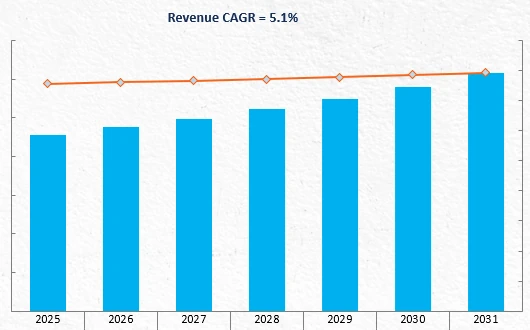
The Europe smart parking market generated approximately $45.7 billion in revenue in 2025 and is forecast to reach $61.5 billion by 2031, reflecting a 5.1% CAGR from 2025 to 2031.
At the same time, total parking spaces are expected to increase from 37.8 million in 2025 to 39.7 million by 2031. The relatively modest increase in total spaces compared with revenue growth indicates that value creation is increasingly coming from pricing, utilization, digital services, and additional revenue layers rather than simply adding parking capacity.
The European Parking Market is experiencing a shift in spending toward EV charging infrastructure, digital enforcement, occupancy technology, dynamic pricing, cloud-based management platforms, and mobility integration. The Europe Car Parking Market is therefore increasingly monetizing existing physical assets through multiple services, including parking, EV charging, subscriptions, energy services, retail, and mobility connectivity.
Growth Drivers: Europe smart parking market
Dynamic and digital pricing
The transition from fixed tariffs and traditional coin-operated parking toward dynamic, digitally enabled pricing is a major growth driver for the Europe smart parking market. Operators can adjust prices based on demand, location, occupancy, time, and regulatory requirements, improving revenue optimization.
EV charging integration
EV charging is transforming parking facilities into multi-revenue assets. European regulations and EV infrastructure mandates are increasing the need for charging infrastructure at parking facilities. Operators can combine parking revenue with charging and energy-related services.
AI and IoT-enabled parking management
IoT sensors, AI-based occupancy detection, ANPR, and cloud platforms enable operators to monitor parking demand in real time, improve enforcement, optimize utilization, and reduce operational inefficiencies.
Reduction of curbside parking
Urban policies that restrict on-street parking and prioritize low-emission and zero-emission mobility are concentrating parking demand into structured and compliant off-street facilities. This can create scarcity premiums and improve the value of strategically located assets.
Mobility-as-a-Service integration
Parking is increasingly becoming part of broader mobility ecosystems. Integration with MaaS platforms, navigation applications, public transport, EV charging, micromobility, and shared mobility can increase the strategic value of parking facilities.
Mobility hub development
Traditional garages are increasingly being transformed into multimodal mobility hubs. These facilities can combine parking with EV charging, logistics, retail, micromobility, and digital mobility services, increasing revenue potential per square meter.
Growth Restraints: Europe smart parking market
Aggressive urban planning policies aimed at sustainability are reducing parking spaces and restricting new parking development. While supply scarcity can increase pricing power for compliant facilities, it can also constrain overall addressable capacity and create pressure for operators in affected locations.
The deployment of EV charging infrastructure and digital parking systems requires significant upfront investment. Returns can vary substantially by location, utilization, energy costs, and technology adoption, creating short- to medium-term investment pressure.
The European Parking Market is also highly fragmented. Regulations, standards, ownership structures, pricing models, and enforcement practices vary across cities and countries, making it difficult for operators to develop standardized solutions across Europe.
Dynamic pricing and stricter enforcement may generate resistance from users and political stakeholders. Concerns over excessive pricing, enforcement intensity, or congestion can limit the flexibility available to operators and municipalities.
The growth of public transportation, micromobility, and shared mobility can also reduce dependence on private vehicles in dense urban areas. While reduced parking supply can increase prices and utilization in some locations, declining vehicle demand can create long-term volume risks for parts of the Europe Car Parking Market.
Competitive Landscape: Europe smart parking market
The Europe smart parking market is highly fragmented, with an estimated 200+ private operators generating more than $1 million in revenue. The competitive environment includes large parking operators, technology-enabled providers, regional companies, infrastructure owners, and specialized parking technology firms.
Competitive differentiation is increasingly determined by the technology stack, EV charging capabilities, and type of parking space controlled by each operator. Operators with advanced digital platforms can improve occupancy visibility, payment processing, enforcement, pricing, and customer engagement.
Leading competitors identified in the supplied analysis include APCOA, Q-Park, Interparking, Saba, NCP, and Indigo. Other notable participants include Empark, Europark, and ParkNow.
The top five competitors account for approximately 15% to 20% of the regulated off-street market, indicating that the European Parking Market remains significantly fragmented despite the presence of large multinational operators.
The distribution structure includes electrical and IT distributors, OEM relationships, retail sales, and direct sales. Technology partnerships are increasingly important as parking operators integrate EV charging, digital payment, ANPR, occupancy detection, cloud platforms, and mobility applications.
M&A activity is contributing to competitive consolidation. Notable transactions identified in the supplied material include the Interparking and Saba merger, while EasyPark acquired Flowbird in January 2025. These transactions reflect the broader movement toward integrated parking technology and mobility platforms.
Competition is increasingly shifting from simply owning parking spaces toward controlling the digital and service layers around those assets. Operators are seeking to increase revenue per square meter by adding EV charging, subscriptions, dynamic pricing, mobility services, retail, and logistics capabilities.
The strongest long-term competitive positions are therefore likely to emerge among companies capable of combining physical parking assets with digital management, EV infrastructure, intelligent pricing, automated enforcement, and mobility integration. This transformation is central to the future of the Europe smart parking market and the broader Europe Car Parking Market.
Scope of Analysis
Parking Market Segmentation
Regulatory and Policy Abbreviations
Technology and Infrastructure Abbreviations
Why is it Increasingly Difficult to Grow?
The Strategic Imperative 8™
The Impact of the Top 3 Strategic Imperatives on the Parking Industry in Europe
Growth Metrics
Growth Environment
Competitive Environment
Key Competitors
Growth Drivers
Growth Restraints
If Cars Are Declining in Cities, Why is Parking a Growth Story?
Removal of On-Street Parking Across Europe
How Amsterdam Removed 11,000 Parking Spaces and Repurposed the Space
Parking of the Future
How EV Adoption Is Changing the Parking Landscape
Impact of EV Charging on Parking Revenue
Impact of Technology on Parking Spaces
EV versus AV Readiness Across the Five Markets in Europe
Regulatory Pressure by Country
Opportunity Across the Five Markets
2025 Market Sizing Methodology
Forecast Considerations
Revenue and Parking Space Forecast
Revenue Forecast by Type of Parking
Revenue Forecast by Country
Revenue Forecast Analysis
Parking Spaces Forecast by Type
Parking Spaces Forecast by Country
Pricing Trends and Forecast Analysis
Growth Metrics
Revenue and Parking Spaces Forecast
Revenue Forecast by Segment
Forecast Analysis
Germany Parking Market Snapshot
Regulations Are Concentrating Value in Off-Street Assets
Stuttgart Airport P6—World's First SAE Level 4 AVP
EV-Linked Parking Regulations
Three Bets Worth Making in Germany
Growth Metrics
Revenue and Parking Spaces Forecast
Revenue Forecast by Segment
Forecast Analysis
UK Parking Market Snapshot
Regulations Restructuring UK Curbside Economics
Westminster Curbside Reform—The UK’s Most-Advanced, Emissions-Based Parking Transformation
EV-Linked Parking Regulations
Three Bets Worth Making in the UK
Growth Metrics
Revenue and Parking Spaces Forecast
Revenue Forecast by Segment
Forecast Analysis
Spain Parking Market Snapshot
Regulations Reducing On-Street Supply and Creating Off-Street Value
Valencia Smart Parking—IoT-Tourism Integration
Three Bets Worth Making in Spain
Growth Metrics
Revenue and Parking Spaces Forecast
Revenue Forecast by Segment
Forecast Analysis
France Parking Market Snapshot
Regulations Converting Legacy Off-Street Assets Into Multi-Revenue Infrastructure
Paris Moovia—Automated Enforcement and Digital Revenue Governance
EV-Linked Parking Regulations
Three Bets Worth Making in France
Growth Metrics
Revenue and Parking Spaces Forecast
Forecast Analysis
Netherlands Parking Market Snapshot
Parking Tax Reform Accelerating the Post-Parking Transition
Q-Park and Shell: Netherlands' Parking-to-Mobility Hub Conversion
EV-Linked Parking Regulations
Three Bets Worth Making in the Netherlands
Growth Opportunity 1: Electrification to Reshape Parking Economics
Growth Opportunity 2: Emergence of Mobility Hubs
Growth Opportunity 3: Parking Becomes a Digital Infrastructure Layer
Benefits and Impacts of Growth Opportunities
Next Steps
List of Exhibits
Legal Disclaimer
Frequently Asked Questions (FAQs) – Europe Smart Parking Market
1. What is the Europe smart parking market?
2. How large is the European Parking Market?
3. What is driving growth in the Europe smart parking market?
4. What is the difference between on-street and off-street parking?
5. What percentage of European parking spaces are off-street?
6. Which countries are covered in the Europe smart parking market analysis?
7. How is EV charging changing the European Parking Market?
8. Who are the leading companies in the Europe smart parking market?
9. What are the major restraints affecting the European Parking Market?
10. What is the future outlook for the Europe Car Parking Market?
Speak directly with our analytics experts for tailored recommendations.
Recent related Infotainment and Telematics research
25 Sep 2026 | Global | Technology Research
Growth Opportunities in Next-Gen Wireless EV charging, Automotive Grade IoT module, Autonomous driving, E-bike Platform, UAVs, and 4D Radars
The Mobility Technology Opportunity Engine (TOE) covers innovations pertaining to EV charging, Automotive Grade IoT module, Autonomous driving, E-bike Platform, UAVs, and 4D Radars.The purpose of the Mobility Technology TOE is to raise awareness of global technology innovations in self-propelled gro...
22 Sep 2026 | Global | Market Research
Growth Opportunities in the Global EV Power Electronics Market, 2025–2032
The rapid push toward e-mobility is accelerating adoption of advanced power electronics by major OEMs. Power electronics underpin electric vehicle reliability, efficiency, and performance. Core systems, including traction inverters, onboard chargers, and DC-DC converters, are gaining strategic impor...
10 Sep 2026 | Global | Market Research
Global Robobus Market, 2026–2032
The global robobus market is at an inflection point. Large autonomous buses are no longer a concept—they are running as paid public services in China, South Korea, Norway, Switzerland, Finland, and the Netherlands. Europe is in its first wave of real deployment, with active L4 commercial service acr...
03 Sep 2026 | Global | Technology Research
Photonic and Optical Computing Chips for AI and Data Center Acceleration
The study evaluates photonic and optical computing technologies as critical enablers of next-generation AI infrastructure, addressing growing bandwidth, latency, power consumption, and scalability constraints associated with copper-based interconnects. The analysis covers photonic integrated circuit...
02 Sep 2026 | Global | Frost Radar
Frost Radar™: In-Vehicle Audio Technology Stacks, 2026
The in-vehicle entertainment industry is going through a dynamic shift. Audio entertainment in the passenger vehicle is no longer limited to music playback through multiple sources. The rise of ADAS/AD and SDVs have made audio a critical part of the passenger vehicle. Audio developers must now cater...
Purchase includes:
- Report download
- Growth Dialog™ with our experts
Growth Dialog™
A tailored session with you where we identify the:- Strategic Imperatives
- Growth Opportunities
- Best Practices
- Companies to Action
Impacting your company's future growth potential.
It evaluates both on-street and off-street parking ecosystems. For each market, the study covers: • Parking Market Snapshot and Urban Parking Dynamics • On-Street vs. Off-Street Parking Shift Analysis • Regulatory and Policy Impact Assessment • EV-Linked Parking Infrastructure Regulations • Strategic Operator and City-Level Case Studies • Growth Opportunities and Future Investment Themes
Key Trends Governing the Market 1. Structural Reduction of On-Street Parking European cities are aggressively reducing curbside parking through low emission zones (LEZ/ZFE), parking maximums, cycling infrastructure expansion, congestion pricing, and pavement parking bans. This is creating scarcity premiums for compliant off-street parking assets located within dense urban cores. 2. Parking Becomes Energy Infrastructure EPBD, AFIR, and national EV mandates are forcing parking assets to integrate EV charging infrastructure at scale. Revenue models are shifting from pure hourly parking fees toward combined parking, charging, subscription, and energy monetization models. 3. Rise of AI-Led Digital Enforcement Cities across the UK, France, Germany, and Spain are deploying ANPR, emissions-linked pricing, weight-based tariffs, and automated compliance systems. Parking enforcement is evolving into a software-driven urban governance layer supported by real-time vehicle and occupancy data. 4. Parking Assets Transition into Mobility Hubs Operators such as APCOA, Indigo, and Q-Park are transforming traditional garages into multimodal mobility hubs integrating EV charging, micromobility, logistics, retail, and MaaS connectivity. Revenue generation is increasingly shifting toward yield per square meter rather than per parking bay.
Scope of Research • Analysis of parking regulations, LEZ/ZFE frameworks, parking maximums, and curbside management policies • Assessment of on-street vs. off-street parking supply transition across key European cities • Evaluation of EV charging integration and parking-linked electrification mandates • Country-level strategic outlook and opportunities across Germany, UK, Spain, France, and the Netherlands • Identification of long-term growth opportunities including mobility hubs, parking digitization, curbside monetization, dynamic pricing, and autonomous vehicle infrastructure
This study provides actionable strategic insights for parking operators, automotive OEMs, EV charging companies, smart city technology providers, infrastructure investors, and mobility platforms. Beyond market trends and regulations, the study explains how parking is becoming one of Europe’s most important urban infrastructure layers sitting at the intersection of mobility, energy, data, and city governance.
Author: Chanchal Jetha
| Deliverable Type | Market Research |
|---|---|
| Industries | Automotive |
| No Index | No |
| Is Prebook | No |
| Keyword 1 | Europe Parking Market Report |
| Keyword 2 | Smart Parking Market Analysis |
| Keyword 3 | Parking Management Market |
| Podcast | No |
| Predecessor | None |
| WIP Number | M1M3-01-00-00-00 |