 USD
USD GBP
GBP  CNY
CNY  EUR
EUR  INR
INR  JPY
JPY  MYR
MYR  ZAR
ZAR  KRW
KRW  THB
THB 


Medical Food Ingredients Market, Global, 2025–2032
Condition‑Specific Medical Nutritional Interventions are Driving Transformational Growth
03-Jul-2026
Global
Market Research
PLT4-01-00-00-00
CM_2026_34703
Key Takeaways: Medical Food Ingredients Market
- The Medical Food Ingredients Market is evolving from conventional nutritional supplementation toward clinically validated, disease-specific nutrition solutions designed to support patients under medical supervision.
- The market is projected to grow from USD 6.58 billion in 2025 to USD 9.00 billion by 2032, registering a CAGR of 4.6% during the forecast period.
- Market volume is forecast to increase from 2.31 million metric tons in 2025 to 2.90 million metric tons by 2032, reflecting a volume CAGR of 3.3%.
- Rising prevalence of chronic diseases, aging populations, and growing physician awareness are accelerating adoption across hospitals, long-term care facilities, and home healthcare.
- Innovation in bioactive ingredients, microbiome-based nutrition, precision fermentation, and personalized nutrition is creating new opportunities across the medical foods market.
- North America and Europe remain mature markets, while Asia-Pacific is expected to experience the fastest long-term growth.
- Regulatory harmonization, stronger clinical evidence, and expanding reimbursement pathways will play a critical role in the future of the Medicinal Foods Market.
Report Summary: Medical Food Ingredients Market
The Medical Food Ingredients Market represents one of the fastest-evolving segments within specialized clinical nutrition. Medical food ingredients are formulated to meet disease-specific nutritional requirements and are intended for patients requiring nutritional management under physician supervision. Positioned between pharmaceuticals and conventional nutraceuticals, these products are increasingly recognized for their role in supporting chronic disease management, recovery, and long-term patient care.
The market is being driven by the increasing global burden of non-communicable diseases (NCDs), rapid population aging, and rising awareness among healthcare professionals regarding nutrition-based therapeutic interventions. As healthcare systems increasingly emphasize preventive care and personalized medicine, manufacturers are investing heavily in clinically validated formulations containing premium proteins, specialized lipids, vitamins, minerals, probiotics, prebiotics, and other functional bioactive ingredients.
Despite positive growth prospects, the Medical Food Ingredients Market continues to face challenges related to inconsistent regulatory frameworks, reimbursement limitations, physician awareness gaps, and supply chain risks for specialty ingredients. Nevertheless, continued innovation in precision nutrition, microbiome science, and clinically substantiated functional ingredients is expected to strengthen long-term demand across the global Nutritional Ingredients market. North America and Europe currently lead adoption, while Asia-Pacific offers significant growth opportunities driven by healthcare expansion, increasing disease prevalence, and evolving regulatory support.
Market Overview & Trends: Medical Food Ingredients Market
The Medical Food Ingredients Market is undergoing a significant transformation as healthcare systems increasingly recognize nutrition as an essential component of disease management rather than simply dietary support. Medical foods are becoming an integral part of clinical care pathways for patients managing metabolic disorders, gastrointestinal diseases, oncology-related complications, renal disorders, cognitive decline, cardiovascular diseases, and age-related health conditions. This evolution is expanding the role of specialized nutritional ingredients beyond traditional supplementation into evidence-based medical nutrition.
Unlike conventional dietary supplements, products within the Medical Food Ingredients Market are formulated specifically to address unique nutritional requirements associated with particular diseases or medical conditions. These formulations require higher levels of scientific substantiation, regulatory oversight, and physician involvement, creating higher entry barriers while enabling manufacturers to differentiate through clinical efficacy and premium ingredient portfolios.
One of the most significant market trends is the shift toward clinically validated, premium bioactive ingredients. Manufacturers are investing in proteins such as whey protein, milk protein, lactoferrin, casein derivatives, and specialized plant proteins alongside advanced lipid ingredients including polyunsaturated fatty acids (PUFAs) and medium-chain triglycerides (MCTs). Functional carbohydrates, vitamins, minerals, probiotics, prebiotics, amino acids, nucleotides, and choline are increasingly incorporated into disease-targeted formulations to improve patient outcomes.
Innovation within the medical foods market is also being driven by advances in precision nutrition and microbiome science. New ingredient technologies, including precision fermentation, microbiome-based functional ingredients, and personalized nutritional formulations, are enabling manufacturers to develop products tailored to specific patient populations. These technologies improve ingredient purity, functionality, and clinical performance while supporting premium product positioning.
Another major trend influencing the Medical Food Ingredients Market is the expansion of personalized healthcare. Hospitals, physicians, and dietitians are increasingly prescribing nutrition interventions based on disease progression, metabolic profiles, patient age, and recovery requirements. This personalized approach is increasing demand for specialized medical nutrition products capable of supporting long-term therapeutic outcomes.
Healthcare demographics continue to create favorable market conditions. The rapid growth of elderly populations worldwide, combined with increasing incidences of diabetes, cardiovascular diseases, cancer, gastrointestinal disorders, neurological diseases, and chronic kidney disease, is expanding the patient base requiring medically supervised nutritional therapies. As populations age, demand for disease-specific nutritional products is expected to rise steadily.
Regional market dynamics further support growth. North America and Europe continue to dominate the Medical Food Ingredients Market due to established regulatory frameworks, advanced healthcare infrastructure, high physician awareness, and the presence of major clinical nutrition manufacturers. Meanwhile, Asia-Pacific is emerging as the fastest-growing region, supported by rising healthcare expenditure, expanding hospital infrastructure, increasing physician education, growing middle-class populations, and improving regulatory pathways for Foods for Special Medical Purposes (FSMPs).
Manufacturers are also increasingly integrating sustainability into product development through alternative protein sources, plant-based functional ingredients, and precision fermentation technologies. Combined with growing investments in clinical research, digital health integration, and personalized nutrition platforms, these trends are expected to reshape the future of both the Medicinal Foods Market and the broader Nutritional Ingredients market, positioning medical nutrition as a critical pillar of modern healthcare.
Scope of Analysis: Medical Food Ingredients Market
The Medical Food Ingredients Market encompasses specialized nutritional ingredients formulated for disease-specific medical foods intended to support patients requiring nutritional intervention under physician supervision. These ingredients are used in products classified as Foods for Special Medical Purposes (FSMPs), therapeutic nutrition products, and condition-specific medical nutrition solutions that address nutritional deficiencies associated with chronic diseases, metabolic disorders, gastrointestinal conditions, renal diseases, neurological disorders, oncology care, and age-related health issues.
This study evaluates the global Medical Food Ingredients Market across North America, Europe, Asia-Pacific, Latin America, and the Middle East & Africa. The research covers the study period from 2023 to 2032, using 2025 as the base year and 2026–2032 as the forecast period, with both revenue (USD million) and volume (000 metric tons) forecasts.
The analysis includes major ingredient categories such as proteins, carbohydrates, oils and fats, biotic ingredients, vitamins and minerals, and other specialty nutritional ingredients. It also evaluates application areas including disease-related malnutrition, critical care and wound healing, metabolic and diabetic health, digestive and gastrointestinal health, renal and organ-specific nutrition, cognitive and neurological health, musculoskeletal health, and cardiovascular health.
Unlike conventional dietary supplements, the medical foods market focuses exclusively on clinically validated nutrition intended for supervised medical use. The report excludes general wellness supplements, preventive nutrition products, and pharmaceutical products while highlighting the growing role of specialized nutrition within the broader Nutritional Ingredients market and Medicinal Foods Market.
Market Segmentation Analysis: Medical Food Ingredients Market
The Medical Food Ingredients Market is segmented by ingredient type, therapeutic application, and geographic region, reflecting the diverse nutritional requirements of patients and the increasing demand for clinically validated medical nutrition products.
By Ingredient Type
Proteins represent one of the largest and most important categories within the Medical Food Ingredients Market. High-value ingredients including whey protein, milk protein, casein and caseinates, soy protein isolate, plant proteins, and lactoferrin are widely used to support muscle maintenance, immune function, wound healing, and recovery. Their strong clinical evidence makes them essential components in disease-specific formulations.
Carbohydrates, including lactose and other specialized sugars, provide controlled energy delivery while supporting digestive tolerance in patients with specific metabolic or gastrointestinal conditions.
The oils and fats segment includes polyunsaturated fatty acids (PUFAs), medium-chain triglycerides (MCTs), and specialty lipid ingredients designed to improve nutrient absorption, cognitive development, inflammatory response, and cardiovascular health. These ingredients continue to gain importance as manufacturers develop precision nutrition solutions.
Biotic ingredients—including probiotics and prebiotics—are among the fastest-growing segments within the medical foods market. Growing scientific understanding of the gut microbiome is encouraging manufacturers to incorporate microbiome-supporting ingredients into therapeutic nutritional formulations for gastrointestinal, immune, and metabolic health.
Vitamins and minerals remain foundational ingredients, supporting metabolic function, bone health, immunity, neurological performance, and disease recovery. Additional specialty ingredients such as amino acids, nucleotides, choline, L-arginine, L-citrulline, and L-carnitine are increasingly incorporated into premium disease-targeted formulations, strengthening innovation across the Medicinal Foods Market.
By Application
Disease-related malnutrition remains the largest application area, as specialized nutritional formulations play a critical role in improving nutritional status among patients experiencing chronic illness, cancer, gastrointestinal disorders, and other medical conditions.
Critical care, trauma, and wound healing applications continue expanding as hospitals increasingly utilize specialized medical nutrition to accelerate patient recovery, reduce complications, and improve treatment outcomes.
Metabolic and diabetic health represents another major growth segment, driven by the increasing prevalence of diabetes, obesity, and metabolic disorders worldwide. Manufacturers are developing clinically validated formulations that help regulate blood glucose levels while supporting long-term nutritional management.
Digestive and gastrointestinal health applications are benefiting from growing demand for microbiome-based nutrition, probiotics, prebiotics, and digestive-support ingredients that improve nutrient absorption and gastrointestinal function.
Renal and organ-specific nutrition remains an important application category, requiring carefully balanced formulations that support kidney function while addressing protein-energy malnutrition in patients with chronic kidney disease.
Cognitive and neurological health applications are expanding as aging populations increase demand for nutrition solutions targeting cognitive decline, neurological disorders, and brain health. Similarly, musculoskeletal health and healthy aging formulations are growing rapidly due to increasing life expectancy and greater focus on maintaining mobility and independence among elderly populations.
Cardiovascular health applications complete the market segmentation, with specialized nutritional ingredients supporting heart health, vascular function, inflammation management, and overall metabolic wellness.
Regional segmentation shows North America and Europe leading the Medical Food Ingredients Market through advanced healthcare infrastructure and physician awareness, while Asia-Pacific is emerging as the fastest-growing regional market due to expanding healthcare investment, rising chronic disease prevalence, improving regulatory frameworks, and increasing adoption of clinically validated medical nutrition products.
Revenue & Volume Forecast: Medical Food Ingredients Market
The Medical Food Ingredients Market is projected to maintain steady long-term growth as healthcare systems increasingly recognize medical nutrition as an essential component of disease management. Rising incidences of chronic diseases, expanding elderly populations, greater physician acceptance of therapeutic nutrition, and continued investment in clinically validated ingredients are expected to support consistent market expansion throughout the forecast period.
According to the study, the global Medical Food Ingredients Market is expected to grow from USD 6.58 billion in 2025 to approximately USD 9.00 billion by 2032, representing a compound annual growth rate (CAGR) of 4.6%.
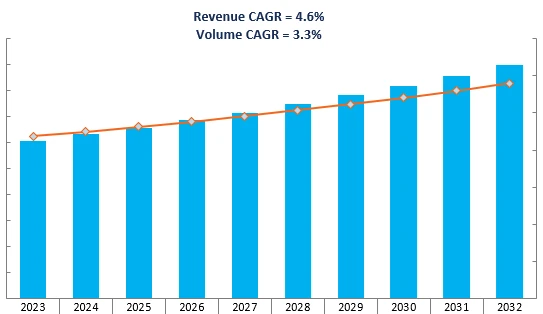
Volume demand is also expected to grow consistently as adoption expands across hospitals, long-term care facilities, rehabilitation centers, and home healthcare settings. Market volume is forecast to rise from 2.31 million metric tons in 2025 to approximately 2.90 million metric tons by 2032, achieving a volume CAGR of 3.3% during the forecast period. This increase reflects growing demand for specialized proteins, bioactive ingredients, vitamins, minerals, functional lipids, probiotics, prebiotics, and disease-targeted nutritional formulations.
North America and Europe are expected to continue generating the largest share of revenue due to mature healthcare infrastructure, established reimbursement systems, and high physician awareness. Meanwhile, Asia-Pacific is projected to record the fastest growth within the medical foods market, supported by increasing healthcare investments, expanding clinical nutrition adoption, aging populations, and improving regulatory pathways for Foods for Special Medical Purposes (FSMPs). Continuous innovation in precision nutrition and clinically substantiated ingredients is expected to strengthen long-term growth across the broader Nutritional Ingredients market and Medicinal Foods Market.
Growth Drivers: Medical Food Ingredients Market
Several long-term structural factors are accelerating growth in the Medical Food Ingredients Market, positioning medical nutrition as a critical component of modern healthcare and personalized disease management.
The most significant growth driver is the rapidly increasing prevalence of non-communicable diseases (NCDs), including diabetes, cardiovascular diseases, cancer, neurological disorders, gastrointestinal conditions, and chronic kidney disease. As these diseases become more common worldwide, healthcare providers are increasingly incorporating disease-specific nutritional therapies into treatment protocols, expanding demand across the Medical Food Ingredients Market.
Another major driver is the rapid aging of the global population. Longer life expectancy has increased the number of patients requiring specialized nutrition for healthy aging, muscle preservation, cognitive health, immune support, and recovery from chronic illnesses. Medical nutrition is becoming an essential component of long-term patient care across hospitals, rehabilitation centers, and home healthcare.
Growing physician and dietitian awareness, particularly in developed economies, continues to improve clinical adoption. Healthcare professionals increasingly recognize the role of evidence-based nutrition in improving patient outcomes, reducing hospital stays, and supporting disease management, leading to greater acceptance of specialized medical foods.
Continuous R&D investment by medical food manufacturers is further strengthening the medical foods market. Companies are developing innovative formulations utilizing premium proteins, lactoferrin, probiotics, prebiotics, precision-fermented ingredients, microbiome-based solutions, and other bioactive compounds designed to address specific therapeutic needs.
Innovation in precision nutrition, personalized healthcare, and functional ingredient technologies is creating new growth opportunities across the broader Nutritional Ingredients market. Manufacturers are increasingly introducing clinically validated, premium formulations that improve patient compliance while delivering measurable health outcomes. Together, these factors are expected to sustain long-term expansion of the Medicinal Foods Market.
Growth Restraints: Medical Food Ingredients Market
Despite favorable growth prospects, the Medical Food Ingredients Market faces several challenges that may moderate adoption and commercialization across global markets.
One of the most significant barriers is the lack of consistent regulatory frameworks governing medical foods. Regulatory definitions, approval pathways, labeling requirements, and clinical evidence standards vary considerably across countries, creating uncertainty for manufacturers and delaying product commercialization.
Another important restraint is the limited availability of reimbursement policies for medical nutrition products. In many regions, inadequate reimbursement discourages physician recommendations and limits patient access to specialized nutritional therapies, particularly in developing healthcare systems.
The market also remains vulnerable to global supply chain disruptions, particularly for specialty bioactive ingredients, micronutrients, and clinically validated functional compounds. Dependence on limited production sources—especially for certain high-value ingredients manufactured in China—creates procurement risks, price volatility, and potential supply shortages.
Limited physician awareness remains a challenge in several emerging markets. While clinical nutrition is well established in North America and Europe, many healthcare professionals in developing regions continue to prioritize pharmaceutical interventions over nutritional therapies, slowing adoption of the Medical Food Ingredients Market.
In addition, manufacturers face challenges associated with high research costs, lengthy clinical validation requirements, premium ingredient pricing, and increasing competition from conventional dietary supplements. The overlap between medical foods and general nutritional products can also create consumer confusion and complicate product positioning within the medical foods market.
Although these restraints are expected to persist in the near term, ongoing regulatory harmonization, stronger clinical evidence, expanding physician education, and greater investment in personalized nutrition are likely to improve long-term adoption across both the Medical Food Ingredients Market and the wider Nutritional Ingredients market.
Competitive Landscape: Medical Food Ingredients Market
The Medical Food Ingredients Market is highly competitive and characterized by a combination of global ingredient manufacturers, dairy nutrition companies, specialty bioactive suppliers, and clinical nutrition innovators. Competition extends beyond pricing, with vendors increasingly differentiating themselves through ingredient functionality, scientific validation, product quality, regulatory compliance, clean-label positioning, personalized nutrition capabilities, and proprietary technologies.
Unlike conventional food ingredient markets, success in the Medical Food Ingredients Market depends heavily on clinical substantiation and regulatory credibility. Manufacturers must demonstrate safety, efficacy, and consistent product quality while meeting the varying regulatory requirements governing Foods for Special Medical Purposes (FSMPs) across different regions. As healthcare providers increasingly adopt evidence-based nutrition, companies investing in clinical research, physician education, and regulatory compliance are strengthening their competitive positions.
The market consists of approximately 150–200 competitors worldwide, creating a fragmented but innovation-driven landscape. Companies compete across multiple ingredient categories, including proteins, functional lipids, vitamins, minerals, probiotics, prebiotics, amino acids, and specialty bioactive compounds. Product innovation remains a major competitive strategy as manufacturers develop disease-specific nutritional ingredients targeting oncology, gastrointestinal disorders, metabolic diseases, renal nutrition, neurological health, and healthy aging.
Leading companies in the Medical Food Ingredients Market include Arla Food Ingredients, Fonterra, FrieslandCampina Ingredients, Lactalis Ingredients, Glanbia plc, Bunge, AAK, Wilmar, ADM, IFF, dsm-firmenich, BENEO, Novonesis, and BASF. These organizations possess strong global manufacturing capabilities, extensive ingredient portfolios, well-established regulatory expertise, and long-standing relationships with medical nutrition manufacturers.
Distribution strategies vary considerably depending on ingredient specialization. High-value ingredients such as lactoferrin, human milk oligosaccharides (HMOs), alpha-lactalbumin (ALA), beta-lactoglobulin (BLG), and casein glycomacropeptide (CGMP) are typically sold directly to specialized medical nutrition manufacturers under tightly regulated supply agreements. More widely used nutritional ingredients—including proteins, vitamins, minerals, carbohydrates, and specialty lipids—are distributed through ingredient distributors, regional partners, and global supply networks serving food, pharmaceutical, supplement, and clinical nutrition industries.
Another emerging competitive trend within the medical foods market is the integration of sustainability with innovation. Companies are investing in precision fermentation, alternative proteins, microbiome science, plant-based bioactives, and environmentally sustainable ingredient production to improve scalability while reducing environmental impact. Digital health integration, personalized nutrition platforms, and AI-assisted nutritional formulation are also becoming differentiators that strengthen long-term competitiveness.
Overall, competition within the Medical Food Ingredients Market is expected to intensify as manufacturers focus on premiumization, clinically validated formulations, regulatory excellence, and personalized medical nutrition solutions. Organizations capable of combining scientific innovation with global regulatory expertise will be best positioned to capitalize on opportunities across the broader Nutritional Ingredients market and Medicinal Foods Market.
Analyst Perspective / Future Outlook: Medical Food Ingredients Market
The outlook for the Medical Food Ingredients Market remains highly positive as nutrition becomes an increasingly important component of modern healthcare. Rather than competing directly with pharmaceuticals, medical foods are evolving into complementary therapeutic solutions that improve patient outcomes through disease-specific nutritional interventions. This transition is expected to reshape the future of clinical nutrition over the coming decade.
According to the analyst, despite regulatory complexity and category overlap with dietary supplements, the market is steadily shifting toward clinically validated, disease-specific nutrition solutions supported by stronger scientific evidence. Growing incidences of chronic diseases, aging populations, and increasing physician recognition of medical nutrition are creating sustained long-term demand for premium ingredients with demonstrated clinical efficacy.
Future innovation is expected to center on precision nutrition, microbiome-based ingredients, advanced bioactives, and precision fermentation technologies that enable manufacturers to develop highly differentiated formulations targeting specific therapeutic conditions. Personalized nutrition platforms integrated with digital health technologies will further strengthen patient adherence and treatment effectiveness.
The analyst also highlights that future market leadership will increasingly depend on clinical substantiation, regulatory alignment, and clear product positioning. Companies capable of generating robust clinical evidence while navigating evolving regulatory frameworks will gain significant competitive advantages. Continued investment in physician education, reimbursement expansion, and ingredient innovation will further accelerate market adoption.
As healthcare systems increasingly prioritize preventive care, personalized medicine, and value-based treatment models, the Medical Food Ingredients Market is expected to become a strategic segment within the global healthcare ecosystem. The combination of premium functional ingredients, evidence-based nutrition, and expanding clinical applications positions both the medical foods market and the broader Nutritional Ingredients market for sustainable long-term growth through 2032 and beyond.
Scope of Analysis
Ecosystem
Definition
Differences between Dietary Supplements, Medical Food, and Pharmaceutical Drugs
Overlap of Medical Food and Nutraceuticals
Medical Foods Ingredients Market—Segmentation
Definition by Ingredient Type
Definition by Application
Why is it Increasingly Difficult to Grow?
The Strategic Imperative 8™
The Impact of the Top 3 Strategic Imperatives on the Medical Food Ingredients Market
Value Chain Analysis for the Medical Food Ingredients Market
Competitive Environment
Personalization Trends in the Medical Food Industry
Key Competitors
Product Matrix—Proteins
Product Matrix—Carbohydrates
Product Matrix—Oils and Fats
Product Matrix—Biotic Ingredients
Product Matrix—Vitamins
Product Matrix—Minerals
Product Matrix—Others
Medical Nutrition Overview for Diverse Disease Conditions
Medical Nutrition for DRM
Medical Nutrition for Critical Care, Trauma, and Wound Health
Medical Nutrition for Metabolic and Diabetes Health
Medical Nutrition for Digestive and GI Health
Medical Nutrition for Renal and Organ-Specific Nutrition
Medical Nutrition for Cognitive and Neurological Health
Medical Nutrition for Musculoskeletal and Healthy Aging
Medical Nutrition for Cardiovascular Health
Recent Market Activities, Protein
Recent Market Activity, Other Medical Food Ingredients
Recent Market Activities, Finished Medical Food Products
Growth Metrics
Growth Drivers
Growth Driver Analysis
Growth Restraints
Restraint Analysis
Forecast Considerations
Revenue and Volume Forecast
Revenue Forecast by Ingredients
Volume Forecast by Ingredients
Revenue and Volume Forecast Analysis
Revenue Forecast by Application
Revenue Forecast Analysis by Application
Revenue Forecast by Region
Volume Forecast by Region
Revenue and Volume Forecast Analysis by Region
Growth Metrics
Revenue and Volume Forecast
Revenue Forecast by Ingredients
Volume Forecast by Ingredients
Revenue Share by Application
Revenue Forecast Analysis
Revenue and Volume Forecast Analysis by Ingredients
Growth Metrics
Revenue and Volume Forecast
Revenue Share by Application
Revenue and Volume Forecast Analysis
Growth Metrics
Revenue and Volume Forecast
Revenue Forecast by Ingredients
Volume Forecast by Ingredients
Revenue Share by Application
Revenue and Volume Forecast Analysis
Revenue and Volume Forecast Analysis
Revenue and Volume Forecast Analysis by Ingredients
Growth Metrics
Revenue Forecast
Revenue Forecast by Ingredients
Revenue Share by Application
Revenue Analysis
Revenue Forecast Analysis by Ingredients
Growth Metrics
Revenue and Volume Forecast
Revenue Forecast by Ingredients
Volume Forecast by Ingredients
Revenue Share by Application
Revenue and Volume Forecast Analysis
Revenue and Volume Forecast Analysis by Ingredients
Growth Metrics
Revenue and Volume Forecast
Revenue Forecast by Ingredients
Volume Forecast by Ingredients
Revenue Share by Application
Revenue and Volume Forecast Analysis
Revenue and Volume Forecast Analysis by Ingredients
Growth Opportunity 1: Chronic Disease Management Beyond Malnutrition
Growth Opportunity 2: China’s FSMP Momentum
Growth Opportunity 3: Infant-Grade FSMP in APAC
Benefits and Impacts of Growth Opportunities
Next Steps
List of Exhibits
Legal Disclaimer
Frequently Asked Questions (FAQs) – Medical Food Ingredients Market
1. What is the Medical Food Ingredients Market?
The Medical Food Ingredients Market comprises specialized nutritional ingredients used in medical foods formulated for the dietary management of diseases or medical conditions under physician supervision. These ingredients include proteins, carbohydrates, functional lipids, vitamins, minerals, probiotics, prebiotics, amino acids, and other bioactive compounds that support disease-specific nutritional requirements.
2. How large is the Medical Food Ingredients Market expected to become by 2032?
The global Medical Food Ingredients Market is projected to grow from approximately USD 6.58 billion in 2025 to nearly USD 9.00 billion by 2032, registering a compound annual growth rate (CAGR) of 4.6%. Market volume is also expected to increase from 2.31 million metric tons to approximately 2.90 million metric tons during the same period.
3. What factors are driving growth in the Medical Food Ingredients Market?
The market is primarily driven by the increasing prevalence of chronic diseases, rapidly aging populations, growing physician awareness of medical nutrition, expanding demand for personalized healthcare, and continuous innovation in clinically validated functional ingredients such as probiotics, prebiotics, specialty proteins, and bioactive compounds.
4. Which ingredient categories are included in the Medical Food Ingredients Market?
The Medical Food Ingredients Market includes proteins, carbohydrates, oils and fats, vitamins, minerals, probiotics, prebiotics, amino acids, nucleotides, choline, lactoferrin, functional lipids, and other specialty bioactive ingredients used in disease-specific medical nutrition formulations.
5. Which regions are leading the Medical Food Ingredients Market?
North America and Europe currently dominate the Medical Food Ingredients Market due to advanced healthcare infrastructure, strong physician awareness, established regulatory frameworks, and high adoption of clinical nutrition. Asia-Pacific is expected to record the fastest growth because of expanding healthcare investments, aging populations, and increasing prevalence of chronic diseases.
6. Which companies are leading the Medical Food Ingredients Market?
Leading companies include Arla Foods Ingredients, Fonterra, FrieslandCampina Ingredients, Lactalis Ingredients, Glanbia plc, ADM, BASF, IFF, dsm-firmenich, BENEO, Novonesis, Bunge, AAK, and Wilmar. These companies compete through scientific innovation, ingredient quality, regulatory compliance, and clinically validated nutritional solutions.
7. What challenges are affecting the Medical Food Ingredients Market?
Major challenges include inconsistent global regulatory frameworks, limited reimbursement policies, supply chain disruptions for specialty ingredients, high research and clinical validation costs, physician awareness gaps in emerging markets, and increasing competition from conventional dietary supplements.
8. How is innovation transforming the Medical Food Ingredients Market?
Innovation is centered on precision nutrition, microbiome science, precision fermentation, plant-based bioactive ingredients, personalized nutrition, and AI-assisted formulation development. These advancements are enabling manufacturers to develop clinically validated medical foods that address specific therapeutic conditions and improve patient outcomes.
9. What role does the Medical Food Ingredients Market play in modern healthcare?
The Medical Food Ingredients Market supports modern healthcare by providing disease-specific nutritional solutions that complement pharmaceutical therapies. Medical foods help manage chronic diseases, improve recovery, enhance patient outcomes, and support personalized treatment plans under medical supervision.
10. What is the future outlook for the Medical Food Ingredients Market?
The future outlook for the Medical Food Ingredients Market is highly positive, driven by growing adoption of precision nutrition, expanding clinical applications, stronger scientific evidence, increasing physician acceptance, and rising investments in personalized healthcare. Continuous innovation in specialty ingredients and medical nutrition is expected to support sustainable market growth through 2032 and beyond.
Speak directly with our analytics experts for tailored recommendations.
Recent related Nutritional and Health Ingredients research
05 Oct 2026 | Global | Market Research
Impact of GLP-1 on Nutraceuticals, Global, 2025–2032
The rapid adoption of GLP-1 therapies is reshaping the weight management landscape and creating a new set of nutritional needs among consumers using these treatments. While GLP-1 therapies have demonstrated significant benefits for weight loss and metabolic health, associated challenges—including re...
03 Sep 2026 | Global | Market Research
Biotics in Animal Nutrition, Global, 2025–2032
The study analyzes probiotics, prebiotics, and postbiotics used in animal feed, pet food, and supplements, focusing strictly on ingested biotics impacting gut health and performance outcomes. The scope excludes non-feed applications (e.g., silage inoculants, aquaculture bioremediation, and other env...
16 Jun 2026 | Global | Market Research
Infant Formula Ingredients Market, Global, 2025–2032
The research assesses growth opportunities for infant formula ingredients across key application segments and regional markets. Driven by demographic shifts, urbanization, and changing lifestyles, infant formula continues to play a critical role in meeting infant nutrition needs, particularly where ...
29 Apr 2026 | Global | Frost Radar
Frost Radar: Non-polluting Flavoring and Coloring Agents, 2026
The market for non-polluting flavoring and coloring agents is transforming because of stricter regulation of synthetic additives, demand for clean-label products, and a focus on sustainability. Natural, bio-based alternatives, such as plant-derived extracts and upcycled ingredients, are replacing co...
03 Apr 2026 | Global | Market Research
Alternative Protein Ingredients for Human Nutrition, Global, 2025–2032
The global food system is undergoing a significant transformation, driven by the increasing demand for sustainable, nutritious, and scalable protein sources. Alternative proteins have emerged as a critical solution to address challenges associated with conventional animal-based protein production, i...
Purchase includes:
- Report download
- Growth Dialog™ with our experts
Growth Dialog™
A tailored session with you where we identify the:- Strategic Imperatives
- Growth Opportunities
- Best Practices
- Companies to Action
Impacting your company's future growth potential.
Rising global prevalence of non-communicable diseases (NCDs), rapid population aging, and increasing recognition of nutrition as a core component of disease management are driving sustained demand for clinically substantiated medical food formulations and their constituent ingredients. Growth in the market is supported by increasing physician and dietitian awareness in developed economies, expanding clinical adoption in hospital and home care settings, and rising R&D investments by medical nutrition manufacturers to address new disease indications. However, market expansion is moderated by regulatory ambiguity across regions, limited and inconsistent reimbursement coverage, and supply chain vulnerabilities, particularly for micronutrients and specialty bioactives. Despite these challenges, innovation in disease-targeted formulations, improved regulatory clarity in select markets, and gradual expansion of reimbursement pathways are expected to support steady long-term market growth.
From a geographic perspective, North America and Europe led the global medical food ingredients market in 2025, supported by established regulatory frameworks, higher physician awareness, strong clinical nutrition infrastructure, and the presence of leading medical nutrition companies. Asia-Pacific, although accounting for a smaller share in 2025, is projected to register the fastest growth during the forecast period, driven by the increasing disease burden, rapid population aging, expanding hospital infrastructure, and improving FSMP regulatory pathways, particularly in China. Emerging markets, such as India, also present long-term growth potential due to high rates of disease-related malnutrition, evolving regulations, and rising interest in clinically validated medical nutrition.
The study period is from 2023 to 2032, the base year is 2025, and the forecast period is from 2026 to 2032.
Author: Nimisha Dhomne
| Deliverable Type | Market Research |
|---|---|
| Industries | Chemicals and Materials |
| No Index | No |
| Is Prebook | No |
| Keyword 1 | Medical Food Ingredients Market Report |
| Keyword 2 | Medical Food Ingredients Industry Analysis |
| Keyword 3 | Medical Food Ingredients Market Forecast |
| Podcast | No |
| Predecessor | PD5F-01-00-00-00 |
| WIP Number | PLT4-01-00-00-00 |