 USD
USD GBP
GBP  CNY
CNY  EUR
EUR  INR
INR  JPY
JPY  MYR
MYR  ZAR
ZAR  KRW
KRW  THB
THB 


Passenger Vehicle and Light Commercial Vehicle Aftermarket, APAC, 2024–2032
AI is Driving Transformational Growth in Diagnostics and Supply Chain Inventory Management
17-Aug-2026
Asia Pacific
Market Research
PG8N-01-00-00-00
AU_2026_34828
Key Takeaways: Passenger Vehicle and Light Commercial Vehicle Aftermarket
- The Passenger Vehicle and Light Commercial Vehicle Aftermarket in APAC is projected to grow from $150.6 billion in 2025 to $239.8 billion by 2032, registering a 6.9% CAGR.
- China remains the largest growth engine, while Indonesia, Malaysia, and Thailand continue expanding as high-potential APAC Automotive Aftermarket hubs.
- AI-powered diagnostics, predictive maintenance, and digital inventory management are transforming workshop operations.
- Aging vehicle fleets and rising vehicles-in-operation (VIO) continue supporting replacement parts demand.
- The Passenger Vehicle Aftermarket APAC benefits from expanding independent aftermarket (IAM) channels and eCommerce distribution.
- EV maintenance, battery diagnostics, and remanufacturing are creating new revenue opportunities across the Light Commercial Vehicle Aftermarket APAC.
Report Summary: Passenger Vehicle and Light Commercial Vehicle Aftermarket
The Passenger Vehicle and Light Commercial Vehicle Aftermarket study examines the evolving aftermarket landscape across Australia, China, Indonesia, Japan, Malaysia, and Thailand, with forecasts extending through 2032. The report evaluates aftermarket revenue, vehicles-in-operation (VIO), replacement parts demand, repair and maintenance services, and distribution channel dynamics.
The APAC Automotive Aftermarket continues expanding due to growing vehicle ownership, longer vehicle lifespans, and increasing adoption of digital repair technologies. China remains the largest contributor to regional growth because of its expanding vehicle population, while Southeast Asian markets strengthen their position through rising automotive production and aftermarket investments.
The study also explores government regulations, leading aftermarket suppliers, retail and distributor networks, competitive dynamics, and emerging opportunities across EV servicing, AI-powered diagnostics, and connected vehicle maintenance.
In the Analyst's Words — Ming Lih Chan, Research Manager, Asia-Pacific Automotive Aftermarket
"Leading APAC stakeholders are leveraging AI-powered diagnostic tools and advanced data processing capabilities to build significant technological barriers, thereby expanding their market share in the aftermarket." — Ming Lih Chan
The Passenger Vehicle and Light Commercial Vehicle Aftermarket is entering a technology-led growth phase where artificial intelligence, connected diagnostics, and predictive maintenance are becoming core competitive differentiators. As vehicles become increasingly software-defined, aftermarket participants that invest in digital workshops, advanced analytics, and EV service capabilities will be better positioned to capture long-term value.
According to Ming Lih Chan, the APAC Automotive Aftermarket will continue evolving beyond traditional parts replacement toward intelligent maintenance ecosystems that improve repair accuracy, inventory optimization, and customer engagement. The Passenger Vehicle Aftermarket APAC is also expected to benefit from battery diagnostics, remanufacturing, and sustainability-focused services, while the Light Commercial Vehicle Aftermarket APAC will gain momentum from expanding logistics fleets, preventive maintenance demand, and digital fleet management solutions through 2032.
Market Overview & Trends: Passenger Vehicle and Light Commercial Vehicle Aftermarket
The Passenger Vehicle and Light Commercial Vehicle Aftermarket is experiencing sustained expansion as Asia-Pacific's vehicle parc continues growing while vehicles remain in service for longer periods. Rising vehicle ownership across China and Southeast Asia, combined with aging fleets in Australia and Japan, creates strong replacement demand for parts, maintenance, and repair services.
Several transformative trends are reshaping the APAC Automotive Aftermarket. Artificial intelligence is improving diagnostic accuracy, predictive maintenance, and supply chain inventory management, helping workshops reduce downtime and improve customer satisfaction. Digital service platforms and eCommerce channels are increasing pricing transparency while expanding customer access to aftermarket products.
Electrification is creating entirely new service categories within the Passenger Vehicle Aftermarket APAC, including battery diagnostics, powertrain inspections, software updates, and EV component servicing. Meanwhile, connected vehicle technologies generate valuable maintenance data that supports proactive repairs.
The Light Commercial Vehicle Aftermarket APAC also benefits from growing logistics activity, eCommerce deliveries, and fleet maintenance requirements. Independent aftermarket networks continue strengthening their market position by expanding service coverage, improving digital capabilities, and offering competitive pricing across both passenger and commercial vehicle segments.
Scope of Analysis: Passenger Vehicle and Light Commercial Vehicle Aftermarket
This Passenger Vehicle and Light Commercial Vehicle Aftermarket study evaluates aftermarket performance across major APAC economies, including Australia, China, Indonesia, Japan, Malaysia, and Thailand, while providing broader regional context through 2032 forecasts.
The research examines light vehicles, including passenger cars, SUVs, multipurpose vehicles, vans, and light commercial vehicles. Revenue analysis focuses primarily on aftermarket parts and accessories while excluding service revenue unless otherwise specified.
The APAC Automotive Aftermarket assessment covers replacement parts such as tires, batteries, filters, braking systems, collision repair components, lighting, HVAC systems, engine cooling, steering systems, remanufactured components, ignition systems, lubricants, and EV-specific parts.
The report also analyzes vehicles-in-operation (VIO), aftermarket revenue forecasts, government regulations, distributor and retailer networks, independent aftermarket channels, OEM participation, and country-level growth opportunities. Historical industry performance provides context for forecasting future demand across the Passenger Vehicle Aftermarket APAC and Light Commercial Vehicle Aftermarket APAC.
Market Segmentation Analysis: Passenger Vehicle and Light Commercial Vehicle Aftermarket
The Passenger Vehicle and Light Commercial Vehicle Aftermarket consists of multiple interconnected segments supporting vehicle ownership throughout the lifecycle, from replacement parts and maintenance to financing, recycling, and EV charging-related services.
The Passenger Vehicle Aftermarket APAC includes replacement components, decorative and electronic accessories, maintenance services, automotive finance, and vehicle recycling activities. Consumers increasingly purchase products through OEM dealerships, independent workshops, distributors, and online platforms, creating a more diversified aftermarket ecosystem.
The Light Commercial Vehicle Aftermarket APAC focuses heavily on fleet maintenance, preventive servicing, braking systems, tires, batteries, filters, lighting, steering components, HVAC equipment, and powertrain-related parts that support high-utilization commercial vehicles.
Geographically, the APAC Automotive Aftermarket covers Australia, China, Indonesia, Japan, Malaysia, and Thailand, while additional regional markets—including South Korea, Singapore, Vietnam, New Zealand, Brunei, and the Philippines—provide supplementary regional opportunities.
Distribution channels remain highly competitive, with independent aftermarket (IAM) networks accounting for approximately 51.1% of regional aftermarket revenue in 2025. OEM service networks continue serving warranty vehicles, while digital commerce increasingly supports factory-to-business, business-to-business, and business-to-consumer purchasing models across the regional aftermarket ecosystem.
Revenue & Spending Forecast: Passenger Vehicle and Light Commercial Vehicle Aftermarket
The Passenger Vehicle and Light Commercial Vehicle Aftermarket is forecast to expand steadily throughout the forecast period, supported by rising vehicles-in-operation, aging fleets, growing replacement demand, and expanding digital aftermarket capabilities.
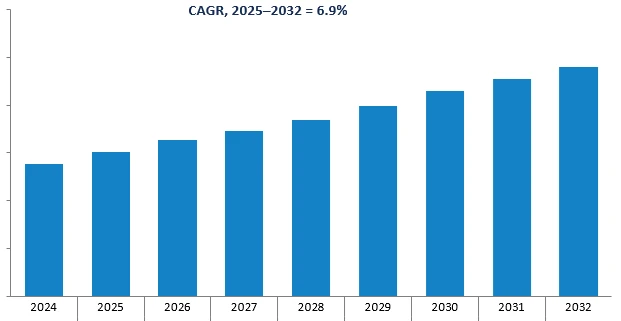
Regional aftermarket revenue is projected to increase from $138.5 billion in 2024 to approximately $150.6 billion in 2025, before reaching $239.8 billion by 2032, representing a 6.9% CAGR between 2025 and 2032.
China is expected to contribute the largest share of incremental revenue growth due to its expanding vehicle population and relatively low vehicle ownership rates. Meanwhile, Indonesia, Malaysia, and Thailand continue strengthening their positions as fast-growing APAC Automotive Aftermarket markets through increasing vehicle production and aftermarket expansion.
The Passenger Vehicle Aftermarket APAC also benefits from rising spending on advanced diagnostics, EV servicing, battery management, and connected vehicle maintenance. Fleet operators within the Light Commercial Vehicle Aftermarket APAC continue increasing investments in preventive maintenance and digital fleet management, supporting sustained aftermarket revenue growth across both mature and emerging economies.
Growth Environment: Passenger Vehicle and Light Commercial Vehicle Aftermarket
The Passenger Vehicle and Light Commercial Vehicle Aftermarket benefits from several long-term structural growth drivers that continue strengthening the regional aftermarket ecosystem. Rising vehicles-in-operation, aging vehicle fleets, expanding independent workshops, and increasing digital adoption provide a favorable environment for sustained revenue growth.
The APAC Automotive Aftermarket is supported by continuous VIO expansion, which is projected to rise from approximately 510.3 million vehicles in 2025 to roughly 630.8 million vehicles by 2032. Older vehicles require more frequent maintenance, creating stronger demand for replacement parts, batteries, braking systems, filters, and repair services.
China remains the strongest growth engine because of its expanding vehicle ownership and favorable economic fundamentals, while Southeast Asian economies—including Indonesia, Malaysia, and Thailand—continue benefiting from growing automotive production and aftermarket investments.
Technology adoption further strengthens the Passenger Vehicle Aftermarket APAC through AI-powered diagnostics, predictive maintenance, digital inventory management, and connected vehicle servicing. However, macroeconomic uncertainty, geopolitical trade tensions, changing OEM strategies, and workforce shortages create challenges that require greater operational flexibility.
The Light Commercial Vehicle Aftermarket APAC continues benefiting from expanding logistics networks, fleet maintenance requirements, and digital service platforms, helping offset competitive pressures while supporting long-term aftermarket resilience across the region.
Scope of Analysis
Segmentation and Definition
Geographic Segmentation
Key Question This Study Will Answer
Why Is It Increasingly Difficult to Grow?
The Strategic Imperative 8™
The Impact of the Top 3 Strategic Imperatives on the Asia-Pacific Automotive Aftermarket
Growth Metrics
Growth Environment
Competitive Environment
Key Competitors
Growth Drivers
Growth Restraints
Forecast Considerations
Revenue Forecast
Revenue Forecast by Key Countries
Revenue Forecast Analysis
Revenue by Replacement Part Type
Pricing Trends
Growth Opportunity by Country
Automotive Aftermarket Revenue Forecast of Key Countries
Automotive Aftermarket Revenue Share by Distribution Channels
Trend Relevance by Countries
APAC Automotive Aftermarket: Top Trends in 2025
Growth Metrics
Key Regulations
Growth Drivers
Growth Restraints
VIO Forecast
VIO by Types and Brands
Revenue Forecast
Forecast Analysis
Distribution Channels
Leading Automotive Parts Suppliers
Leading Automotive Parts Distributors and Retailers
Automotive Aftermarket Opportunity Areas
Growth Metrics
Key Regulations
Growth Drivers
Growth Restraints
VIO Forecast
VIO by Types and Brands
Revenue Forecast
Distribution Channels
Leading Automotive Parts Suppliers
Leading Automotive Parts Distributors and Retailers
Automotive Aftermarket Opportunity Areas
Growth Metrics
Key Regulations
Growth Drivers
Growth Restraints
VIO Forecast
VIO by Types and Brands
Revenue Forecast
Forecast Analysis
Distribution Channels
Leading Automotive Parts Suppliers
Leading Automotive Parts Distributors and Retailers
Automotive Aftermarket Opportunity Areas
Growth Metrics
Key Regulations
Growth Drivers
Growth Restraints
VIO Forecast
VIO by Types and Brands
Revenue Forecast
Forecast Analysis
Distribution Channels
Leading Automotive Parts Suppliers
Leading Automotive Parts Distributors and Retailers
Automotive Aftermarket Opportunity Areas
Growth Metrics
Key Regulations
Growth Drivers
Growth Restraints
VIO Forecast
VIO by Types and Brands
Revenue Forecast
Forecast Analysis
Distribution Channels
Leading Automotive Parts Suppliers
Leading Automotive Parts Distributors and Retailers
Automotive Aftermarket Opportunity Areas
Growth Metrics
Key Regulations
Growth Drivers
Growth Restraints
VIO by Types and Brands
Revenue Forecast
Forecast Analysis
Distribution Channels
Leading Automotive Parts Suppliers
Leading Automotive Parts Distributors and Retailers
Automotive Aftermarket Opportunity Areas
Growth Opportunity 1: Policy-Driven Growth Opportunities in the Aftermarket
Growth Opportunity 2: Aging Vehicles and Aftermarket Demand
Growth Opportunity 3: The Rise of Electric Powertrain and Intelligent Solutions
Growth Opportunity 4: Country-Specific Vehicle Segments, Including K Cars and Pickups, and the Corresponding Aftermarket Demand
Growth Opportunity 5: Aftermarket Growth in Digital and eCommerce Activities
Growth Opportunity 6: Sustainability in the Aftermarket Supply Chain through Recycling and Remanufacturing
Benefits and Impacts of Growth Opportunities
Next Steps
List of Exhibits
Legal Disclaimer
Frequently Asked Questions (FAQs) – Passenger Vehicle and Light Commercial Vehicle Aftermarket
1. What is the Passenger Vehicle and Light Commercial Vehicle Aftermarket?
The Passenger Vehicle and Light Commercial Vehicle Aftermarket includes replacement parts, repair services, maintenance, diagnostics, accessories, remanufacturing, and other post-sale solutions that support passenger vehicles and light commercial vehicles throughout their operating life.
2. How fast is the APAC Automotive Aftermarket expected to grow?
The APAC Automotive Aftermarket is projected to grow from approximately $150.6 billion in 2025 to $239.8 billion by 2032, registering a CAGR of 6.9% during the forecast period.
3. Which countries are covered in the Passenger Vehicle Aftermarket APAC study?
The study covers Australia, China, Indonesia, Japan, Malaysia, and Thailand, while also providing additional regional insights into broader APAC Automotive Aftermarket opportunities.
4. What factors are driving growth in the Passenger Vehicle Aftermarket APAC?
Key growth drivers include rising vehicles-in-operation (VIO), aging vehicle fleets, increasing vehicle ownership, expanding independent aftermarket networks, AI-powered diagnostics, predictive maintenance, and growing EV servicing demand.
5. What opportunities exist in the Light Commercial Vehicle Aftermarket APAC?
The Light Commercial Vehicle Aftermarket APAC benefits from expanding logistics fleets, preventive maintenance requirements, eCommerce deliveries, fleet management solutions, and increasing replacement demand for critical vehicle components.
6. How is artificial intelligence changing the APAC Automotive Aftermarket?
Artificial intelligence is improving predictive maintenance, repair diagnostics, inventory optimization, customer service, and workshop efficiency, enabling aftermarket businesses to reduce downtime and improve operational performance.
7. Why is China important to the Passenger Vehicle Aftermarket APAC?
China remains the largest contributor to APAC Automotive Aftermarket growth because of its expanding vehicle population, relatively low vehicle ownership rates, and increasing demand for replacement parts, EV servicing, and digital aftermarket solutions.
8. What role do independent aftermarket (IAM) channels play in APAC?
Independent aftermarket channels account for a significant share of regional revenue and continue expanding through wider service coverage, competitive pricing, digital commerce, and stronger customer engagement across the Passenger Vehicle and Light Commercial Vehicle Aftermarket.
9. What challenges could affect future aftermarket growth in APAC?
Macroeconomic uncertainty, geopolitical trade tensions, changing OEM strategies, workforce shortages, and evolving vehicle technologies could influence aftermarket performance, although long-term demand remains supported by an expanding vehicle parc.
10. What is the future outlook for the Passenger Vehicle and Light Commercial Vehicle Aftermarket?
The Passenger Vehicle and Light Commercial Vehicle Aftermarket is expected to experience sustained long-term growth through 2032, supported by AI-powered diagnostics, connected vehicle technologies, EV maintenance services, expanding IAM networks, and rising aftermarket investments across APAC.
Speak directly with our analytics experts for tailored recommendations.
Recent related Aftermarket research
15 Oct 2026 | Asia Pacific | Market Research
Replacement Turbocharger Aftermarket in Passenger and Light Commercial Vehicles, China, 2026–2032
This study provides a comprehensive assessment of the automotive turbocharger replacement aftermarket in China, with a 2025 base year and forecasts extending through 2032. The analysis covers the replacement market across passenger vehicles and light commercial vehicles, evaluating market size, unit...
06 Oct 2026 | Asia Pacific | Market Research
Aftermarket Replacement Turbochargers in Medium- Duty and Heavy-Duty Commercial Vehicles, China, 2026–2032
China's medium- and heavy-duty truck turbocharger aftermarket is entering a mature yet resilient phase, supported by a vehicle parc exceeding 10 million units and sustained replacement demand despite increasing battery electric vehicle (BEV) sales. While turbocharger penetration is nearing saturatio...
16 Sep 2026 | North America | Customer Research
US Automotive Technicians’ Choice Survey, 2025
The 2025 US Automotive Technicians’ Choice study is an insightful voice-of-customer survey that highlights the tool preferences of automotive aftermarket service technicians. The survey of 400 automotive technicians across the United States used a combination of computer-assisted telephone and compu...
13 Aug 2026 | Global | Market Research
AI in the Global Automobile Aftermarket
This analysis examines the AI applications reshaping the automotive aftermarket ecosystem, exploring key adoption areas, regional dynamics, emerging use cases, and AI-driven investments driving change in operations and business models. Structured into six core segments, the report focuses on major v...
23 Jul 2026 | Global | Market Outlook
Growth Opportunities in the Automotive Aftermarket, Global, 2026
The global automotive aftermarket for light vehicles (≤6T GVWR) continues to demonstrate resilience despite moderating momentum in new vehicle sales. With a base year of 2025, this study evaluates market trends through 2030, providing a global perspective with region-specific insights for North Amer...
Purchase includes:
- Report download
- Growth Dialog™ with our experts
Growth Dialog™
A tailored session with you where we identify the:- Strategic Imperatives
- Growth Opportunities
- Best Practices
- Companies to Action
Impacting your company's future growth potential.
The research service provides an aftermarket overview for 2025, covering automotive aftermarket performance and analyzing various trends influencing demand for automotive parts replacement, repair, and maintenance.
Furthermore, the research service includes relevant government regulations; VIO data by vehicle type and by brand; aftermarket revenue forecasts; forecast analysis; distribution channel analysis; leading aftermarket parts suppliers; key parts distributors and retailers; and aftermarket opportunity areas in each country.
The APAC region is a vital player in the global automotive aftermarket. The outlook for growth in the Chinese market remains strong, primarily due to an increasing vehicle population, low vehicle ownership rates, and stable GDP growth. In contrast, Australia's aging vehicle population is expected to create further opportunities in its automotive aftermarket. Although Japan's aftermarket demand is relatively stable, a declining population and a decrease in household numbers may gradually reduce the vehicle infrastructure output (VIO).
Meanwhile, Southeast Asian countries such as Indonesia, Malaysia, and Thailand are projected to emerge as significant players in the automotive aftermarket, as they continue to expand their vehicle production and aftermarket activities.
This study outlines the size of each respective aftermarket, examines historical industry data from 2024, and provides forecasts extending to 2032.
Author: Chan Ming Lih
| Deliverable Type | Market Research |
|---|---|
| Industries | Automotive |
| No Index | No |
| Is Prebook | No |
| Keyword 1 | APAC Automotive Aftermarket |
| Keyword 2 | Automotive Aftermarket Market Report |
| Keyword 3 | Vehicle Parts Market Analysis |
| Podcast | No |
| Predecessor | None |
| WIP Number | PG8N-01-00-00-00 |