 USD
USD GBP
GBP  CNY
CNY  EUR
EUR  INR
INR  JPY
JPY  MYR
MYR  ZAR
ZAR  KRW
KRW  THB
THB 


Vulnerability Management Market, Global, 2024–2029
Demand for Converged AI-Enabled Solutions is Driving Growth by Reducing Security Analyst Workloads
16-Oct-2025
Global
Market Research
PFQD-01-00-00-00
AE_2025_33961
Report Summary:
The global vulnerability management market was valued at USD 1.88 billion in 2024 and is forecast to reach USD 3.06 billion by 2029, growing at a CAGR of 10.3% (2024–2029). This market comprises solutions and platforms for discovering, assessing, prioritizing, and remediating vulnerabilities across networks, cloud applications, endpoints, and IoT devices. Demand is rapidly rising for AI-Enabled Security market tools and next-generation vulnerability management solutions—including Vulnerability Management as a Service (VMaaS)—as organizations address the exponential growth of security risks and regulatory requirements.
Key Market Trends & Insights
- The security vulnerability management market is evolving from legacy scanning to integrated risk-based and exposure management platforms.
- AI and automation are core to improving detection, workflow, and prioritization, reducing analyst workloads.
- VMaaS adoption grows as organizations, especially SMEs, seek managed services for risk reduction and compliance.
- Vendor consolidation, innovative analytics, and regulatory mandates are intensifying market dynamics.
Market Overview - Vulnerability Management Market
- The vulnerability management market has transformed intensely over the past decade, driven by expanding threats, digital transformation, and compliance needs. Traditional scanning tools have evolved into holistic platforms with AI-enabled vulnerability assessment, risk prioritization, automated remediation, and cross-environment visibility.
- Modern VM solutions in the security vulnerability management market scan networks, endpoints, cloud, applications, and IoT for exposures, then prioritize findings and initiate remediation based on real business risk. This shift is propelled by the explosion of Common Vulnerabilities and Exposures (CVEs)—with over 37,000 CVEs discovered in 2024 alone—and the continued trend of cyber adversaries exploiting unpatched weaknesses as their leading attack vector.
- The rise of hybrid and remote work models, IoT proliferation, and cloud adoption has widened attack surfaces. In response, enterprises are investing in AI-enabled security market ecosystems for smarter vulnerability detection and risk analysis, leveraging threat intelligence, machine learning, and workflow automation.
Organizations must also navigate increasingly complex regulatory and compliance environments across regions (GDPR, CCPA, NERC CIP, PCI DSS). This has led to VM solutions being used for rigorous asset tracking, risk reporting, and policy enforcement, with VMaaS (Vulnerability Management as a Service) filling a critical gap for those lacking internal expertise. - Vendor competition is intense, with leading players rapidly acquiring capabilities in AI and managed vulnerability management, while also integrating digital risk, exposure management, and security orchestration. The market is poised for continued technological disruption as VM tools move beyond traditional scanning to advanced analytics, exposure scoring, and consolidated cybersecurity stacks (XDR, SOAR).
Revenue Forecast - Vulnerability Management Market
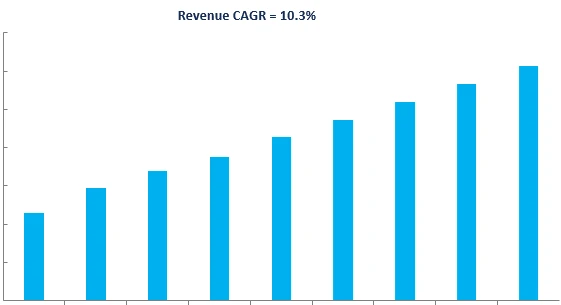
The global vulnerability management market revenue is projected to grow from USD 1,879.6 million in 2024 to USD 3,064.3 million in 2029 CAGR (2024–2029): 10.3%
- North America: Dominant region by revenue share (over 55%), led by the U.S.
- Asia-Pacific: Fastest-growing region (CAGR: 13.7%), driven by digital transformation and compliance initiatives.
- Top Product Segments:
- Vulnerability Assessment (VA): 2024 revenue USD 1,061.6 million; 2029 forecast USD 1,820.5 million (CAGR: 9.2%)
- Vulnerability Prioritization & Remediation (VPR): 2024 revenue USD 560.0 million; 2029 forecast USD 1,107.2 million (CAGR: 12.0%)
- VMaaS (Vulnerability Management as a Service): 2024 revenue USD 69.6 million; 2029 forecast USD 136.6 million (CAGR: 11.5%)
Subscription-based and consumption-based pricing dominate, with annual pricing influenced by the number of assets, required service levels, and bundled support.
Scope of Analysis - Vulnerability Management Market
This study encompasses the global vulnerability management market—including solutions for vulnerability assessment, prioritization, remediation, and managed VMaaS platforms. The base year is 2024 with forecasts extending to 2029. Covered regions are North America, Europe, Asia-Pacific, Central/Latin America, and Middle East & Africa.
Vulnerability management is defined as the process of identifying, classifying, prioritizing, remediating, and reporting on security weaknesses in organizational IT environments. Products are segmented as:
- Vulnerability Assessment (VA): Scans IT/OT environments for vulnerabilities.
- Vulnerability Prioritization & Remediation (VPR): Ranks vulnerabilities by exploitability, impact, and business risk, triggering automated or manual remediation.
- VMaaS (Vulnerability Management as a Service): Delivers vulnerability management through external managed service providers.
The analysis excludes managed/professional services revenues outside VMaaS, focusing on solution/platform sales at the manufacturer/vendor level in US dollars.
Segmentation Analysis - Vulnerability Management Market
The security vulnerability management market is segmented by product type, end-user vertical, and region.
By Product:
- Vulnerability Assessment (VA): Network, application, and endpoint scanning tools focused on discovery.
- Vulnerability Prioritization & Remediation (VPR): Platforms that aggregate vulnerability data, score risks, automate risk-based remediation, and report compliance.
- VMaaS (Vulnerability Management as a Service): Managed solutions for organizations lacking scale or in-house security capabilities.
By End-User: - Large Enterprises: Favor deep integration and workflow automation for large-scale infrastructure.
- SMEs: Rapidly adopting VMaaS for scalable risk management and compliance without heavy IT investment.
- Industry Verticals: BFSI, healthcare, government, retail, energy/critical infrastructure—each with sector-specific regulatory drivers.
By Region: - North America: Market leader by revenue share, with high maturity in adoption and compliance needs.
- Asia-Pacific: Fastest adoption rates, propelled by digitalization and increasing cyberattacks.
- Europe: Driven by GDPR and strong financial/regulatory sectors.
- Latin America & MEA: Gaining traction as organizations modernize security operations.
Market leaders are shifting towards consolidated security stacks, integrating VM with threat intelligence, XDR, SOAR, and exposure management platforms.
Growth Drivers - Vulnerability Management Market
- Increase in vulnerability exploitation as a preferred attack vector.
- Overwhelming growth in CVEs and widespread adoption of IoT, cloud, and remote work—broadening attack surfaces.
- Regulatory frameworks and compliance standards (GDPR, PCI DSS, NERC CIP) mandating continuous scanning and risk-based patch management.
- Need for advanced AI-Enabled Security market tools to automate risk prioritization and remediation, especially as manual workflows cannot keep up with risk volume and complexity.
- Expanding adoption of VMaaS, particularly by SMEs and organizations with resource or expertise limitations, for managed, scalable vulnerability risk reduction.
Growth Restraints - Vulnerability Management Market
- High concentration of market share among leading vendors limits new entrant opportunities in the vulnerability management market.
- Low awareness and skepticism about vulnerability prioritization tools reduce both demand and pricing power for advanced solutions.
- Pivot from traditional VM to broader exposure management solutions, leading vendors to innovate rapidly but increasing complexity for buyers.
- Consolidation with XDR/SIEM/SOAR and built-in cloud security tools may commoditize basic VM scanning—ratcheting up price pressure and reducing standalone solution margins.
- Demonstrating ROI is difficult, especially for SMEs, and often extends sales cycles for new or niche security vulnerability management market offerings.
Competitive Landscape - Vulnerability Management Market
The global security vulnerability management market features a highly competitive and consolidated structure.
- Top Market Share Holders: Tenable (33.5%), Rapid7 (21.5%), and Qualys (19.4%) collectively account for ~74% of global market revenue in 2024, cementing their roles as leaders in vulnerability management and AI-Enabled Security market innovation.
- Key Differentiators: Advanced prioritization algorithms, automation capabilities, managed services, sector-specific compliance, and integration with larger security analytics ecosystems.
- Notable Emerging Players: Absolute Security, RedSeal, Fortra, Brinqa, Intruder, Nucleus Security, NopSec, Outpost24, SecPod, and ManageEngine focus on differentiated features (e.g., firmware security, exposure scoring, flexible delivery).
- Distribution Channels: Retail/direct sales, MSPs/MSSPs (especially for VMaaS), value-added resellers, and system integrators.
- M&A Activity: Strategic acquisitions are reshaping offerings (e.g., Tenable acquiring Apex Security and Vulcan Cyber), while new entries come from both pure-play and multi-category security vendors.
Price competition, innovation (AI-driven, cloud-native, and SaaS), and expanding VMaaS portfolios will define the market’s trajectory.
FAQ :
- What is the 2029 projected market size for the global vulnerability management market?
USD 3.06 billion. - Which regions are growing fastest in the security vulnerability management market?
Asia-Pacific and Central/Latin America show the highest CAGRs. - What is VMaaS and why is it gaining traction?
Vulnerability Management as a Service delivers managed, scalable vulnerability assessment and remediation—ideal for SMEs and resource-limited organizations. - Who are the largest players in the global market?
Tenable, Rapid7, and Qualys collectively hold nearly three quarters of global market share. - How does the AI-Enabled Security market impact vulnerability management?
AI enhances detection, automates risk prioritization, and enables sophisticated workflow and remediation. - What segments are covered by VM solutions?
Vulnerability Assessment, Vulnerability Prioritization & Remediation, and VMaaS. - Why are regulatory requirements important?
They drive demand for continuous scanning, risk reporting, and compliance documentation. - What drives organizations to prioritize vulnerability management?
Rising threat volumes, increased exploitation, compliance, and the need for risk-based, automated solutions. - What challenges do new vendors face?
High market concentration, price pressure, and difficulty in demonstrating rapid ROI. - What trends are shaping future market offerings?
Integration with XDR, exposure management, consolidated threat analytics, and SaaS-based subscription models.
Scope of Analysis
Segmentation
Why is it Increasingly Difficult to Grow?
The Strategic Imperative 8
The Impact of the Top 3 Strategic Imperatives on the Global VM Market
Distribution Channels
Competitive Environment
Key Competitors
Growth Metrics
Growth Drivers
Growth Driver Analysis
Growth Restraints
Growth Restraint Analysis
Forecast Considerations
Revenue Forecast
Revenue Forecast by Product
Revenue Forecast by Region
Revenue Forecast Analysis
Pricing Trends and Forecast Analysis
Revenue Share
Revenue Share Gain/Loss
Revenue Share Analysis
Growth Metrics
Revenue Forecast
Revenue Forecast by Region
Revenue Share
Forecast Analysis
Growth Metrics
Revenue Forecast
Revenue Forecast by Region
Revenue Share
Forecast Analysis
Growth Metrics
Revenue Forecast
Revenue Forecast by Region
Revenue Share
Forecast Analysis
Growth Opportunity 1: Integrate AI Into the VM Platform
Growth Opportunity 2: Leverage Growing Demand in SMEs for VM Tools
Growth Opportunity 3: Managed Services/VMaaS Offerings
Strategic Shifts in VM Requirements
Benefits and Impacts of Growth Opportunities
Next Steps
List of Exhibits
Legal Disclaimer
Speak directly with our analytics experts for tailored recommendations.
Recent related Security research
21 Oct 2026 | Global | Market Research
Insights for CISOs: The Transition to Quantum-Safe
The emergence of post-quantum cryptography (PQC) reflects a significant problem: powerful quantum computers may soon compromise the cryptographic algorithms underpinning today’s digital economy, threatening the confidentiality and integrity of sensitive data and communications. Addressing this risk ...
16 Oct 2026 | Global | Market Research
Customer Transformation Journeys External Risk Mitigation and Management: BitSight
This report explores how organizations are accelerating cyber risk reduction and remediation through Bitsight’s intelligent External Risk Management and Mitigation (ERMM) solution. It examines customer transformation journeys, highlighting how continuous visibility, contextualized risk intelligence,...
15 Oct 2026 | Global | Market Research
Network Detection and Response (NDR) Sector, Global, 2026–2030
This study examines the global NDR market over the 2022–2030 forecast period. It finds that rising investment reflects NDR's evolution from a discretionary security enhancement into a foundational component of enterprise cyber defense, underscoring stronger buyer commitment and heightened vendor com...
09 Oct 2026 | Global | Technology Research
Growth Opportunities in SiC MOSFET, Photodiodes, RISC-Vs, and Advanced Memory
The Microelectronics Technology Opportunity Engine covers innovations pertaining to SiC MOSFET, Photodiodes, RISC-Vs, and Advanced Memory.The Microelectronics Technology Opportunity Engine captures global electronics-related innovations and developments on a weekly basis. Developments are centered o...
09 Oct 2026 | Global | Frost Radar
Frost Radar™: Workforce Identity and Access Management, 2026
Hybrid work and software as a service have shifted security enforcement from the network perimeter to identity, transforming it into a control plane. Workforce identity and access management (IAM) now determines whether every user, device, and session should retain access based on context, risk, and...
Purchase includes:
- Report download
- Growth Dialog™ with our experts
Growth Dialog™
A tailored session with you where we identify the:- Strategic Imperatives
- Growth Opportunities
- Best Practices
- Companies to Action
Impacting your company's future growth potential.