 USD
USD GBP
GBP  CNY
CNY  EUR
EUR  INR
INR  JPY
JPY  MYR
MYR  ZAR
ZAR  KRW
KRW  THB
THB 


Biosurfactants Market in Personal Care, Global, 2025–2032
Biosurfactant Production is Experiencing Transformational Growth Due to Advances in Fermentation, Strain Engineering, Feedstocks, and Downstream Processing
09-Apr-2026
Global
Market Research
PLS3-01-00-00-00
CM_2026_34488
Report Summary: Biosurfactants Market
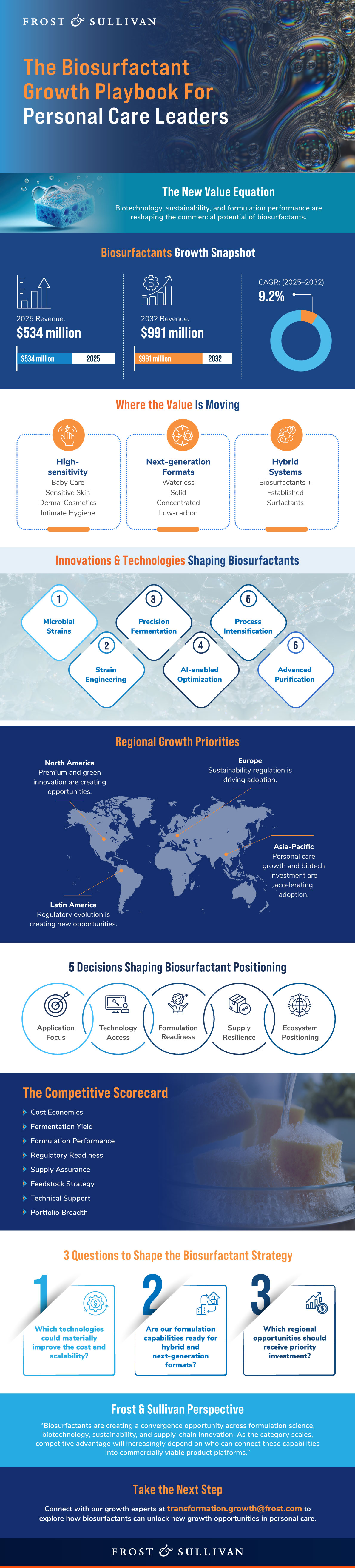
The global biosurfactants market in personal care is gaining strong momentum, driven by increasing demand for sustainable and bio-based ingredients. The market was valued at USD 492.7 million in 2024 and is projected to reach USD 991.0 million by 2032, expanding at a CAGR of 9.2%. Growth in the biosurfactants market is primarily fueled by rising consumer preference for environmentally friendly formulations and tightening regulations on synthetic surfactants.
Biosurfactants such as rhamnolipids, sophorolipids, and mannosylerythritol lipids (MELs) are increasingly being adopted due to their low toxicity, biodegradability, and multifunctional performance. The biosurfactants market is also benefiting from advancements in fermentation technologies and strain engineering, which are improving production efficiency and scalability.
Key Market Trends & Insights
- Europe and North America lead the biosurfactants market due to strong regulatory frameworks and sustainability focus.
- Asia-Pacific is emerging as a high-growth region in the biosurfactants market.
- Skin care and personal hygiene applications dominate demand in the biosurfactants market.
- Increasing preference for natural and mild ingredients is shaping the biosurfactants market.
- Innovation in bio-based surfactants is enhancing product differentiation.
Market Size & Forecast
- 2024 Market Size: USD 492.7 Million
- 2032 Projected Market Size: USD 991.0 Million
- CAGR (2025–2032): 9.2%
The biosurfactants market is expected to witness sustained expansion as sustainability trends and innovation continue to reshape the personal care industry.
Market Overview & Trends: Biosurfactants Market
The biosurfactants market is undergoing a significant transformation as sustainability becomes a central focus in personal care formulations. Consumers are increasingly shifting toward bio-based and environmentally friendly products, driving demand across the biosurfactants market. This trend is reinforced by regulatory pressures aimed at reducing reliance on petrochemical-based surfactants.
A key trend shaping the biosurfactants market is the rapid advancement in fermentation and biotechnology processes. These innovations are improving yield efficiency and reducing production costs, making biosurfactants more competitive with synthetic alternatives.
Another important trend is the growing use of biosurfactants in multifunctional applications. In the biosurfactants market, these ingredients are valued not only for cleansing but also for emulsification, antimicrobial properties, and skin compatibility.
Digital transformation and R&D investments are also contributing to innovation within the biosurfactants market, enabling the development of customized formulations for different personal care applications.
Additionally, brands are increasingly positioning biosurfactants as premium ingredients, aligning with clean beauty and sustainability trends. This is further strengthening the growth trajectory of the biosurfactants market.
Scope of Analysis: Biosurfactants Market
The biosurfactants market analysis covers global trends from 2023 to 2032, with 2025 as the base year. The study evaluates key drivers, restraints, and opportunities influencing the biosurfactants market within the personal care industry.
The scope includes detailed analysis of biosurfactant types such as glycolipids (rhamnolipids, sophorolipids, trehalolipids, MELs) and lipopeptides. These categories represent the core segments of the biosurfactants market.
Applications analyzed in the biosurfactants market include skin care, hair care, and personal hygiene products. These segments highlight the versatility of biosurfactants across different formulations.
Geographically, the biosurfactants market spans North America, Europe, Asia-Pacific, and LAMEA, providing a comprehensive view of regional dynamics.
The analysis also considers advancements in industrial biotechnology, feedstock optimization, and regulatory frameworks that are shaping the biosurfactants market.
Overall, the report delivers a holistic perspective on the biosurfactants market, supporting strategic decision-making for stakeholders.
Market Segmentation Analysis: Biosurfactants Market
The biosurfactants market is segmented by type, application, and region, reflecting its diverse use across personal care products.
By type, the biosurfactants market includes glycolipids and lipopeptides. Glycolipids such as rhamnolipids, sophorolipids, and MELs dominate the biosurfactants market due to their widespread use in formulations.
By application, the biosurfactants market is categorized into skin care, hair care, and personal hygiene. Skin care holds a significant share, followed by personal hygiene products such as body washes and cleansers.
Regionally, Europe and North America lead the biosurfactants market, supported by strong sustainability regulations and consumer awareness. Asia-Pacific is rapidly expanding, contributing to future growth in the biosurfactants market.
The increasing demand for multifunctional and eco-friendly ingredients is driving innovation across all segments of the biosurfactants market, enhancing its overall value proposition.
Revenue & Spending Forecast: Biosurfactants Market
The biosurfactants market is projected to grow steadily, with global revenue increasing from USD 492.7 million in 2024 to USD 991.0 million by 2032, reflecting a CAGR of 9.2%.
This growth is driven by rising demand for sustainable personal care products and increasing adoption of bio-based ingredients. The biosurfactants market is also benefiting from advancements in production technologies that are improving cost efficiency.
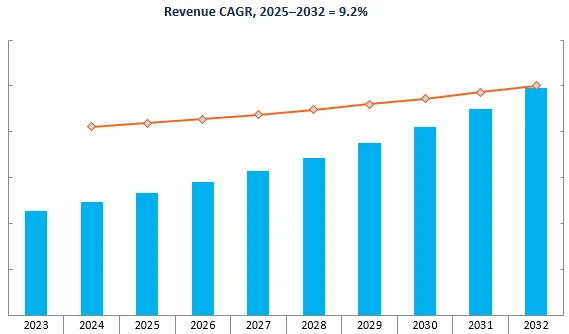
Investments in R&D and industrial biotechnology are further accelerating expansion in the biosurfactants market, enabling manufacturers to scale production and meet growing demand.
Growth Drivers: Biosurfactants Market
The biosurfactants market is driven by several key factors shaping its expansion.
One major driver is the increasing consumer preference for natural and sustainable ingredients. This shift is significantly boosting demand in the biosurfactants market.
Another important driver is regulatory pressure on synthetic surfactants, encouraging manufacturers to adopt bio-based alternatives within the biosurfactants market.
Advancements in biotechnology and fermentation processes are also enhancing production efficiency, supporting growth in the biosurfactants market.
Additionally, the growing demand for mild and skin-friendly formulations is driving adoption across personal care applications in the biosurfactants market.
These factors collectively strengthen the growth outlook of the biosurfactants market.
Growth Restraints: Biosurfactants Market
Despite strong growth potential, the biosurfactants market faces certain challenges.
High production costs remain a major restraint, limiting widespread adoption in the biosurfactants market.
Scalability and manufacturing complexity also pose challenges, affecting supply consistency in the biosurfactants market.
Performance limitations in certain formulations can hinder adoption compared to synthetic alternatives, impacting the biosurfactants market.
Additionally, feedstock availability and cost fluctuations create uncertainties within the biosurfactants market.
Addressing these challenges is crucial for unlocking the full potential of the biosurfactants market.
Competitive Landscape: Biosurfactants Market
The biosurfactants market is moderately competitive, with a mix of established players and emerging companies driving innovation.
Leading companies in the biosurfactants market include Evonik, Holiferm, Locus Fermentation Solutions, and Croda Plc, among others. These players focus on product innovation, scalability, and sustainability.
Other notable participants in the biosurfactants market include Amphistar, TensioGreen, and Kaneka Corporation, contributing to technological advancements.
The biosurfactants market is characterized by strategic partnerships, investments in R&D, and expansion of production capacities. Companies are also focusing on improving fermentation efficiency and reducing costs to remain competitive.
Overall, the biosurfactants market continues to evolve, with innovation and sustainability driving competition and long-term growth.
Scope of Analysis
Market Segmentation
Definitions
Why is it Increasingly Difficult to Grow?
The Strategic Imperative 8™
The Impact of the Top 3 Strategic Imperatives on the Biosurfactants Market in Personal Care
Executive Summary
Understanding Surfactant Categories
Comparing Surfactant Categories
Biosurfactants Overview
Biosurfactants Production Process
Total Surfactants Market in Personal Care
Total Surfactants Market in Personal Care—Growth Opportunity
Bio-Based Surfactants in Personal Care Applications
Biosurfactants Demand By Application Area
Biosurfactants Market Ecosystem
Feedstock Type Analysis
Biosurfactants Value Chain
Value Chain Description
Technology Trends
Growth Metrics
Growth Drivers
Growth Driver Analysis
Growth Restraints
Growth Restraint Analysis
Biosurfactants Growth Forecast Model
Forecast Considerations
Competitive Environment
Competitive Factors in the Biosurfactants Industry
Competitive Landscape
Evonik
Locus Performance Solutions
AGAE Technologies
Holiferm
Key Market Activities, 2024–2026
Revenue Forecast
Volume Forecast
Revenue and Volume Forecast Analysis
Revenue Forecast by Type
Revenue Forecast Analysis by Type
Revenue Forecast by Application
Revenue Forecast Analysis by Application
Revenue Forecast by Region
Revenue Forecast Analysis by Region
Growth Opportunity 1: Prioritization of High-Sensitivity Personal Care Segments for Biosurfactant Adoption
Growth Opportunity 2: Hybrid Formulation Models Enabling Scalable Adoption
Growth Opportunity 3: Shift Toward Waterless, Concentrated, and Low-Carbon Product Formats
Growth Opportunity 4: Expanding Biosurfactant Applications Beyond Personal Care into Home Care Cleaning Systems
Growth Opportunity 5: Alignment with Long-Term Regulatory and ESG Strategies
Benefits and Impacts of Growth Opportunities
Next Steps
List of Exhibits
Legal Disclaimer
Frequently Asked Questions (FAQ) – Biosurfactants Market
1. What is the biosurfactants market?
The biosurfactants market refers to the industry focused on naturally derived surfactants produced through biological processes, widely used in personal care, pharmaceuticals, and industrial applications.
2. What is the current size of the biosurfactants market?
The biosurfactants market was valued at USD 492.7 million in 2024 and is projected to reach USD 991.0 million by 2032, growing at a CAGR of 9.2%.
3. What are the key drivers of the biosurfactants market?
Key drivers include rising demand for sustainable ingredients, regulatory pressure on synthetic surfactants, and increasing consumer preference for natural personal care products.
4. Which industries use biosurfactants?
Biosurfactants are widely used in personal care, pharmaceuticals, agriculture, oil and gas, and environmental applications due to their biodegradability and multifunctional properties.
5. Which region dominates the biosurfactants market?
Europe and North America dominate the biosurfactants market due to strong environmental regulations and high demand for sustainable products.
6. Which region is growing fastest in the biosurfactants market?
Asia-Pacific is the fastest-growing region in the biosurfactants market due to increasing industrialization and rising demand for eco-friendly personal care products.
7. What types of biosurfactants are available in the market?
Common types include glycolipids such as rhamnolipids, sophorolipids, and mannosylerythritol lipids (MELs), as well as lipopeptides like surfactin.
8. What challenges affect the biosurfactants market?
Challenges include high production costs, scalability issues, feedstock constraints, and formulation performance limitations compared to synthetic surfactants.
9. How are biosurfactants used in personal care products?
Biosurfactants are used for cleansing, emulsifying, foaming, and antimicrobial functions in products such as shampoos, face cleansers, lotions, and body washes.
10. What is the future outlook for the biosurfactants market?
The biosurfactants market is expected to grow steadily, driven by sustainability trends, technological advancements in biotechnology, and increasing adoption across multiple industries.
Speak directly with our analytics experts for tailored recommendations.
Recent related Personal Well-being research
18 Sep 2026 | Global | Technology Research
Innovations in Surface Technologies for Automotive Coatings, Protective Coatings, Oleophobic Coatings, Plasma Coatings, Icephobic Coatings, and Others
This edition of the Advanced Coating & Surface Technology Opportunity Engine profiles significant advances in advanced coatings and surface treatments for various industrial applications. The featured innovations include Ultra-Black Nanocarbon Coatings for Next-Generation Automotive Surface Finishes...
07 Sep 2026 | Global | Market Research
Color Ingredients in Personal Care and Cosmetics, Global, 2025–2032
The cosmetics and personal care color ingredients industry is undergoing a transition driven by evolving consumer preferences, regulatory changes, and continuous formulation innovation. Demand is shifting toward high-performance pigments that deliver enhanced color intensity, long-lasting wear, impr...
14 Aug 2026 | Global | Technology Research
Innovations in Surface Technologies for Optical Coatings, Antifouling Coatings, Protective Coatings, Sustainable Packaging Coatings, and Others
This edition of the Advanced Coating & Surface Technology Opportunity Engine profiles significant advances in advanced coatings and surface treatments for various industrial applications. The featured innovations include Next-Generation Low-Emissivity Coatings for Lightweight Transparent Glazing, Pl...
17 Jul 2026 | Global | Technology Research
Innovations in Surface Technologies for Smart Sensing Coatings, Antifouling Coatings, Medical Device Coatings, Optical Coatings, Battery Coatings, and Others
This edition of the Advanced Coating & Surface Technology Opportunity Engine profiles significant advances in advanced coatings and surface treatments for various industrial applications. The featured innovations include Smart Coatings for Real-Time Surface Sensing, Antifouling Coatings for Commerci...
19 Jun 2026 | Global | Technology Research
Innovations in Coatings and Surface Technologies for Enhanced Performance, Durability, Energy Efficiency, Sustainability, for Various Industrial Applications
This edition of the Advanced Coating & Surface Technology Opportunity Engine profiles significant advances in advanced coatings and surface treatments for various industrial applications. The featured innovations include Plasma-Engineered Polymer Nanocoatings for Multi-Industry Applications, Solvent...
Purchase includes:
- Report download
- Growth Dialog™ with our experts
Growth Dialog™
A tailored session with you where we identify the:- Strategic Imperatives
- Growth Opportunities
- Best Practices
- Companies to Action
Impacting your company's future growth potential.
Within personal care, these biosurfactants are assessed across skin care, hair care, and personal hygiene applications, where attributes such as low irritation potential, biodegradability, reduced aquatic toxicity, and multifunctional performance are increasingly valued. Biosurfactants enable effective cleansing, foaming, emulsification, and antimicrobial functionality, while supporting product differentiation in premium, natural, and sustainability‑led segments.
The analysis covers market dynamics across North America, Europe, Asia‑Pacific, and Latin America, Middle East and Africa (LAMEA). Europe and North America represent key growth regions, supported by increasingly stringent regulations and regulatory scrutiny on petrochemical‑derived ingredients, as well as strong demand for compliant alternatives in mass and prestige personal care. Asia‑Pacific is expected to be a major volume growth region, driven by expanding personal care consumption and rising investment in industrial biotechnology, while LAMEA presents longer‑term opportunities linked to regulatory evolution and localized manufacturing. Overall, biosurfactants represent a structurally attractive growth opportunity in personal care, although challenges related to production scale, cost competitiveness, and formulation integration continue to influence the pace of adoption.
Author: Akheela Dhiman
| Deliverable Type | Market Research |
|---|---|
| Industries | Chemicals and Materials |
| No Index | No |
| Is Prebook | No |
| Keyword 1 | Biosurfactants in Personal Care Market |
| Keyword 2 | Sustainable Cosmetic Ingredients |
| Keyword 3 | Green Chemistry Surfactants |
| Podcast | No |
| Predecessor | None |
| WIP Number | PLS3-01-00-00-00 |