 USD
USD GBP
GBP  CNY
CNY  EUR
EUR  INR
INR  JPY
JPY  MYR
MYR  ZAR
ZAR  KRW
KRW  THB
THB 


Global Ground Tactical Precise Ammunition, 2025–2028
Next-Gen Precision Ammunition Drives Tactical Superiority in Ground Warfare
04-Feb-2026
Global
Market Research
M1H9-01-00-00-00
AE_2026_34336
Report Summary: Ground Tactical Precision-Guided Munitions (PGM) Market
The global ground tactical precision-guided munitions (PGM) market was valued at approximately USD 6.57 billion in 2024 and is projected to reach nearly USD 12.36 billion by 2028, expanding at a CAGR of about 17.1% during the forecast period. Growth is being driven by rising geopolitical tensions, increasing defense modernization programs, and the strategic shift toward highly accurate, low-collateral strike capabilities. Militaries worldwide are prioritizing next-generation precision systems to enhance battlefield agility, improve target accuracy, and support multi-domain operations, positioning the broader precision-guided munitions market as a critical enabler of modern combat strategies.
Key Market Trends & Insights
- Persistent asymmetric warfare and urban combat scenarios are accelerating procurement of infantry-level guided weapons and smart munitions.
- Integration of advanced guidance technologies such as laser, infrared, and GPS-based targeting is improving operational effectiveness across ground platforms.
- Defense agencies are emphasizing lightweight, modular systems that enable rapid deployment and interoperability with digital battlefield networks.
- Increased investments in anti-tank guided missiles, precision artillery, and guided rockets are reshaping the competitive dynamics within the ground tactical precision-guided munitions (PGM) market.
Market Size & Forecast
- 2024 Market Size: USD 6.57 Billion
- 2028 Projected Market Size: USD 12.36 Billion
- CAGR (2024–2028): 17.1%
- Regional Outlook: North America remains a leading revenue contributor, while Europe and Asia-Pacific are witnessing strong modernization-driven demand.
The evolution of network-centric warfare, combined with increasing adoption of smart munitions across land forces, is expected to sustain long-term expansion of the global precision-guided munitions market, creating opportunities for defense contractors focused on advanced guidance, precision strike technologies, and scalable tactical solutions.
Market Overview: Ground Tactical Precision-Guided Munitions (PGM) Market
The ground tactical precision-guided munitions (PGM) market represents a critical subset of the broader precision-guided munitions market, focused on land-based combat operations. Unlike legacy unguided munitions, PGMs offer high accuracy, reduced ammunition expenditure, and improved mission effectiveness, making them indispensable in modern combat environments characterized by urban warfare and hybrid threats.
Operational doctrines are evolving to emphasize precision firepower at the lowest tactical echelon, enabling infantry units and maneuver formations to engage high-value targets without reliance on air or naval assets. This doctrinal shift is directly supporting growth in the ground tactical precision-guided munitions (PGM) market, particularly for guided rockets, loitering munitions, anti-tank guided missiles (ATGMs), and precision-guided artillery rounds.
Additionally, interoperability requirements among allied forces and integration with C4ISR systems are shaping procurement strategies. Militaries are prioritizing PGMs that can operate in GPS-denied environments, feature software-defined upgrades, and integrate seamlessly with digital battlefield networks. These trends are reinforcing long-term demand across the precision-guided munitions market despite budgetary pressures in certain regions.
Scope of Analysis: Ground Tactical Precision-Guided Munitions (PGM) Market
This study analyzes the global ground tactical precision-guided munitions (PGM) market across land-based precision weapon systems used by infantry, mechanized units, and special forces. The scope includes guided rockets, anti-tank guided missiles, loitering munitions, and precision-guided mortar and artillery solutions, excluding air-launched and naval PGMs.
The analysis covers a study period from 2024 to 2028, with 2024 as the base year and 2025–2028 as the forecast period. Geographic coverage spans North America, Europe, Asia-Pacific, the Middle East, and other key defense-spending regions. Market sizing is based on procurement contracts, modernization programs, and defense budget allocations relevant to the precision-guided munitions market.
Frost & Sullivan’s methodology combines primary interviews with defense stakeholders and secondary analysis of military procurement data to assess demand drivers, competitive dynamics, and technology adoption trends within the ground tactical precision-guided munitions (PGM) market.
Market Segmentation Analysis: Ground Tactical Precision-Guided Munitions (PGM) Market
The ground tactical precision-guided munitions (PGM) market is segmented by application into five core categories, reflecting how precision firepower is being deployed across modern land warfare scenarios. Each segment addresses distinct operational requirements while collectively reinforcing the shift from massed firepower to accuracy-driven engagement within the broader precision-guided munitions market.
Precision-Guided Artillery and Mortars represent a foundational segment, enabling ground forces to achieve extended range and high accuracy while significantly reducing collateral damage. These systems leverage GPS, laser, and inertial navigation technologies to engage high-value or time-sensitive targets with rapid response, making them critical assets in joint and combined operations.
Rockets and Projectiles are designed for high-intensity, rapid-fire missions and are commonly deployed on mobile launchers or shoulder-fired platforms. Their flexibility in range, payload configuration, and destructive capability makes them suitable for dynamic battlefield conditions. Ongoing enhancements in guidance accuracy, such as GPS and laser-assisted targeting, are increasing their effectiveness within the ground tactical precision-guided munitions (PGM) market.
Armor-Fired Precision Ammunition empowers mechanized and armored units to engage targets with greater precision from protected platforms. By integrating advanced guidance systems, these munitions enhance fire superiority while supporting maneuver and combined-arms doctrines, particularly in high-threat environments.
Anti-Tank Guided Missiles (ATGMs) form a critical segment focused on defeating modern armored threats. Utilizing wire-guided, laser-guided, infrared, and fire-and-forget technologies, ATGMs provide high penetration capability, adaptability, and precision across offensive and defensive operations, especially in complex or asymmetric warfare scenarios.
Precision Small- and Medium-Caliber Ammunition enables accurate engagement at close to medium ranges and is tailored for rifles, machine guns, and light vehicle-mounted weapons. By improving first-hit probability and reducing unnecessary fire, this segment lowers logistical burden and ammunition expenditure, reinforcing efficiency across the precision-guided munitions market.
Collectively, these segments illustrate the growing emphasis on precision, adaptability, and operational efficiency that defines the evolution of the ground tactical precision-guided munitions (PGM) market.
Revenue & Spending Forecast: Ground Tactical Precision-Guided Munitions (PGM) Market
The ground tactical precision-guided munitions (PGM) market is projected to witness steady revenue expansion, supported by rising modernization programs, increased defense allocations, and the growing role of precision strike capabilities in land-based operations. Market revenue is expected to increase from approximately USD 6.57 billion in 2024 to nearly USD 12.36 billion by 2028, reflecting a strong CAGR of about 17.1% during the forecast period. This growth trajectory highlights accelerating procurement cycles across NATO and allied defense programs as militaries prioritize mobility, accuracy, and reduced collateral damage.
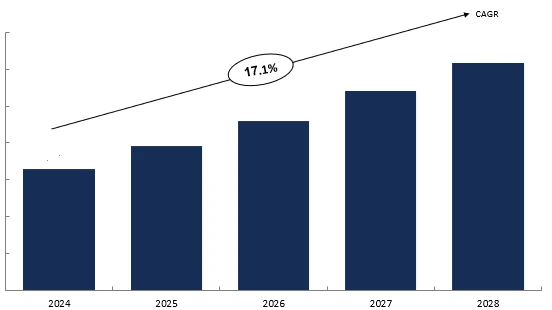
Spending within the broader precision-guided munitions market is increasingly shifting toward advanced guidance technologies, modular payload systems, and interoperable digital fire-control architectures. Governments are allocating larger portions of defense budgets toward infantry-level precision capabilities, including guided rockets, anti-tank systems, and precision artillery solutions. The expansion of multi-domain operations and network-centric warfare is also reinforcing investment in scalable munition platforms that integrate with battlefield communication networks.
Over the forecast horizon, procurement spending is expected to remain resilient despite geopolitical uncertainty, as demand for rapid-response tactical systems continues to grow. As a result, the ground tactical precision-guided munitions (PGM) market is likely to maintain strong revenue momentum, supported by long-term contracts, strategic alliances, and sustained innovation across the global precision-guided munitions market ecosystem.
Growth Drivers: Ground Tactical Precision-Guided Munitions (PGM) Market
The ground tactical precision-guided munitions (PGM) market is being propelled by the increasing prevalence of asymmetric warfare and urban combat environments, where precision engagement is essential to minimize collateral damage and maximize operational efficiency. Modern conflicts have exposed the limitations of unguided weapons, driving militaries to invest heavily in advanced solutions within the broader precision-guided munitions market. The growing use of artillery, loitering munitions, and smart infantry weapons is reinforcing the role of precision capabilities as a cornerstone of ground combat modernization.
Rising global defense budgets are also accelerating procurement across the ground tactical precision-guided munitions (PGM) market. Governments are prioritizing systems that enhance lethality, survivability, and accuracy while supporting low-footprint operations. Investments in guided rockets, anti-tank missiles, and precision artillery reflect the strategic shift toward high-precision warfare, where operational success depends on rapid, targeted engagements rather than massed firepower.
Additionally, the digitization of infantry units and integration with battlefield networks are creating new opportunities across the precision-guided munitions market. Smart targeting technologies, sensor fusion, and soldier-worn systems enable precision munitions to operate within connected battlefield ecosystems, improving situational awareness and response times. As military forces continue adopting network-centric warfare doctrines, demand for advanced PGMs is expected to strengthen throughout the forecast period.
Growth Restraints: Ground Tactical Precision-Guided Munitions (PGM) Market
Despite strong demand, the ground tactical precision-guided munitions (PGM) market faces several challenges that may moderate growth. One of the primary restraints is the significantly higher cost per unit compared to traditional ammunition. Precision systems designed for infantry applications often require advanced guidance and electronics, limiting large-scale deployment and restricting procurement to specialized forces in certain regions.
Operational constraints also present barriers within the precision-guided munitions market. Compact design requirements, harsh battlefield conditions, and dependence on GPS or laser guidance can affect reliability in environments characterized by electronic warfare, adverse weather, or dense terrain. These limitations can slow adoption rates and delay broader integration across standard infantry formations.
Furthermore, the ground tactical precision-guided munitions (PGM) market is influenced by a fragmented supplier landscape, where innovation is often driven by smaller niche providers while major defense contractors focus on larger strategic systems. The lack of standardized designs and interoperability frameworks may complicate procurement decisions for military buyers seeking scalable and long-term solutions, ultimately posing challenges for widespread adoption across multinational forces.
Competitive Landscape: Ground Tactical Precision-Guided Munitions (PGM) Market
The competitive environment within the ground tactical precision-guided munitions (PGM) market is shaped by a mix of global defense primes and specialized munition manufacturers that focus on distinct application segments such as precision artillery, rockets and projectiles, armor-fired precision ammunition, anti-tank guided missiles, and precision small- and medium-caliber rounds. Competition across the broader precision-guided munitions market is driven by technological innovation, operational reliability, and the ability to integrate advanced guidance systems into compact tactical platforms.
In the precision-guided artillery and mortar segment, major defense companies such as RTX, Northrop Grumman, General Dynamics Ordnance and Tactical Systems (GD-OTS), BAE Systems, Rheinmetall, and Saab maintain strong positions through long-standing military partnerships and advanced research capabilities. These companies continue to invest in extended-range precision systems designed to support modern joint-force operations.
The rockets and projectiles category features leading players including Lockheed Martin, RTX, Leonardo DRS, Barrett Firearms, MBDA, and Rafael, alongside emerging manufacturers from Europe, Israel, and Asia. Their competitive strategies emphasize modular designs, mobile launch platforms, and enhanced targeting technologies to improve mission effectiveness within the ground tactical precision-guided munitions (PGM) market.
Within the armor-fired precision ammunition segment, established firms such as Lockheed Martin, RTX, Northrop Grumman, Rheinmetall, and Elbit Systems focus on developing advanced guided rounds that enhance the lethality and survivability of armored platforms. Similarly, the anti-tank guided missile (ATGM) market remains highly competitive, with RTX, Lockheed Martin, Saab AB, MBDA, Rafael, and Roketsan driving innovation in fire-and-forget and multi-mode guidance technologies.
The precision small- and medium-caliber ammunition space is characterized by a broader and more fragmented supplier base, including Northrop Grumman, Textron Systems, Colt Industries, Winchester Ammunition, FN Herstal, SIG Sauer, and Nammo. These companies compete on factors such as ballistic performance, guidance accuracy, and integration with modern infantry systems.
Overall, the precision-guided munitions market remains moderately consolidated at the top, while niche innovators continue to introduce specialized solutions that address evolving battlefield requirements. Strategic collaborations, regional manufacturing initiatives, and continuous R&D investment are expected to shape future competitive dynamics across the ground tactical precision-guided munitions (PGM) market.
Scope of Analysis
Industry Segmentation
Why is it Increasingly Difficult to Grow?
The Strategic Imperative 8™
The Impact of the Top 3 Strategic Imperatives on the Ground Tactical Precise Ammunition Industry
Growth Drivers
Growth Restraints
Regional Analysis
Forecast Assumptions
Revenue Forecast
Revenue Forecast by Region
Market Forecast Analysis
Analysis of Highlighted Market Trends
Key Competitors
US Ground Tactical Precise Ammunition Main Build-Up Programs
US Representative Ground Tactical Precise Ammunition Contracts
EU Ground Tactical Precise Ammunition Build-Up Programs
EU Ground Tactical Precise Ammunition Representative Contracts
Global Ground Tactical Precise Ammunition Representative Programs
Global Ground Tactical Precise Ammunition Representative Contracts
Growth Opportunity 1: Procurement
Growth Opportunity 2: R&D
Growth Opportunity 3: Training & Simulation
Benefits and Impacts of Growth Opportunities
Next Steps
List of Exhibits
Legal Disclaimer
Frequently Asked Questions (FAQ) – Ground Tactical Precision-Guided Munitions (PGM) Market
1. What is the ground tactical precision-guided munitions (PGM) market?
2. What factors are driving growth in the precision-guided munitions market?
3. What types of products are included in the ground tactical precision-guided munitions (PGM) market?
4. Which regions lead the precision-guided munitions market?
5. What technologies are shaping the ground tactical precision-guided munitions (PGM) market?
6. What challenges affect growth in the precision-guided munitions market?
7. Who are the key companies operating in the ground tactical precision-guided munitions (PGM) market?
8. How is urban warfare influencing the ground tactical precision-guided munitions (PGM) market?
9. What role does digitization play in the precision-guided munitions market?
10. What is the future outlook for the ground tactical precision-guided munitions (PGM) market?
Speak directly with our analytics experts for tailored recommendations.
Recent related Defense research
07 Oct 2026 | North America | Frost Radar
Frost Radar™: US Military Intelligence Analytics, 2026
The US military intelligence (MILINT) analytics industry is undergoing a structural transformation as defense and intelligence agencies transition from platform-centric architectures to AI-native, data-centric, and decision-driven operational models. Intelligence systems are no longer confined to po...
30 Sep 2026 | Global | Market Research
Total Airport Management (TAM) Market, Global, 2025–2034
Total airport management (TAM) represents a high-potential convergence market that integrates enterprise architecture, data management, resource and capacity planning, collaborative decision-making, passenger management, and airport simulation/digital twin into a unified operational framework. TAM r...
24 Sep 2026 | North America | Market Research
Military Aviation Maintenance, Repair, and Overhaul Industry, US, 2025–2030
This research service provides a comprehensive overview of the US military aviation maintenance, repair, and overhaul (MRO) industry. The study segments the industry into six platform categories: 1. Fighter, Attack, & Bomber 2. Rotorcraft 3. Transport & Tanker 4. Training & Utility 5. Intelligence, ...
03 Sep 2026 | Global | Technology Research
Photonic and Optical Computing Chips for AI and Data Center Acceleration
The study evaluates photonic and optical computing technologies as critical enablers of next-generation AI infrastructure, addressing growing bandwidth, latency, power consumption, and scalability constraints associated with copper-based interconnects. The analysis covers photonic integrated circuit...
25 Aug 2026 | North America | Market Research
US Military Intelligence Analytics Industry Growth Opportunities, 2025–2028
The US military intelligence (MILINT) analytics market is undergoing rapid transformation driven by the convergence of AI, big data analytics, and next-generation sensing. As the DoW and the wider intelligence community (IC) face increasingly complex multi-domain threats, the demand for scalable, re...
Purchase includes:
- Report download
- Growth Dialog™ with our experts
Growth Dialog™
A tailored session with you where we identify the:- Strategic Imperatives
- Growth Opportunities
- Best Practices
- Companies to Action
Impacting your company's future growth potential.