 USD
USD GBP
GBP  CNY
CNY  EUR
EUR  INR
INR  JPY
JPY  MYR
MYR  ZAR
ZAR  KRW
KRW  THB
THB 


Transformative Precision and Programmatic Marketing Approaches Backed by SaaS-based Service Platforms Drive Pharmaceutical Commercialization
10-Sep-2024
Global
Market Research
PFOW-01-00-00-00
HC_2024_1002
Report Summary: Pharmaceutical Commercialization Solutions & Services Industry, Global, 2024–2029
The global pharmaceutical commercialization solutions and services industry is undergoing rapid transformation, driven by patient-centric care models, complex regulatory pathways, and the rising volume of specialty and precision drugs. Market revenues reached USD 138.1 billion in 2023 and are forecast to expand at a CAGR of 7.4% between 2024 and 2029, reflecting strong demand for data-driven, technology-enabled commercialization support.
Key Market Trends
- Digital Enablement: AI, ML, predictive analytics, and cloud platforms are reshaping go-to-market models through intelligent segmentation, real-world evidence, and omnichannel engagement.
- Agile Supply Chains: Partnerships with 3PLs and logistics providers support dual sourcing, stockpiling, and scenario planning for global distribution resilience.
- HEOR & Market Access: Growing focus on value-based engagement models for payers, regulators, and PBMs.
- Cross-industry Collaboration: Pharma firms increasingly partner with tech vendors and data platforms to enhance commercialization impact.
Market Outlook
- 2023 Market Size: USD 138.1 Billion
- 2029 Market Size (Forecast): ~USD 212 Billion
- CAGR (2024–2029): 7.4%
Scope & Segmentation
- Commercial Support Services: Product launch planning, regulatory submissions, sales force training, and campaign execution.
- Technology-enabled Solutions: AI/ML-based analytics, digital orchestration, CRM, and automation platforms.
- Key Functions: Marketing & Sales, Market Access (HEOR, HTA, pricing, payer-provider engagement).
Market Overview – Pharmaceutical Commercialization Solutions and Services Industry, Global, 2024–2029
The global pharmaceutical commercialization solutions and services industry is evolving rapidly, driven by the increasing need for patient-centric care delivery and the complexity of bringing pharmaceutical innovations to market across diverse geographies. Pharma companies are now adopting highly structured and data-driven strategies for the commercialization of pharmaceutical products, encompassing stakeholder analysis, segmentation, and post-launch forecasting to optimize go-to-market efforts.
As part of this evolution, there’s a growing reliance on pharma commercialization services that support adaptive and agile supply chains. Companies are increasingly working with third-party logistics providers and leveraging strategies like dual sourcing, stockpiling, and advanced scenario planning to minimize risks and disruptions in global distribution networks. These partnerships with established distribution experts are critical for ensuring seamless delivery and regulatory compliance across borders.
To boost product awareness and adoption, especially among healthcare professionals (HCPs), pharmaceutical commercialization strategies are increasingly focused on building trust through scientific evidence, real-world data, and testimonials. Tailored marketing initiatives aim to resonate with different stakeholder groups—patients, providers, payers, and regulators—using omnichannel engagement and AI-powered personalization.
Automation technologies such as AI, machine learning (ML), and cloud computing are reshaping pharma commercialization services, enabling intelligent market segmentation, lead scoring, predictive analytics, and content personalization. These digital enablers significantly enhance market access efficiency and contribute to stronger product uptake and long-term revenue growth.
Moreover, pharma companies are exploring strategic cross-industry collaborations to improve commercialization outcomes. Opportunities are expanding in areas such as health economics and outcomes research (HEOR), tailor-made omnichannel marketing, and integrated drug pricing for payers and pharmacy benefit managers (PBMs). This strategic shift supports better alignment with dynamic healthcare ecosystems and payer models.
Between 2024 and 2029, the market is expected to grow steadily as pharmaceutical commercialization becomes more reliant on customized service models and flexible agreements designed to deliver measurable impact. As pharmaceutical companies adapt to digital transformation, outsourcing specialized commercialization services will become a critical differentiator in achieving competitive advantage.
Revenue Forecast – Pharmaceutical Commercialization Solutions and Services Industry, Global, 2024–2029
Pharma Commercialization Solutions & Services Market valued at $138.13Billion in 2023, projected to hit $212.18Billion by 2029, growing at a 7.4% CAGR (2024–2029). This growth trajectory reflects the increasing demand for comprehensive pharma commercialization services that streamline product launch, market access, and lifecycle management across global markets.
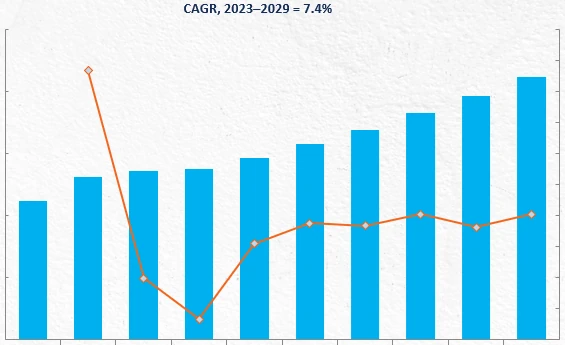
As pharmaceutical companies navigate complex regulatory environments, payer dynamics, and evolving healthcare systems, the need for strategic commercialization of pharmaceutical products has never been more critical. This includes investments in advanced analytics, AI-powered marketing automation, HEOR (Health Economics and Outcomes Research), and value-based engagement models, all of which are contributing to the rising market value.
With accelerating innovation pipelines and the rising number of specialty and precision drugs entering the market, the scope and scale of pharmaceutical commercialization efforts are expanding significantly. Service providers offering tailored solutions—from go-to-market strategy to digital channel orchestration—are well-positioned to capitalize on the multi-billion-dollar growth opportunity unfolding in this sector through 2029
Scope of Analysis – Pharmaceutical Commercialization Solutions and Services Industry, Global, 2024–2029
The scope of this study spans the rapidly evolving pharma commercialization services landscape, with a special focus on technology-enabled solutions that support end-to-end processes for the commercialization of pharmaceutical products. The research delves into the integration of advanced technologies—such as artificial intelligence (AI), machine learning (ML), cloud computing, predictive analytics, and natural language processing (NLP)—in optimizing core functions like market access, manufacturing and supply chain operations, marketing and sales, and field force efficiency.
The analysis comprehensively covers the core pillars of pharmaceutical commercialization, including product launch strategies, HEOR, health technology assessments (HTA), payer-provider engagement, regulatory compliance, and customer-centric value proposition design. It identifies how tech-driven service providers are enabling pharma companies to enhance product visibility, accelerate time-to-market, and improve return on investment across global markets.
Additionally, the report evaluates the position of commercial analytics vendors in the pharma value chain, offering insights into emerging business models, strategic partnerships, and digital transformation initiatives. Real-world use cases from both leading firms and innovative startups demonstrate the breadth and potential of pharmaceutical commercialization solutions in a dynamic healthcare landscape.
Segmentation - Pharmaceutical Commercialization Solutions and Services Industry, Global, 2024–2029
The pharmaceutical commercialization landscape is evolving rapidly, driven by the need for integrated, patient-centric go-to-market strategies. This study provides a clear market definition, scope, and segmentation of the pharma commercialization services industry, outlining the key categories that enable the successful commercialization of pharmaceutical products in global markets.
Market Definition:
Pharmaceutical commercialization refers to the end-to-end process of bringing a pharmaceutical product to market, encompassing regulatory submission, marketing and sales, pricing and reimbursement, and market access strategies. It includes both traditional commercial support services and technology-enabled solutions.
Scope:
The research covers two major types of solutions:
- Commercial Support Services – These include product launch planning, regulatory documentation, marketing campaign execution, and sales force training. These services form the operational backbone of pharmaceutical commercialization.
- Technology-enabled Solutions – Driven by innovations in AI/ML, IoT, predictive analytics, and cloud platforms, these solutions are increasingly offered by specialized vendors and Contract Research/Commercial Organizations (CROs/CSOs) to support digital transformation in the commercialization process.
Segmentation:
The pharma commercialization services market is segmented across key functional areas:
- Marketing & Sales: Includes product positioning, digital marketing, CRM, field force optimization, and value proposition development.
- Market Access: Covers HEOR, PROM/PRO, payer-provider strategies, pricing, HTA, and regulatory compliance.
By categorizing commercialization solutions into these strategic pillars, the report provides an actionable framework for stakeholders to identify growth opportunities and align investments with emerging industry needs.
Key Growth Drivers – Pharmaceutical Commercialization Solutions and Services Industry, Global, 2024–2029
The global pharma commercialization services market is evolving rapidly as pharmaceutical companies shift toward more personalized and tech-enabled strategies. Several drivers are accelerating the growth of this industry, contributing to better outcomes in the commercialization of pharmaceutical products:
- Newer Marketing Strategies to Support Omnichannel Approaches for Smaller Patient Population.
- Navigating Complex Distributor Networks Through Local Partnerships.
- Digitization of Pharmaceutical Commercial Services.
Key Restraints – Pharmaceutical Commercialization Solutions and Services Industry, Global, 2024–2029
While the pharmaceutical commercialization landscape is expanding through digitalization and strategic collaborations, several critical restraints may hinder the growth of the global pharma commercialization services industry:
- Complex Regulatory Landscape.
- Complexity in Market Access and Pricing Challenges for Niche Drugs for Rare Indications.
- Data Standards Issues with the Use of RWE.
- Dearth of Qualified Field Force Professionals can Impact Revenues.
Competitive Environment – Pharmaceutical Commercialization Solutions and Services Industry, Global, 2024–2029
The pharmaceutical commercialization solutions and services industry is highly competitive, with more than 200 active participants operating across various solution verticals. The market consists of both specialized vendors and enabling technology providers, with a competitive landscape shaped by several key success factors including cost efficiency, solution performance, speed-to-market, technology depth, customer relationship management, and regulatory support capabilities.
Key Competitive Factors
- Cost of deployment and ongoing service
- Performance outcomes such as time-to-launch and HCP engagement metrics
- Schedule reliability and launch predictability
- Post-deployment support
- Technology enablement, including AI/ML, predictive analytics, and omnichannel engagement
- Contractor and partner relationships
- Strong client relationships with pharma manufacturers, payers, and providers
Key End-user Verticals
- Pharmaceutical Manufacturers
- Payers (including PBMs and insurers)
- Healthcare Providers
- Patients
- Regulatory Agencies
Leading Competitors
- Aktana
- Trinity Life Sciences
- Eversana
- Axtria
- Syneos Health
- IQVIA
Other Notable Competitors
- Pure Play Vendors: Open Health, Icon PLC, Inizio, Exeveo, Aplity Health
- Technology Enablers: Inovalon, Optum, Wolters Kluwer, Verizon, Verily
Mergers & Acquisitions
- Aktana's acquisition of Tact.ai significantly enhances its AI-driven CRM and omnichannel orchestration capabilities.
- Eversana’s acquisition of Healthcare Group reinforces its footprint in commercial services with integrated offerings.
The competitive dynamics of the pharma commercialization services market are expected to intensify as more players invest in technology-enabled, data-driven platforms to support omnichannel outreach, real-world data integration, and accelerated market access planning.
Growth Environment: Transformation in Pharmaceutical Commercialization Solutions and Services Sector
Why is it Increasingly Difficult to Grow?
The Strategic Imperative 8™
The Impact of the Top 3 Strategic Imperatives on the Pharmaceutical Commercial Solutions and Services Industry
Scope of Analysis
Market Definition, Scope and Segmentation
Segmentation by Commercial Services Model/Partnership Type
Pharmaceutical Commercial Value Chain—Commercial Analytics Overview
Market Trend Analysis
Market Trend Analysis (continued)
Market Trend Analysis (continued)
Growth Drivers
Growth Restraints
Pharmaceutical Commercial Launch—Primary Operations and Stakeholders involved
Key Aspects of Pharmaceutical Marketing and Sales
Key Aspects of Pharmaceutical Market Access Process
Vendor Ecosystem
Digital Solutions for Commercialization by Stakeholders
Technology Application across Pharma Commercial Activities
AI Application across the Commercialization Value Chain
Digital Marketing Strategies for Effective Communication
Digital Market Access Strategies
Embracing Digital Transformation for Patient-centric Pharma Commercialization
Investment Trends
Investment Trends—Technology Acquisition/Partnerships
Investment Trends—Technology Acquisition/Partnerships (continued)
Investment Trends—Technology Acquisition/Partnerships (continued)
Investment Trends—Strategic Partnerships
Investment Trends—Strategic Partnerships (continued)
Investment Trends—Mergers & Acquisitions
New Product Launches—Expansions
New Product Launches—Expansions (continued)
New Product Launches—Expansions (continued)
New Product Launches—Expansions (continued)
New Product Launches—Expansions (continued)
Competitive Environment
Competitor Assessment: Pure Play
Competitor Assessment: CROs/CSOs
Competitor Assessment: Tech Enablers
Competitor Assessment
Competitor Assessment (continued)
Growth Metrics
Forecast Considerations: Approach and Methodology
Forecast Considerations: Approach and Methodology (continued)
Forecast Considerations: Approach and Methodology (continued)
Forecast Considerations: Limitations and Caveats
Forecast Considerations: Limitations and Caveats (continued)
Revenue Forecast
Revenue Forecast by Solution/Services Type
Revenue Forecast Analysis
Revenue Forecast Analysis (continued)
Revenue Forecast Analysis (continued)
Revenue Forecast Analysis (continued)
Revenue Forecast By Service Model/Agreement Type
Revenue Forecast Analysis By Service Model/Agreement Type
Revenue Forecast Analysis By Service Model/Agreement Type (continued)
Regional Trend Analysis—North America
Regional Trend Analysis—Europe
Regional Trend Analysis—Asia Pacific
Regional Trend Analysis—Other Emerging Markets
Growth Opportunity 1: Multi AI and LLM agents for HEOR Services
Growth Opportunity 1: Multi AI and LLM agents for HEOR Services (continued)
Growth Opportunity 2: Integrated Drug Pricing Strategies for PBMs and Payors
Growth Opportunity 2: Integrated Drug Pricing Strategies for PBMs and Payors (continued)
Growth Opportunity 3: Innovative Approaches for Precision Marketing and Sales Strategies
Growth Opportunity 3: Innovative Approaches for Precision Marketing and Sales Strategies (continued)
Best Practices Recognition
Frost Radar
Benefits and Impacts of Growth Opportunities
Next Steps
List of Exhibits
Legal Disclaimer
 List of Figures
- Pharmaceutical Commercialization Solutions and Services Industry: Growth Drivers, Global, 2024–2029
- Pharmaceutical Commercialization Solutions and Services Industry: Growth Restraints, Global, 2024–2029
- Pharmaceutical Commercialization Solutions and Services Industry: Growth Metrics, Global, 2023
- Pharmaceutical Commercialization Solutions and Services Industry: Revenue Forecast, Global, 2020–2029
- Pharmaceutical Commercialization Solutions and Services Industry: Revenue Forecast by Type of Solution and Service, Global, 2020–2029
- Pharmaceutical Commercialization Solutions and Services Industry: Revenue Forecast by Service Model/Agreement Type, Global, 2020–2029
FAQ
1. What is the Pharmaceutical Commercialization Solutions and Services market?
The pharmaceutical commercialization market includes technology-enabled services and strategies that help pharma companies bring products to market effectively. This includes market access, product launch planning, pricing and reimbursement strategies, HEOR, field force optimization, and omnichannel marketing—often supported by AI, ML, and cloud platforms.
2. What is the market size and growth forecast for this industry?
Pharma Commercialization Solutions & Services Market valued at $138.13 Billion in 2023, projected to hit $212.18 Billion by 2029, growing at a 7.4% CAGR (2024–2029).
3. Which services are covered under pharmaceutical commercialization?
Marketing & Sales: Digital campaigns, CRM, sales force effectiveness
Market Access: HEOR, HTA, pricing & reimbursement
Regulatory Affairs: Compliance documentation, global filings
Technology Enablement: AI/ML analytics, predictive modeling, cloud solutions
4. What are the key market drivers?
Rise in precision medicine and niche therapies
Omnichannel strategies targeting small patient populations
Demand for automation and AI/ML in commercial operations
Adoption of local distribution partnerships and dual-sourcing models
Increased focus on HEOR and pricing strategy development
5. What challenges does the industry face?
Complex global regulatory requirements
Pricing pressure for orphan and rare disease drugs
Issues with data interoperability and RWE integration
Shortage of qualified field force professionals
6. Who are the leading players in the pharmaceutical commercialization market?
Major players include Aktana, Trinity Life Sciences, Eversana, Axtria, Syneos Health, and IQVIA. Other notable vendors include Open Health, Inizio, Icon PLC, and technology enablers such as Optum, Inovalon, and Verily.
7. What regions are covered in this market analysis?
This report provides global coverage, with detailed insights across North America, Europe, Asia-Pacific, Latin America, and Middle East and Africa.
8. How is technology shaping the future of pharma commercialization?
AI, ML, and predictive analytics are transforming traditional sales models into agile, data-driven operations. Technology enables personalized HCP engagement, targeted content delivery, intelligent segmentation, and real-time decision-making, improving commercialization success rates.
9. Which business models are emerging in this space?
SaaS-based commercial platforms
Integrated outsourcing models via CRO/CSO partnerships
Real-world evidence platforms for market access support
Subscription-based commercialization services
10. Who should purchase this report?
This report is ideal for pharma commercial teams, market access strategists, technology providers, CROs/CSOs, VC/PE firms evaluating investment opportunities, and consulting firms supporting life sciences transformation.
Speak directly with our analytics experts for tailored recommendations.
Recent related Pharmaceuticals and Biotech research
21 Jan 2025 | Global | Technology Research
Technologies Enabling Resilient Pharmaceutical Supply Chains
This study aims to review emerging, transformative technology solutions that redesign pharmaceutical supply chain processes and introduce increased resilience, transparency, and responsiveness into the model. The study answers the following questions: What are some new challenges big pharma's supp...
16 Jan 2025 | Global | Technology Research
Advanced Therapeutics for the Infectious Disease Management Market, Global, 2024-2029
Antimicrobial resistance (AMR), the emergence of new pathogens, and breakthroughs in biotechnology have significantly transformed the global landscape of infectious diseases. This Frost & Sullivan report focuses on advanced therapeutics for the infectious disease management industry. It offers an an...
28 Oct 2024 | Global | Frost Radar
Frost Radar™: Pharmaceutical Commercialization Solutions and Services, 2024
With an inclination toward patient-centric care delivery, the pharma industry follows a robust, step-by-step approach to market commercialization, with a clear understanding of the market stakeholders, segments, and post-launch forecasts to create seamless go-to-market strategies, develop a positive...
10 Sep 2024 | Global | Technology Research
Technology Advances in Modular and Automated Platforms for Pharmaceutical Manufacturing
This study examines technology advances in modular and automated platforms for non-biologics manufacturing in the pharmaceutical sector. There is a growing demand for automated and modular technologies that ensure regulatory compliance, increase productivity, reduce waste, and meet emerging therapeu...
09 Sep 2024 | Global | Technology Research
AI-based Drug Repurposing Market, Growth Opportunities, Global, 2024-2029
This study analyzes the emergence of AI-based drug repurposing and examines the factors driving and hindering adoption. The limitation of traditional drug discovery has led to the growing interest in AI -based drug repurposing, which offers numerous advantages in terms of time, speed, and cost. AI-b...
Purchase includes:
- Report download
- Growth Dialog™ with our experts
Growth Dialog™
A tailored session with you where we identify the:- Strategic Imperatives
- Growth Opportunities
- Best Practices
- Companies to Action
Impacting your company's future growth potential.
| Deliverable Type | Market Research |
|---|---|
| Author | Aarti Siddhesh Chitale |
| Industries | Healthcare |
| No Index | No |
| Is Prebook | No |
| Keyword 1 | Pharma Contract Commercialization Market |
| Keyword 2 | Pharma Solutions Growth |
| Keyword 3 | Commercialization Services Industry |
| List of Charts and Figures | Pharmaceutical Commercialization Solutions and Services Industry: Growth Drivers, Global, 2024–2029~ Pharmaceutical Commercialization Solutions and Services Industry: Growth Restraints, Global, 2024–2029~ Pharmaceutical Commercialization Solutions and Services Industry: Growth Metrics, Global, 2023~ Pharmaceutical Commercialization Solutions and Services Industry: Revenue Forecast, Global, 2020–2029~ Pharmaceutical Commercialization Solutions and Services Industry: Revenue Forecast by Type of Solution and Service, Global, 2020–2029~ Pharmaceutical Commercialization Solutions and Services Industry: Revenue Forecast by Service Model/Agreement Type, Global, 2020–2029~ |
| Podcast | No |
| WIP Number | PFOW-01-00-00-00 |
Pharmaceutical Commercialization Solutions and Services Industry, Global, 2024 2029
$4,950.00
Special Price $4,207.50 save 15 %