 USD
USD GBP
GBP  CNY
CNY  EUR
EUR  INR
INR  JPY
JPY  MYR
MYR  ZAR
ZAR  KRW
KRW  THB
THB 


South American Unmanned Aircraft Systems for Agriculture Applications Growth Opportunities
Technological Enhancements in the Drone Industry Propel Adoption Rates for Drone Agriculture Applications in South America
30-Aug-2024
Latin America
Market Research
KA8B-01-00-00-00
AE_2026_34586
Report Summary: South America Unmanned Aircraft Systems Agriculture Market
The South America Unmanned Aircraft Systems Agriculture Market is experiencing rapid growth as precision farming technologies gain traction across commercial agriculture operations. The market was valued at USD 36.3 million in 2023 and is projected to reach USD 79.3 million by 2028, expanding at a CAGR of 16.9% during the forecast period. Rising demand for data-driven farming, increasing awareness of crop optimization technologies, and the growing need to reduce pesticide waste are accelerating adoption across South America.
Key Market Trends & Insights
- The South America Agricultural Drones Market is gaining momentum due to increased use of AI-enabled drone platforms for crop monitoring, mapping, spraying, and irrigation analysis.
- Governments across South America are encouraging sustainable agriculture practices to reduce environmental impact caused by excessive pesticide application.
- Hybrid VTOL fixed-wing drones are emerging as high-value solutions for large-scale mapping and surveying applications due to their extended flight range and operational efficiency.
- Commodity price increases are encouraging farmers to invest in technologies that improve productivity, reduce labor dependency, and optimize resource utilization.
- Trade relationships with China are improving accessibility to affordable agricultural drone systems, supporting faster penetration of commercial UAS technologies.
Market Size & Forecast
- 2023 Market Size: USD 36.3 Million
- 2028 Projected Market Size: USD 79.3 Million
- CAGR (2023–2028): 16.9%
- South America remains a high-potential emerging region for agricultural drone adoption
- Precision agriculture applications continue to drive long-term technology investments
The South America Unmanned Aircraft Systems Agriculture Market is evolving from experimental deployment toward mainstream commercial adoption. Agricultural businesses are increasingly leveraging drone technologies for crop intelligence, pesticide optimization, and operational automation. As AI capabilities improve and drone hardware becomes more affordable, the market is expected to witness stronger adoption among medium-sized and large farming operations across South America.
Market Overview & Trends: South America Unmanned Aircraft Systems Agriculture Market
The South America Unmanned Aircraft Systems Agriculture Market is transforming agricultural operations through the integration of drone technologies, artificial intelligence, remote sensing, and precision farming solutions. Agricultural enterprises across South America are increasingly adopting unmanned aircraft systems (UAS) to improve crop productivity, reduce operational costs, and support sustainable farming practices. The market is witnessing accelerated growth as farmers seek more efficient alternatives to traditional field monitoring and pesticide application methods.
One of the most important trends shaping the South America Agricultural Drones Market is the increasing deployment of precision agriculture technologies. Drones equipped with multispectral cameras, lidar sensors, RGB imaging systems, and AI-powered analytics platforms are enabling real-time monitoring of crop health, soil conditions, irrigation patterns, and pest infestations. These technologies help farmers make data-driven decisions that improve agricultural yields while minimizing environmental impact.
Environmental sustainability has become another major growth catalyst. Governments and agricultural organizations are promoting technologies that reduce pesticide overuse and optimize fertilizer application. Drone-based spraying systems allow precise targeting of agricultural zones, lowering chemical waste and reducing contamination risks. This trend is especially relevant in South America, where large-scale agricultural production creates increasing pressure for sustainable farming methods.
The market is also benefiting from declining hardware costs and stronger commercial trade relationships with China. Affordable drone platforms manufactured by Chinese suppliers are expanding access to agricultural drone technologies among medium-sized farms and regional agricultural businesses. This pricing accessibility is reducing entry barriers and accelerating adoption throughout the region.
Hybrid VTOL fixed-wing platforms are gaining strong commercial attention because they combine long operational endurance with efficient mapping capabilities. These drones are particularly suitable for large agricultural landscapes where high-speed surveying and extensive coverage are required. Professional-grade drones with advanced sensors are increasingly used for crop analysis, field mapping, irrigation planning, and precision spraying applications.
Artificial intelligence integration represents another major structural shift in the market. AI-powered drones can automate flight operations, process field data faster, and generate predictive agricultural insights. These capabilities are improving operational efficiency while reducing manual labor requirements. Automation technologies are expected to play a larger role as agricultural businesses continue digitizing farming operations.
Despite strong growth potential, adoption rates remain influenced by purchasing power limitations among smaller farming operations. Many farmers still prefer lower-cost drone solutions until broader commercial validation and return-on-investment visibility improve across the market.
Scope of Analysis: South America Unmanned Aircraft Systems Agriculture Market
The South America Unmanned Aircraft Systems Agriculture Market study evaluates the adoption, deployment, and commercial potential of unmanned aerial systems used across agricultural applications in South America. The research examines how precision agriculture technologies, AI-enabled drone platforms, and remote sensing capabilities are reshaping modern farming operations across the region.
The study period spans from 2023 to 2028, with 2023 considered the base year and 2024–2028 representing the forecast period. Market analysis is presented in US dollars and focuses specifically on commercial UAS platforms designed for agricultural applications, including crop monitoring, aerial mapping, irrigation analysis, pesticide spraying, and farm management optimization.
The report segments the market based on drone platform categories, including consumer, prosumer, professional, enterprise, industrial, and VTOL fixed-wing hybrid systems. Each segment is analyzed according to pricing structure, payload capability, operational complexity, and agricultural use cases. The analysis also highlights how AI algorithms and autonomous drone technologies are improving operational efficiency in precision farming environments.
The South America Agricultural Drones Market assessment includes detailed evaluation of agricultural technology adoption trends, environmental sustainability initiatives, and government policies influencing drone deployment across farming operations. Particular attention is given to how UAS technologies help reduce pesticide waste, lower environmental pollution, and improve crop productivity.
The study further analyzes technological evolution within drone ecosystems, including lidar sensors, multispectral imaging, RGB camera systems, AI-enabled flight automation, and data analytics integration. These technologies are becoming increasingly important for large-scale agricultural enterprises seeking operational scalability and real-time farm intelligence.
Geographically, the report covers South America as the primary regional market. It evaluates adoption trends across commercial agricultural environments where drone technologies are increasingly integrated into precision agriculture workflows. The research also examines the role of global drone manufacturers and Chinese suppliers in expanding affordable drone accessibility across the region.
Market Segmentation Analysis: South America Unmanned Aircraft Systems Agriculture Market
The South America Unmanned Aircraft Systems Agriculture Market is segmented across multiple commercial drone categories based on payload capability, operational complexity, technology integration, and agricultural application requirements. These segments address varying farming needs ranging from basic aerial imaging to advanced precision agriculture and industrial-scale crop management.
Consumer drones represent the entry-level category within the South America Agricultural Drones Market. These systems are primarily used for aerial photography, farm visualization, and basic monitoring activities. Their lower pricing structure makes them attractive for hobbyists and small-scale agricultural operators, although they offer limited sensor capabilities compared with advanced commercial systems.
Prosumer drone platforms occupy the mid-range segment and are increasingly used for agricultural surveying and operational monitoring. These drones typically include RGB imaging sensors and moderate payload capabilities suitable for field inspection and crop visualization. Prosumer systems provide an affordable transition point for agricultural businesses seeking greater technological sophistication without enterprise-level investment requirements.
Professional drones are among the fastest-growing categories because they support advanced agricultural analytics and precision farming applications. These systems commonly integrate multispectral cameras, lidar sensors, and AI-powered imaging technologies that enable accurate crop health assessments, irrigation monitoring, and predictive agricultural analysis. Professional platforms are widely adopted by commercial farms and agritech service providers.
Enterprise drone systems are designed for high-capacity agricultural operations requiring advanced spraying capabilities and heavy payload management. These platforms are commonly used for pesticide application and large-scale crop treatment. Industrial drones, while less agriculture-focused, are utilized for infrastructure inspection and specialized industrial operations connected to agricultural ecosystems.
VTOL fixed-wing hybrid systems represent one of the most technologically advanced segments within the South America Unmanned Aircraft Systems Agriculture Market. These platforms combine vertical takeoff capabilities with long-range operational endurance, making them highly effective for mapping extensive agricultural landscapes. Their ability to cover large geographic areas quickly positions them as critical solutions for precision agriculture expansion.
The market also segments according to application areas including crop monitoring, pest management, irrigation optimization, field mapping, precision spraying, and environmental analysis. Increasing integration of AI analytics and autonomous navigation technologies is further reshaping segmentation dynamics across the agricultural drone ecosystem.
Revenue & Spending Forecast: South America Unmanned Aircraft Systems Agriculture Market
The South America Unmanned Aircraft Systems Agriculture Market is projected to witness strong revenue expansion as precision agriculture technologies become increasingly integrated into commercial farming operations. The market was valued at USD 36.3 million in 2023 and is expected to reach USD 79.3 million by 2028, registering a CAGR of 16.9% during the forecast period.
The market’s growth trajectory reflects increasing investments in agricultural automation, AI-enabled drone technologies, and sustainable farming solutions across South America. Agricultural enterprises are allocating larger budgets toward unmanned aerial systems to improve operational efficiency, optimize crop productivity, and reduce labor-intensive field activities. Drone adoption is also accelerating because modern agricultural businesses require real-time data collection and predictive analytics capabilities to remain competitive.
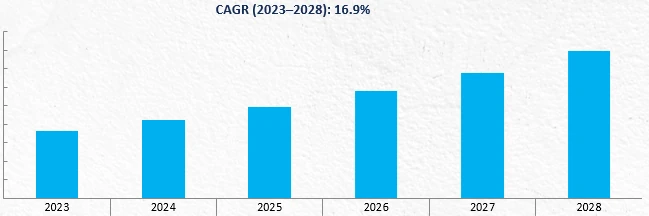
Commercial spending within the South America Agricultural Drones Market is increasingly concentrated around professional-grade drones equipped with advanced imaging sensors, autonomous navigation systems, and AI-powered analytics software. These solutions deliver measurable operational benefits through precision pesticide application, targeted irrigation planning, and improved crop management efficiency.
Rising commodity prices continue to encourage investment in precision farming technologies that maximize agricultural output while minimizing operational waste. Farmers are increasingly recognizing the economic value of drone-enabled agricultural intelligence, particularly in large-scale crop environments where traditional monitoring methods are less efficient.
The market is also benefiting from declining hardware costs and improved accessibility to imported drone systems. Chinese manufacturers continue to strengthen market penetration through affordable commercial drone platforms that support wider technology adoption among mid-sized agricultural businesses.
As AI integration becomes more sophisticated, spending is expected to shift beyond hardware toward software ecosystems, predictive analytics tools, cloud-connected drone management platforms, and autonomous operational technologies. These investments are likely to reshape long-term market dynamics throughout the forecast period.
Growth Drivers: South America Unmanned Aircraft Systems Agriculture Market
The South America Unmanned Aircraft Systems Agriculture Market is being driven by increasing demand for precision agriculture technologies that improve operational efficiency, crop productivity, and sustainability across commercial farming environments. Agricultural businesses are actively investing in drone solutions to optimize field operations, reduce chemical waste, and improve real-time decision-making capabilities.
One of the primary growth drivers is the increasing concern surrounding environmental damage caused by excessive pesticide use. Traditional spraying methods often result in chemical overuse and environmental contamination, whereas agricultural drones enable highly targeted pesticide application. This precision reduces waste, lowers operational costs, and supports sustainable farming initiatives across South America.
Artificial intelligence integration is another major growth catalyst within the South America Agricultural Drones Market. AI-powered drones can automate flight operations, process field data more efficiently, and generate predictive insights related to crop health, irrigation needs, and pest activity. These capabilities improve agricultural productivity while reducing labor dependency and operational complexity.
Rising commodity prices are also encouraging agricultural operators to invest in advanced technologies that improve farm output and maximize profitability. Drone technologies provide actionable agricultural intelligence through real-time mapping, multispectral imaging, and crop monitoring systems, helping farmers optimize resource allocation and improve yield performance.
Growing awareness of precision agriculture benefits is accelerating adoption among commercial farming enterprises. Drones are increasingly viewed as essential tools for crop surveying, irrigation planning, field mapping, and operational analytics. Their ability to deliver faster, more accurate agricultural insights compared with traditional methods is driving stronger market penetration.
The market is further supported by lower drone acquisition costs resulting from stronger commercial relationships with Chinese manufacturers. Affordable drone platforms are expanding accessibility across mid-sized farms and emerging agricultural businesses, contributing to wider regional adoption.
Growth Restraints: South America Unmanned Aircraft Systems Agriculture Market
The South America Unmanned Aircraft Systems Agriculture Market faces several operational and structural challenges that may restrict adoption rates across certain agricultural segments. Despite strong growth potential, regulatory uncertainty, limited purchasing power, and conservative farming practices continue to affect market expansion.
One of the primary restraints involves regulatory frameworks that have not fully evolved alongside rapid advancements in drone technologies. Inconsistent rules related to drone licensing, operational permissions, airspace management, and agricultural deployment create uncertainty for commercial users. Compliance requirements can also increase operational costs and slow technology adoption among agricultural businesses.
Limited purchasing power among many farmers across South America remains another major barrier. Although drone prices have declined in recent years, advanced agricultural drone systems equipped with AI analytics, lidar sensors, and multispectral imaging technologies still require substantial investment. Many agricultural operators remain hesitant to allocate significant capital toward emerging technologies without clear long-term return-on-investment visibility.
The South America Agricultural Drones Market is also affected by conservative attitudes toward technological transformation within traditional farming communities. Many farmers continue relying on established agricultural practices and older operational methods rather than adopting advanced automation technologies. This cautious approach slows the pace of drone penetration across some agricultural sectors.
Infrastructure limitations in rural regions may also affect deployment efficiency. Reliable connectivity, technical support services, and specialized drone maintenance capabilities are not always widely available across remote agricultural areas. These operational limitations can create additional adoption challenges for commercial users.
Another important restraint involves the complexity of integrating AI-powered systems into traditional agricultural workflows. While automation technologies offer long-term efficiency benefits, initial implementation costs and technical learning requirements may discourage smaller agricultural operators from transitioning toward advanced drone ecosystems.
Why is it Increasingly Difficult to Grow?
The Strategic Imperative 8™
The Impact of the Top 3 Strategic Imperatives on the Agriculture Unmanned Aerial Systems (UAS) Industry
Growth Opportunities Fuel the Growth Pipeline Engine™
Research Scope
Commercial UAS Platform Segmentation
Main UAS Agricultural Use Cases
Growth Metrics
Market Size of UAS for Agriculture in South America
Key Factors Driving Growth in UAS for Agriculture
Regional Economic Trends
Key Companies Developing UAS for Agriculture
Key Companies Developing Hybrid VTOL Fixed-wing UAS for Agriculture
Main Product Lines from Competing Drone Manufacturers
Meeting the UN Sustainable Development Goals
Growth Drivers
Growth Restraints
Key Takeaways
Growth Opportunity 1: UAS for Precision Agriculture
Growth Opportunity 2: Drone Training Academies for Agricultural Applications
Growth Opportunity 3: Heavy-lift UAS for Precise Spraying
List of Exhibits
Legal Disclaimer
Frequently Asked Questions (FAQ) – South America Unmanned Aircraft Systems Agriculture Market
1. What is the South America Unmanned Aircraft Systems Agriculture Market?
The South America Unmanned Aircraft Systems Agriculture Market refers to the industry focused on the deployment of agricultural drones and unmanned aerial systems (UAS) for crop monitoring, precision spraying, irrigation analysis, mapping, and farm management across South America.
2. What is driving growth in the South America Agricultural Drones Market?
Key growth drivers include increasing adoption of precision agriculture, rising demand for sustainable farming practices, advancements in AI-powered drone technologies, growing awareness of crop optimization solutions, and the need to reduce pesticide waste and operational costs.
3. What is the projected market size of the South America Unmanned Aircraft Systems Agriculture Market?
The South America Unmanned Aircraft Systems Agriculture Market was valued at USD 36.3 million in 2023 and is projected to reach USD 79.3 million by 2028, growing at a CAGR of 16.9% during the forecast period.
4. Which drone types are included in the South America Agricultural Drones Market?
The market includes consumer drones, prosumer drones, professional drones, enterprise drones, industrial drones, and VTOL fixed-wing hybrid systems used for various agricultural applications such as mapping, crop monitoring, pesticide spraying, and irrigation management.
5. How are AI technologies influencing the South America Unmanned Aircraft Systems Agriculture Market?
AI technologies are improving autonomous flight operations, predictive analytics, crop health monitoring, irrigation planning, and precision farming capabilities. AI-enabled drones help farmers improve productivity, reduce labor dependency, and optimize agricultural resource utilization.
6. What are the major applications of agricultural drones in South America?
Major applications include crop health monitoring, aerial mapping, irrigation analysis, pesticide spraying, field surveying, multispectral imaging, livestock monitoring, and precision agriculture management for large-scale farming operations.
7. What challenges affect the South America Agricultural Drones Market?
Market growth is restrained by regulatory uncertainty, limited purchasing power among farmers, infrastructure limitations in rural regions, and conservative adoption patterns among traditional agricultural operators.
8. Why are VTOL fixed-wing drones gaining popularity in the South America Unmanned Aircraft Systems Agriculture Market?
VTOL fixed-wing drones are gaining popularity because they combine vertical takeoff capabilities with extended flight endurance, making them highly efficient for large-area agricultural mapping, surveying, and precision farming applications.
Speak directly with our analytics experts for tailored recommendations.
Recent related Defense research
07 Oct 2026 | North America | Frost Radar
Frost Radar™: US Military Intelligence Analytics, 2026
The US military intelligence (MILINT) analytics industry is undergoing a structural transformation as defense and intelligence agencies transition from platform-centric architectures to AI-native, data-centric, and decision-driven operational models. Intelligence systems are no longer confined to po...
30 Sep 2026 | Global | Market Research
Total Airport Management (TAM) Market, Global, 2025–2034
Total airport management (TAM) represents a high-potential convergence market that integrates enterprise architecture, data management, resource and capacity planning, collaborative decision-making, passenger management, and airport simulation/digital twin into a unified operational framework. TAM r...
24 Sep 2026 | North America | Market Research
Military Aviation Maintenance, Repair, and Overhaul Industry, US, 2025–2030
This research service provides a comprehensive overview of the US military aviation maintenance, repair, and overhaul (MRO) industry. The study segments the industry into six platform categories: 1. Fighter, Attack, & Bomber 2. Rotorcraft 3. Transport & Tanker 4. Training & Utility 5. Intelligence, ...
03 Sep 2026 | Global | Technology Research
Photonic and Optical Computing Chips for AI and Data Center Acceleration
The study evaluates photonic and optical computing technologies as critical enablers of next-generation AI infrastructure, addressing growing bandwidth, latency, power consumption, and scalability constraints associated with copper-based interconnects. The analysis covers photonic integrated circuit...
25 Aug 2026 | North America | Market Research
US Military Intelligence Analytics Industry Growth Opportunities, 2025–2028
The US military intelligence (MILINT) analytics market is undergoing rapid transformation driven by the convergence of AI, big data analytics, and next-generation sensing. As the DoW and the wider intelligence community (IC) face increasingly complex multi-domain threats, the demand for scalable, re...
Purchase includes:
- Report download
- Growth Dialog™ with our experts
Growth Dialog™
A tailored session with you where we identify the:- Strategic Imperatives
- Growth Opportunities
- Best Practices
- Companies to Action
Impacting your company's future growth potential.
Agricultural businesses in South America are becoming increasingly aware of the potential benefits of drone technology. Rising commodity prices are encouraging end-users to adopt new technologies to improve yields and reduce costs, and drones have become the ideal tool in this scenario. Trade links with China have also facilitated the introduction of this technology, particularly of low- and mid-range systems. However, despite growing adoption, the low purchasing power of end-users in South America represents the most significant challenge for growth, because most farmers are reluctant to invest a large number of resources into new technologies unless their use is widespread and their benefit guaranteed.
This report highlights the current and future role of UAS in South American agriculture. From precision agriculture and crop monitoring to pest control and irrigation management, UAS offer advantages in efficiency, accuracy, and cost-effectiveness. Furthermore, UAS facilitate sustainable farming practices, minimizing environmental impact while maximizing yields.
| Deliverable Type | Market Research |
|---|---|
| Industries | Aerospace, Defence and Security |
| No Index | No |
| Is Prebook | No |
| Keyword 1 | Agricultural UAS market |
| Keyword 2 | Precision farming drones |
| Keyword 3 | South America agricultural technology |
| Podcast | No |
| WIP Number | KA8B-01-00-00-00 |
South American Unmanned Aircraft Systems for Agriculture Applications Growth Opportunities
$2,450.00
Special Price $2,082.50 save 15 %