 USD
 GBP
 CNY
 EUR
 INR
 JPY
 MYR
 ZAR
 KRW
 THB


Biotics in Animal Nutrition, Global, 2025–2032
Regulatory Shift to Antibiotic-Free Production and Increasing Focus on Gut Health Are Driving Transformational Growth
03-Sep-2026
Global
Market Research
PLZQ-01-00-00-00
CM_2026_34866
Key takeaways: Biotics in Animal Nutrition Market
- The global biotics in animal nutrition market is projected to grow from $2,952.3 million in 2025 to $4,588.2 million by 2032, registering a CAGR of 6.5%.
- Increasing restrictions on antibiotic growth promoters (AGPs) are accelerating the adoption of probiotics, prebiotics, and postbiotics in animal nutrition.
- Probiotics and prebiotics remain established feed additives, while postbiotics are emerging as next-generation solutions offering improved stability and consistency.
- Growing awareness of gut microbiome health, feed efficiency, immunity, and animal performance is supporting market expansion.
- The animal feed and pet food sectors represent the primary application markets, with poultry, swine, ruminants, aquaculture, and companion animals driving demand.
- Asia-Pacific is positioned to support volume growth through rising protein consumption, expanding feed production, and modernization of livestock systems.
- Product differentiation, fermentation capabilities, scientific validation, and cost-effective formulations will shape competitive positioning through 2032.
Report Summary
The biotics in animal nutrition market is evolving as livestock producers and pet food manufacturers increasingly prioritize gut health, feed efficiency, immunity, and antibiotic reduction. This market encompasses probiotics, prebiotics, and postbiotics incorporated into animal feed, pet food, supplements, and drinking water. The study examines the global market across ingredient categories, applications, animal species, and geographical regions, with 2025 as the base year and a forecast period of 2026–2032.
Probiotics and prebiotics represent established ingredient categories, while postbiotics are emerging as innovative alternatives supported by advantages in stability and consistency. Market expansion is driven by regulatory restrictions on antibiotic growth promoters, increasing demand for functional nutrition, and growing awareness of microbiome health. However, cost sensitivity, fragmented production systems, alternative feed additives, and regulatory variability remain challenges. The market is forecast to reach $4,588.2 million by 2032, growing at a CAGR of 6.5%.
Market Overview & Trends in the Biotics in Animal Nutrition Market
The biotics in animal nutrition market is undergoing a structural transformation as the global animal feed industry shifts toward antibiotic-free production, functional nutrition, and microbiome-focused solutions. Probiotics, prebiotics, and postbiotics are increasingly incorporated into animal feed and pet food formulations to support gastrointestinal health, improve nutrient utilization, strengthen immunity, and enhance overall animal performance. This transition reflects growing recognition of gut microbiome functionality as an important contributor to livestock productivity and companion animal health.
One of the most significant trends is the growing adoption of postbiotics as next-generation functional ingredients. Unlike conventional probiotics, postbiotics contain inactivated microbial cells and their components, offering potential advantages in product stability, consistency, and formulation flexibility. Their increasing regulatory acceptance and suitability for different feed applications are creating additional opportunities beyond established probiotic and prebiotic products.
Another important development is the expansion of multi-biotic formulations combining probiotics, prebiotics, and postbiotics. These formulations support broader nutritional functionality across animal species and production stages. Manufacturers are also investing in strain-specific solutions, fermentation technologies, and scientifically validated formulations to demonstrate measurable improvements in feed conversion, productivity, and gut health.
The probiotics in animal feed market is benefiting from increasing demand for alternatives to antibiotic growth promoters, particularly in organized poultry and swine production. Meanwhile, pet food manufacturers are incorporating functional ingredients to address digestive health, immunity, and differentiated nutritional requirements.
Geographically, Asia-Pacific is expected to contribute significantly to market volume growth, supported by expanding livestock and aquaculture production and rising protein consumption. North America and Europe remain important markets due to established feed industries and increasing adoption of functional nutrition. Overall, the biotics in animal nutrition market is transitioning toward science-backed, performance-oriented, and value-added animal nutrition solutions.
Scope of Analysis of the Biotics in Animal Nutrition Market
This study evaluates global growth opportunities in the biotics in animal nutrition market, focusing on probiotics, prebiotics, and postbiotics used in livestock, aquaculture, and companion animal nutrition. The analysis examines market developments across product categories, ingredient types, applications, animal species, and five geographical regions.
The probiotics segment covers ingredients consumed by animals through feed, food, supplements, or drinking water to support host health and gastrointestinal functionality. It includes applications involving Bacilli, Lactobacilli, Bifidobacteria, Enterococcus, Saccharomyces yeast, and other probiotic strains. Non-ingested applications, including silage inoculants, aquaculture water treatment, bioremediation, manure treatment, and other processing applications, are excluded.
The prebiotics segment includes dietary fibers and functional ingredients commonly used in animal nutrition, such as inulin, fructooligosaccharides (FOS), galactooligosaccharides (GOS), mannan-oligosaccharides (MOS), beta-glucan, and xylo-oligosaccharides (XOS). Ingredients with limited feed relevance and non-feed applications, including human milk oligosaccharides, are excluded.
The postbiotics segment includes inactivated microbial cells and their components delivered through animal feed or water. Purified metabolites, vaccines, and non-ingested applications are outside the defined scope.
Application coverage includes livestock, aquaculture, and pets. Livestock and aquaculture are further classified into poultry, swine, ruminants, and aquaculture applications. Geographical coverage comprises North America, Europe, Asia-Pacific, Latin America (LATAM), and the Middle East and Africa (MEA).
The study period covers 2023–2032, with 2025 as the base year and 2026–2032 as the forecast period. Revenue is measured in US dollars (millions). The analysis evaluates market growth opportunities, ingredient innovation, competitive developments, and the adoption of functional animal nutrition solutions.
Revenue Forecast Analysis: Biotics in Animal Nutrition Market
The global Biotics in Animal Nutrition Market is projected to grow from $2,952.3 million in 2025 to $4,588.2 million by 2032, reflecting a compound annual growth rate (CAGR) of 6.5% from 2025 to 2032. The market's 2025 base-year growth rate is 6.0%, indicating sustained demand for biotics-based nutritional solutions across animal production systems.
Revenue growth is expected to be supported by increasing interest in animal gut health, feed efficiency, nutrient utilization, and alternatives to conventional antibiotic growth promoters. Probiotics, prebiotics, postbiotics, and related biotic solutions are gaining relevance as livestock producers seek to improve animal performance, strengthen production efficiency, and support more sustainable animal nutrition practices.
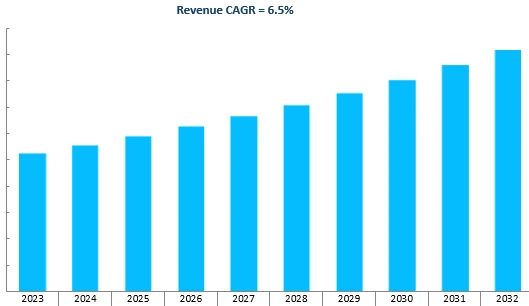
The market's growth trajectory also reflects the increasing emphasis on preventive animal health and functional feed ingredients. However, adoption may vary according to feed formulation costs, regulatory requirements, scientific validation, and the ability of producers to demonstrate consistent performance benefits across animal species and production environments.
With more than 100 active competitors in 2025 and a technical change score of 6 out of 10, the Biotics in Animal Nutrition Market presents opportunities for ingredient manufacturers to differentiate through product innovation, application-specific formulations, and validated nutritional outcomes. Overall, the market is forecast to reach approximately $4.59 billion by 2032, supported by a projected 6.5% CAGR over the forecast period.
Market Segmentation Analysis of the Biotics in Animal Nutrition Market
The biotics in animal nutrition market is segmented by ingredient, application, animal species, and region. This segmentation highlights the different functional requirements, adoption patterns, and growth opportunities across the global animal nutrition industry.
Segmentation by ingredient
The market is divided into three primary ingredient categories: probiotics, prebiotics, and postbiotics.
- Probiotics: This segment includes Bacilli, Lactobacilli, Bifidobacteria, Enterococcus, Saccharomyces yeast, and other probiotic strains. Probiotics are incorporated into animal feed and supplements to support gastrointestinal balance, gut health, and immune functionality. Their established applications in livestock and pet nutrition position them as an important component of the probiotics in animal feed market.
- Prebiotics: This category includes fructans such as inulin and fructooligosaccharides (FOS), galactooligosaccharides (GOS), mannan-oligosaccharides (MOS), beta-glucan, xylo-oligosaccharides (XOS), and other prebiotic ingredients. These functional ingredients support beneficial microbial activity and are increasingly incorporated into specialized feed formulations.
- Postbiotics: This segment comprises bacteria-based and yeast-based postbiotics. Postbiotics are emerging as next-generation solutions due to their potential advantages in stability, consistency, and formulation flexibility. Their development represents an important innovation opportunity within the broader biotics in animal nutrition market.
Segmentation by application
The market is classified into animal nutrition, covering livestock and aquaculture, and pet nutrition.
- Animal (livestock and aquaculture): This segment includes poultry, swine, ruminants, and aquaculture. Poultry and swine production benefit from organized feed manufacturing, standardized formulations, and increasing demand for antibiotic alternatives. Ruminant applications focus on nutritional efficiency and animal health, while aquaculture applications address digestive health and performance requirements.
- Pets: This segment includes functional nutrition solutions for companion animals. Increasing attention to digestive health, immunity, and premium pet food formulations is supporting the adoption of probiotics, prebiotics, and postbiotics.
Segmentation by region
The global market covers five geographical regions:
- North America: Includes the United States and Canada, supported by established animal nutrition and pet food industries.
- Europe: Covers European Economic Area and European Free Trade Association countries, including the United Kingdom. The region benefits from developed feed production and growing interest in antibiotic-free animal nutrition.
- Asia-Pacific: Includes China, Japan, India, Australia, New Zealand, South Korea, ASEAN countries, and South Asian countries. Rising protein demand, expanding livestock production, and aquaculture development support regional growth.
- Latin America (LATAM): Includes all Latin American countries, including Mexico. Livestock production and feed industry development contribute to market opportunities.
- Middle East and Africa (MEA): Includes Middle Eastern countries, including Türkiye, and Africa. Livestock modernization and evolving animal nutrition requirements support adoption opportunities.
Overall, ingredient innovation, species-specific formulations, and regional differences in production systems will influence the development of the biotics in animal nutrition market through 2032.
Growth Drivers of the Biotics in Animal Nutrition Market
The biotics in animal nutrition market is supported by regulatory developments, increasing demand for functional feed ingredients, expanding animal protein production, and advancements in microbial formulations. These factors are creating opportunities for manufacturers of probiotics, prebiotics, and postbiotics.
Regulatory shift toward antibiotic-free production: Increasing restrictions on antibiotic growth promoters (AGPs) are encouraging livestock producers to adopt alternative nutritional solutions. Probiotics, prebiotics, and postbiotics are gaining attention as functional ingredients that support gut health, disease prevention, and immune functionality. This transition is strengthening demand across the probiotics in animal feed market, particularly in organized poultry and swine production.
Growing focus on precision nutrition and gut health: Increasing awareness of the relationship between gut microbiome functionality, nutrient absorption, feed conversion, and animal productivity is supporting the adoption of specialized biotic ingredients. Producers are increasingly seeking formulations that improve feed efficiency, maintain animal health, and support consistent production outcomes. These requirements are encouraging investment in strain-specific probiotics and targeted prebiotic solutions.
Expansion of animal feed and pet food production: Rising global demand for animal protein and expanding pet food consumption are increasing the addressable market for functional nutritional ingredients. North America and Europe remain important consumption markets, while Asia-Pacific is expected to contribute significant volume growth through expanding livestock, aquaculture, and pet nutrition industries.
Modernization of organized production systems: Large-scale poultry and swine production facilities are supporting standardized feed formulations and centralized procurement. This creates opportunities for suppliers to introduce biotic ingredients through integrated feed manufacturers, premix producers, and compound feed companies.
Advancements in biotic formulations and multi-biotic solutions: Innovation in fermentation, microbial strain selection, and ingredient combinations is improving product differentiation. The growing use of probiotics, prebiotics, and postbiotics together is supporting broader applications across species and life stages.
Shift toward functional and premium nutrition: Increasing demand for differentiated animal feed and premium pet food products is encouraging manufacturers to incorporate higher-value functional ingredients. This development creates opportunities for suppliers to demonstrate product performance and capture additional value within the biotics in animal nutrition market.
Growth Restraints of the Biotics in Animal Nutrition Market
Despite increasing adoption, the biotics in animal nutrition market faces several challenges related to production economics, industry fragmentation, competitive alternatives, and regulatory requirements. These constraints can influence product penetration, pricing, and commercialization across different geographical markets.
Cost sensitivity and return-on-investment constraints: Adoption of biotic ingredients depends heavily on their ability to demonstrate measurable improvements in animal performance and production economics. Price-sensitive livestock and aquaculture markets may limit the incorporation of higher-cost probiotics, prebiotics, and postbiotics. Feed manufacturers and producers evaluate ingredient costs against improvements in feed conversion, productivity, and animal health, creating pressure on suppliers to establish clear economic benefits.
Fragmented production systems in certain segments: Ruminant and aquaculture production systems often exhibit lower standardization compared with organized poultry and swine operations. Differences in feeding practices, production infrastructure, and procurement systems can slow the adoption of advanced feed ingredients. This fragmentation makes it challenging for manufacturers to achieve consistent market penetration and scale distribution across diverse customer groups.
Competition from alternative feed additives: The biotics in animal nutrition market competes with other functional feed additives, including enzymes, organic trace minerals, organic acids, phytogenics, and other antibiotic alternatives. Feed manufacturers may prioritize ingredients based on formulation costs, demonstrated performance, and specific production requirements. This competitive environment can constrain the utilization of biotic solutions, particularly when lower-cost alternatives deliver acceptable results.
Variability in regulatory frameworks and definitions: Differences in regulatory approval processes and product definitions across countries can complicate product registration, commercialization, and market expansion. Postbiotics and emerging biotic formulations may face additional requirements related to ingredient classification, safety documentation, and performance validation.
Availability of low-cost substitutes: Plant-based and vegetable-derived fibers, including tomato pomace, can substitute for certain functional prebiotic ingredients. The availability of economical alternatives may limit the adoption of higher-value prebiotic formulations, particularly among cost-conscious feed manufacturers.
Limited awareness and validation of emerging biotics: Postbiotics and other newer nutritional solutions may have lower market awareness compared with established probiotics. Additional product education, application research, and scientific validation are required to demonstrate their benefits and encourage adoption.
Formulation optimization constraints: Feed manufacturers carefully manage ingredient inclusion rates to achieve minimum effective doses while maintaining formulation economics. These optimization requirements can restrict higher-value ingredient utilization and influence revenue growth.
Competitor Landscape of the Biotics in Animal Nutrition Market
The competitive landscape of the biotics in animal nutrition market is fragmented, with more than 100 competitors operating across ingredient manufacturing, microbial technologies, fermentation, functional feed additives, and animal nutrition solutions. Competition is influenced by product pricing, functional properties, technology and extraction capabilities, and innovation. The market includes multinational ingredient suppliers, specialized biotechnology companies, fermentation manufacturers, and regional feed additive producers.
Leading competitors identified in the study include:
- Novonesis
- Lallemand
- Phileo by Lesaffre
- dsm-firmenich
- IFF
- Evonik
- Kemin Industries
- ADM
- Cargill
- Kerry
- Beneo GmbH
- Ingredion
- AngelYeast
- Roquette
- Galam
- Alltech
- AB Vista
- BioZyme Inc.
These companies participate in different areas of the animal nutrition value chain, including microbial ingredients, functional carbohydrates, fermentation-based products, specialty feed additives, and integrated nutrition solutions.
Competitive differentiation and innovation
Product performance, functional properties, and technological capabilities are important competitive factors. Manufacturers are increasingly focusing on strain-specific probiotics, advanced fermentation processes, prebiotic ingredient development, and emerging postbiotic formulations. The ability to demonstrate consistent performance across animal species and production conditions is becoming increasingly important.
Innovation in multi-biotic formulations is also creating opportunities for differentiation. Combining probiotics, prebiotics, and postbiotics enables manufacturers to develop specialized solutions targeting gut health, feed efficiency, and animal performance. Scientific validation and evidence-based product positioning are important for establishing customer confidence and supporting premium product adoption.
Distribution structure
The distribution structure combines direct sales to large integrated feed manufacturers with distributor-led channels serving fragmented markets. Premix producers and compound feed manufacturers act as important intermediaries by incorporating biotic ingredients into standardized nutritional formulations.
Integrated companies, including dsm-firmenich and Cargill/Provimi, participate in premix and feed ingredient distribution, while specialized providers such as Devenish Nutrition and Agrofed supply standalone solutions. Large feed manufacturers, including Cargill, Alltech, and Nutreco, may also operate in-house premix operations and incorporate functional ingredients directly into complete feed products.
This distribution ecosystem enables suppliers to serve large-scale commercial operations as well as smaller and fragmented livestock markets.
Overall, competitive positioning in the biotics in animal nutrition market will increasingly depend on fermentation capabilities, product consistency, scientific evidence, formulation expertise, and the ability to deliver cost-effective functional ingredients across diverse animal nutrition applications.
Scope of Analysis
Segmentation by Ingredient
Segmentation by Application and Region
Market Definitions: Biotic Ingredients
Market Definitions: Probiotic Ingredients
Market Definitions: Prebiotic Ingredients
Market Definitions: Postbiotic Ingredients
Application Definitions: Biotic Ingredients
Why Is It Increasingly Difficult to Grow?
The Strategic Imperative 8™
The Impact of the Top 3 Strategic Imperatives on the Biotics in Animal Nutrition Industry
Growth Metrics
Growth Environment
Biotic Ingredient Ecosystem: Animal Nutrition
Focus of Biotics Ingredients for Pet versus Livestock and Aquaculture
Value Chain
Key Competitors
Rationale Behind Product Matrix of Biotic Ingredients
Product Matrix by Application: Probiotics
Product Matrix by Ingredient Type: Prebiotics
Product Matrix by Product and End User: Postbiotics
Recent Market Activities, Probiotics
Interesting Innovations in the Biotics Space
Growth Drivers
Growth Restraints
Forecast Considerations
Revenue Forecast
Revenue Forecast Analysis by Product Category
Revenue Forecast by Application
Revenue Forecast by Animal Species
Revenue Forecast by Region
Revenue Forecast Analysis by Region
Growth Metrics
Ecosystem of Live Bacteria
Probiotics Usage in Animal Care
Probiotics in Water Applications
Revenue Forecast
Revenue Forecast by Ingredient
Revenue Forecast Analysis by Ingredient
Revenue Forecast Analysis by Functional Use
Revenue Breakdown by Delivery Format
Revenue Forecast by Application
Revenue Forecast by Animal Species
Revenue Forecast Analysis by Application and Animal Species
Revenue Forecast by Region
Revenue Forecast Analysis by Region
Growth Metrics
Prebiotics, Scope
Revenue Forecast
Revenue Forecast by Ingredient
Revenue Forecast Analysis by Ingredient
Revenue Forecast by Application
Revenue Forecast by Animal Species
Revenue Forecast Analysis by Application and Animal Species
Revenue Forecast by Region
Revenue Forecast Analysis by Region
Growth Metrics
Postbiotics, Scope
Revenue Forecast
Revenue Forecast by Ingredient
Revenue Forecast Analysis by Type
Revenue Forecast by Application
Revenue Forecast by Animal Species
Revenue Forecast Analysis by Application
Revenue Forecast by Region
Revenue Forecast Analysis by Region
Growth Opportunity 1: Postbiotics as a Growth Product Category
Growth Opportunity 2: High-Growth Potential in the Pet Food Sector
Growth Opportunity 3: Antibiotic-Free Poultry & Swine Nutrition
Benefits and Impacts of Growth Opportunities
Next Steps
List of Exhibits
Legal Disclaimer
Frequently Asked Questions: Biotics in Animal Nutrition Market
1. What is the Biotics in Animal Nutrition Market?
The Biotics in Animal Nutrition Market covers probiotics, prebiotics, and postbiotics incorporated into animal feed, pet food, supplements, and drinking water to support gut health, immunity, nutrient utilization, and animal performance.
2. What is the projected size of the Biotics in Animal Nutrition Market by 2032?
The global Biotics in Animal Nutrition Market is projected to grow from $2,952.3 million in 2025 to $4,588.2 million by 2032, registering a compound annual growth rate (CAGR) of 6.5% during the forecast period.
3. What are the major segments of the Biotics in Animal Nutrition Market?
The Biotics in Animal Nutrition Market is segmented into probiotics, prebiotics, and postbiotics by ingredient. By application, it covers livestock, aquaculture, and pets. Livestock applications include poultry, swine, and ruminants, while geographical segmentation includes North America, Europe, Asia-Pacific, Latin America, and the Middle East and Africa.
4. What is driving the growth of the probiotics in animal feed market?
The probiotics in animal feed market is driven by increasing restrictions on antibiotic growth promoters, growing awareness of gut microbiome health, demand for improved feed efficiency, expansion of livestock production, and increasing adoption of functional animal nutrition ingredients.
5. What are the major companies operating in the Biotics in Animal Nutrition Market?
Major companies operating in the Biotics in Animal Nutrition Market include Novonesis, Lallemand, Phileo by Lesaffre, dsm-firmenich, IFF, Evonik, Kemin Industries, ADM, Cargill, Kerry, Beneo GmbH, Ingredion, AngelYeast, Roquette, Alltech, and AB Vista.
6. Why are postbiotics gaining importance in animal nutrition?
Postbiotics are gaining importance because of their potential advantages in stability, consistency, and formulation flexibility. These ingredients include inactivated microbial cells and their components, offering emerging opportunities for functional animal feed and pet nutrition applications.
7. Which regions are covered in the Biotics in Animal Nutrition Market?
The global Biotics in Animal Nutrition Market covers five major regions: North America, Europe, Asia-Pacific, Latin America (LATAM), and the Middle East and Africa (MEA). Asia-Pacific is expected to contribute to market volume growth through expanding livestock, aquaculture, and animal feed production.
8. What are the major challenges affecting the Biotics in Animal Nutrition Market?
Major challenges affecting the Biotics in Animal Nutrition Market include cost sensitivity, return-on-investment constraints, fragmented production systems, competition from alternative feed additives, regulatory variability, limited awareness of emerging biotics, and formulation optimization requirements.
Speak directly with our analytics experts for tailored recommendations.
Recent related Nutritional and Health Ingredients research
12 Nov 2026 | Global | Market Research
Food Enzymes Market, Global, 2025–2032
Food enzymes have evolved beyond their traditional role as processing aids and are being used to enhance product quality, improve nutritional attributes, support clean-label reformulation, and optimize manufacturing performance across the food and beverage industry. This Frost & Sullivan analysis ex...
02 Nov 2026 | Global | Market Research
The Aquaculture Ecosystem, Global, 2025
Aquaculture is a booming industry. In 2022, the industry overtook the wild-fisheries industry in terms of the quantity of output and its growth shows no signs of abating.Building and operating an aquaculture facility is an extremely complex undertaking, and the owners of the fish farms must take acc...
05 Oct 2026 | Global | Market Research
Impact of GLP-1 on Nutraceuticals, Global, 2025–2032
The rapid adoption of GLP-1 therapies is reshaping the weight management landscape and creating a new set of nutritional needs among consumers using these treatments. While GLP-1 therapies have demonstrated significant benefits for weight loss and metabolic health, associated challenges—including re...
03 Jul 2026 | Global | Market Research
Medical Food Ingredients Market, Global, 2025–2032
The research assesses growth opportunities for medical food ingredients across key therapeutic applications and regional markets. Medical foods, also referred to as Foods for Special Medical Purposes (FSMPs), occupy a distinct regulatory and commercial position between pharmaceuticals and nutraceuti...
16 Jun 2026 | Global | Market Research
Infant Formula Ingredients Market, Global, 2025–2032
The research assesses growth opportunities for infant formula ingredients across key application segments and regional markets. Driven by demographic shifts, urbanization, and changing lifestyles, infant formula continues to play a critical role in meeting infant nutrition needs, particularly where ...
Purchase includes:
- Report download
- Growth Dialog™ with our experts
Growth Dialog™
A tailored session with you where we identify the:- Strategic Imperatives
- Growth Opportunities
- Best Practices
- Companies to Action
Impacting your company's future growth potential.