 USD
USD GBP
GBP  CNY
CNY  EUR
EUR  INR
INR  JPY
JPY  MYR
MYR  ZAR
ZAR  KRW
KRW  THB
THB 


From Mass Firepower to Surgical Precision: Redefining Modern Military Doctrine
12-May-2026
Global
Market Research
M1I9-01-00-00-00
AE_2026_34558
Report Summary: Loitering Munition Market
The global loitering munition market size was valued at approximately USD 6.06 billion in 2025 and is projected to reach nearly USD 10.93 billion by 2028, expanding at a CAGR of 21.7% during the forecast period. Rapid advancements in autonomous targeting, AI-enabled guidance systems, precision strike technologies, and ISR-integrated battlefield operations are accelerating market expansion across modern defense ecosystems. Militaries worldwide are increasingly adopting loitering munitions as cost-effective alternatives to conventional guided missile systems.
Key Market Trends & Insights
- The loitering munition market is benefiting from rising global defense modernization programs and increasing asymmetric warfare requirements.
- AI-enabled autonomous targeting and swarm-capable systems are becoming major innovation priorities across next-generation loitering munition programs.
- Multi-role loitering munitions capable of ISR, precision strike, and battle damage assessment are witnessing strong procurement momentum.
- NATO-aligned defense spending increases are supporting adoption of precision-guided autonomous strike systems.
- Vehicle-mounted, airborne, and naval-launched platforms are expanding operational deployment flexibility across contested environments.
Market Size & Forecast
- 2025 Market Size: USD 6.06 Billion
- 2028 Projected Market Size: USD 10.93 Billion
- CAGR (2025–2028): 21.7%
- North America: Largest Market in 2025
- Asia-Pacific: Emerging Growth Region for Defense Procurement
The loitering munition market is increasingly shaped by evolving battlefield doctrines emphasizing low-cost precision strike capability, persistent surveillance, autonomous engagement, and rapid deployment flexibility. Defense agencies are prioritizing AI-enabled strike systems capable of operating effectively in contested and GPS-denied environments, driving long-term investments across advanced unmanned combat technologies.
Market Overview & Trends: Loitering Munition Market
The loitering munition market is emerging as one of the fastest-growing segments within modern unmanned warfare systems due to rising global demand for precision-guided, low-cost, and highly maneuverable strike capabilities. Loitering munitions combine intelligence, surveillance, reconnaissance (ISR), target acquisition, and strike functions into a single autonomous platform, enabling militaries to conduct precision engagements with reduced collateral damage and improved operational flexibility.
Modern battlefield conflicts across Eastern Europe, the Middle East, and Indo-Pacific regions are significantly influencing procurement strategies for autonomous strike systems. Defense organizations are increasingly prioritizing rapid-response precision engagement technologies capable of neutralizing mobile targets, air-defense systems, armored platforms, and tactical infrastructure in contested operational environments. The loitering munition market is benefiting directly from this doctrinal transition toward distributed and autonomous warfare.
Artificial intelligence integration remains a central market trend. AI-enabled navigation, autonomous target recognition, swarm collaboration, adaptive flight control, and real-time battlefield data processing are transforming next-generation loitering munition capabilities. Defense manufacturers are also focusing on modular payload architectures, extended endurance systems, lightweight propulsion technologies, and improved communication resilience in GPS-denied environments.
The market is witnessing growing adoption of multi-role platforms capable of ISR operations, precision strike execution, and battle damage assessment within a single mission cycle. Vehicle-mounted and airborne loitering systems are gaining traction among military forces seeking enhanced deployment flexibility and reduced logistical complexity. Naval-launched loitering munitions are also emerging as strategic assets for maritime surveillance and anti-ship tactical operations.
Increasing defense modernization budgets across NATO countries, India, Japan, South Korea, and Australia continue supporting procurement activities within the loitering munition market. Strategic partnerships between defense OEMs, AI software providers, propulsion developers, and sensor manufacturers are accelerating product innovation and expanding operational capabilities across autonomous precision strike ecosystems.
Scope of Analysis: Loitering Munition Market
This study analyzes the global loitering munition market across evolving autonomous warfare and precision-strike ecosystems. The report evaluates key technology trends, procurement strategies, modernization programs, defense spending patterns, and operational deployment models shaping global adoption of loitering munition systems between 2025 and 2028.
The scope of analysis includes man-portable systems, vehicle-mounted loitering munitions, airborne loitering platforms, and naval-launched autonomous strike systems. The study examines technological advancements in AI-enabled targeting, swarm-enabled operations, autonomous navigation, ISR integration, modular payload development, and precision strike architectures supporting modern military doctrine evolution.
The report evaluates procurement activities and deployment opportunities across North America, Europe, Asia-Pacific, the Middle East, Latin America, and Africa. Regional assessments include defense modernization initiatives, military build-up programs, tactical doctrine transitions, and strategic investments supporting autonomous warfare capabilities.
Revenue estimates are presented in US dollars and are based on publicly disclosed defense contracts, procurement programs, and military modernization initiatives. The forecast excludes classified procurement programs not publicly reported. Research methodology combines primary interviews with defense industry participants, secondary research analysis, government defense expenditure tracking, OEM benchmarking, and military technology trend evaluation within the global loitering munition market.
Revenue & Spending Forecast: Loitering Munition Market
The global loitering munition market generated approximately USD 6.06 billion in 2025 and is projected to reach nearly USD 10.93 billion by 2028, registering a strong CAGR of 21.7% during the forecast period. Accelerating military modernization initiatives, rising geopolitical tensions, and increasing investments in autonomous precision-strike systems are driving substantial market expansion worldwide.
Defense agencies are significantly increasing procurement spending on loitering munitions due to their ability to combine surveillance, target acquisition, and precision strike capabilities within a single low-cost platform. Compared with traditional guided missile systems, loitering munitions offer enhanced tactical flexibility, reduced operational cost, rapid deployment capability, and scalable combat effectiveness across contested environments.
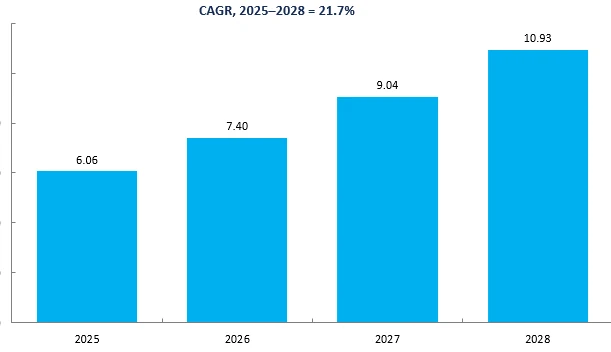
The loitering munition market is also benefiting from rising adoption of AI-enabled targeting technologies, swarm coordination systems, modular payload integration, and long-endurance autonomous navigation capabilities. Increasing demand for precision engagement in urban warfare, border security operations, and counter-drone missions is further accelerating procurement activity.
North America continues leading defense expenditure related to autonomous strike systems, while Asia-Pacific and European nations are rapidly expanding procurement programs amid rising regional security concerns and military modernization priorities.
Market Segmentation Analysis: Loitering Munition Market
The loitering munition market is segmented by launch platform into man-portable systems, vehicle-mounted loitering munitions, air-launched systems, and naval-launched platforms. Each segment addresses distinct operational requirements associated with modern tactical and strategic combat environments.
Man-portable systems represent a highly flexible segment designed for lightweight deployment, rapid tactical engagement, and frontline operational mobility. These systems are increasingly utilized for close-range precision strikes, surveillance operations, and anti-armor missions in asymmetric warfare environments.
Vehicle-mounted loitering munitions are gaining adoption due to enhanced mobility, higher payload capacity, extended operational endurance, and integration with armored combat platforms. Military forces are deploying these systems to support rapid-response tactical operations and battlefield precision targeting missions.
Air-launched loitering systems provide extended range, improved survivability, and enhanced ISR capabilities. These platforms support long-range precision engagement operations while reducing pilot exposure within high-threat operational zones. Autonomous navigation and real-time targeting integration remain critical growth factors for this segment.
Naval-launched loitering systems are emerging as strategic maritime warfare assets capable of supporting surveillance, anti-ship targeting, and distributed naval combat operations. The segment is attracting increased investment as naval forces modernize autonomous combat capabilities across maritime security and tactical strike applications.
The loitering munition market also continues benefiting from increasing integration of AI-enabled targeting algorithms, swarm-capable architectures, advanced electro-optical sensors, and autonomous mission coordination technologies across all deployment categories.
Growth Drivers: Loitering Munition Market
The changing nature of modern warfare is one of the primary growth drivers for the loitering munition market. Military forces increasingly require precision-strike systems capable of operating effectively in asymmetric, urban, and contested combat environments where traditional artillery and missile systems may lack flexibility or cost efficiency.
Growing demand for low-cost precision engagement capabilities is accelerating global procurement of autonomous strike systems. Loitering munitions provide militaries with real-time ISR integration, target tracking, rapid engagement capability, and minimized collateral damage within a single platform, improving battlefield responsiveness and operational efficiency.
AI-enabled autonomous targeting and swarm-capable systems are creating major technological growth opportunities across the market. Defense agencies are prioritizing intelligent strike systems capable of autonomous navigation, collaborative engagement, adaptive mission execution, and enhanced survivability in GPS-denied environments.
The rise of multi-role loitering munitions capable of ISR, battle damage assessment, and precision strike operations is expanding deployment flexibility across tactical missions. Vehicle-mounted, airborne, and naval-launch systems are increasingly adopted for distributed warfare and rapid-response military operations.
Increasing global defense budgets, NATO modernization initiatives, Indo-Pacific security tensions, and growing investments in unmanned warfare technologies continue strengthening long-term demand within the loitering munition market.
Growth Restraints: Loitering Munition Market
Supply chain fragility and component shortages remain major restraints affecting the loitering munition market. Manufacturing operations rely heavily on advanced semiconductors, microelectronics, propulsion systems, sensors, and high-performance communication technologies vulnerable to geopolitical disruptions and procurement bottlenecks.
Limited endurance and payload capacity continue constraining operational flexibility for smaller loitering munition systems. Many man-portable platforms face technical limitations related to battery performance, fuel efficiency, payload integration, and long-range engagement capability within high-intensity combat scenarios.
GPS-denied environments and adverse weather conditions also create operational challenges. Autonomous strike systems dependent on GNSS navigation may experience degraded performance in contested electronic warfare environments where signal jamming and cyber disruption are increasingly common.
Ethical concerns and regulatory debates surrounding autonomous targeting systems represent another critical restraint. Concerns related to human oversight, civilian risk, rules of engagement, and autonomous lethal decision-making continue influencing procurement policies across several defense organizations and international regulatory bodies.
High integration costs associated with AI-enabled targeting systems, advanced sensors, secure communication infrastructure, and swarm-capable architectures may also limit adoption among budget-constrained defense agencies.
Scope of Analysis
Industry Segmentation (by launch platform)
Why is it Increasingly Difficult to Grow?
The Strategic Imperative 8™
The Impact of the Top 3 Strategic Imperatives on the LM Industry
Research Methodology
Purpose and Overview
Growth Drivers
Growth Restraints
Forecast Assumptions
Revenue Forecast
Revenue Forecast by Region
Market Forecast Analysis
Regional Analysis
Key Vendors by Segment
LM Emerging Concepts of Operation
Prime Military Global Programs for Leading LM Systems, 2025–2028
Prime US Contracts for LM Systems, 2025–2028
Prime EU and NATO Contracts for LM Systems, 2025–2028
Ukraine LM Market Outlook
Prime Middle East and Africa Contracts for LM Systems, 2025–2028
Prime APAC Contracts for LM Systems, 2025–2028
Key Abbreviations
Growth Opportunity 1: Procurement
Growth Opportunity 2: Research & Development
Growth Opportunity 3: Swarm as Accelerator
Benefits and Impacts of Growth Opportunities
Next Steps
List of Exhibits
Legal Disclaimer
Frequently Asked Questions (FAQ) – Loitering Munition Market
1. What is the loitering munition market?
The loitering munition market includes autonomous precision-strike weapon systems capable of surveillance, target acquisition, and attack operations within a single platform. These systems are widely used across modern military and defense applications.
2. What is driving growth in the loitering munition market?
Growth in the loitering munition market is driven by increasing defense modernization programs, rising geopolitical tensions, AI-enabled targeting technologies, autonomous warfare adoption, and growing demand for low-cost precision-strike systems.
3. What is the projected revenue forecast for the loitering munition market?
The global loitering munition market was valued at approximately USD 6.06 billion in 2025 and is projected to reach nearly USD 10.93 billion by 2028, growing at a CAGR of 21.7% during the forecast period.
4. What are the major types of loitering munition systems?
Major system types in the loitering munition market include man-portable systems, vehicle-mounted loitering munitions, air-launched systems, and naval-launched autonomous strike platforms.
5. How is artificial intelligence influencing the loitering munition market?
Artificial intelligence is improving autonomous navigation, target recognition, swarm coordination, adaptive mission execution, and real-time battlefield decision-making capabilities across advanced loitering munition systems.
6. Which regions are leading the loitering munition market?
North America currently leads the loitering munition market due to strong defense spending and autonomous warfare investments, while Asia-Pacific is witnessing rapid growth driven by regional security modernization programs.
7. What are the key applications of loitering munitions?
Loitering munitions are primarily used for intelligence, surveillance, reconnaissance (ISR), precision strike operations, anti-armor missions, tactical battlefield support, counter-drone activities, and maritime security operations.
8. What challenges are affecting the loitering munition market?
Key challenges affecting the loitering munition market include supply chain disruptions, semiconductor shortages, GPS-denied operational environments, limited payload capacity, ethical concerns regarding autonomous weapons, and regulatory restrictions.
9. Why are militaries increasingly adopting loitering munitions?
Militaries are increasingly adopting loitering munitions because they provide rapid deployment, low-cost precision engagement, real-time surveillance, operational flexibility, and reduced collateral damage compared with conventional missile systems.
10. What is the future outlook for the loitering munition market?
The future outlook for the loitering munition market remains highly positive due to rising investments in autonomous warfare technologies, swarm-enabled strike systems, AI-driven targeting capabilities, and next-generation precision engagement platforms.
Speak directly with our analytics experts for tailored recommendations.
Recent related Defense research
30 Sep 2026 | Global | Market Research
Total Airport Management (TAM) Market, Global, 2025–2034
Total airport management (TAM) represents a high-potential convergence market that integrates enterprise architecture, data management, resource and capacity planning, collaborative decision-making, passenger management, and airport simulation/digital twin into a unified operational framework. TAM r...
24 Sep 2026 | North America | Market Research
Military Aviation Maintenance, Repair, and Overhaul Industry, US, 2025–2030
This research service provides a comprehensive overview of the US military aviation maintenance, repair, and overhaul (MRO) industry. The study segments the industry into six platform categories: 1. Fighter, Attack, & Bomber 2. Rotorcraft 3. Transport & Tanker 4. Training & Utility 5. Intelligence, ...
03 Sep 2026 | Global | Technology Research
Photonic and Optical Computing Chips for AI and Data Center Acceleration
The study evaluates photonic and optical computing technologies as critical enablers of next-generation AI infrastructure, addressing growing bandwidth, latency, power consumption, and scalability constraints associated with copper-based interconnects. The analysis covers photonic integrated circuit...
25 Aug 2026 | North America | Market Research
US Military Intelligence Analytics Industry Growth Opportunities, 2025–2028
The US military intelligence (MILINT) analytics market is undergoing rapid transformation driven by the convergence of AI, big data analytics, and next-generation sensing. As the DoW and the wider intelligence community (IC) face increasingly complex multi-domain threats, the demand for scalable, re...
31 Jul 2026 | Global | Market Research
UAV Navigation Systems and Solutions, Global, 2025–2035
This study provides a comprehensive assessment of the global UAV navigation systems and solutions market through a multidimensional framework encompassing geographies, technologies, and applications. The market sizing and competitive assessment use a triangulated methodology that combines demand-sid...
Purchase includes:
- Report download
- Growth Dialog™ with our experts
Growth Dialog™
A tailored session with you where we identify the:- Strategic Imperatives
- Growth Opportunities
- Best Practices
- Companies to Action
Impacting your company's future growth potential.
Defense forces are accelerating investments in LM systems as a complementary layer within multi-domain defense architectures. The ability of LM platforms to autonomously search, track, and neutralize time-sensitive or mobile targets at low cost enhances their value as a responsive, scalable precision strike solution. With the growing emphasis worldwide on persistent surveillance and standoff attack capabilities, LMs are emerging as one of the fastest-rising categories of unmanned weapon systems.
This Frost & Sullivan Aerospace & Defense report analyses the current and emerging trends, key growth drivers, restraints, and technology evolution pathways shaping the LM market globally. It reviews the evolving competitive landscape, highlighting procurement programs, modernization cycles, and the strategic integration of LM systems across leading military forces.
North America remains the largest regional market for LM platforms, driven by adoption across all combat arms and integration within joint all-domain C2 structures.
Across the North Atlantic Treaty Organization (NATO) countries, increased defense spending commitments are expected to promote wider adoption of LM technologies as allied forces seek cost-efficient precision strike capabilities and enhanced tactical autonomy.
Israel continues to maintain its role as a global innovation leader in LM development, supported by extensive operational experience and a strong domestic defense industrial base. In the Asia-Pacific, new demand signals are emerging across India, Japan, Australia, and South Korea, where border tensions and force modernization initiatives accelerate procurement and create fertile ground for LM-focused technology partnerships and industrial expansion.
The report concludes by outlining the prime growth opportunities across the LM value chain, including artificial intelligence (AI)-enabled autonomy, swarm-capable architectures, modular warhead development, extended-range propulsion technologies, and next-generation ISR strike fusion. These emerging vectors represent high-value business avenues for leading original equipment manufacturers (OEMs) as well as mid-tier defense companies seeking to position themselves within one of the most dynamic and strategically critical weapon system domains of the 2026 to 2028 timeframe.
| Deliverable Type | Market Research |
|---|---|
| Industries | Aerospace, Defence and Security |
| No Index | No |
| Is Prebook | No |
| Keyword 1 | Loitering Munitions Market |
| Keyword 2 | Kamikaze Drone Technology |
| Keyword 3 | Autonomous Precision Strike Systems |
| Podcast | No |
| Predecessor | None |
| WIP Number | M1I9-01-00-00-00 |