 USD
USD GBP
GBP  CNY
CNY  EUR
EUR  INR
INR  JPY
JPY  MYR
MYR  ZAR
ZAR  KRW
KRW  THB
THB 


Advanced Delivery Technologies in Phytonutrients are Experiencing Transformational Growth Due to Bioavailability Enhancement Needs
12-Feb-2026
Global
Market Research
PG5O-01-00-00-00
CM_2026_34365
Report Summary: Phytonutrients Market
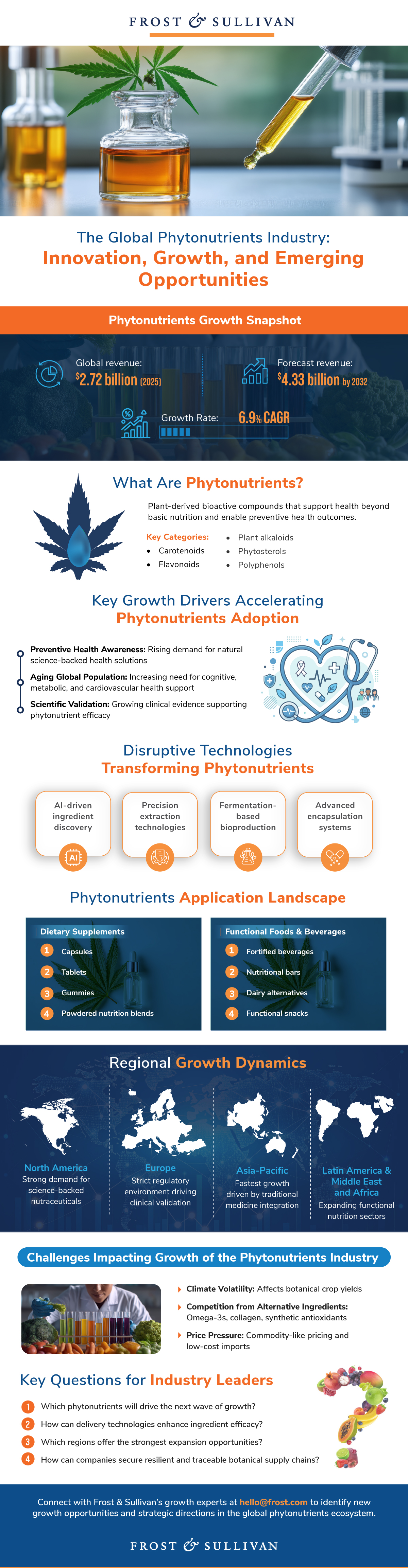
The phytonutrients market is experiencing steady expansion as consumer demand for natural health ingredients and preventive nutrition solutions accelerates worldwide. The global phytonutrients market generated approximately USD 2,720.7 million in 2025 and is projected to reach USD 4,330.9 million by 2032, reflecting a compound annual growth rate (CAGR) of 6.9% during the forecast period.
Growth across the plant-based nutrients market is driven by increasing awareness of the health benefits associated with carotenoids, flavonoids, and plant-derived bioactive compounds used in dietary supplements and functional foods. The phytonutrients market benefits from rising demand for antioxidant ingredients, metabolic health solutions, and formulations supporting cardiovascular, cognitive, and eye health.
Key Market Trends & Insights
- Carotenoids accounted for the largest revenue share in the phytonutrients market in 2025 due to strong demand for lutein, beta carotene, and lycopene in eye-health formulations.
- Flavonoids, including catechins and anthocyanins, are widely used in functional beverages and metabolic health products across the plant-based nutrients market.
- Growing consumer preference for plant-derived ingredients is accelerating innovation across the phytonutrients market, particularly in encapsulation and bioavailability technologies.
- Increasing interest in healthy aging and preventive wellness is strengthening demand for bioactive compounds such as resveratrol and phytosterols.
Market Size & Forecast
- 2025 Market Size: USD 2,720.7 Million
- 2032 Projected Market Size: USD 4,330.9 Million
- CAGR (2025–2032): 6.9%
- Largest Application Segment: Dietary Supplements
- Fastest Innovation Segment: Functional Food & Beverage Applications
The plant-based nutrients market is expected to benefit from expanding nutraceutical innovation, increasing adoption of clean-label ingredients, and growing consumer awareness of plant-derived health compounds.
Market Overview & Trends: Phytonutrients Market
The phytonutrients market is evolving rapidly as consumers increasingly prioritize preventive healthcare, functional nutrition, and plant-derived ingredients. Phytonutrients—naturally occurring compounds in plants—are gaining significant attention for their antioxidant, anti-inflammatory, and disease-prevention properties. This trend is transforming the plant-based nutrients market, particularly within dietary supplements and functional food products.
One of the most notable trends shaping the phytonutrients market is the growing popularity of personalized nutrition. Consumers are seeking targeted formulations designed to support specific health goals such as immune support, cardiovascular health, cognitive performance, and metabolic balance. As a result, manufacturers in the plant-based nutrients market are focusing on standardized extracts, clinically validated ingredients, and enhanced delivery technologies to maximize efficacy.
Advancements in extraction technologies are also improving the bioavailability of phytonutrients. Innovations such as nanoencapsulation, liposomal delivery systems, and emulsification are helping overcome traditional limitations associated with plant compounds, including poor absorption and instability. These technological developments are strengthening product performance and expanding the commercial potential of the phytonutrients market.
Another important structural shift within the plant-based nutrients market is the increasing integration of phytonutrients into mainstream food and beverage products. Functional beverages, fortified snacks, and nutraceutical beverages are becoming major application segments, enabling phytonutrients to move beyond traditional supplement formats.
Growing consumer awareness regarding the role of antioxidants in disease prevention is further accelerating demand. Compounds such as lutein, lycopene, catechins, and resveratrol are being incorporated into wellness-focused product portfolios across the phytonutrients market.
In addition, the clean-label movement is strengthening demand for natural plant-derived ingredients. Consumers increasingly prefer botanical sources over synthetic additives, reinforcing long-term growth prospects for the plant-based nutrients market.
Overall, the phytonutrients market is transitioning from a niche nutraceutical category to a core component of global preventive healthcare and functional nutrition ecosystems.
Scope of Analysis: Phytonutrients Market
This research study analyzes the phytonutrients market and identifies growth opportunities across the functional food, beverage, and dietary supplement industries. The analysis evaluates key market dynamics, technological developments, and competitive trends shaping the global plant-based nutrients market.
The study covers phytonutrients derived from natural plant sources and examines their use across multiple end-use applications. Key ingredient categories evaluated in the phytonutrients market include carotenoids, flavonoids, plant alkaloids, phytosterols, and polyphenols.
Carotenoids represent a major product segment within the plant-based nutrients market, including ingredients such as beta carotene, lutein, lycopene, astaxanthin, and zeaxanthin. These compounds are widely used in eye health supplements, antioxidant formulations, and functional foods.
Flavonoids also represent a major category in the phytonutrients market, including catechins, quercetin, anthocyanins, and soy isoflavones. These ingredients are widely incorporated into metabolic health products and cardiovascular support supplements.
The geographic scope of the plant-based nutrients market analysis includes major global regions such as North America, Europe, Asia-Pacific, Latin America, and the Middle East and Africa. The study evaluates market trends, demand drivers, and regional growth dynamics across these key markets.
The study period spans 2023–2032, with 2025 serving as the base year and 2026–2032 representing the forecast period. Revenue data is measured in U.S. dollars, while volume estimates are expressed in metric tons.
The objective of this analysis is to provide stakeholders with strategic insights into emerging opportunities, competitive positioning, and long-term growth trends within the phytonutrients market and broader plant-based nutrients market.
Revenue & Spending Forecast: Phytonutrients Market
The phytonutrients market continues to experience consistent revenue growth driven by increasing demand for plant-derived bioactive ingredients across dietary supplements and functional foods. In 2025, the global phytonutrients market generated approximately USD 2,720.7 million, reflecting strong demand for carotenoids, flavonoids, and polyphenol compounds. The market is projected to grow at a compound annual growth rate (CAGR) of 6.9% from 2025 to 2032, highlighting the steady expansion of plant-based nutritional ingredients across multiple consumer health applications.

By 2032, the plant-based nutrients market is projected to reach USD 4,330.9 million, supported by expanding applications in functional beverages, nutraceutical products, and preventive healthcare formulations. Rising consumer awareness regarding natural health solutions and the benefits of antioxidant-rich ingredients is accelerating demand across global nutrition markets.
Consumer spending patterns within the phytonutrients market indicate a structural shift toward proactive health management. Consumers are increasingly investing in natural supplements designed to support immune health, cardiovascular wellness, and cognitive performance, further reinforcing growth opportunities in the plant-based nutrients market.
The plant-based nutrients market is also benefiting from the growing popularity of clean-label ingredients and plant-derived formulations. Food and beverage manufacturers are incorporating phytonutrients into fortified beverages, health snacks, and nutritional supplements to meet evolving consumer preferences for natural and minimally processed ingredients.
Corporate investments in research and product innovation are also driving revenue expansion within the phytonutrients market. Companies are investing heavily in advanced extraction technologies, bioavailability enhancement methods, and clinical validation studies to improve product efficacy and strengthen competitive differentiation.
Overall, the phytonutrients market is expected to maintain stable growth, expanding at a CAGR of 6.9% through 2032, as demand for plant-derived nutritional ingredients continues to rise globally. The convergence of functional foods, nutraceutical innovation, and preventive healthcare trends will further reinforce long-term expansion in the plant-based nutrients market.
Market Segmentation Analysis: Phytonutrients Market
The phytonutrients market is segmented primarily by ingredient type, application, and regional consumption patterns. Ingredient categories within the plant-based nutrients market include carotenoids, flavonoids, and other plant-derived bioactive compounds such as alkaloids, phytosterols, and polyphenols. Each category plays a distinct role in the expanding portfolio of functional health ingredients.
Carotenoids represent one of the most established segments within the phytonutrients market. Compounds such as beta carotene, lutein, lycopene, astaxanthin, and zeaxanthin are widely used for eye health, antioxidant support, and immune health formulations. Lutein and beta carotene have maintained strong demand due to their application in vision health supplements and fortified foods. The increasing prevalence of digital eye strain and aging-related vision conditions continues to support the expansion of carotenoid-based formulations in the plant-based nutrients market.
Flavonoids represent another major ingredient category within the phytonutrients market. This segment includes compounds such as catechins, anthocyanins, quercetin, hesperidin, and soy isoflavones. These bioactive compounds are commonly used in cardiovascular health supplements, metabolic wellness products, and functional beverages. The popularity of green tea extracts and berry-derived ingredients has significantly strengthened the flavonoid segment within the plant-based nutrients market.
The “other phytonutrients” category includes plant alkaloids, phytosterols, and resveratrol. These compounds are increasingly incorporated into dietary supplements designed for metabolic health, cholesterol management, and anti-aging formulations. Phytosterols, in particular, are widely used in cholesterol-lowering functional foods and nutraceutical products.
By application, the phytonutrients market is primarily divided into dietary supplements and functional food and beverage products. Dietary supplements currently represent the dominant application segment in the plant-based nutrients market, driven by consumer demand for targeted health solutions and standardized plant extracts.
Functional food and beverage applications are also expanding rapidly. Phytonutrients are increasingly integrated into fortified beverages, nutritional bars, and wellness drinks, reflecting the broader trend toward plant-based nutrition and preventive health solutions.
Growth Drivers: Phytonutrients Market
The phytonutrients market is benefiting from several strong growth drivers that are accelerating global demand for plant-derived bioactive ingredients. One of the most significant factors supporting expansion in the plant-based nutrients market is the rising aging population and the increasing prevalence of lifestyle-related health conditions.
As populations age, consumers are seeking nutritional solutions that support long-term health, including cardiovascular wellness, cognitive function, metabolic balance, and eye health. Phytonutrients such as carotenoids, flavonoids, and polyphenols are widely recognized for their antioxidant and anti-inflammatory properties, making them essential ingredients in preventive healthcare products. This demographic trend continues to strengthen demand across the phytonutrients market.
Scientific validation and product innovation are also major growth drivers. Increasing clinical research supporting the health benefits of phytonutrients has improved consumer confidence and regulatory acceptance of these ingredients. Manufacturers in the plant-based nutrients market are investing in advanced extraction technologies and standardized formulations to ensure consistent potency and bioavailability.
Another important growth driver is the increasing consumer shift toward preventive health and natural nutrition. Consumers are increasingly prioritizing plant-based ingredients and clean-label formulations in dietary supplements and functional foods. This shift is accelerating innovation across the phytonutrients market, with companies developing plant-based products targeting immunity, heart health, digestive wellness, and metabolic health.
Additionally, the rapid expansion of the functional food and beverage sector is creating new opportunities for the plant-based nutrients market. Phytonutrients are increasingly incorporated into fortified beverages, plant-based dairy alternatives, and wellness-focused food products.
Together, these factors are supporting sustained growth in the phytonutrients market and reinforcing the importance of plant-derived ingredients in the global health and nutrition industry.
Growth Restraints: Phytonutrients Market
Despite its strong growth potential, the phytonutrients market faces several challenges that could influence long-term expansion. One of the most significant restraints within the plant-based nutrients market is the vulnerability of botanical supply chains to climate variability and agricultural disruptions.
Phytonutrients are derived primarily from plant sources such as fruits, vegetables, herbs, and botanical extracts. Climate change, extreme weather events, and agricultural instability can significantly affect crop yields, raw material availability, and ingredient pricing. Variations in temperature, rainfall, and soil conditions may impact the concentration and quality of plant-derived compounds, creating supply chain uncertainties for manufacturers operating within the phytonutrients market.
Another key restraint is the increasing competition from alternative ingredients offering similar health benefits. Many functional health products incorporate omega-3 fatty acids, collagen peptides, probiotics, and synthetic antioxidants that compete directly with phytonutrients in the nutraceutical and functional food industries. These alternatives can sometimes offer higher stability or stronger brand recognition, creating competitive pressure within the plant-based nutrients market.
Product formulation challenges also represent a barrier to broader adoption. Certain phytonutrients are sensitive to light, heat, and oxygen exposure, which can reduce their stability and effectiveness during product manufacturing and storage. This creates additional research and development requirements for companies operating within the phytonutrients market.
Finally, regulatory variations across regions can slow product commercialization. Health claims associated with plant-based ingredients often require extensive scientific validation, which may delay market entry for new products in the plant-based nutrients market.
Competitive Landscape: Phytonutrients Market
The phytonutrients market is moderately competitive, with a mix of multinational ingredient manufacturers and specialized botanical extract producers operating across the global plant-based nutrients market. Companies compete primarily on ingredient purity, scientific validation, formulation capabilities, and supply chain reliability.
Leading players in the phytonutrients market include major ingredient suppliers that offer large-scale production capabilities and extensive product portfolios covering carotenoids, flavonoids, and plant sterols. These companies invest heavily in research and development to improve extraction efficiency, bioavailability, and clinical validation of plant-derived ingredients.
DSM-Firmenich, BASF, and Kemin Industries are among the major companies shaping innovation across the plant-based nutrients market. These firms focus on high-quality botanical ingredients supported by scientific research and global distribution networks. Their extensive manufacturing infrastructure allows them to supply standardized phytonutrient extracts to dietary supplement and food manufacturers worldwide.
In addition to large multinational suppliers, the phytonutrients market includes numerous specialized companies focused on botanical extraction and nutraceutical ingredient production. Companies such as Sami-Sabinsa, Indena, Biogen Extracts, and Divi’s Nutraceuticals have developed strong expertise in plant-based ingredient technologies and standardized extracts.
Product differentiation in the plant-based nutrients market often centers on advanced delivery technologies such as microencapsulation, liposomal formulations, and enhanced bioavailability systems. These innovations enable manufacturers to improve ingredient stability and absorption, increasing the effectiveness of phytonutrient-based formulations.
Distribution within the phytonutrients market is primarily conducted through direct sales to dietary supplement manufacturers, functional food producers, and contract manufacturing organizations. Strategic partnerships with nutraceutical brands and food companies play a critical role in expanding market reach.
Overall, competitive intensity within the plant-based nutrients market is expected to increase as demand for natural health ingredients continues to grow globally. Companies with strong research capabilities, sustainable sourcing strategies, and advanced ingredient technologies are likely to maintain a competitive advantage in the evolving phytonutrients market.
Scope of Analysis
Scope and Segmentation
Definitions
Why is it Increasingly Difficult to Grow?
The Strategic Imperative 8™
The Impact of the Top 3 Strategic Imperatives on the Phytonutrients Industry
Ecosystem Mapping of Plant-Derived Ingredients
Value Chain
Value Chain—Description
Competitive Environment
Key Competitors
Competitive Benchmarking—Carotenoids
Competitive Benchmarking—Flavonoids
Competitive Benchmarking—Others
Key Developments
Growth Metrics
Growth Drivers
Growth Driver Analysis
Growth Restraints
Growth Restraint Analysis
Forecast Considerations
Revenue and Volume Forecast
Revenue Forecast by Type
Volume Forecast by Type
Revenue Forecast by Application
Volume Forecast by Application
Revenue Forecast by Region
Volume Forecast by Region
Revenue and Volume Forecast Analysis
Pricing Trends and Forecast Analysis
Phytonutrients Market – Competitive Analysis
Growth Metrics
Revenue and Volume Forecast
Revenue Forecast by Type
Volume Forecast by Type
Revenue Forecast by Application
Volume Forecast by Application
Revenue Forecast by Region
Volume Forecast by Region
Revenue and Volume Forecast Analysis
Forecast Analysis by Ingredient Type
Forecast Analysis by Application
Forecast Analysis by Region
Growth Metrics
Revenue and Volume Forecast
Revenue Forecast by Type
Volume Forecast by Type
Revenue Forecast by Application
Volume Forecast by Application
Revenue Forecast by Region
Volume Forecast by Region
Revenue and Volume Forecast Analysis
Forecast Analysis by Ingredient Type
Forecast Analysis by Application
Forecast Analysis by Region
Growth Metrics
Revenue and Volume Forecast
Revenue Forecast by Type
Volume Forecast by Type
Revenue Forecast by Type
Volume Forecast by Type
Revenue Forecast by Application
Volume Forecast by Application
Revenue Forecast by Region
Volume Forecast by Region
Revenue and Volume Forecast Analysis
Forecast Analysis by Ingredient Type
Forecast Analysis by Application
Forecast Analysis by Region
Growth Opportunity 1: Polyphenols for Cardiovascular & Metabolic Health
Growth Opportunity 2: Advancements in Delivery Technologies
Growth Opportunity 3: Expansion in Emerging Markets
Growth Opportunity 4: Driving Sustainable Growth Through Upcycled Phytonutrient Sourcing
Benefits and Impacts of Growth Opportunities
Next Steps
List of Exhibits
Legal Disclaimer
Frequently Asked Questions (FAQ) – Phytonutrients Market
1. What is the phytonutrients market?
2. What are plant-based nutrients?
3. What is the size of the phytonutrients market?
4. What factors are driving growth in the phytonutrients market?
5. Which industries use phytonutrients?
6. What are the main types of phytonutrients?
7. Which region leads the phytonutrients market?
8. What challenges affect the phytonutrients market?
9. How are phytonutrients used in functional foods?
10. What is the future outlook for the phytonutrients market?
Speak directly with our analytics experts for tailored recommendations.
Recent related Nutritional and Health Ingredients research
03 Sep 2026 | Global | Market Research
Biotics in Animal Nutrition, Global, 2025–2032
The study analyzes probiotics, prebiotics, and postbiotics used in animal feed, pet food, and supplements, focusing strictly on ingested biotics impacting gut health and performance outcomes. The scope excludes non-feed applications (e.g., silage inoculants, aquaculture bioremediation, and other env...
03 Jul 2026 | Global | Market Research
Medical Food Ingredients Market, Global, 2025–2032
The research assesses growth opportunities for medical food ingredients across key therapeutic applications and regional markets. Medical foods, also referred to as Foods for Special Medical Purposes (FSMPs), occupy a distinct regulatory and commercial position between pharmaceuticals and nutraceuti...
16 Jun 2026 | Global | Market Research
Infant Formula Ingredients Market, Global, 2025–2032
The research assesses growth opportunities for infant formula ingredients across key application segments and regional markets. Driven by demographic shifts, urbanization, and changing lifestyles, infant formula continues to play a critical role in meeting infant nutrition needs, particularly where ...
29 Apr 2026 | Global | Frost Radar
Frost Radar: Non-polluting Flavoring and Coloring Agents, 2026
The market for non-polluting flavoring and coloring agents is transforming because of stricter regulation of synthetic additives, demand for clean-label products, and a focus on sustainability. Natural, bio-based alternatives, such as plant-derived extracts and upcycled ingredients, are replacing co...
03 Apr 2026 | Global | Market Research
Alternative Protein Ingredients for Human Nutrition, Global, 2025–2032
The global food system is undergoing a significant transformation, driven by the increasing demand for sustainable, nutritious, and scalable protein sources. Alternative proteins have emerged as a critical solution to address challenges associated with conventional animal-based protein production, i...
Purchase includes:
- Report download
- Growth Dialog™ with our experts
Growth Dialog™
A tailored session with you where we identify the:- Strategic Imperatives
- Growth Opportunities
- Best Practices
- Companies to Action
Impacting your company's future growth potential.
The market is also segmented by application and region. By application, it includes dietary supplements and functional food and beverages. The dietary supplements segment held the largest share in 2025, driven by strong consumer demand for targeted health solutions, higher bioactive concentrations, and widespread use of standardized phytonutrient ingredients in capsule and tablet formats. The study’s geographic scope is global, covering North America, Europe, Asia-Pacific, Latin America, and the Middle East and Africa.
Author: Akheela Dhiman
| Deliverable Type | Market Research |
|---|---|
| Industries | Chemicals and Materials |
| No Index | No |
| Is Prebook | No |
| Keyword 1 | phytonutrients market forecast |
| Keyword 2 | plant based nutrients market |
| Keyword 3 | phytonutrients industry trends |
| Podcast | No |
| Predecessor | None |
| WIP Number | PG5O-01-00-00-00 |